
How to Identify Wonga Pigeon Feathers
How to identify Wonga Pigeon feathers using their grey-brown back, white face, and the bold black-and-white V-shaped necklace across the breast.
Read the full Wonga Pigeon encyclopedia entry →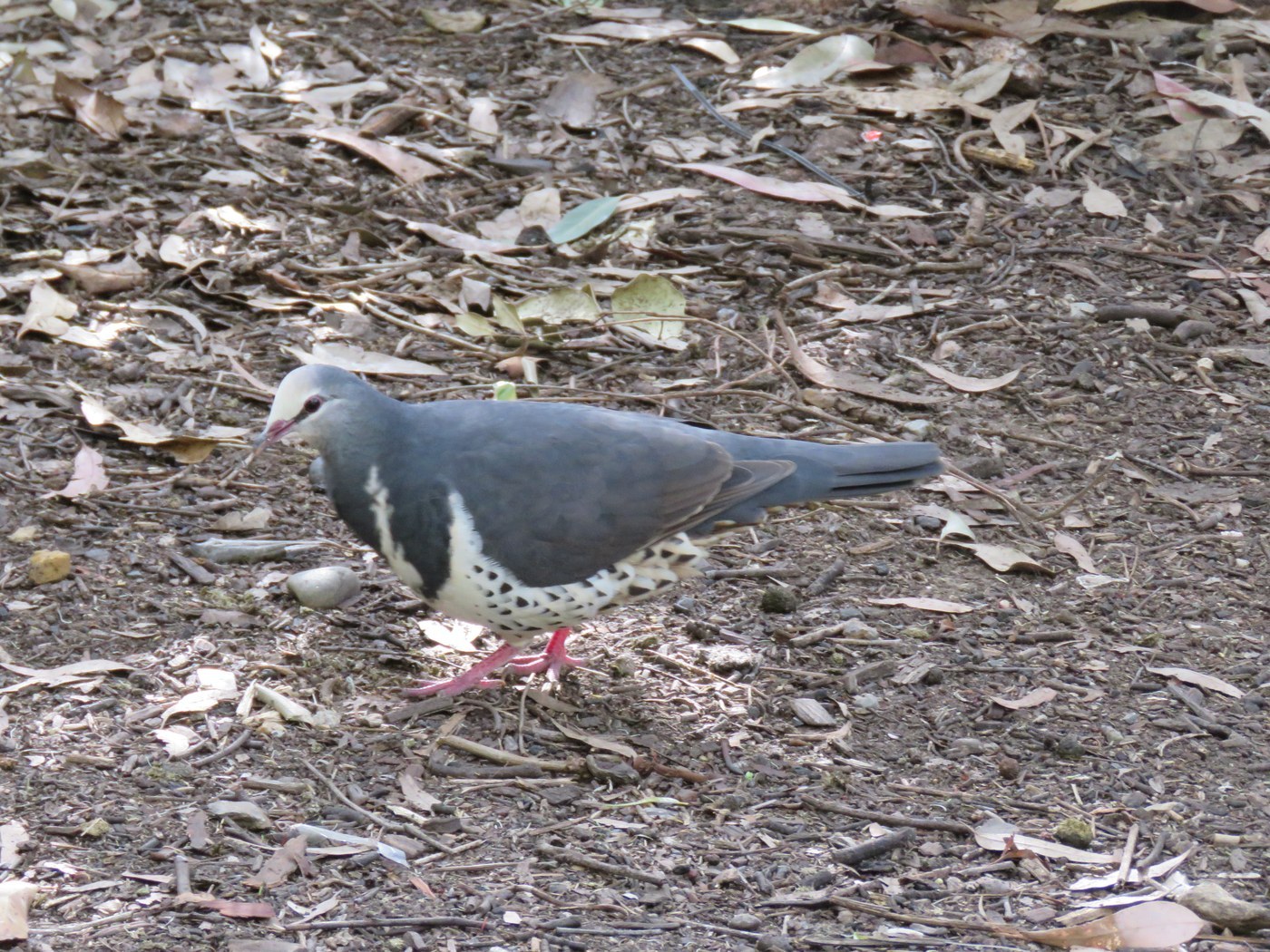
What Wonga Pigeon's Feathers Look Like
The Wonga Pigeon is a large, plump ground-dwelling pigeon, and its feathers combine plain earth tones with one very bold pattern element. Back, wing, and upper body feathers are uniform slate-grey to grey-brown, plain and unmarked, matching the bird's habit of foraging quietly on shaded forest floors. The forehead and face are white, giving a clean, pale-headed look distinct from the grey body. The signature feature is found on the breast: a bold black-and-white V-shaped "necklace" pattern, formed by dark feathers edged in white that create a chevron or scalloped look across the upper chest — a small cluster of these feathers is very recognizable even out of context. Below the necklace, the belly is white with irregular dark spotting or barring, especially along the flanks, fading to a plainer white toward the vent. Undertail covert feathers often show a warm buff or rufous tinge. Overall feather size is large and full-bodied, consistent with a pigeon considerably bigger than a typical city pigeon.
Step-by-Step: Is This Feather From a Wonga Pigeon?
- Look for the black-and-white chevron/necklace pattern. A feather cluster with dark centers and crisp white edges arranged in a scalloped V is the strongest single clue for this species.
- Check the face/forehead color. A plain white feather from the forehead paired with grey body feathers supports Wonga Pigeon.
- Examine belly feathers for spotting on a white background. Irregular dark spots or bars on white lower body feathers, rather than clean solid white, is typical.
- Judge feather size and thickness. Large, substantial feathers with a soft pigeon-like texture fit this notably heavy-bodied species.
- Rule out iridescence. Wonga Pigeon feathers are matte grey-brown with no glossy sheen, unlike many other pigeons and doves.
Similar Species & How to Tell Them Apart
White-headed Pigeon shares a white head but has a uniformly dark, glossy blackish body without the necklace chevron pattern or spotted belly. Crested Pigeon and Common Bronzewing, found in similar regions, both show iridescent wing patches (bronze/green sheen) that Wonga Pigeon entirely lacks, and neither shows the same bold black-and-white breast necklace. The necklace pattern combined with a matte, non-iridescent grey-brown body is the most dependable way to separate Wonga Pigeon feathers from other pigeons sharing its forest habitat.
Where & When You'll Find Them
Wonga Pigeons live in rainforest and adjacent wet eucalypt forest along the eastern coast of Australia, foraging mostly on the ground for fallen fruit and seeds and rarely venturing far from dense cover. Because the species is largely sedentary and ground-foraging, feathers are most often found scattered along forest floor foraging trails and near dense understory roost sites, with molt occurring mainly after the breeding season in spring and summer, though resident populations can shed feathers at low levels year-round.
Frequently asked questions
What is the clearest single diagnostic feather for this species?
A feather (or small cluster) showing the black-and-white chevron necklace pattern from the upper breast.
How do I rule out White-headed Pigeon, which also has a white head?
Check the body color and pattern — White-headed Pigeon is uniformly dark and glossy with no necklace or spotted belly, while Wonga Pigeon is matte grey-brown with the bold breast pattern.
Does this species show any iridescent feathers?
No, its plumage is matte and non-iridescent throughout, unlike many pigeon relatives with glossy wing patches.
Where on the forest floor should I look for feathers?
Along ground-foraging trails and near dense understory roosting or nesting cover, since the species spends most of its time walking on the forest floor rather than flying in the open.