
Wonga Pigeon
Leucosarcia melanoleuca
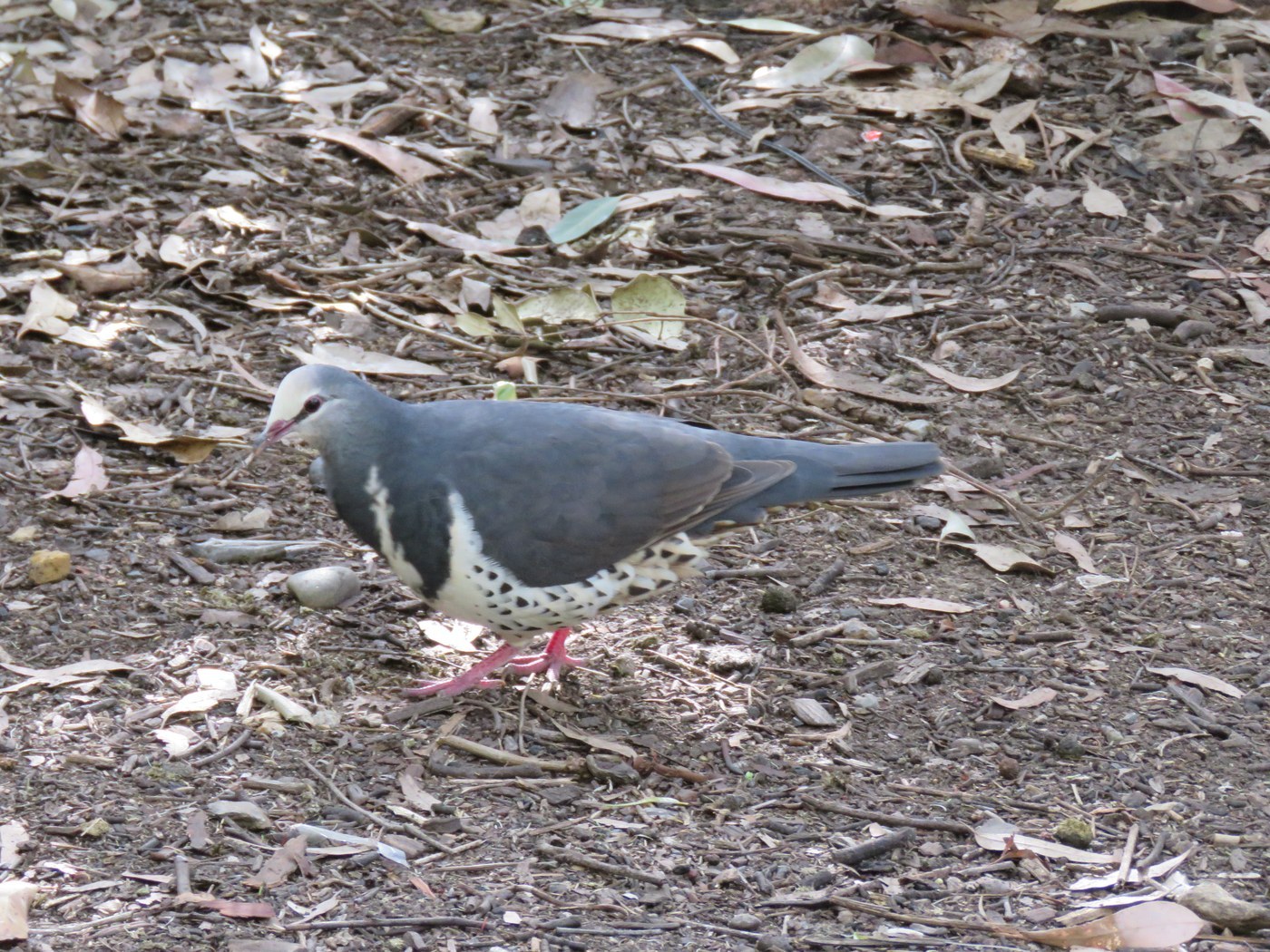
The Wonga Pigeon is a plump, ground-dwelling Australian pigeon known for the bold black chevron markings across its white lower breast and belly.
- Feather type
- Dense, soft body contour feathers over a stocky frame
- Colours
- Slate-grey upperparts, white face and underparts with bold dark chevron markings on the belly
- Bird size
- Large ground-pigeon, ~36-40 cm
Found a feather like this?
Identify any feather from a photo, free.
Overview
The Wonga Pigeon is a heavy-bodied, mostly terrestrial pigeon endemic to eastern Australia. It forages quietly on the forest floor, walking with a slow, deliberate gait and bobbing head motion typical of ground pigeons. Its bulky build and short legs give it a rounded, low-slung silhouette distinct from tree-dwelling doves.
Identifying the Feather
Wonga Pigeon flight feathers are broad and rounded-tipped, slate-grey above with a slight sheen. The most distinctive feathers are the white breast and belly feathers, each tipped or barred with a crisp dark chevron, creating a scalloped pattern unlike any other Australian pigeon. Tail feathers are long, grey, and squared at the tip. Compared to the Topknot Pigeon, Wonga feathers lack any crest plumes and show a plainer grey back.
Plumage & Molt
Sexes look alike, with slate-grey upperparts, a white forehead and throat, and a white lower breast marked with bold blackish chevrons forming a necklace-like band. Juveniles show duller, less distinct chevron markings that sharpen with maturity. Molt follows a gradual sequential pattern typical of pigeons, with no marked seasonal plumage change.
Habitat & Range
Found in subtropical and temperate rainforest, wet sclerophyll forest, and dense gullies along the eastern Australian coast and ranges from Queensland to Victoria. It is largely sedentary, remaining within suitable forest tracts year-round, though some local movement occurs outside the breeding season.
Behavior & Field Notes
Wonga Pigeons forage on the ground for fallen seeds and fruit, often walking in a slow, methodical manner beneath dense cover. They build a flimsy stick platform nest low in vegetation. Their call is a distinctive repeated low-pitched 'wonk-wonk' delivered from a perch, often given persistently at dawn. When flushed, they burst upward with a loud wing-clatter before gliding to cover.
Frequently asked questions
What makes Wonga Pigeon feathers distinctive?
The white breast and belly feathers marked with bold dark chevrons form a scalloped pattern found in no other Australian pigeon.
Where do Wonga Pigeons live?
In wet forests and rainforest gullies along the eastern Australian coast and ranges.
Do Wonga Pigeons fly often?
They spend most of their time walking on the forest floor and only fly short distances when disturbed.
How can you tell males from females?
Sexes are essentially identical in plumage, so field identification relies on behavior rather than color.
Wonga Pigeon guides
In-depth guides for identifying and understanding Wonga Pigeon.
Other feathers you may enjoy

Victoria Crowned Pigeon
Large lace-like fan crest plumes over dense body contour feathers

Plain Pigeon
Contour feathers, plain and uniformly toned, with a white wing patch

Zenaida Dove
Contour and flight feathers, faint iridescent sheen on neck

Pink Pigeon
Soft contour feathers with graduated tail

Nicobar Pigeon
Long, hackle-like elongated neck feathers with iridescent sheen

Squatter Pigeon
Dense, cryptic body contour feathers with a bold facial pattern

White-winged Dove
Broad, sturdy flight feathers with a bold white wing stripe

Western Crowned Pigeon
Rounded fan crest plumes over dense soft body feathers

Snow Pigeon
Dense insulating body contour feathers with a bold white rump and belly patch

Zebra Dove
Contour feathers with bold, extensive black-and-white barring

Scaly-naped Pigeon
Contour feathers with iridescent scaled nape pattern
Scaled Dove
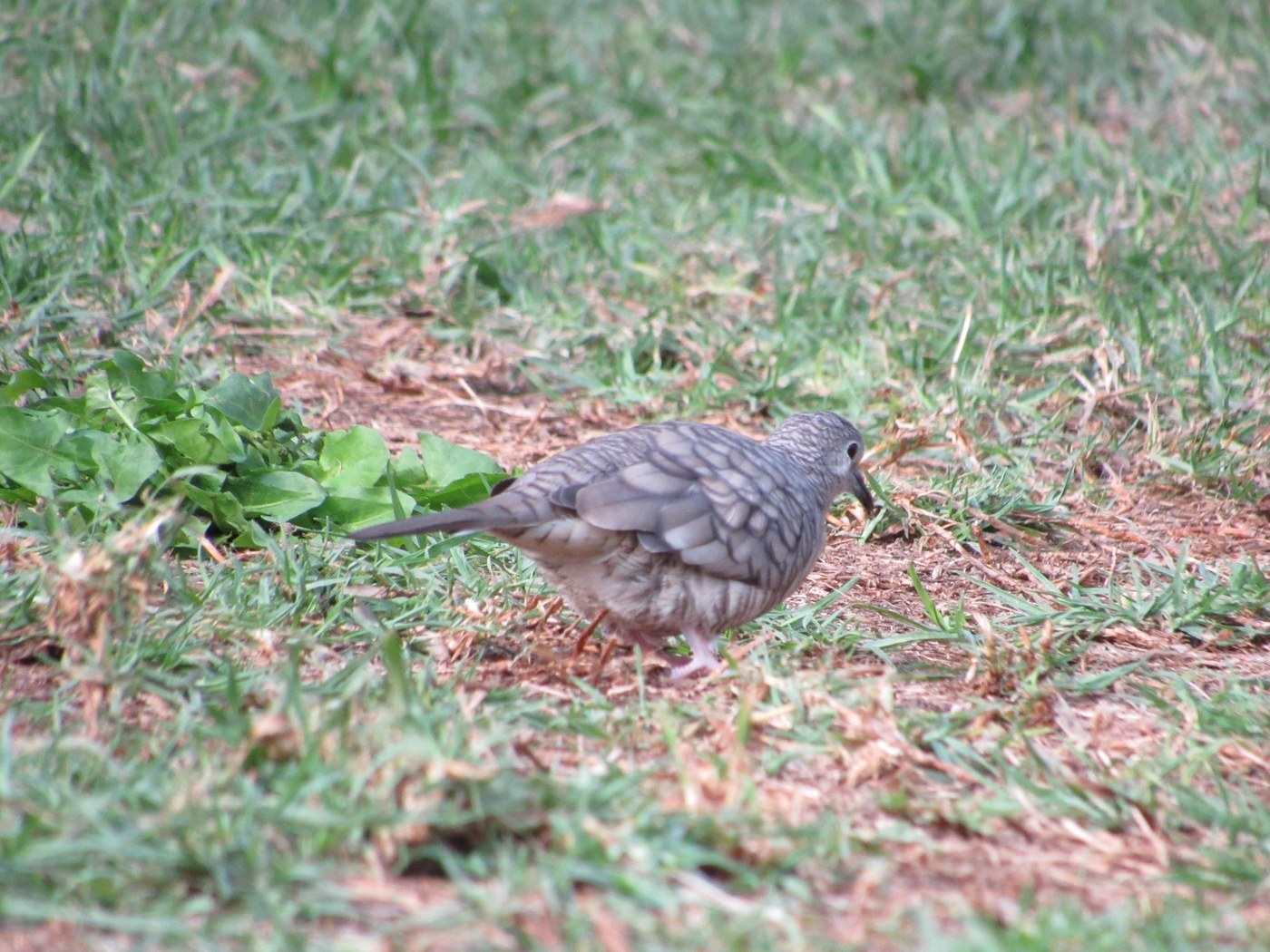
Contour feathers with dark scalloped edging