
How to Identify Yellowhammer Feathers
A practical checklist for the chestnut rump patch, streaky brown back, and white outer tail feathers that identify a Yellowhammer, with guidance on separating it from Cirl Bunting and Corn Bunting.
Read the full Yellowhammer encyclopedia entry →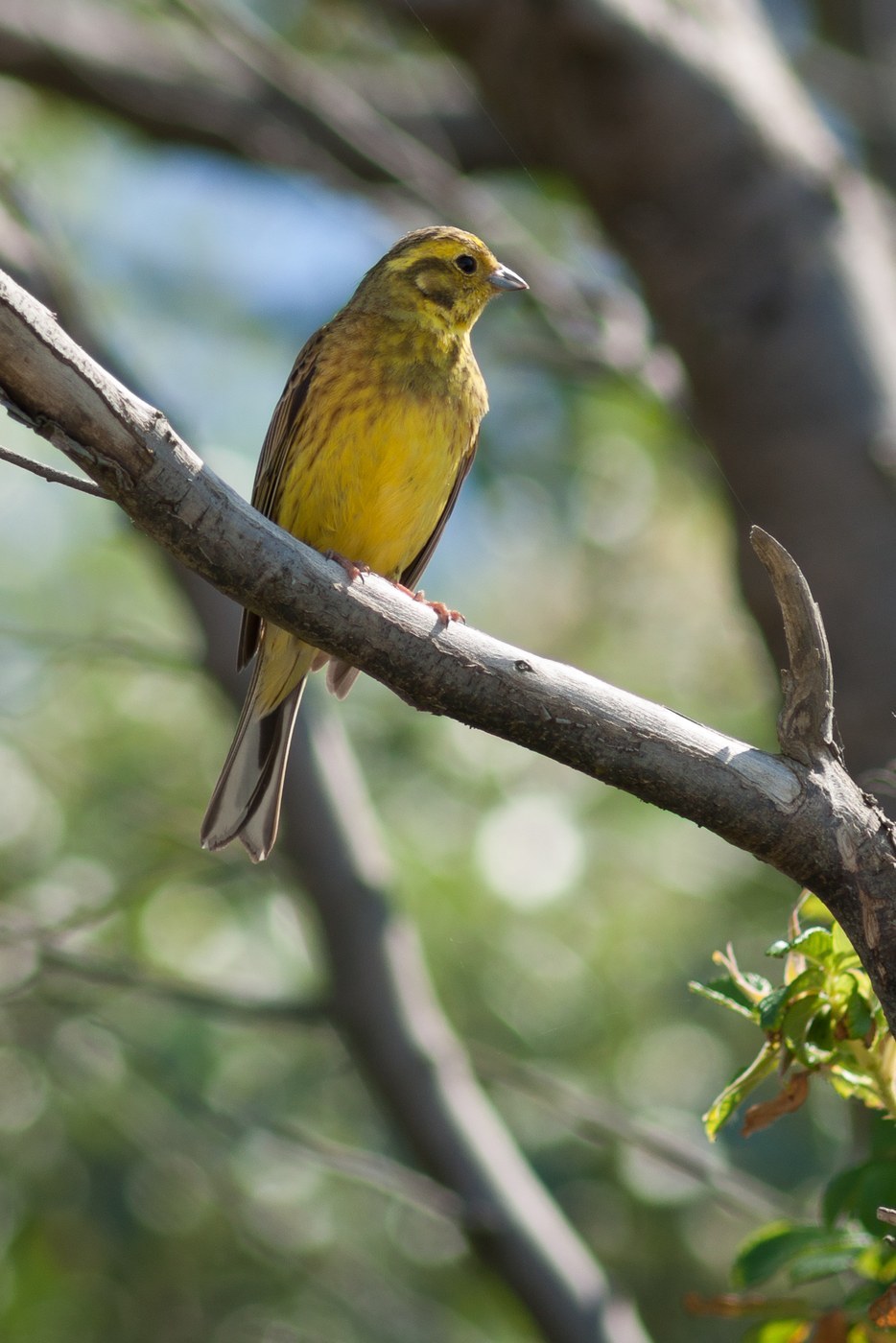
What Yellowhammer's Feathers Look Like
Yellowhammer is a bunting with a distinctive combination of bright and earthy tones. The single most useful feather is from the rump: it's a solid, unstreaked rufous-chestnut patch, quite different from the streaky brown feathers surrounding it, and this unmarked chestnut rump feather is the species' best diagnostic mark. Back and mantle feathers are brown with heavy dark streaking. Underparts contour feathers are yellow in males (bright, unmarked on the head and throat) or duller buffy-yellow with light streaking in females and immatures. Tail feathers are dark brown, but the outer pair shows a clean white wedge, visible as a flash in flight — a feature shared with several other buntings, so it's best used alongside the rump color rather than alone. Feathers are small to medium, typical bunting size, with a fairly long, notched tail.
Step-by-Step: Is This Feather From a Yellowhammer?
- Find the rump feather. A plain, unstreaked chestnut-rufous rump feather is the strongest single diagnostic sign for this species.
- Check underparts color. Bright unmarked yellow (adult male) or buffy-yellow with light streaking (female/immature) fits the pattern.
- Look at the back. Brown feathers with heavy dark streaking are typical, but not unique on their own.
- Examine the outer tail feathers. White wedges on the outer tail are supportive but need the chestnut rump to confirm species.
- Rule out an olive rump. An olive-toned rump feather instead of chestnut points to Cirl Bunting rather than Yellowhammer.
- Consider size. Reject very large, plain brown feathers with no yellow at all — those likely belong to Corn Bunting instead.
Similar Species & How to Tell Them Apart
Cirl Bunting is the closest relative and the most important species to rule out: it shows an olive-toned rump rather than chestnut, along with a more contrasted head pattern with black-and-yellow facial stripes. Any feather with a distinctly greenish-olive rump, rather than warm rufous-chestnut, points to Cirl Bunting instead of Yellowhammer. Corn Bunting is much larger and plain brown overall with streaking but no yellow feathering anywhere, making it simple to rule out once any yellow tone is present. Female and immature Yellowhammers can also be confused with female Reed Buntings, but Reed Bunting lacks the chestnut rump entirely, showing a more uniform gray-brown rump instead — again making the rump feather the deciding factor.
Where & When You'll Find Them
Yellowhammers are birds of farmland hedgerows, scrubby field margins, and open countryside across Europe and temperate Asia, and were also introduced to New Zealand, where they are now well established. Most populations are resident or short-distance migrants, moving only modestly with seasonal weather rather than undertaking long migrations. The main molt occurs after breeding, roughly July through September, when adults replace worn plumage before winter. Feathers are most often found along hedgerows, field edges, and areas of rough grassland during and after this molt period, particularly in late summer and autumn when birds gather in loose flocks to forage on stubble fields and seed heads.
Frequently asked questions
What is the single most useful feather to check?
The rump feather — a plain, unstreaked chestnut-rufous rump is the strongest diagnostic sign for Yellowhammer.
How do I tell this apart from Cirl Bunting?
Cirl Bunting has an olive-toned rump rather than chestnut, so rump color is the key difference between the two species.
Is a white outer tail feather enough to confirm the species?
No, several buntings share white outer tail feathers, so you need the chestnut rump as well to confirm Yellowhammer specifically.
Can female or immature feathers still be identified?
Yes, though their yellow is duller and buffier with light streaking, the chestnut rump feather still works as the main identifying clue.
When are feathers most commonly found?
Late summer through autumn, roughly July to September, corresponding with the post-breeding molt and flocking behavior on stubble fields.