

Budgerigar
Melopsittacus undulatus
A small, gregarious Australian parakeet whose wild-type plumage combines bright yellow-green underparts with a finely scalloped black-and-yellow pattern across the nape and wings.
- Feather type
- Small, tightly vaned body feathers with fine black scalloping; long tapered tail feathers
- Colours
- Yellow-green body with black-scalloped nape and wings, blue tail
- Bird size
- Small parrot, ~18 cm
Found a feather like this?
Identify any feather from a photo, free.
Overview
The Budgerigar is a small, highly social parakeet native to the arid and semi-arid interior of Australia, where it forms large nomadic flocks that track seeding grasses and rainfall. In its wild form it is uniformly patterned in yellow-green with fine black scalloping, quite different from the many solid colors bred in captivity. It is one of the most numerous and wide-ranging parrots on the continent.
Identifying the Feather
Wild-type body feathers are bright yellow-green on the face, throat, and underparts, while the nape, back, and wing coverts show a fine, evenly spaced black scalloped or barred pattern over a yellow background, created by dark feather edging on a paler base. The tail is long, narrow, and tapered, colored deep blue with elongated central feathers extending well beyond the rest. Flight feathers are blue-black and relatively short given the bird's small size, suited to fast, agile flock flight. The combination of yellow-green underparts, black-scalloped upperparts, and a long blue tail is distinctive among small Australian parakeets.
Plumage & Molt
Sexes are similar in wild-type plumage, though the cere above the bill is blue in males and brown to tan in females, a soft-part difference rather than a feather one. Juveniles show duller scalloping that extends further onto the forehead, which becomes clean yellow-green in adults after the first molt. Wild Budgerigars undergo regular molts throughout the year in response to breeding conditions rather than a single fixed annual molt, reflecting their opportunistic breeding strategy tied to rainfall.
Habitat & Range
Budgerigars range across the arid and semi-arid interior of Australia, inhabiting grassland, scrubland, and open woodland near seasonal water sources. The species is highly nomadic, moving in large flocks in response to rainfall and seed availability rather than following a fixed migratory route, and can rapidly colonize areas after good rains.
Behavior & Field Notes
Budgerigars feed mainly on grass and other seeds, foraging in large, tightly coordinated flocks on the ground and in low vegetation. They breed opportunistically following rain, nesting in tree hollows, and can produce multiple broods when conditions are favorable. Their calls include soft chattering and warbling notes used constantly within flocks to maintain contact, along with louder alarm calls when predators are spotted.
Frequently asked questions
What does wild Budgerigar plumage look like?
Yellow-green underparts with a fine black scalloped pattern across the nape and wings, and a long blue tail.
Are captive Budgerigar colors the same as wild ones?
No, the wild type is yellow-green and black-scalloped; captive breeding has produced many solid colors not seen in nature.
Where do Budgerigars live in the wild?
Across arid and semi-arid inland Australia, in grassland, scrub, and open woodland.
Do Budgerigars migrate?
They don't follow a fixed migration but move nomadically in large flocks following rainfall and seed availability.
Budgerigar guides
In-depth guides for identifying and understanding Budgerigar.

Budgerigar identified by the community
Real feathers identified with Feather Identifier.


Other feathers you may enjoy
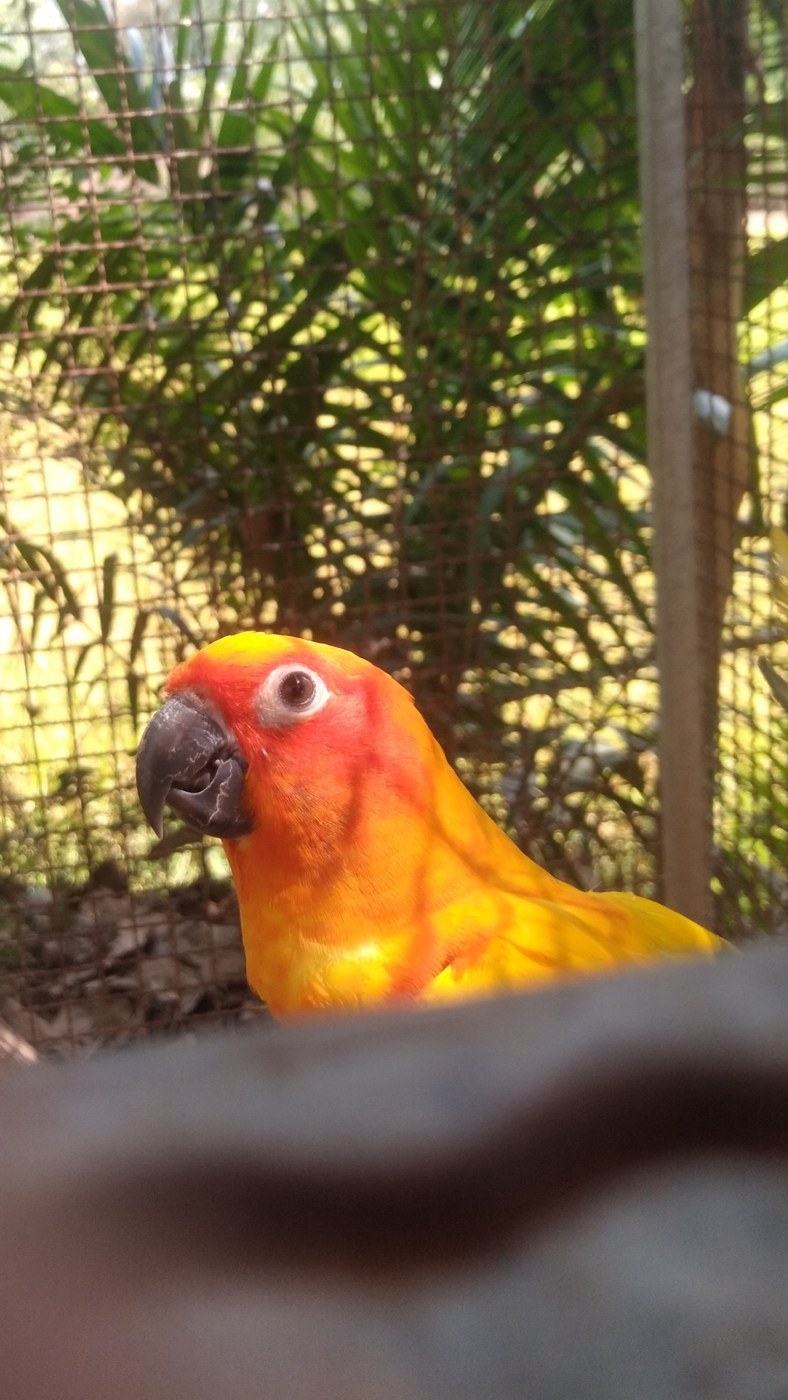
Sun Parakeet
Bright, dense body contour feathers; medium pointed tail feathers

Yellow-naped Amazon
Broad rounded contour feathers with sturdy flight feathers
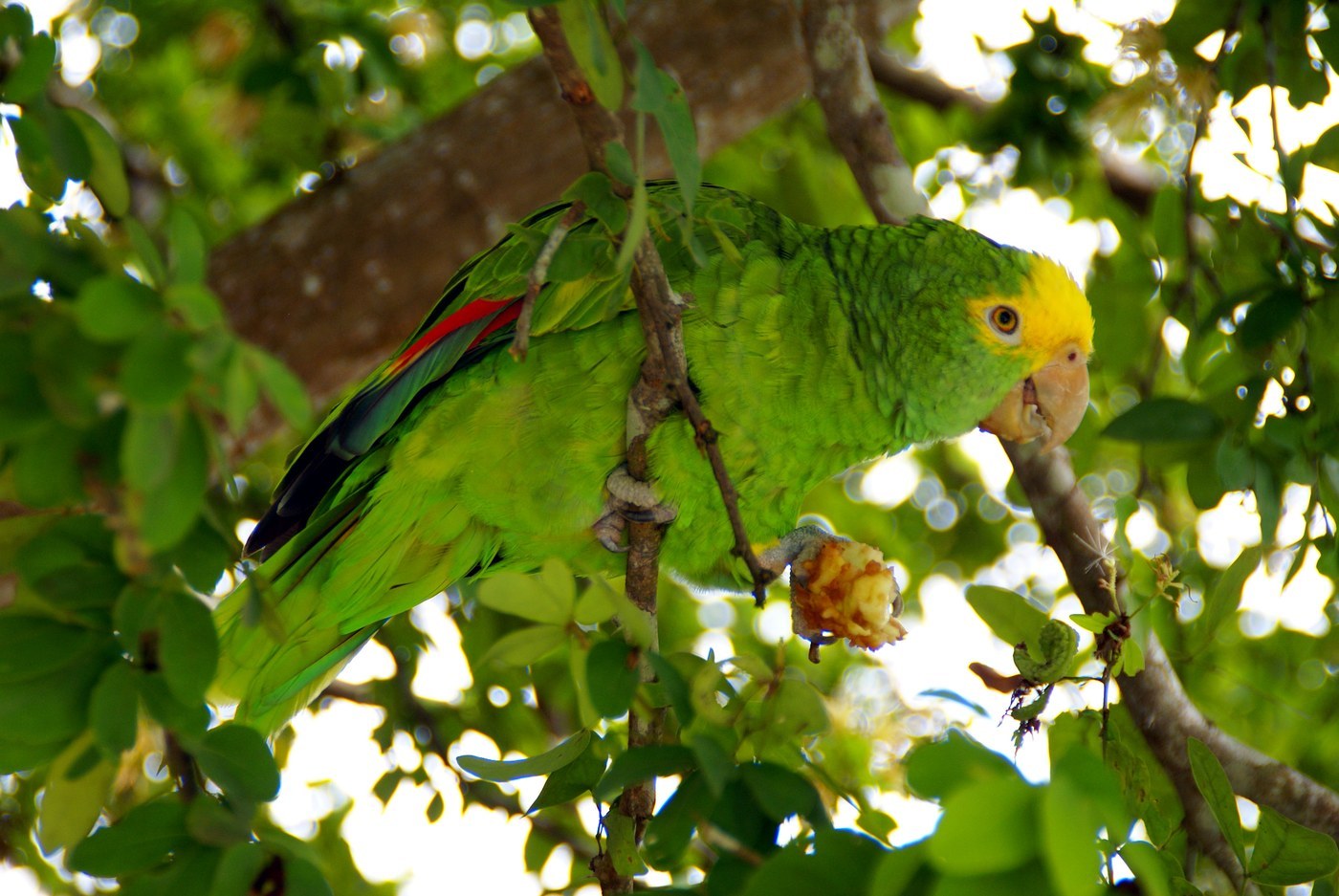
Yellow-headed Amazon
Dense, rounded body contour feathers; broad flight feathers
Yellow-collared Lovebird
Small compact flight feathers, short rounded tail

White-eyed Conure
Medium contour and long, graduated tail feathers

Yellow-tailed Black Cockatoo
Large, sturdy contour and flight feathers; short crest

Scarlet-chested Parrot
Small contour and flight feathers

Timneh Parrot
Broad flight feathers, scalloped body feathers with pale edges
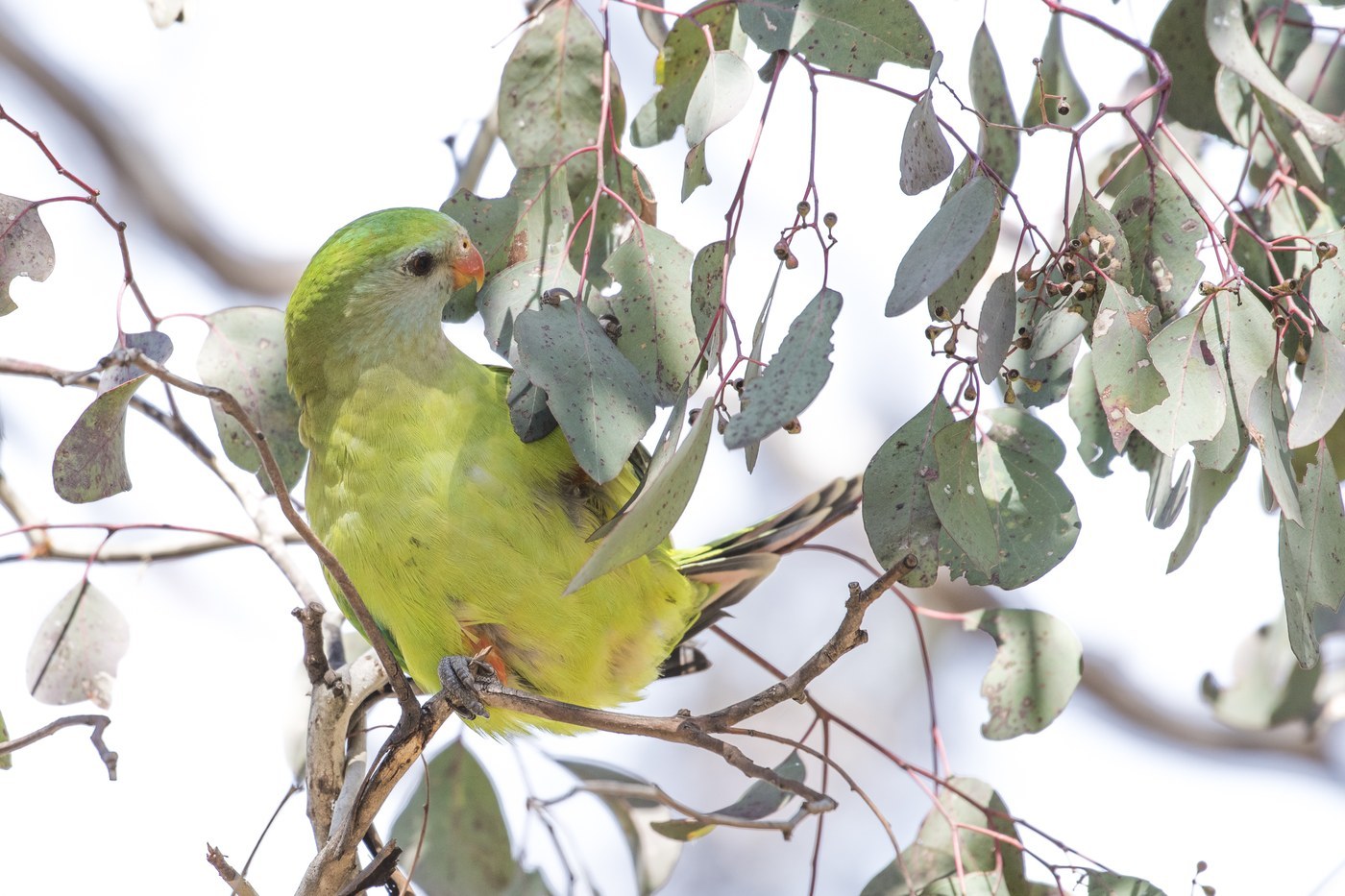
Superb Parrot
Sleek contour feathers with a long tapering tail

Red-shouldered Macaw
Compact body contour feathers; medium flight and tail feathers
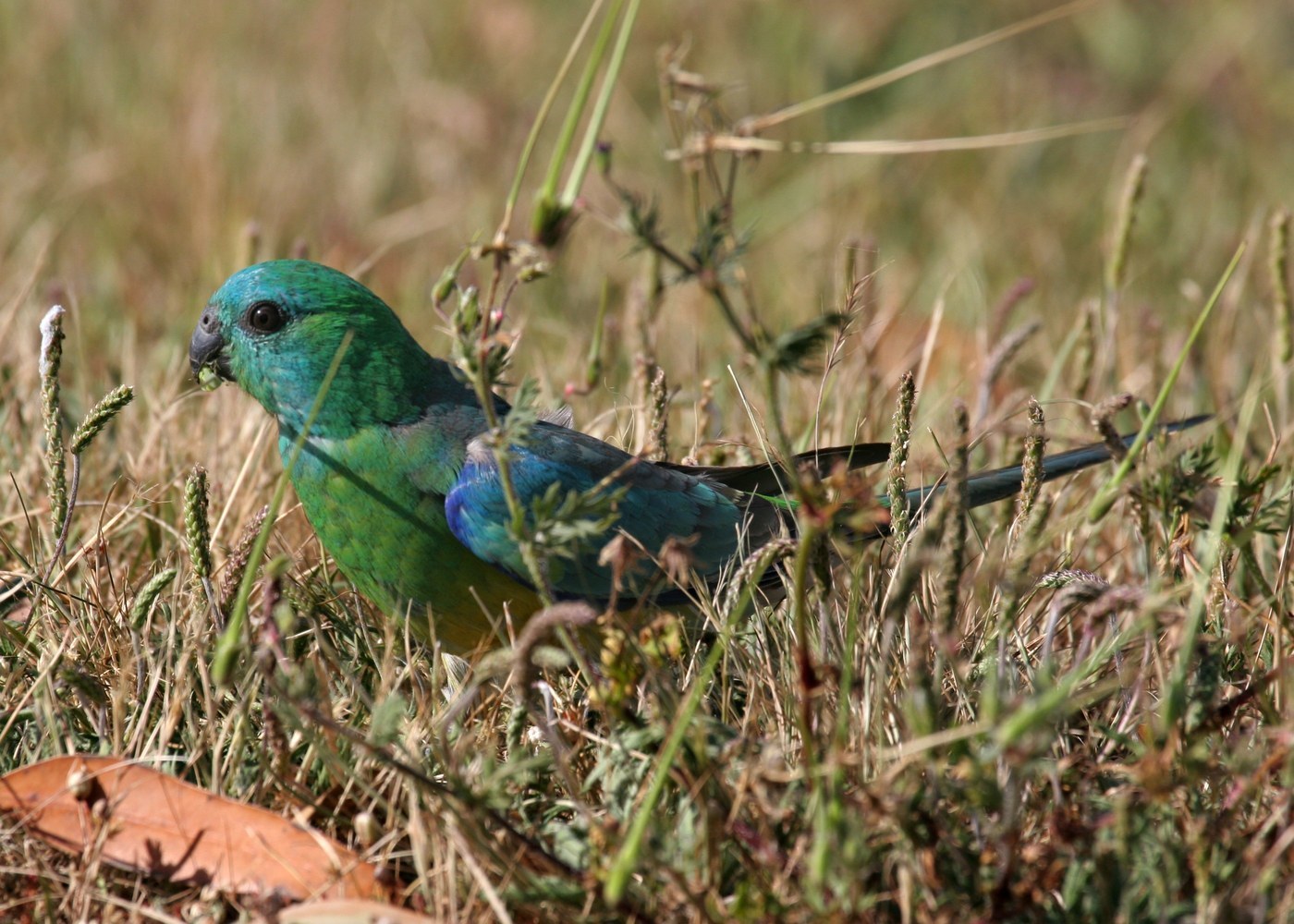
Red-rumped Parrot
Sleek contour feathers with a bright rump patch in males

White-capped Pionus
Compact contour feathers and short, squared tail feathers