

Eclectus Parrot
Eclectus roratus
A parrot with extreme visual differences between the sexes: males are bright emerald green, while females are bright red with a blue-purple breast and belly.
- Feather type
- Broad flight feathers, dense glossy body plumage
- Colours
- Males emerald green with red underwing; females bright red with blue-purple breast and belly
- Bird size
- Large, ~35-42 cm
Found a feather like this?
Identify any feather from a photo, free.
Overview
Overview
The Eclectus Parrot is native to New Guinea, nearby islands, and parts of northeastern Australia, and is notable for one of the most extreme examples of sexual dimorphism among parrots. For many years, the strikingly different-looking males and females were thought to be entirely separate species before their true relationship was understood.
Males display vivid emerald-green plumage, while females show a bold combination of red and blue-purple, making this one of the more dramatic examples of plumage divergence between sexes in the parrot family.
Identifying the Feather
Feather Identification
- Male body feathers: Bright emerald green over most of the body, with red feathers along the flanks and underwing coverts, and blue tones on the flight feathers.
- Female body feathers: Bright red covers the head, neck, and back, while the breast and belly show a deep blue to purple coloring, a pattern entirely different from the male.
- Bill: Males have a bright orange-yellow upper mandible with a blackish lower mandible, while females have an entirely black bill, a useful non-feather marker for confirming sex.
- Shaft and texture: Feathers are dense and glossy in both sexes, with a smooth, almost lacquered appearance especially on the female's red plumage.
- Compared to similar species: No other parrot shows this extreme two-color sexual dimorphism; males and females were historically mistaken for different species due to their completely different plumage patterns.
Plumage & Molt
Plumage Notes
This species shows one of the most pronounced examples of sexual dimorphism among parrots, with males emerald green and red, and females red and blue-purple. Juvenile males resemble adult males with somewhat duller coloring, while juvenile females resemble adult females, with full adult plumage developing over the first couple of years.
Molt occurs gradually through the year, and the glossy texture of the feathers remains a consistent feature across molts.
Habitat & Range
Habitat & Range
Eclectus Parrots are found in New Guinea and nearby islands, the Maluku Islands, the Solomon Islands, and a small area of northeastern Australia's Cape York Peninsula. They inhabit lowland and hill tropical rainforest, favoring tall forest with large trees for nesting.
The species is generally resident, with local movement tied to the fruiting cycles of forest trees.
Behavior & Field Notes
Behavior & Field Notes
Eclectus Parrots are often seen singly, in pairs, or in small flocks, flying above the forest canopy with a distinctive slow, deep wingbeat. They feed on fruit, seeds, nuts, and blossoms, foraging mainly in the upper canopy.
They nest in large tree hollows, with females spending unusually long periods inside the nest cavity compared to many other parrots, a behavior linked to their breeding system. Their calls include loud, harsh screeches as well as softer contact notes exchanged between pairs.
Frequently asked questions
Why do male and female Eclectus Parrots look so different?
The species shows one of the most extreme examples of sexual dimorphism among parrots, with males bright emerald green and females bright red with a blue-purple breast and belly.
How can you tell an Eclectus Parrot's sex from its bill color?
Males have a bright orange-yellow upper mandible with a blackish lower mandible, while females have an entirely black bill.
Where does the Eclectus Parrot live?
It is found in New Guinea and nearby islands, the Maluku Islands, the Solomon Islands, and a small area of northeastern Australia.
Were male and female Eclectus Parrots once thought to be different species?
Yes, their dramatically different plumage led early observers to classify them as separate species before their true relationship was recognized.
Eclectus Parrot guides
In-depth guides for identifying and understanding Eclectus Parrot.

Other feathers you may enjoy
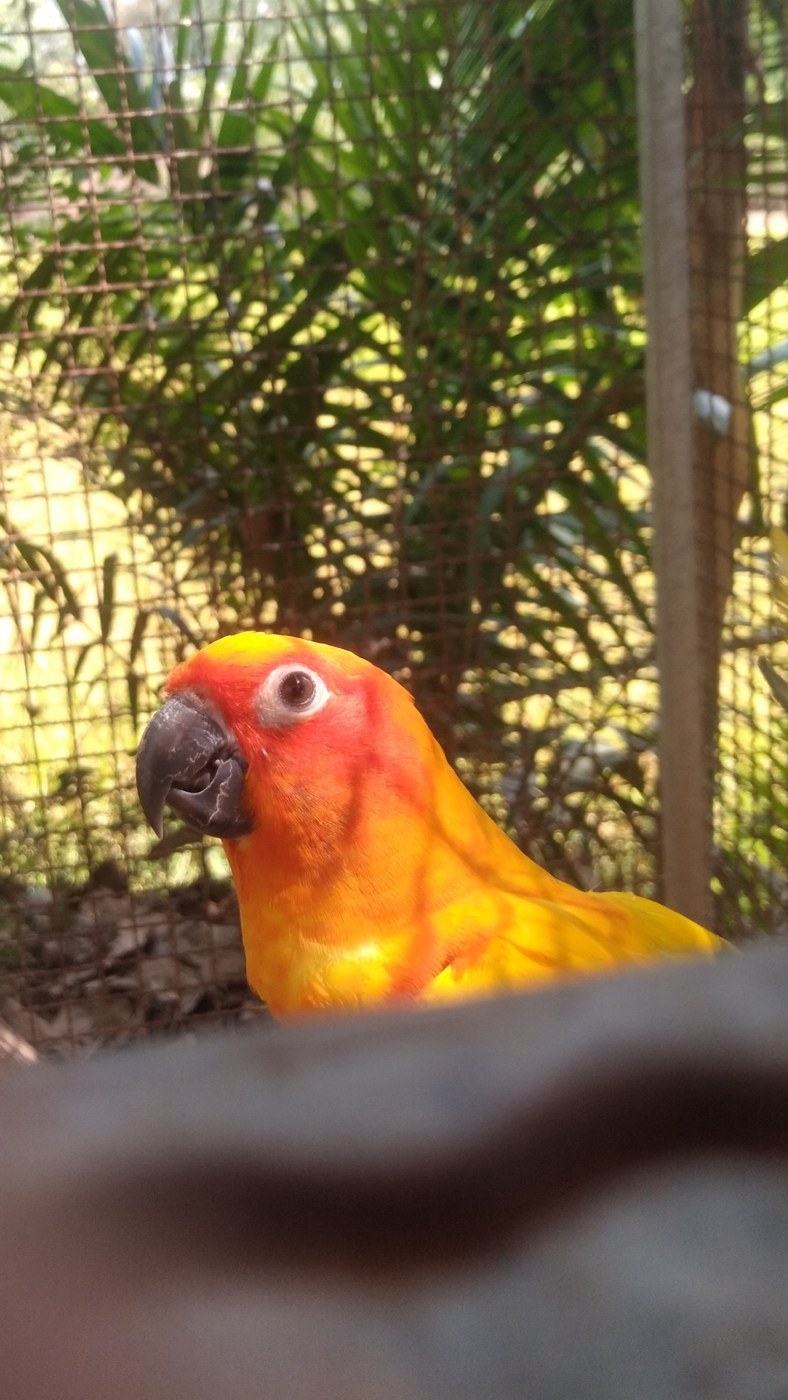
Sun Parakeet
Bright, dense body contour feathers; medium pointed tail feathers

Yellow-naped Amazon
Broad rounded contour feathers with sturdy flight feathers
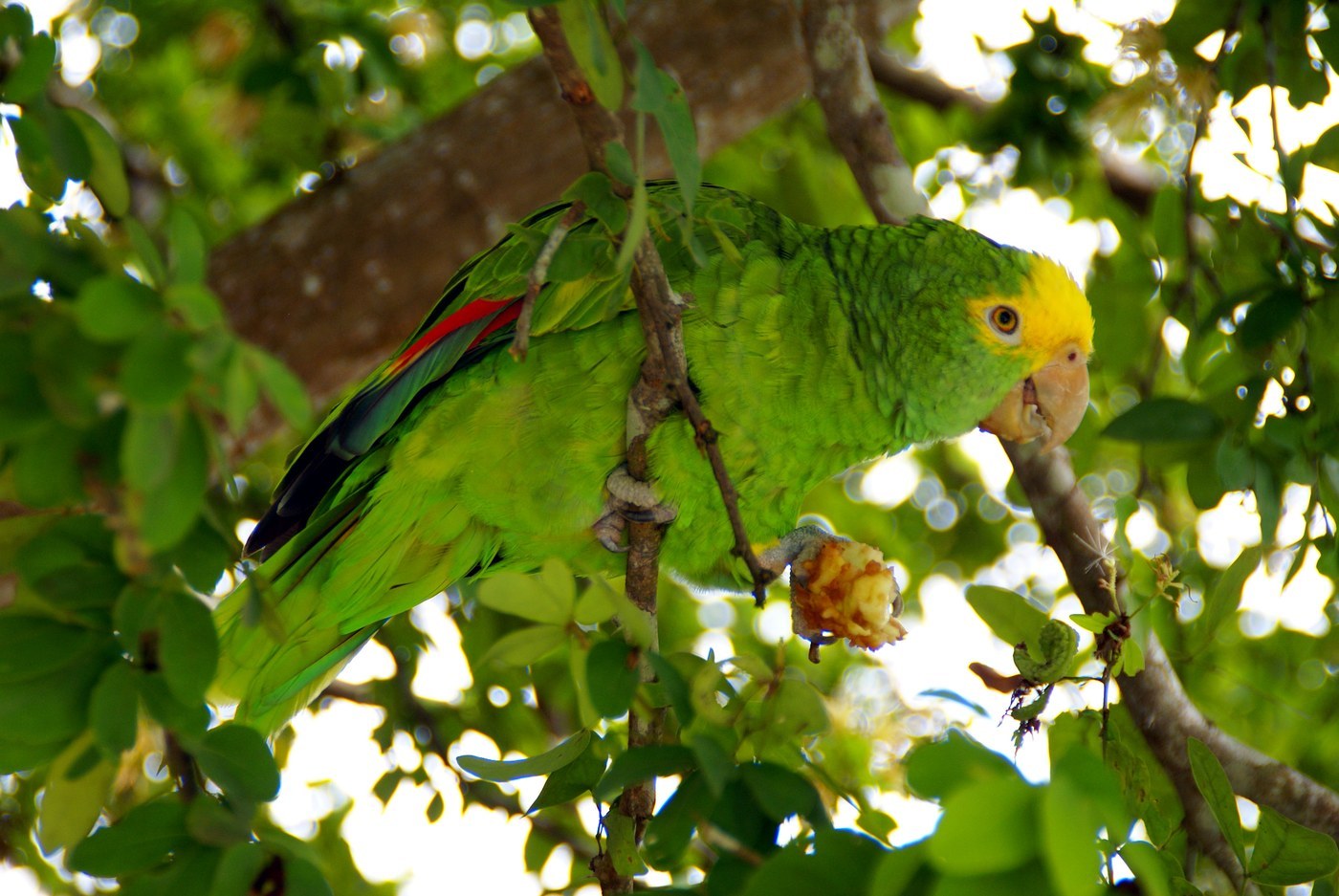
Yellow-headed Amazon
Dense, rounded body contour feathers; broad flight feathers
Yellow-collared Lovebird
Small compact flight feathers, short rounded tail

White-eyed Conure
Medium contour and long, graduated tail feathers

Yellow-tailed Black Cockatoo
Large, sturdy contour and flight feathers; short crest

Scarlet-chested Parrot
Small contour and flight feathers

Timneh Parrot
Broad flight feathers, scalloped body feathers with pale edges
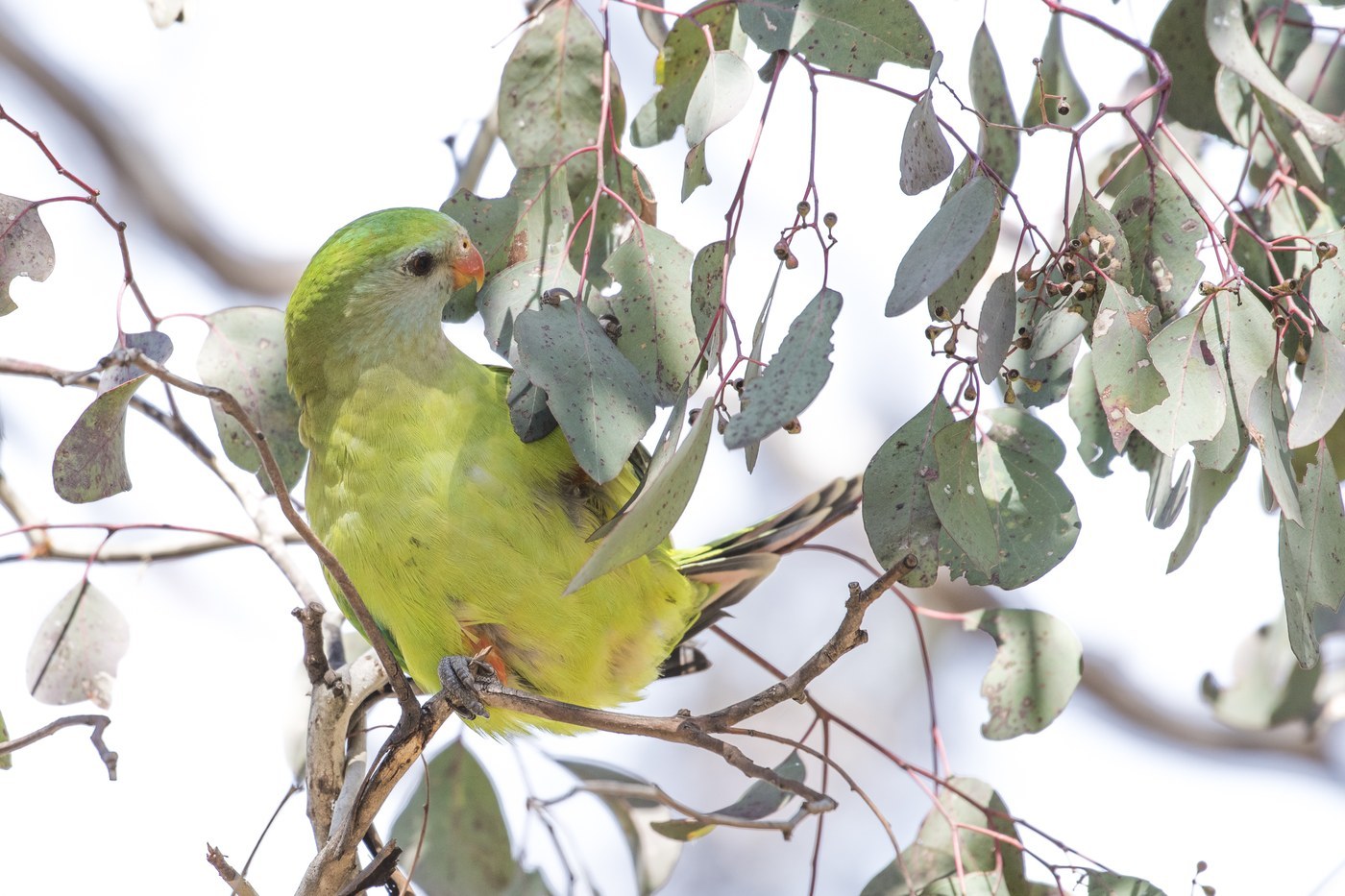
Superb Parrot
Sleek contour feathers with a long tapering tail

Red-shouldered Macaw
Compact body contour feathers; medium flight and tail feathers
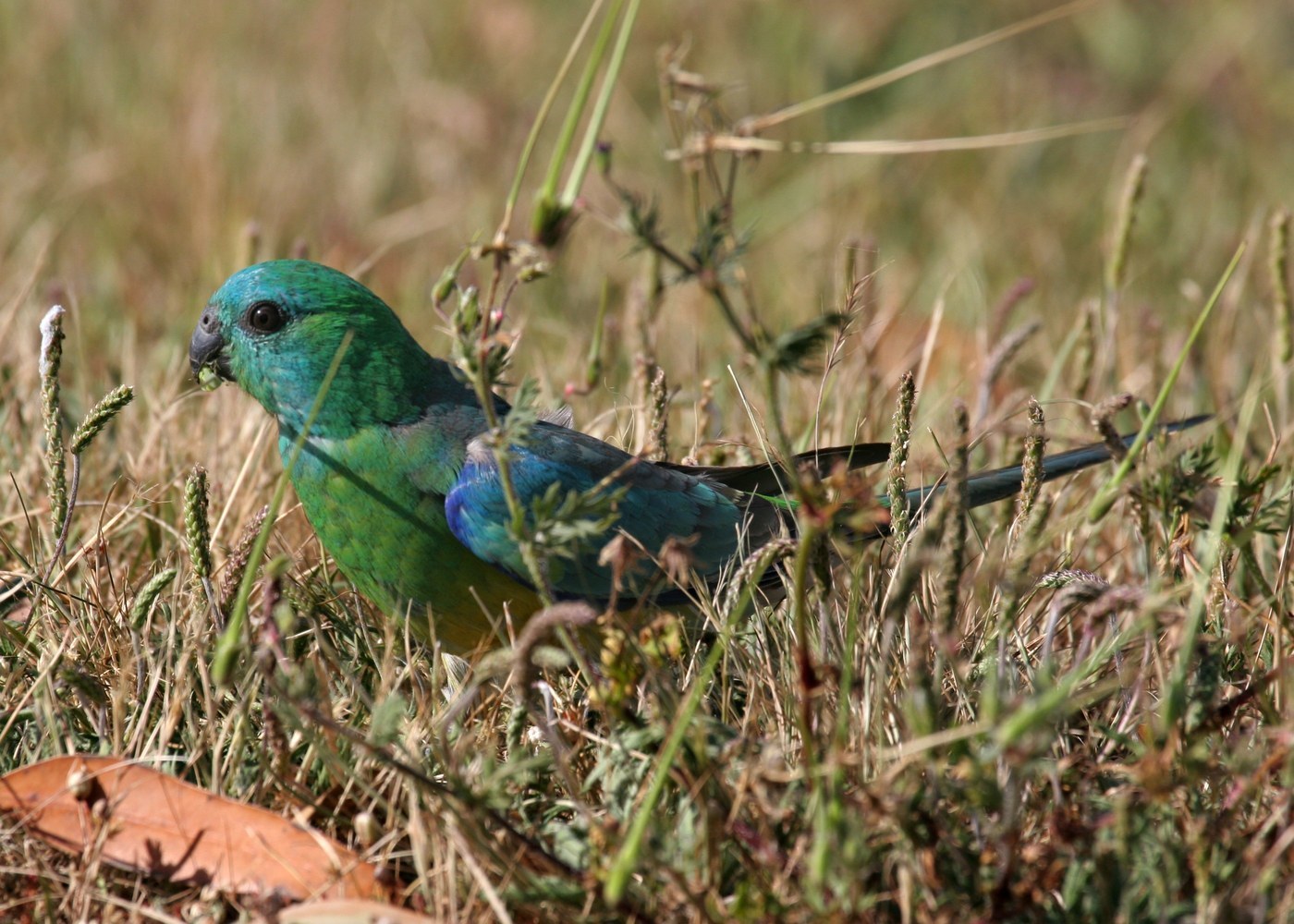
Red-rumped Parrot
Sleek contour feathers with a bright rump patch in males

White-capped Pionus
Compact contour feathers and short, squared tail feathers