
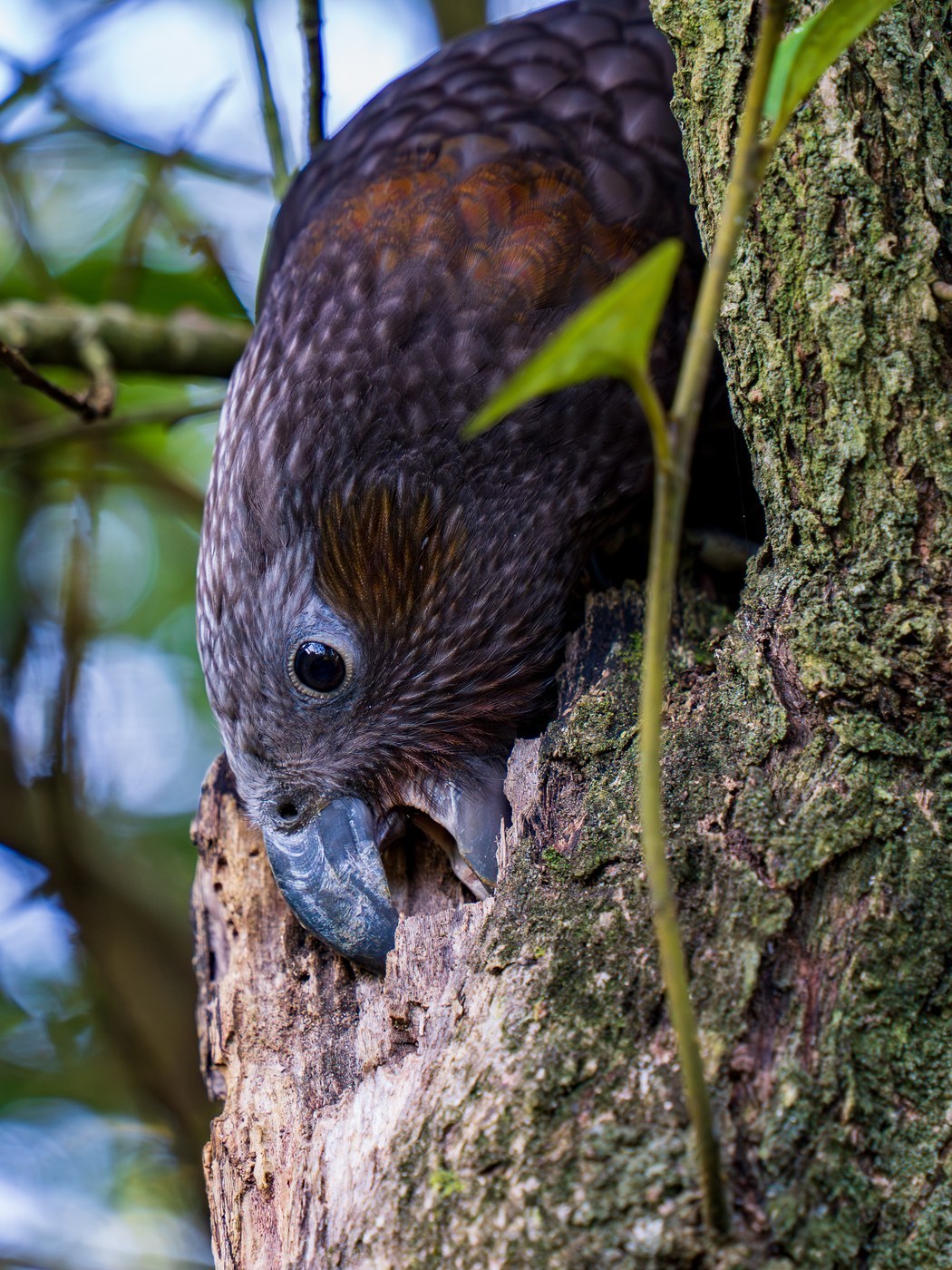
Kaka
Nestor meridionalis
A large forest parrot of New Zealand, the Kaka has olive-brown plumage that conceals a flash of bright crimson under the wings and across the rump, revealed in flight.
- Feather type
- Dense, coarse-textured contour feathers; broad rounded flight feathers
- Colours
- Olive-brown body, crimson underwing and rump, grayish crown
- Bird size
- Crow-sized, ~45 cm
Found a feather like this?
Identify any feather from a photo, free.
Overview
The Kaka is a large, forest-dwelling parrot native to New Zealand, closely related to the alpine Kea. Its plumage is subdued at rest but reveals bright crimson patches in flight, and it is known for strong, curved bill adaptations used to strip bark in search of food.
Identifying the Feather
Body feathers are olive-brown with darker scalloped edging across the back and wings, giving a scaly appearance at close range. A grayish-white crown and nape contrast with a darker cheek patch. The underwing coverts and rump are bright crimson-red, normally hidden when the bird is perched but conspicuous in flight, a key distinguishing feature from the more uniformly gray-green Kea. Flight feathers are broad, strong, and grayish-brown, built for powerful, direct flight. Isolated crimson underwing feathers strongly indicate this species or its close relative, the Kea, distinguished from the Kea by the Kaka's warmer overall brown tone versus the Kea's cooler olive-green.
Plumage & Molt
Sexes are broadly similar in plumage, though males average slightly larger with a longer, more strongly curved bill. Juveniles show duller coloration with less contrast in the crown and cheek patch. Molt is gradual, and the bright crimson underwing and rump feathers are maintained year-round rather than being seasonal.
Habitat & Range
Kaka inhabit native forest across New Zealand, historically widespread but now more restricted to areas with intact old-growth forest and predator control. The species is non-migratory, remaining resident within forest home ranges, though it may make local movements linked to seasonal food sources such as flowering or fruiting trees.
Behavior & Field Notes
Kaka feed on a broad diet of fruit, nectar, sap, and invertebrates, often using their strong bills to strip bark or excavate wood in search of grubs. They nest in tree cavities, typically in large old trees. Their calls include loud, harsh screeches and softer, more musical notes given in social interactions. They are often social outside the breeding season, gathering at abundant food sources.
Frequently asked questions
How can you tell a Kaka feather from a Kea feather?
The Kaka has a warmer olive-brown body tone with crimson underwing and rump patches, while the Kea is more uniformly olive-green with less contrasting underwing color.
Why don't you see the crimson color when a Kaka is perched?
The bright crimson feathers are on the underwing and rump, areas concealed when the wings are folded, and only visible in flight.
What does a Kaka use its bill for?
Its strong, curved bill is used to strip bark and excavate wood in search of invertebrates, as well as to access nectar and sap.
Is the Kaka a migratory species?
No, it is a non-migratory resident of New Zealand forest, though it may move locally to follow seasonal food.
Kaka guides
In-depth guides for identifying and understanding Kaka.
Other feathers you may enjoy
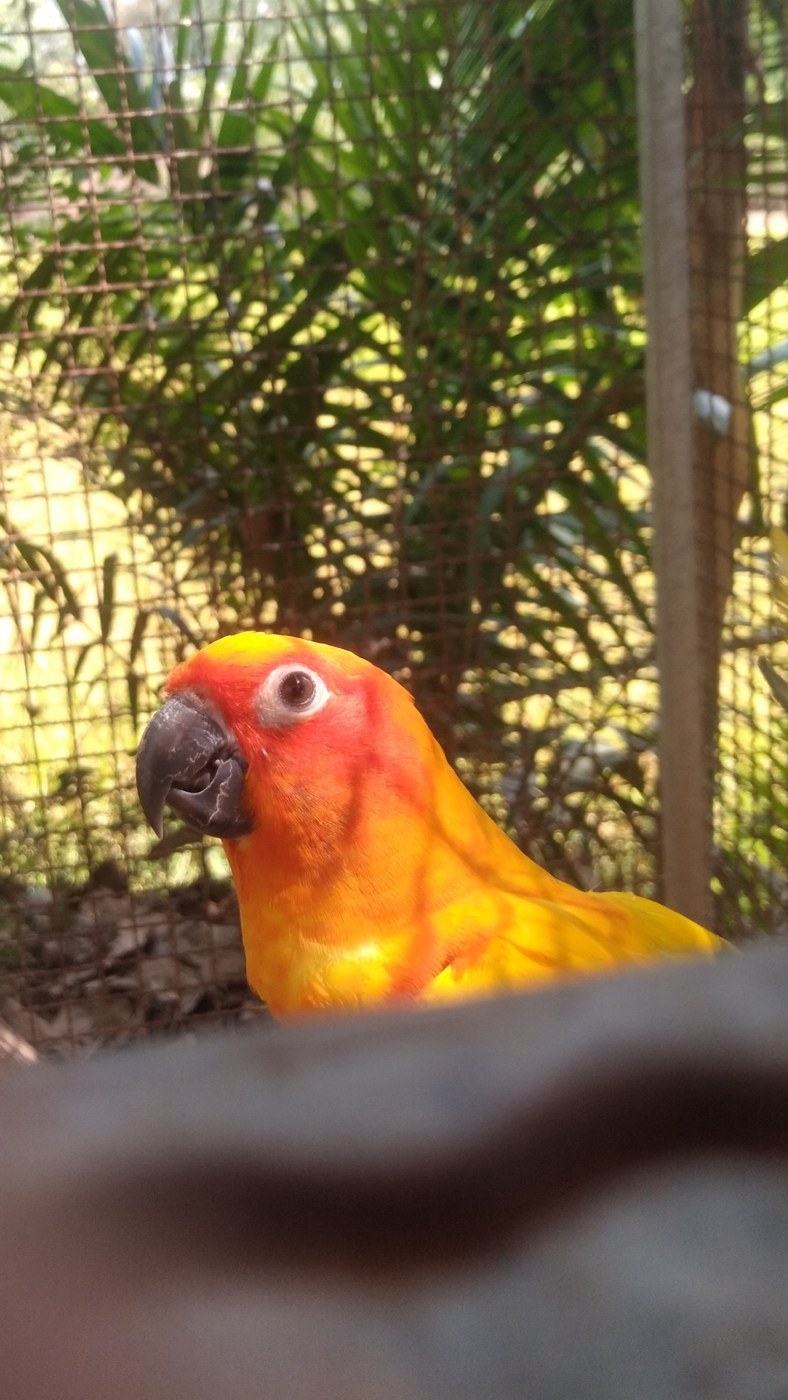
Sun Parakeet
Bright, dense body contour feathers; medium pointed tail feathers

Yellow-naped Amazon
Broad rounded contour feathers with sturdy flight feathers
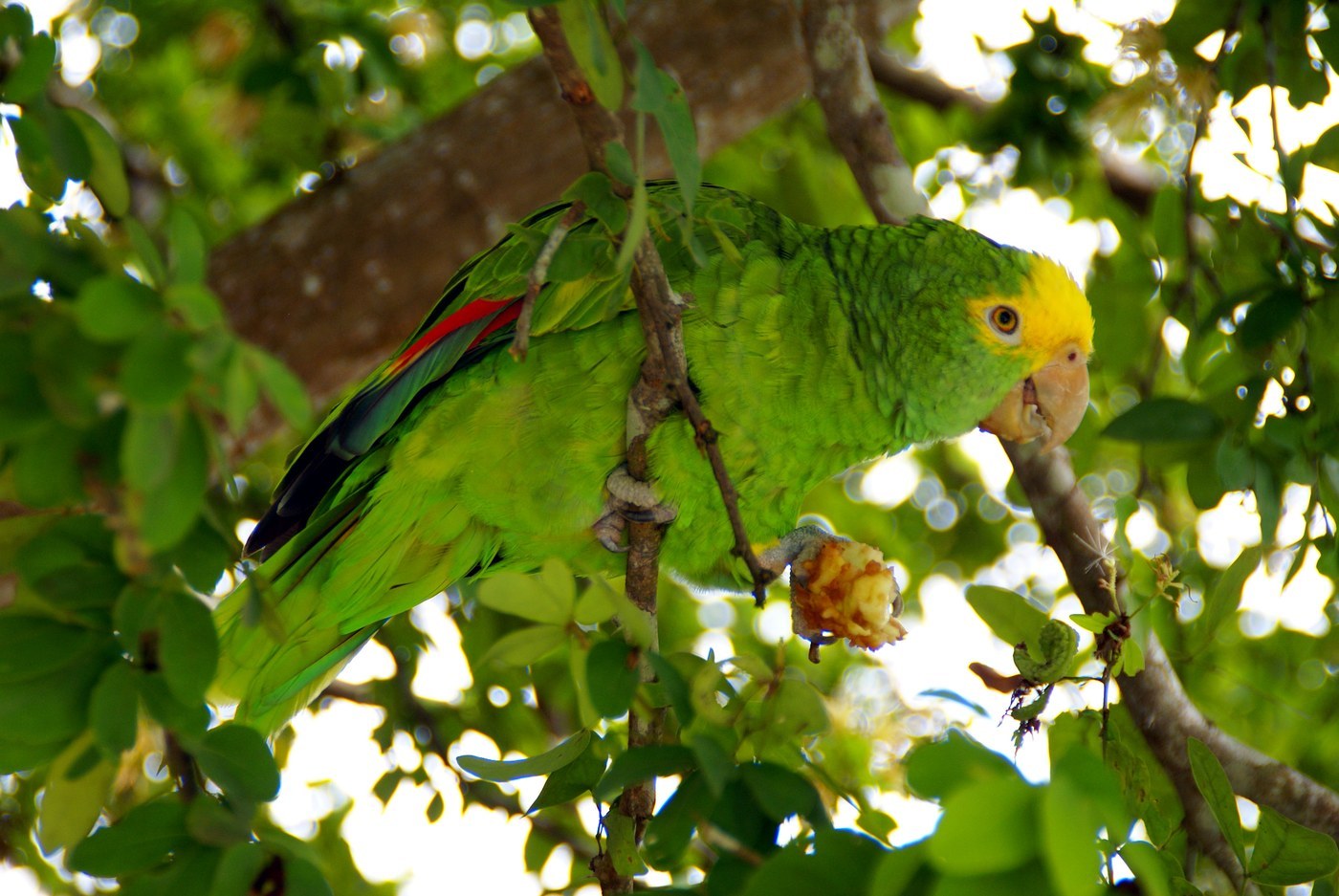
Yellow-headed Amazon
Dense, rounded body contour feathers; broad flight feathers
Yellow-collared Lovebird
Small compact flight feathers, short rounded tail

White-eyed Conure
Medium contour and long, graduated tail feathers

Yellow-tailed Black Cockatoo
Large, sturdy contour and flight feathers; short crest

Scarlet-chested Parrot
Small contour and flight feathers

Timneh Parrot
Broad flight feathers, scalloped body feathers with pale edges
Superb Parrot
Sleek contour feathers with a long tapering tail

Red-shouldered Macaw
Compact body contour feathers; medium flight and tail feathers
Red-rumped Parrot
Sleek contour feathers with a bright rump patch in males

White-capped Pionus
Compact contour feathers and short, squared tail feathers