
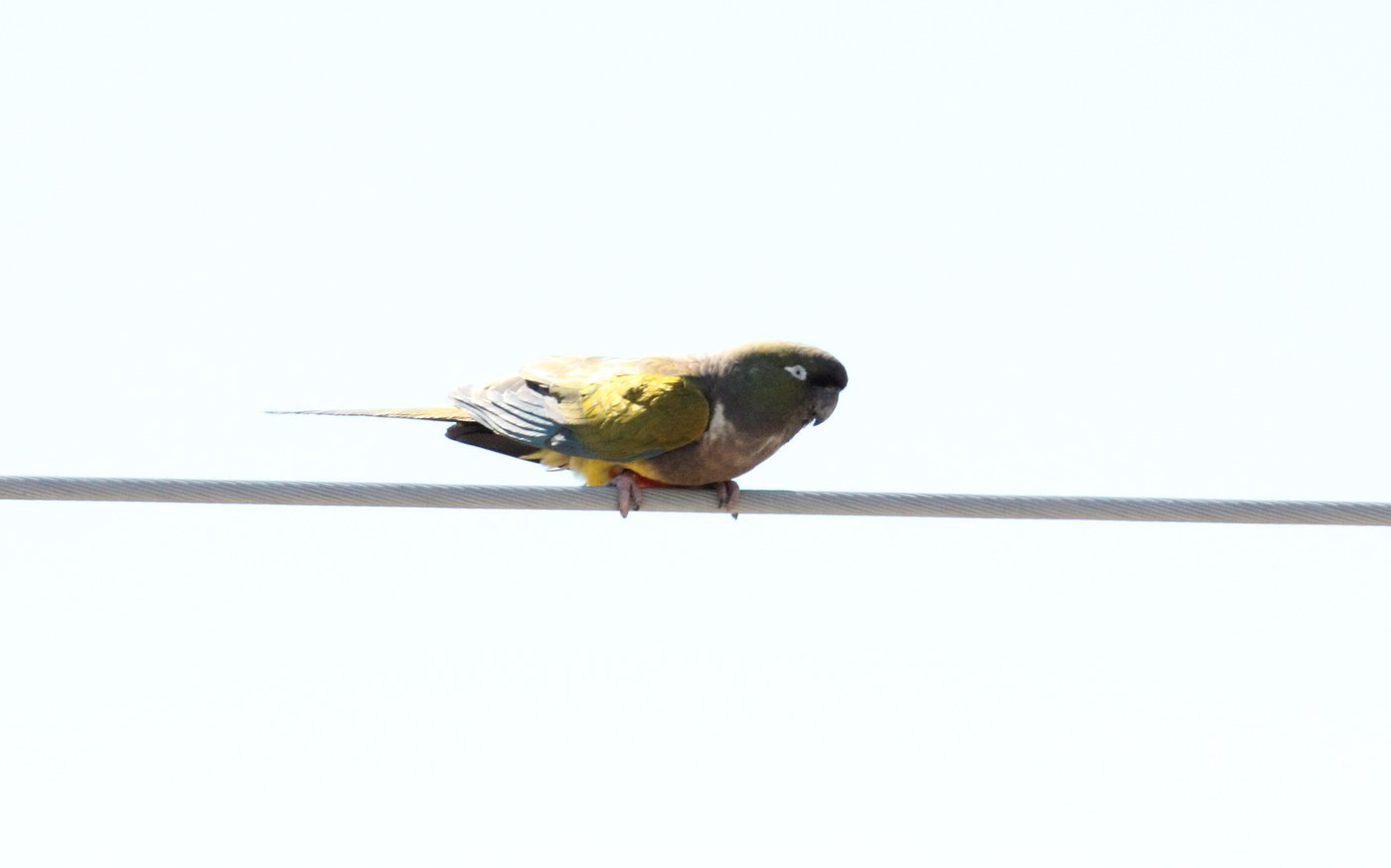
Patagonian Conure
Cyanoliseus patagonus
A large, earth-toned South American parrot notable for nesting in burrows dug into cliff faces, identified by its olive-brown upperparts and a bright yellow-and-red patch across the lower belly.
- Feather type
- Sturdy olive-brown body feathers with a yellow-and-red belly patch
- Colours
- Olive-brown upperparts, yellow-green underparts, and a red-and-yellow belly patch
- Bird size
- Large conure, ~45 cm including tail
Found a feather like this?
Identify any feather from a photo, free.
Overview
The Patagonian Conure, or Burrowing Parrot, is native to arid steppe and river valley habitats of Argentina and Chile. Unusually among parrots, it nests colonially in burrows excavated into sandstone or earthen cliffs, sometimes forming colonies with hundreds of nesting pairs. Its subdued, earth-toned plumage contrasts with the brighter colors of many South American parrots and helps it blend into its open, arid habitat.
Identifying the Feather
Upperparts are olive-brown overall, providing camouflage against the dry, earth-toned cliffs and steppe it inhabits. The underparts are yellow-green, brightening toward the belly, where a patch of red and yellow feathering creates a bold contrast against the otherwise muted plumage. A pale, whitish area often appears on the upper breast. The tail is long and dark, tipped with an olive-brown wash. Compared with other large South American parrots, this species is notably less vivid overall, aside from the belly patch, reflecting its open, arid habitat rather than forest cover.
Plumage & Molt
Sexes are alike in plumage, with no reliable visual distinction between males and females. Juveniles show a duller version of the adult pattern, with a less developed red-and-yellow belly patch that becomes more defined with maturity after the first molt.
Habitat & Range
This species occupies arid steppe, scrubland, and river valleys with adjacent cliffs suitable for burrow-nesting, across Argentina and into parts of Chile. Some populations are migratory, moving between breeding cliff colonies and non-breeding foraging areas, while others remain resident depending on region and food availability.
Behavior & Field Notes
Patagonian Conures feed on seeds, fruit, and grain, foraging in flocks across open steppe and agricultural land. Their most distinctive behavior is nesting in burrows excavated into cliff faces, often in large colonies with numerous nest entrances close together. Calls include loud, harsh, far-carrying screeching notes typical of large conures, given frequently around nesting cliffs and while foraging in flocks.
Frequently asked questions
Why is the Patagonian Conure also called the Burrowing Parrot?
Because it nests in burrows dug into sandstone or earthen cliffs, often in large colonies, rather than in tree cavities.
What color are Patagonian Conure feathers?
Olive-brown on the upperparts, yellow-green underparts, with a red-and-yellow patch on the belly.
Where does the Patagonian Conure live?
In arid steppe, cliffs, and river valleys across Argentina and parts of Chile.
Is the Patagonian Conure migratory?
Some populations migrate between breeding cliff colonies and non-breeding areas, while others remain resident.
Patagonian Conure guides
In-depth guides for identifying and understanding Patagonian Conure.
Other feathers you may enjoy
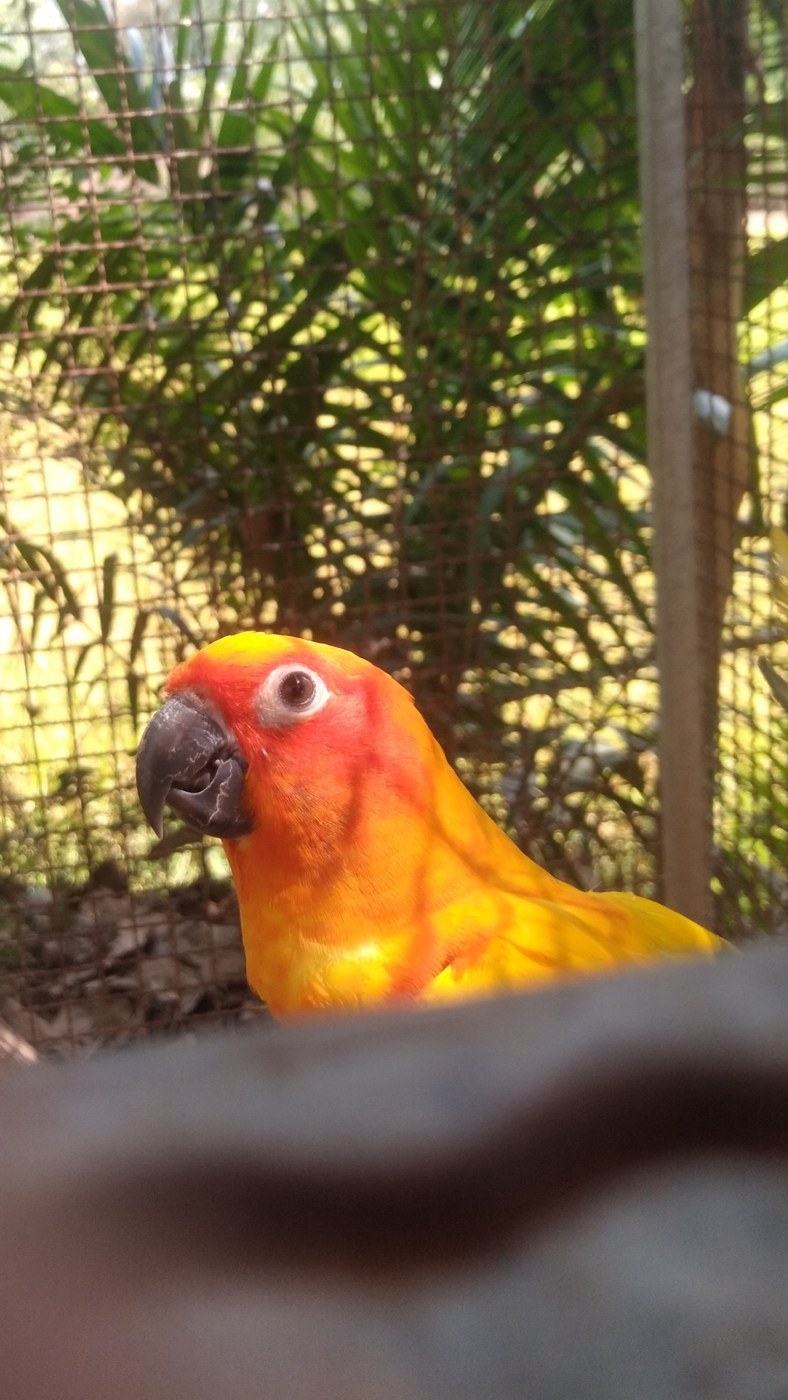
Sun Parakeet
Bright, dense body contour feathers; medium pointed tail feathers

Yellow-naped Amazon
Broad rounded contour feathers with sturdy flight feathers
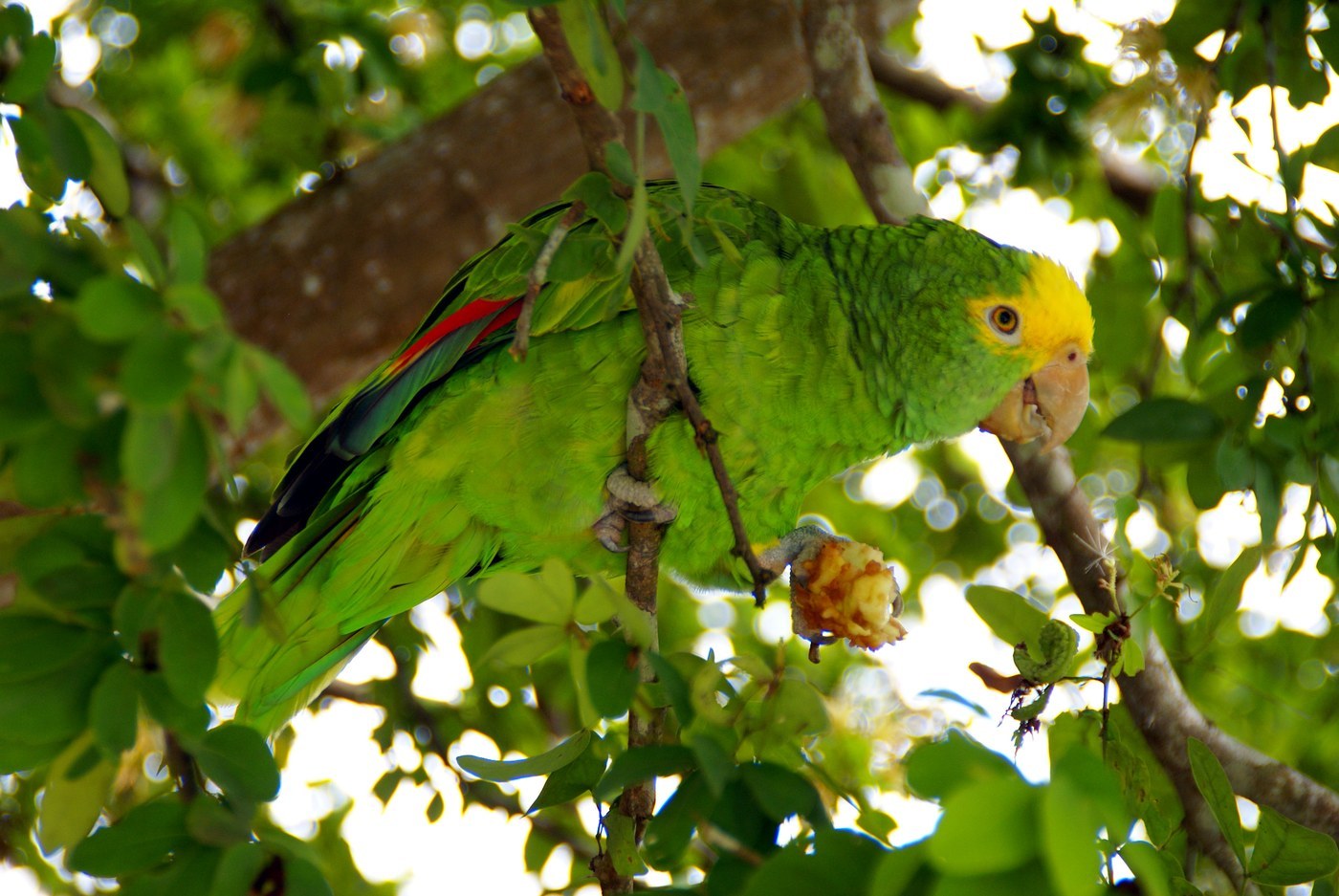
Yellow-headed Amazon
Dense, rounded body contour feathers; broad flight feathers
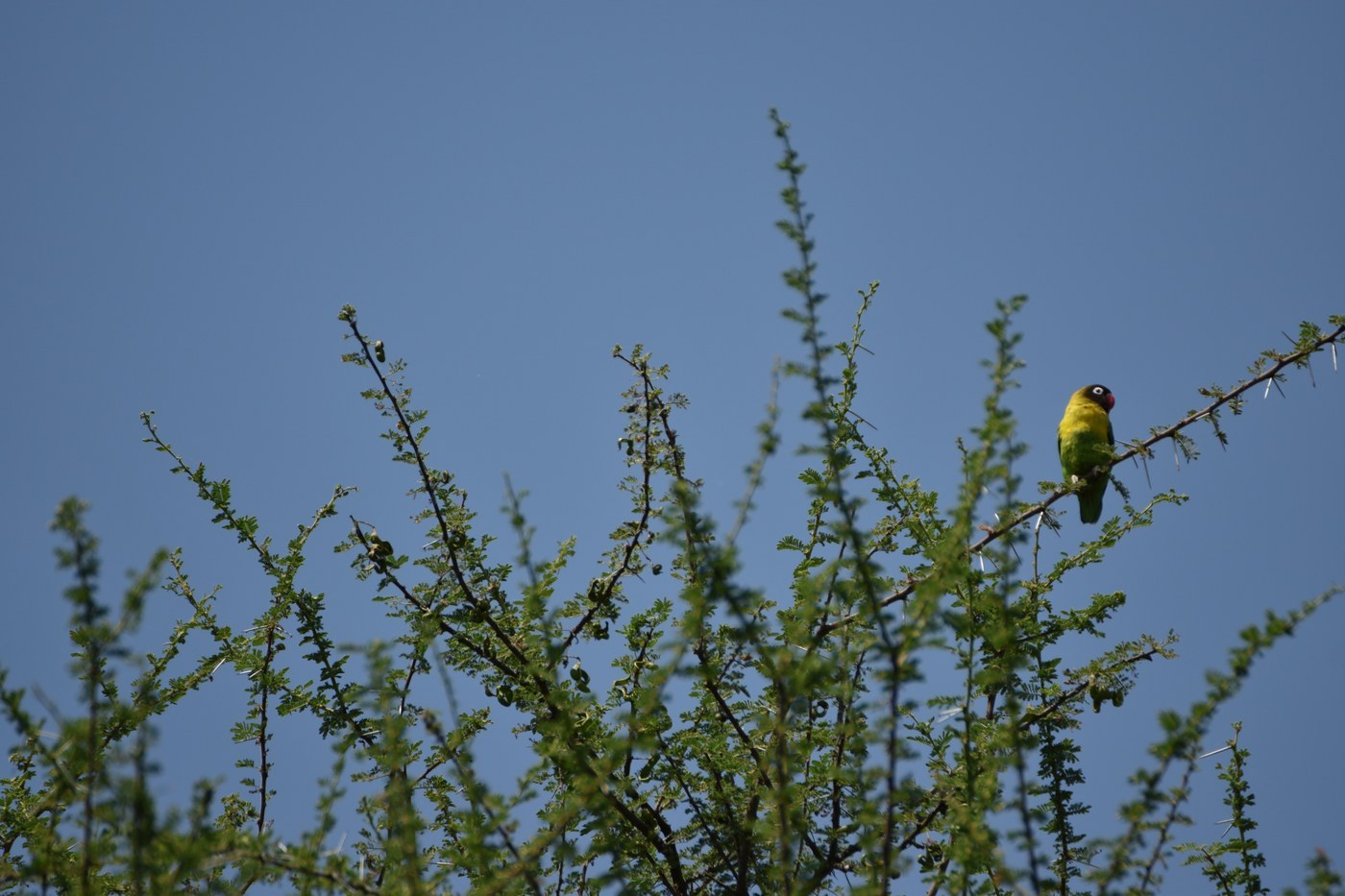
Yellow-collared Lovebird
Small compact flight feathers, short rounded tail

White-eyed Conure
Medium contour and long, graduated tail feathers

Yellow-tailed Black Cockatoo
Large, sturdy contour and flight feathers; short crest

Scarlet-chested Parrot
Small contour and flight feathers

Timneh Parrot
Broad flight feathers, scalloped body feathers with pale edges
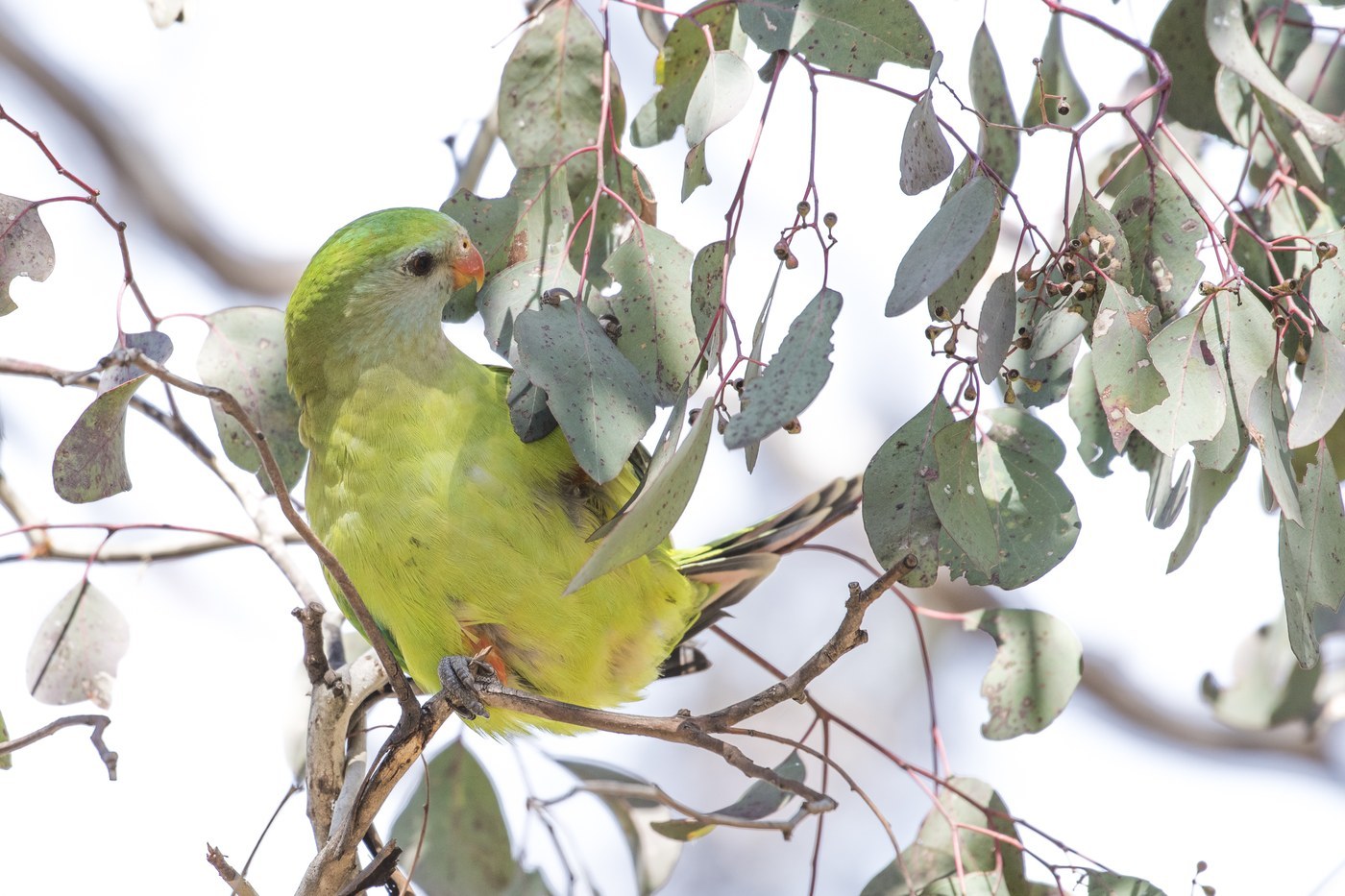
Superb Parrot
Sleek contour feathers with a long tapering tail

Red-shouldered Macaw
Compact body contour feathers; medium flight and tail feathers
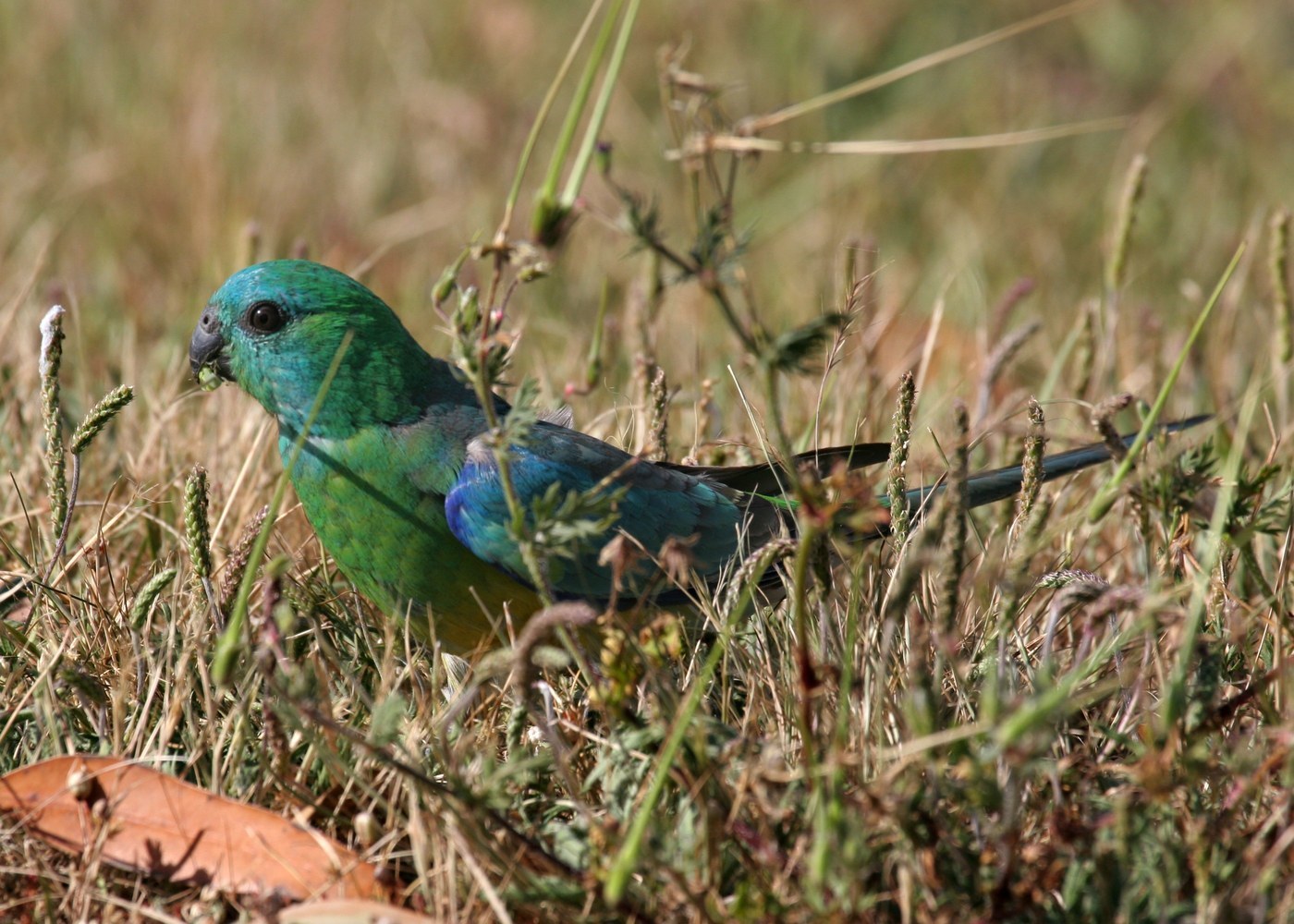
Red-rumped Parrot
Sleek contour feathers with a bright rump patch in males

White-capped Pionus
Compact contour feathers and short, squared tail feathers