

Red-fronted Macaw
Ara rubrogenys
A medium-sized olive-green macaw with a bright red forehead band and red patch around the eye, restricted to dry canyon country in Bolivia.
- Feather type
- Compact flight feathers, moderate tapering tail
- Colours
- Olive-green body with a red forehead band, red eye patch, and orange-red underwing
- Bird size
- Medium, ~55-60 cm including tail
Found a feather like this?
Identify any feather from a photo, free.
Overview
Overview
The Red-fronted Macaw is native to a small region of arid inter-Andean valleys and canyon country in central Bolivia, an unusual habitat for a macaw compared to the humid lowland forests favored by many relatives. Its olive-green body plumage is set off by bold red markings on the head and shoulders.
Its limited range and specialized cliff-nesting habits make it one of the more distinctive macaws to identify by both plumage and geography.
Identifying the Feather
Feather Identification
- Body feathers: Olive-green overall, slightly duller and browner than the bright greens of forest macaws.
- Head feathers: A red band of feathers crosses the forehead, with a matching red patch around the eye.
- Wing feathers: A red patch of feathers at the bend of the wing, with turquoise-blue on the flight feathers.
- Underwing: Orange-red wash visible on the underwing coverts in flight, a useful field mark from below.
- Compared to similar species: The combination of red forehead band, red eye patch, and orange-red underwing on an otherwise olive-green body is unique among macaws.
Plumage & Molt
Plumage Notes
Sexes are alike, both showing the same olive-green body with red facial and shoulder markings. Juveniles have a duller red forehead band and shorter tail feathers until maturing after their first molt.
Molt occurs gradually throughout the year rather than in a single defined season.
Habitat & Range
Habitat & Range
This species is restricted to a small area of semi-arid inter-Andean valleys in central Bolivia, where it nests on cliff faces and forages in nearby dry scrub and cultivated land. This habitat is notably drier and more open than the humid forest used by most macaws.
It is a resident species within its limited range, though flocks move between cliff roosts and feeding areas daily.
Behavior & Field Notes
Behavior & Field Notes
Red-fronted Macaws are social, often seen in flocks feeding on seeds, fruit, and cultivated crops in the dry valleys they inhabit. They are agile fliers, well suited to the canyon terrain where they nest and roost communally on cliff faces.
Nesting takes place in cliff cavities and crevices rather than tree hollows, an adaptation to their arid habitat. Their calls are typical macaw screeches, often heard echoing off canyon walls at dawn and dusk as flocks move between roosts and feeding grounds.
Frequently asked questions
What color is the Red-fronted Macaw's head?
It has a red band of feathers across the forehead and a matching red patch around the eye, set against an otherwise olive-green head.
Where does the Red-fronted Macaw nest?
Unlike most macaws that nest in tree cavities, it nests on cliff faces in the dry inter-Andean valleys of central Bolivia.
What does the Red-fronted Macaw's underwing look like?
It shows an orange-red wash on the underwing coverts, visible when the bird is in flight.
Is the Red-fronted Macaw found in rainforest?
No, it is restricted to semi-arid canyon country and dry scrub habitat, unlike most macaws that favor humid lowland forest.
Red-fronted Macaw guides
In-depth guides for identifying and understanding Red-fronted Macaw.

Other feathers you may enjoy
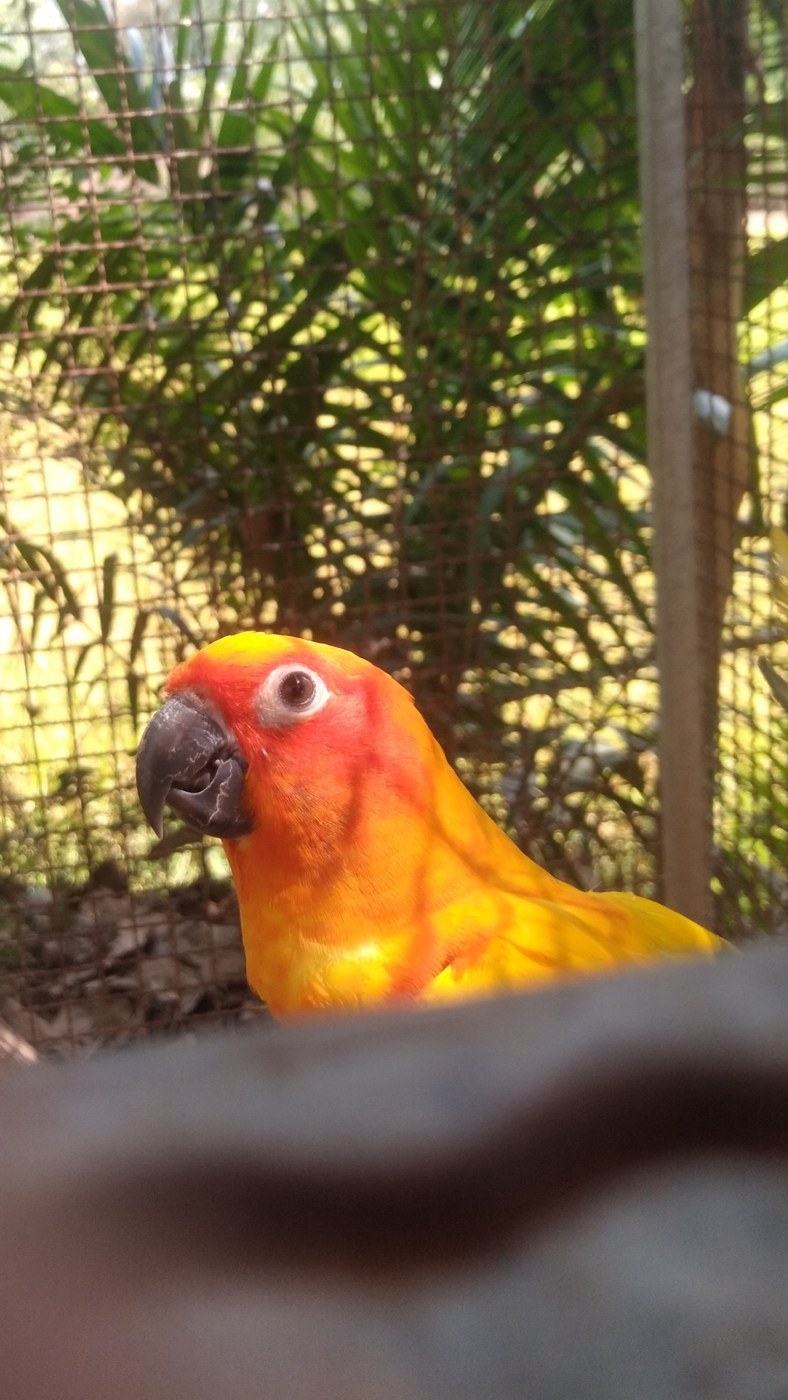
Sun Parakeet
Bright, dense body contour feathers; medium pointed tail feathers

Yellow-naped Amazon
Broad rounded contour feathers with sturdy flight feathers
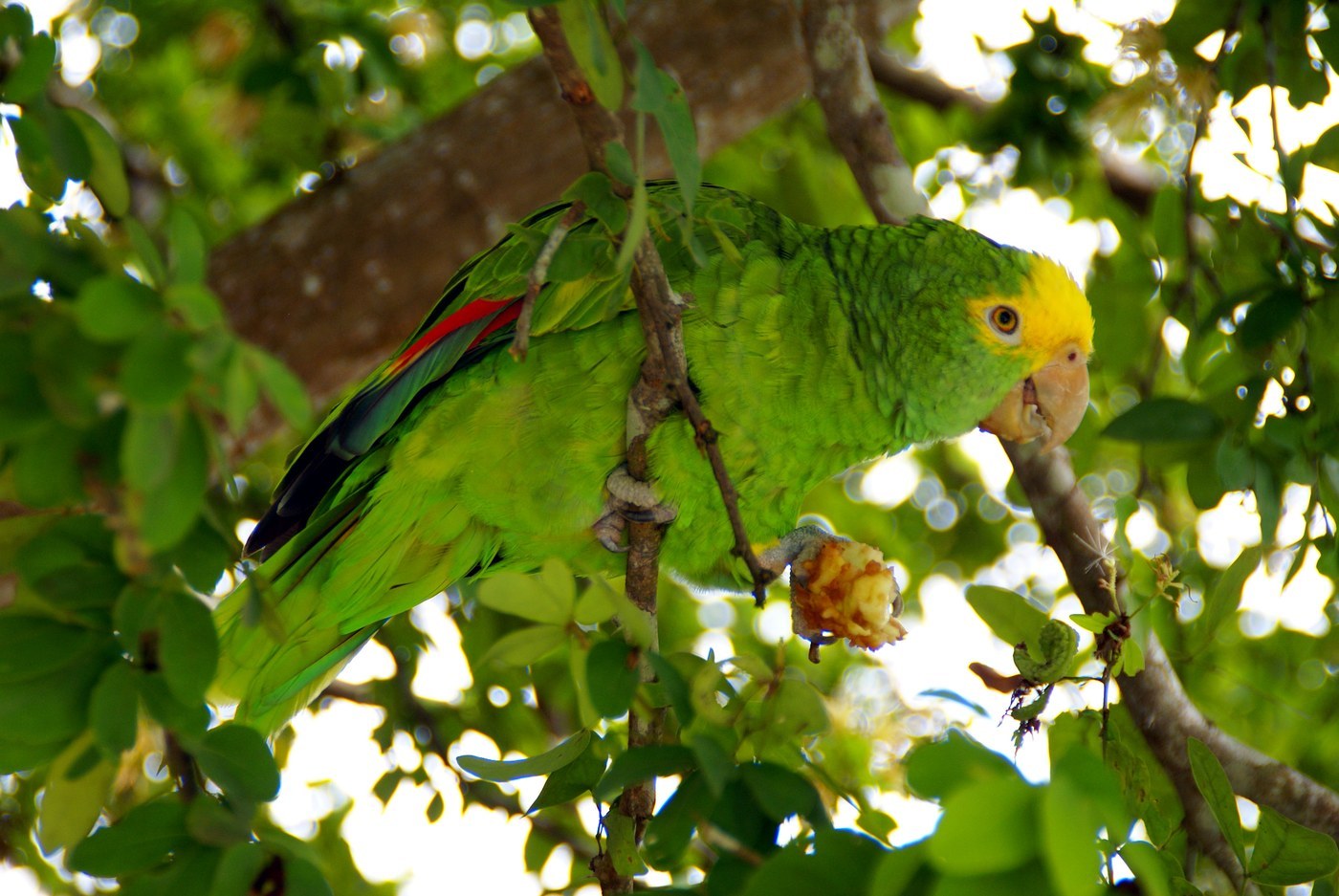
Yellow-headed Amazon
Dense, rounded body contour feathers; broad flight feathers
Yellow-collared Lovebird
Small compact flight feathers, short rounded tail

White-eyed Conure
Medium contour and long, graduated tail feathers

Yellow-tailed Black Cockatoo
Large, sturdy contour and flight feathers; short crest

Scarlet-chested Parrot
Small contour and flight feathers

Timneh Parrot
Broad flight feathers, scalloped body feathers with pale edges
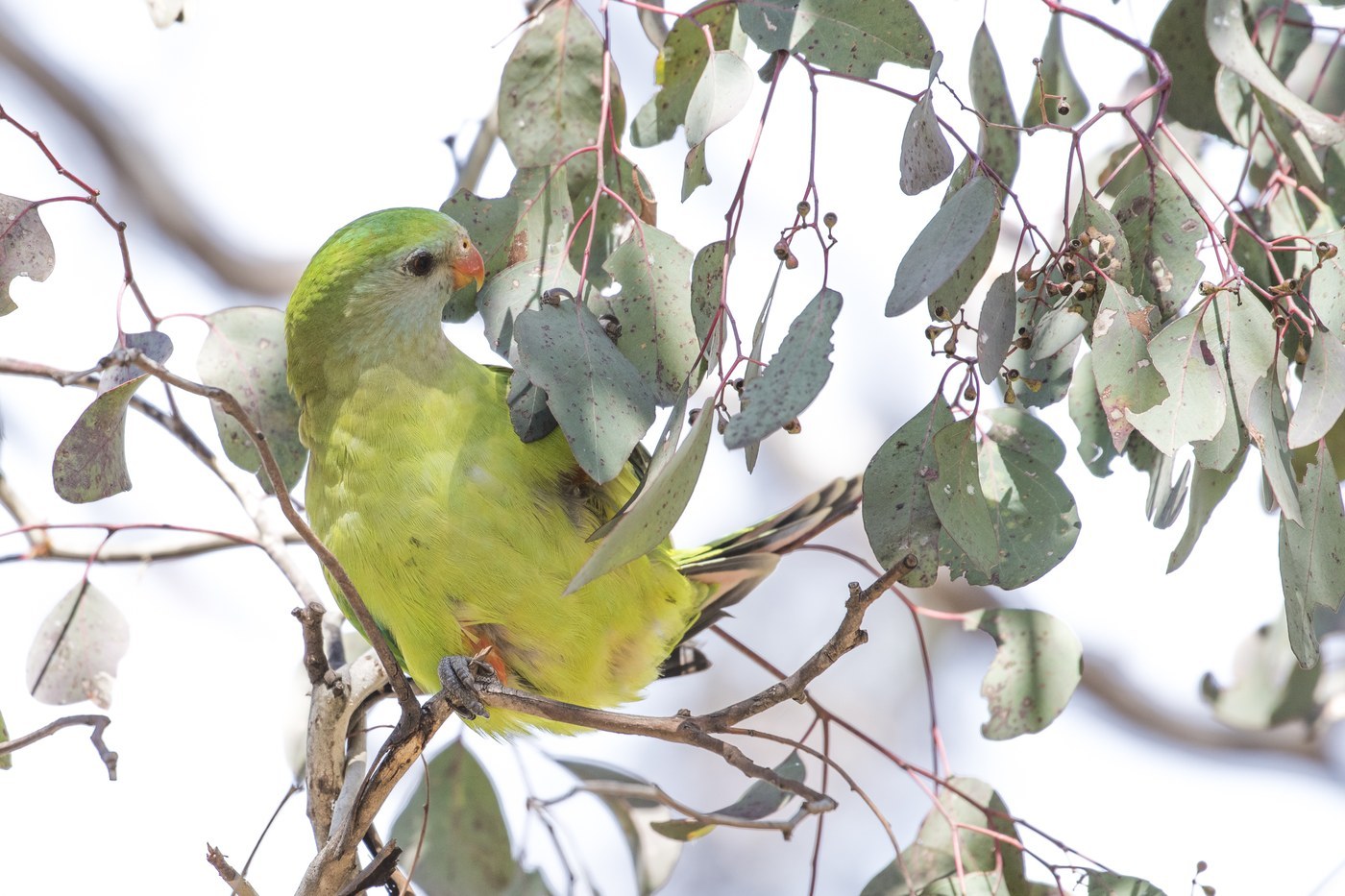
Superb Parrot
Sleek contour feathers with a long tapering tail

Red-shouldered Macaw
Compact body contour feathers; medium flight and tail feathers
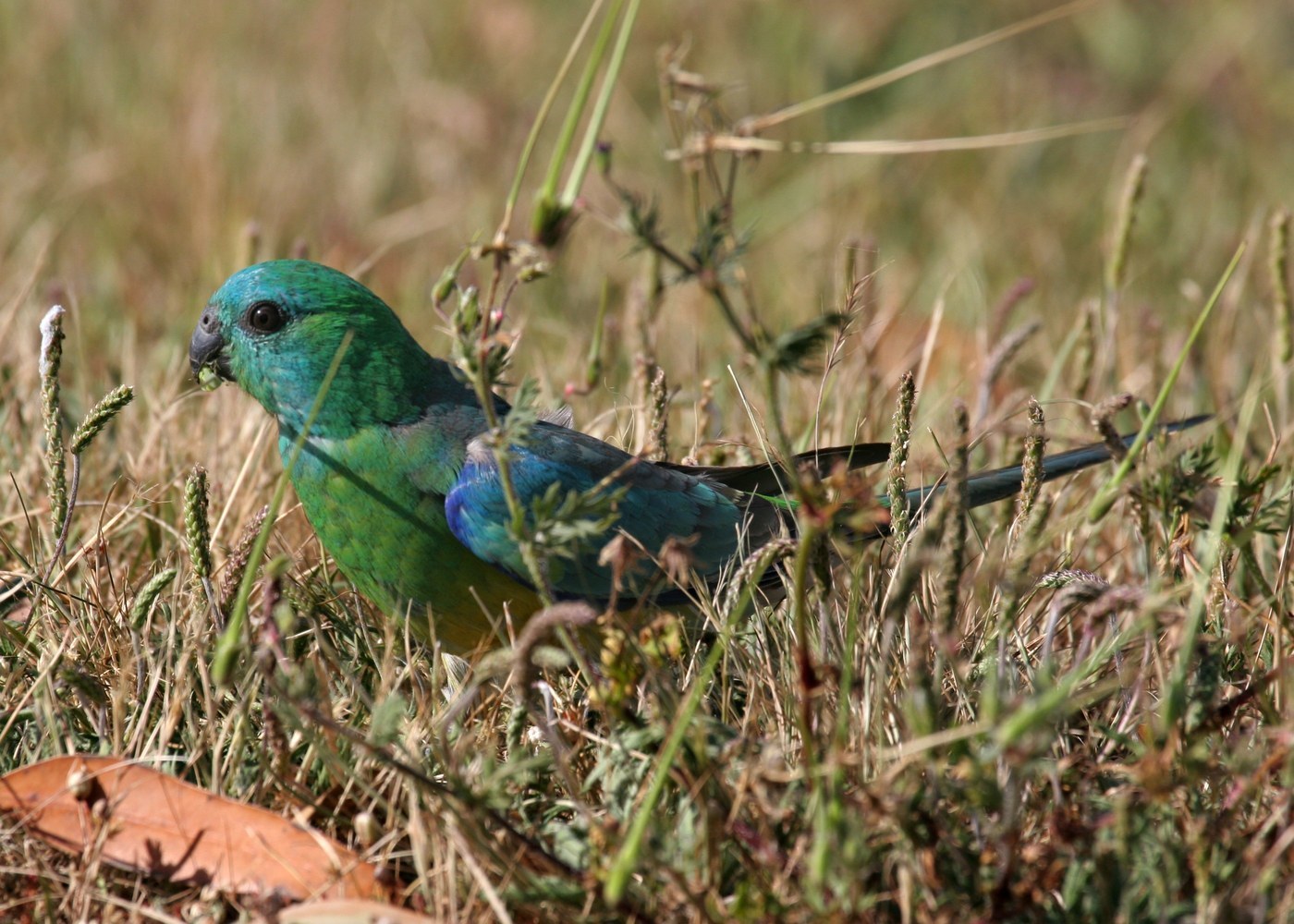
Red-rumped Parrot
Sleek contour feathers with a bright rump patch in males

White-capped Pionus
Compact contour feathers and short, squared tail feathers