
Senegal Parrot
Poicephalus senegalus
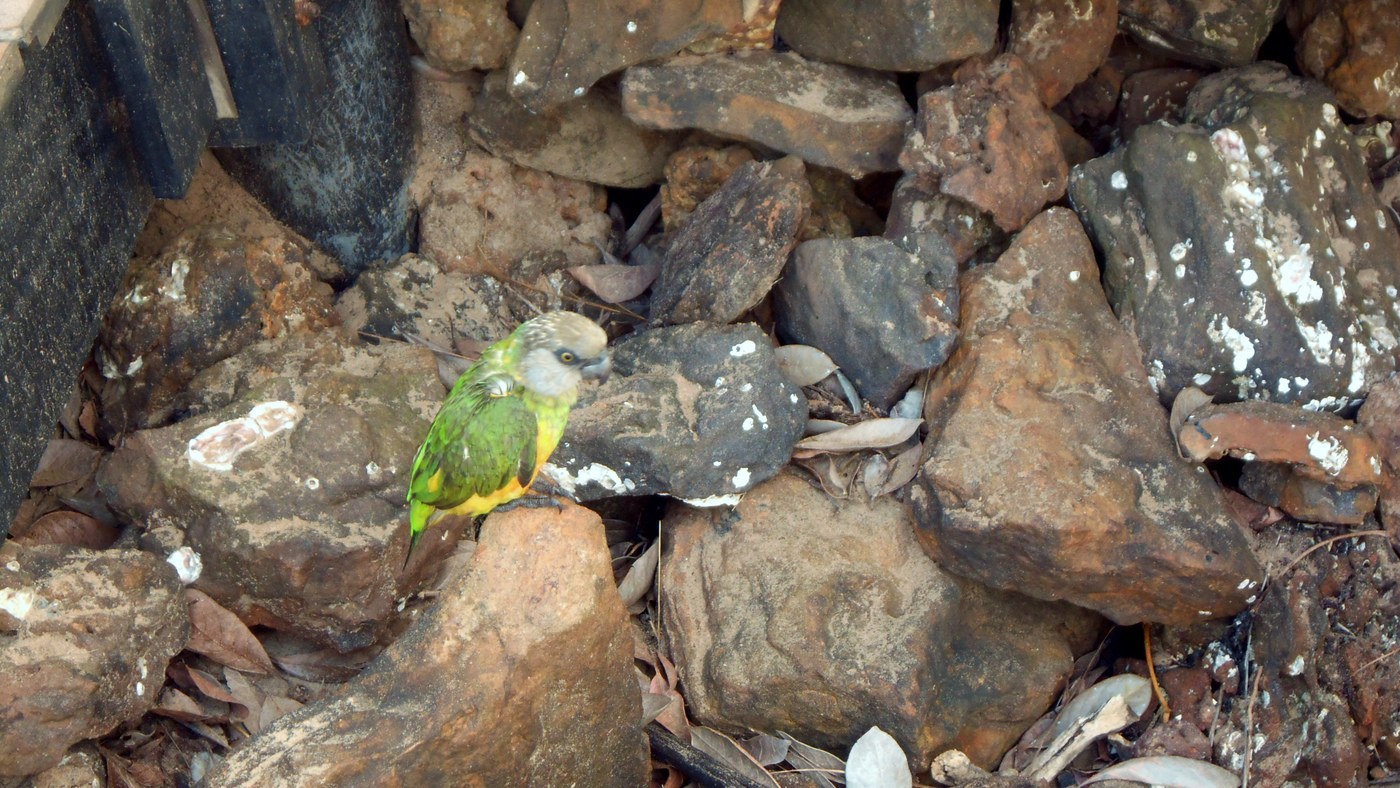
The Senegal Parrot is a small, stocky West African parrot with a grey head, green back, and a bright yellow-orange belly marking shaped like a V.
- Feather type
- Short, dense contour feathers typical of Poicephalus parrots
- Colours
- Grey head and neck, green back and wings, and a yellow-to-orange V-shaped belly patch
- Bird size
- Small, ~23 cm
Found a feather like this?
Identify any feather from a photo, free.
Overview
Overview
The Senegal Parrot is a compact, short-tailed parrot native to the savanna woodlands of West Africa. Its bold three-toned body pattern makes it one of the more distinctive small parrots of the region.
- Short, squared tail relative to body size
- Stocky build typical of Poicephalus parrots
- Pale eye ring visible at close range
Identifying the Feather
Feather Identification
Head and neck feathers are solid grey, transitioning to green on the back, wings, and upper breast. The lower breast and belly show a well-defined yellow-to-orange patch that widens into a V shape, with color intensity varying somewhat by subspecies (from pale yellow to deep orange).
- Flight feathers: Green primaries and secondaries with darker tips
- Tail feathers: Short and green, with little contrasting pattern
- Head feathers: Uniform grey, lacking any red, blue, or yellow crown patch
The grey head combined with a sharply demarcated yellow-orange belly V is diagnostic among small African parrots and separates this species from the more uniformly colored Meyer's Parrot.
Plumage & Molt
Sexes are similar, though some individuals show subtle differences in belly color intensity that are not consistently sex-linked. Juveniles have duller, more muted belly coloring and a browner iris, with adult brightness developing over the first couple of years. Molt is gradual.
Habitat & Range
This species inhabits savanna, open woodland, and forest-edge habitat across West Africa, often near cultivated land with scattered trees. It is largely sedentary, moving locally in response to seasonal fruiting and seeding of favored trees.
Behavior & Field Notes
Senegal Parrots are active and social, typically seen in pairs or small flocks foraging in tree canopies for seeds, fruit, and blossoms. They nest in natural tree cavities, and pairs share incubation and chick-rearing duties. Calls include high-pitched whistles and chattering notes given in flight and while perched in feeding trees.
Frequently asked questions
What is the most reliable feather-based mark for a Senegal Parrot?
A solid grey head paired with a sharply defined yellow-to-orange V-shaped patch on the belly is the clearest identifying combination.
How does belly color vary in this species?
Belly color ranges from pale yellow to deeper orange depending on the subspecies and individual, though the V-shaped pattern itself remains consistent.
Do juveniles look different from adults?
Yes, young birds show duller, less saturated belly coloring that brightens as they mature.
How does this species differ from Meyer's Parrot in plumage?
Meyer's Parrot shows a turquoise-blue belly and yellow shoulder patches rather than the grey head and yellow-orange belly V of the Senegal Parrot.
Senegal Parrot guides
In-depth guides for identifying and understanding Senegal Parrot.
Other feathers you may enjoy
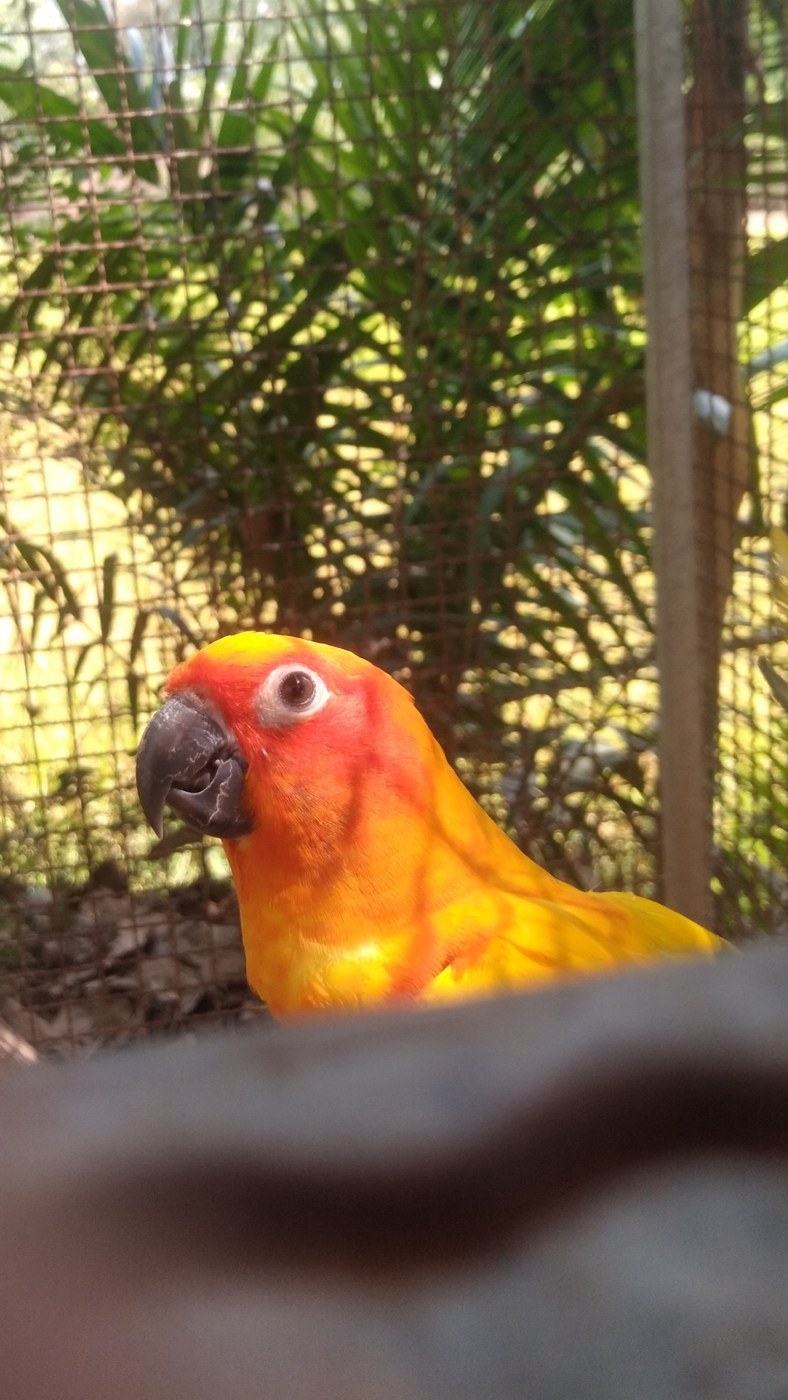
Sun Parakeet
Bright, dense body contour feathers; medium pointed tail feathers

Yellow-naped Amazon
Broad rounded contour feathers with sturdy flight feathers
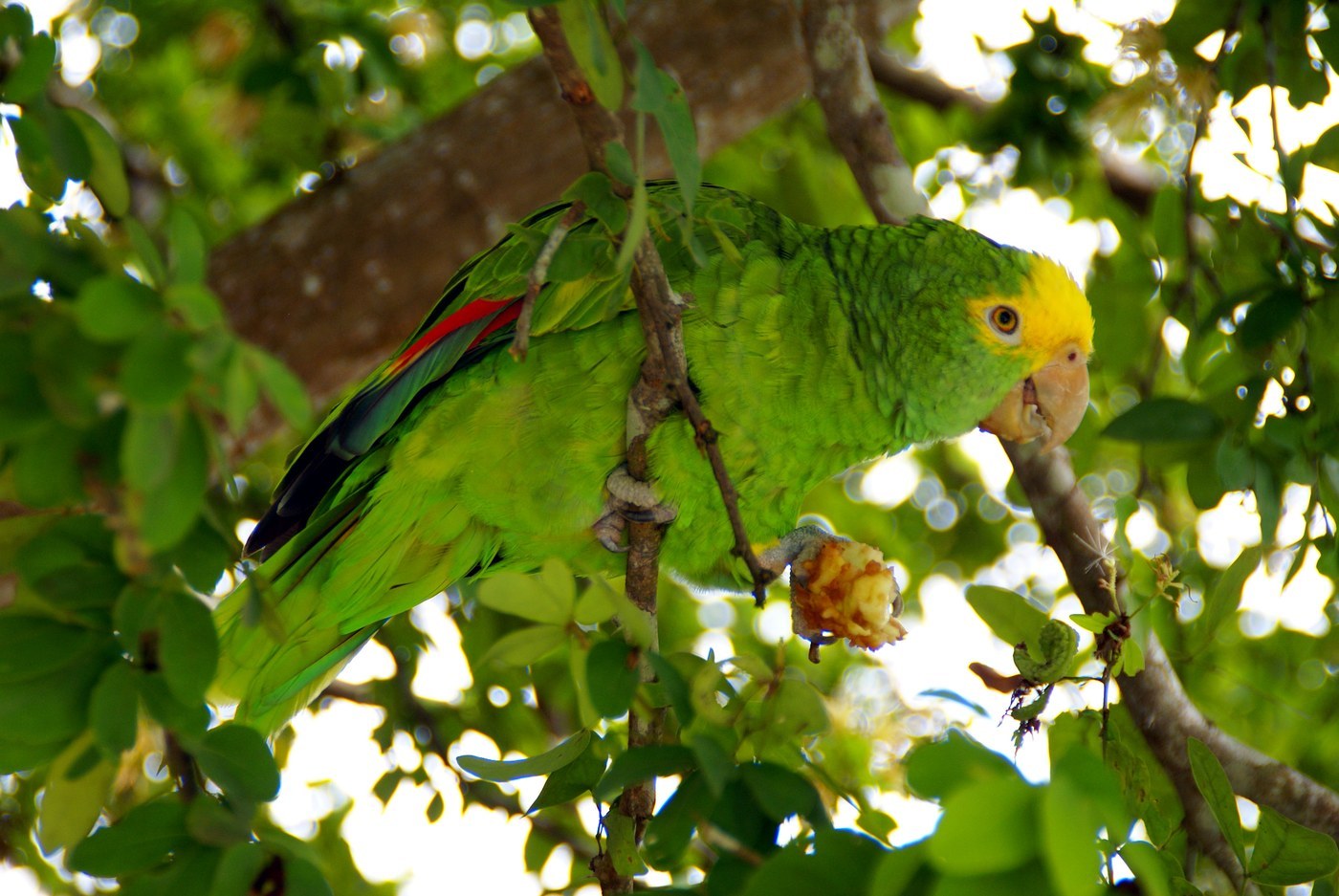
Yellow-headed Amazon
Dense, rounded body contour feathers; broad flight feathers
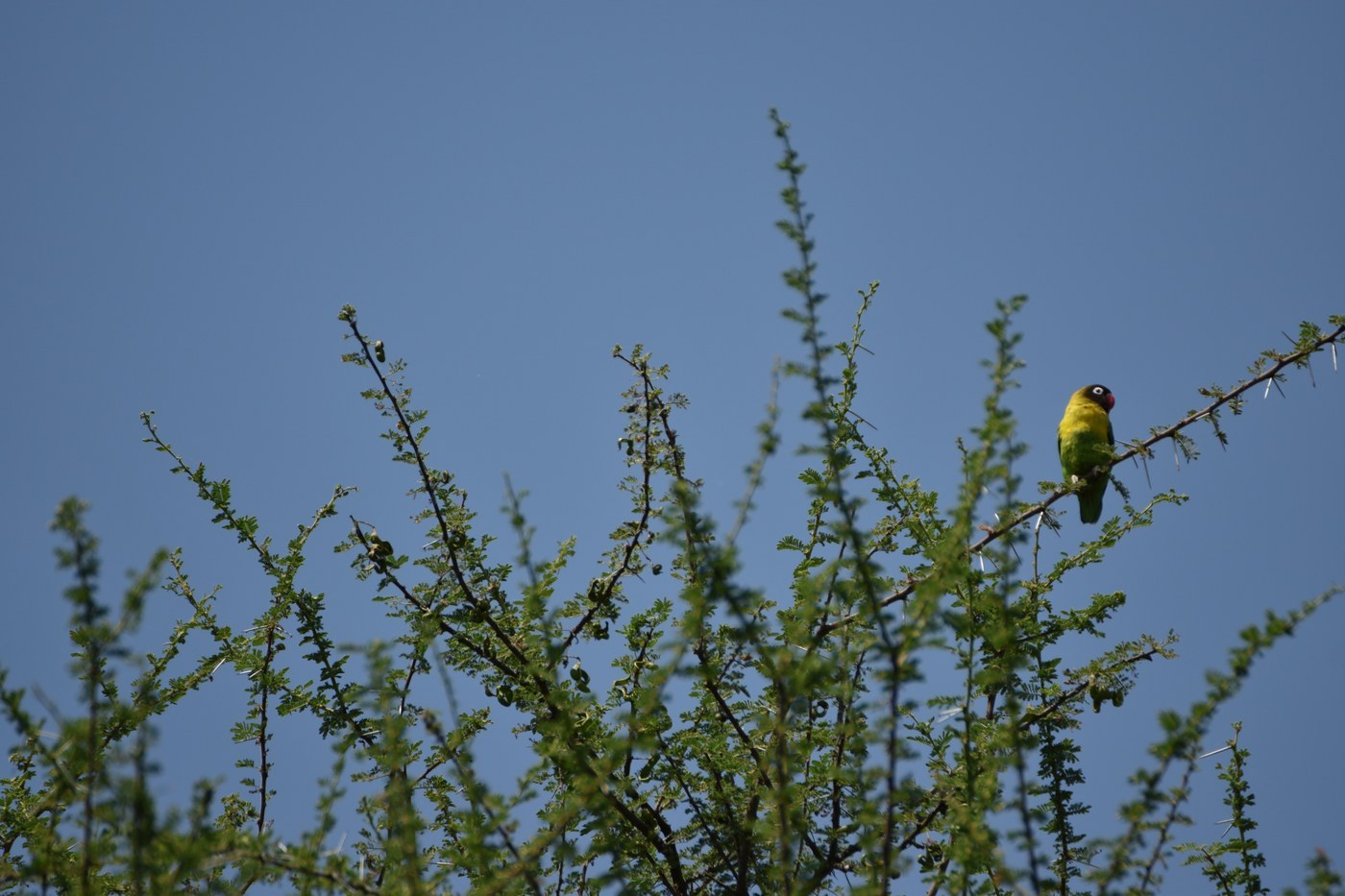
Yellow-collared Lovebird
Small compact flight feathers, short rounded tail

White-eyed Conure
Medium contour and long, graduated tail feathers

Yellow-tailed Black Cockatoo
Large, sturdy contour and flight feathers; short crest

Scarlet-chested Parrot
Small contour and flight feathers

Timneh Parrot
Broad flight feathers, scalloped body feathers with pale edges
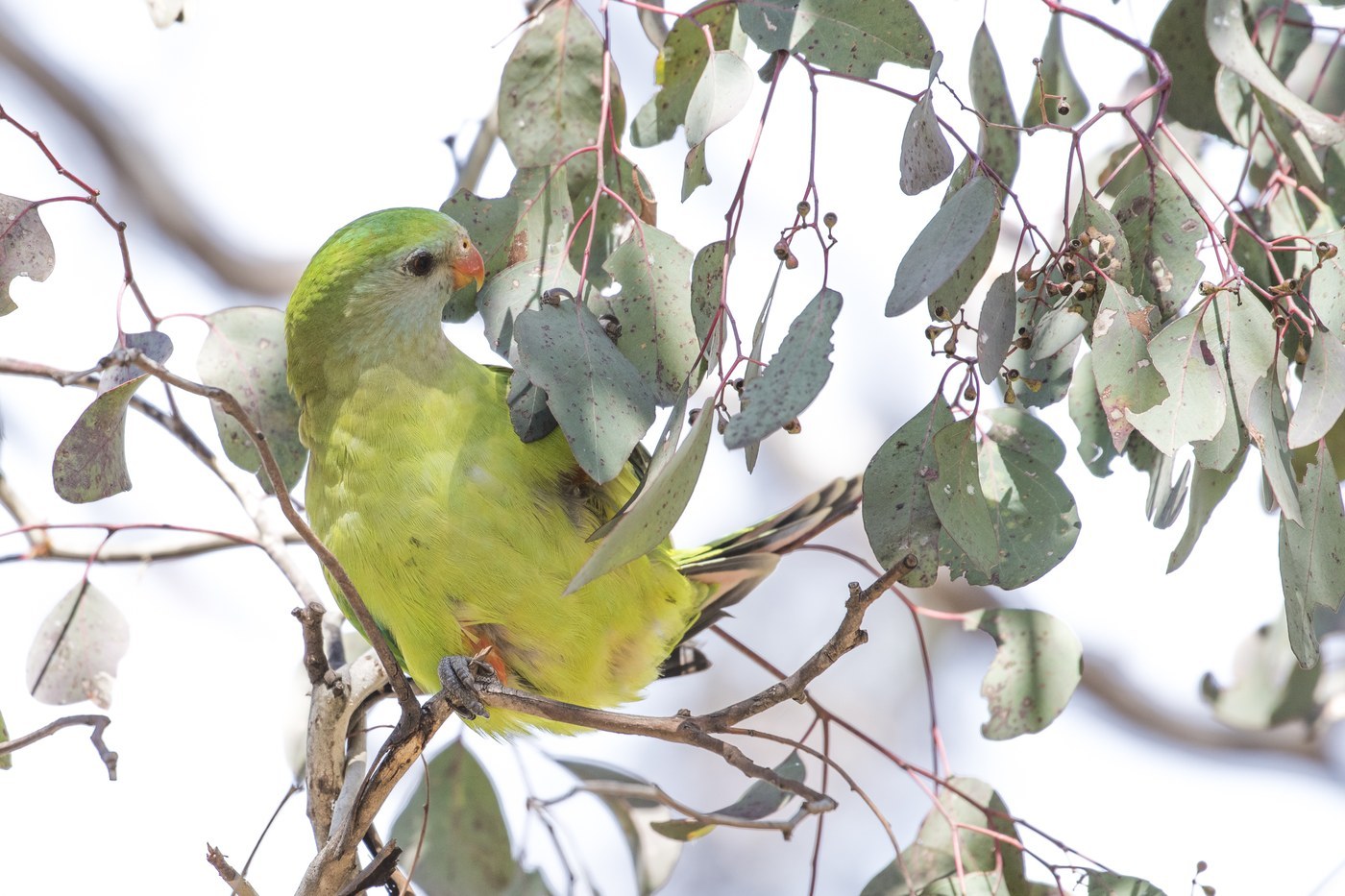
Superb Parrot
Sleek contour feathers with a long tapering tail

Red-shouldered Macaw
Compact body contour feathers; medium flight and tail feathers
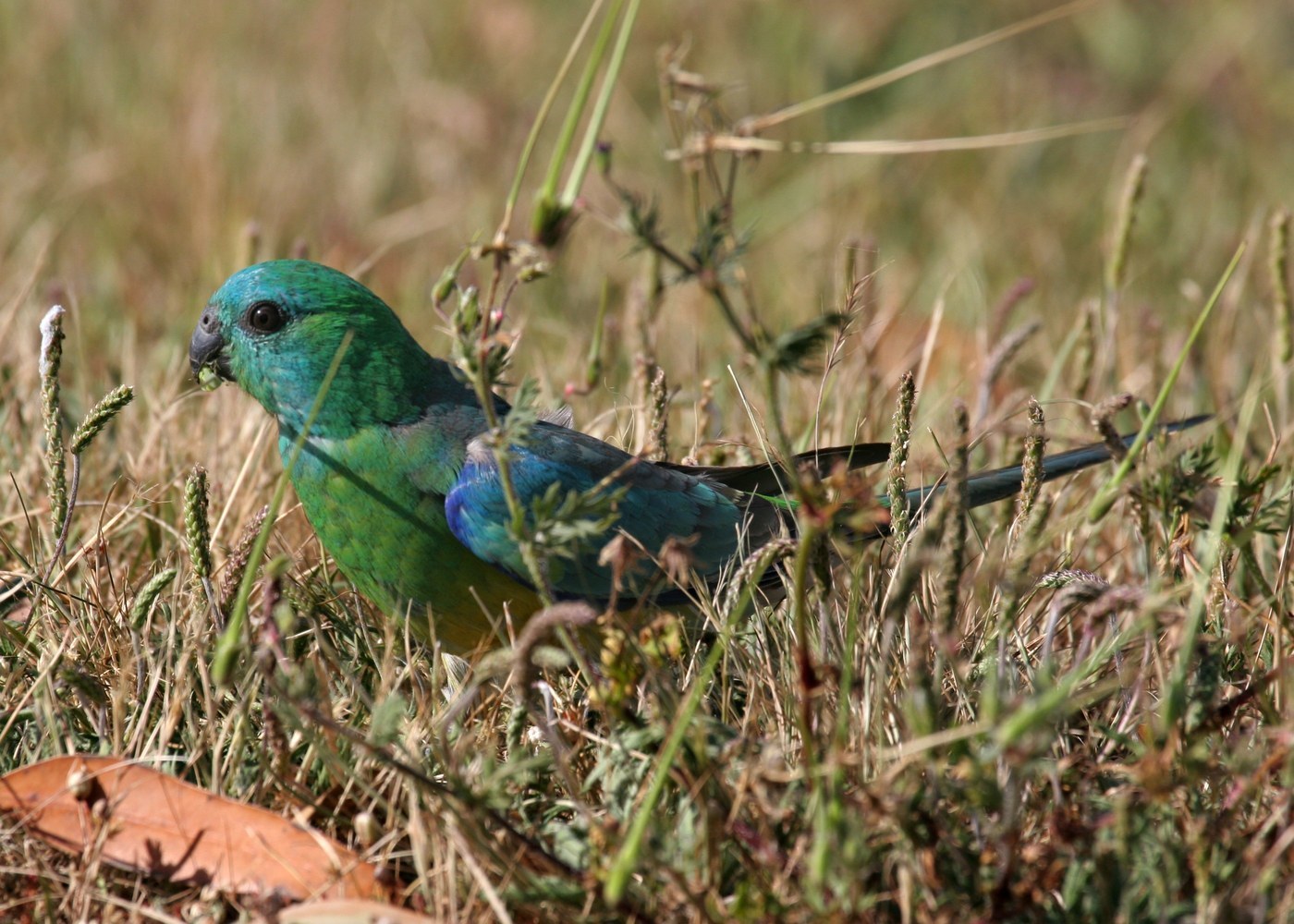
Red-rumped Parrot
Sleek contour feathers with a bright rump patch in males

White-capped Pionus
Compact contour feathers and short, squared tail feathers