

Allen's Hummingbird
Selasphorus sasin
A small West Coast hummingbird with a fiery orange-red throat patch, warm rufous flanks and tail, and a back that can be green or rufous depending on the population.
- Feather type
- Iridescent gorget feathers, rufous flank and tail feathers
- Colours
- Orange-red iridescent throat, green or rufous back, rufous flanks and tail
- Bird size
- Very small, ~8-9 cm
Found a feather like this?
Identify any feather from a photo, free.
Overview
Allen's Hummingbird breeds along a narrow strip of the California and southern Oregon coast, closely resembling the more widespread Rufous Hummingbird. Males display a brilliant, fiery orange-red iridescent throat patch, while their back coloring varies between populations, with some appearing green-backed and others fully rufous-backed.
Identifying the Feather
The male's throat, or gorget, is a vivid iridescent orange-red that can appear dark or nearly black when not catching direct light. Flanks and tail are washed with warm rufous, and the back may be either green or rufous depending on the individual population. Females and immatures are duller, with a green back, pale rufous-washed flanks, and often a small patch of orange-red spotting at the throat. Tail feather shape is a key technical distinction from the very similar Rufous Hummingbird, with subtle differences in the width and notching of individual tail feathers used by banders and careful observers to separate the two species.
Plumage & Molt
Males show the bright orange-red gorget and rufous flanks described above, with back color varying by population. Females are green-backed with rufous-washed flanks and a much reduced or spotted throat patch. Juveniles resemble females initially, with young males gradually acquiring full gorget color in their first year. Feather wear and the annual molt refresh the vividness of the male's throat iridescence.
Habitat & Range
Breeds in a narrow coastal band from southern Oregon through California, in coastal scrub, chaparral, and increasingly in gardens and parks. It winters mainly in Mexico, making it a long-distance migrant despite its restricted breeding range.
Behavior & Field Notes
Feeds on nectar from flowering plants and small insects, and readily visits nectar feeders in gardens within its range. Males perform a distinctive climbing-and-diving display flight during courtship, often accompanied by a sharp, buzzy sound from the wings and tail. Its call is a sharp, high chip note. Nests are small cups built from plant down and spider silk, usually placed low in shrubs or trees.
Frequently asked questions
What does a male Allen's Hummingbird look like?
It has a vivid iridescent orange-red throat, rufous-washed flanks and tail, and a back that is either green or rufous depending on the population.
How can you tell it from the Rufous Hummingbird?
The two species are very similar; subtle differences in tail feather shape and width are used for definitive identification, especially in green-backed individuals.
Where does it breed?
Along a narrow coastal strip from southern Oregon through California.
Does it migrate?
Yes, it winters mainly in Mexico despite having a fairly restricted breeding range.
Allen's Hummingbird guides
In-depth guides for identifying and understanding Allen's Hummingbird.

Allen's Hummingbird identified by the community
Real feathers identified with Feather Identifier.

Other feathers you may enjoy

Speckled Hummingbird
Small contour feathers with fine speckled underpart markings
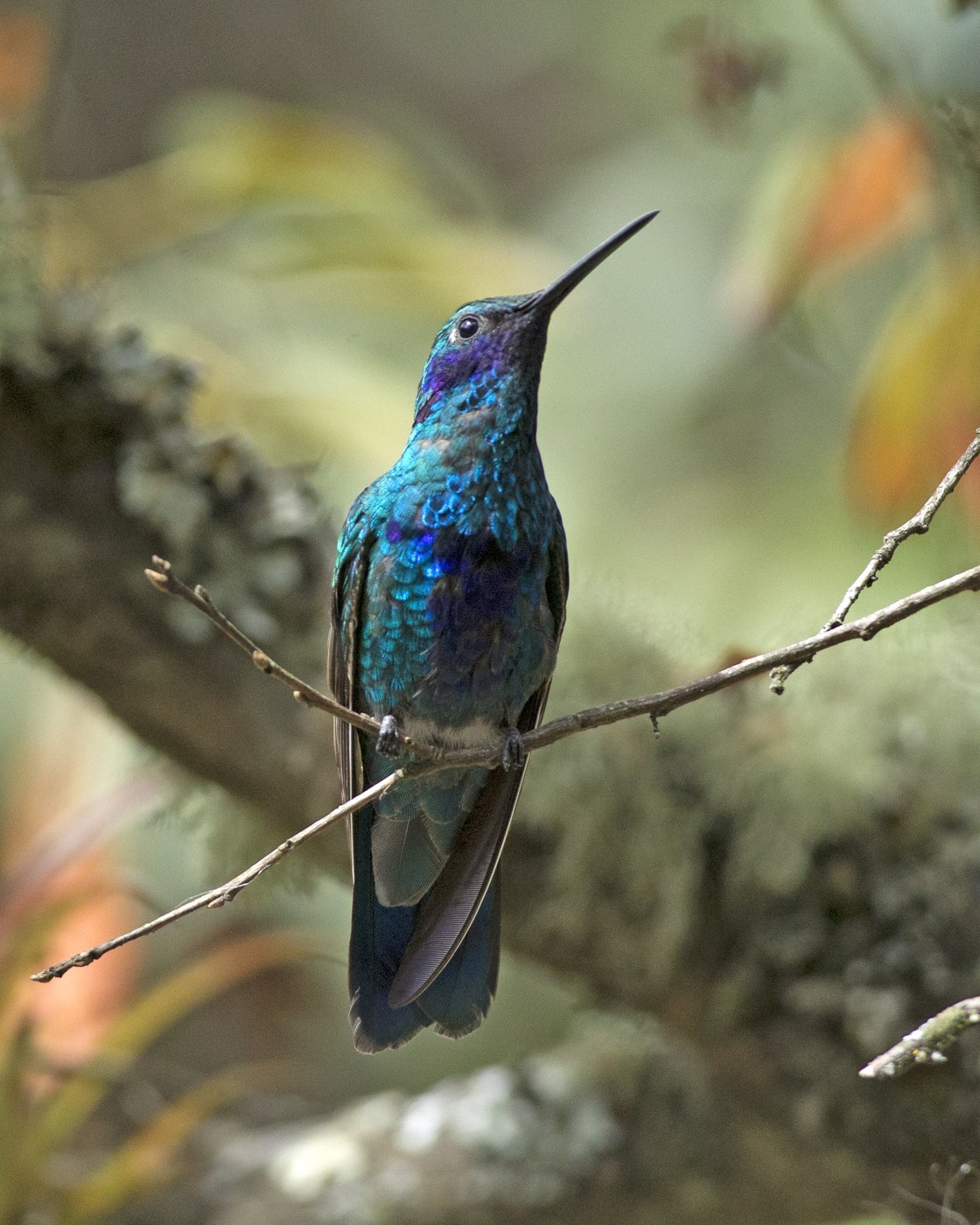
Sparkling Violetear
Iridescent body feathers, large violet ear and chest patches
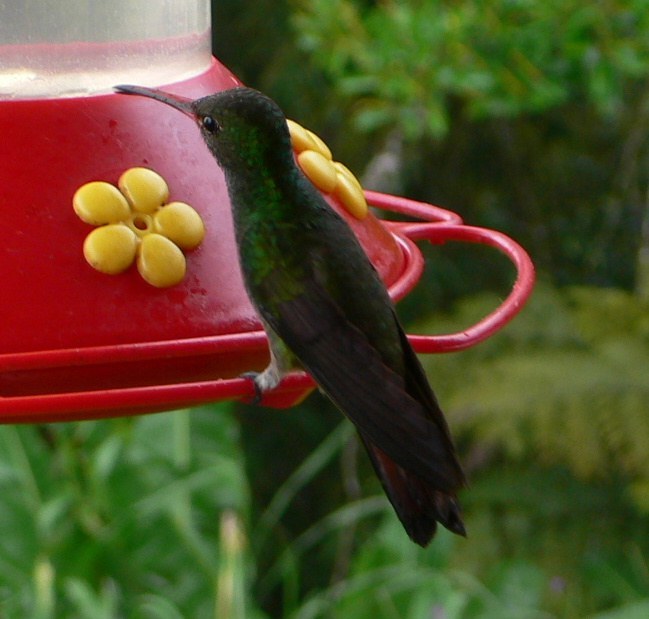
Rufous-tailed Hummingbird
Iridescent throat and breast feathers, rufous tail feathers

Rufous-breasted Hermit
Slightly decurved bill with rufous-washed contour feathers
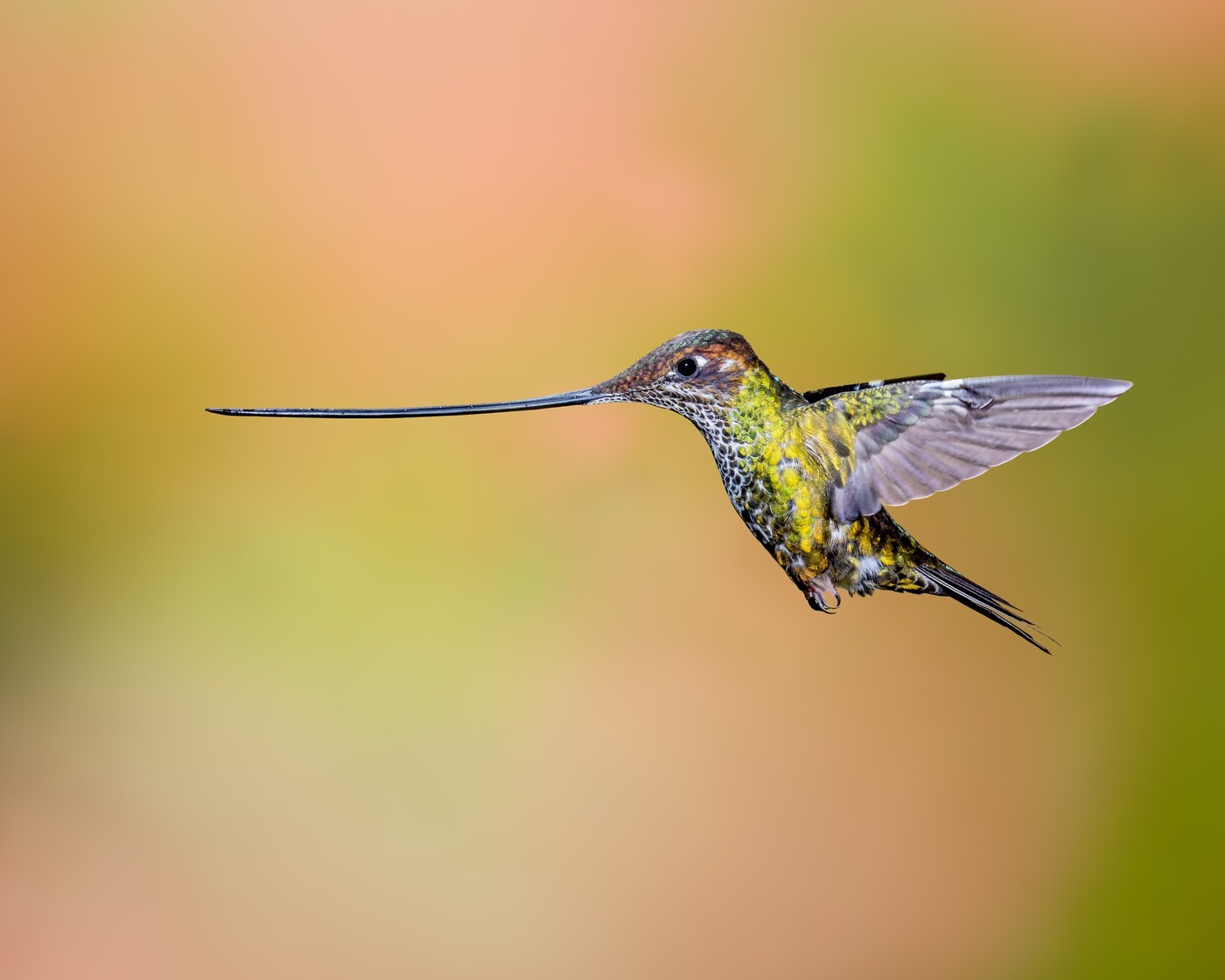
Sword-billed Hummingbird
Iridescent body feathers, extraordinarily long bill (non-feather feature)
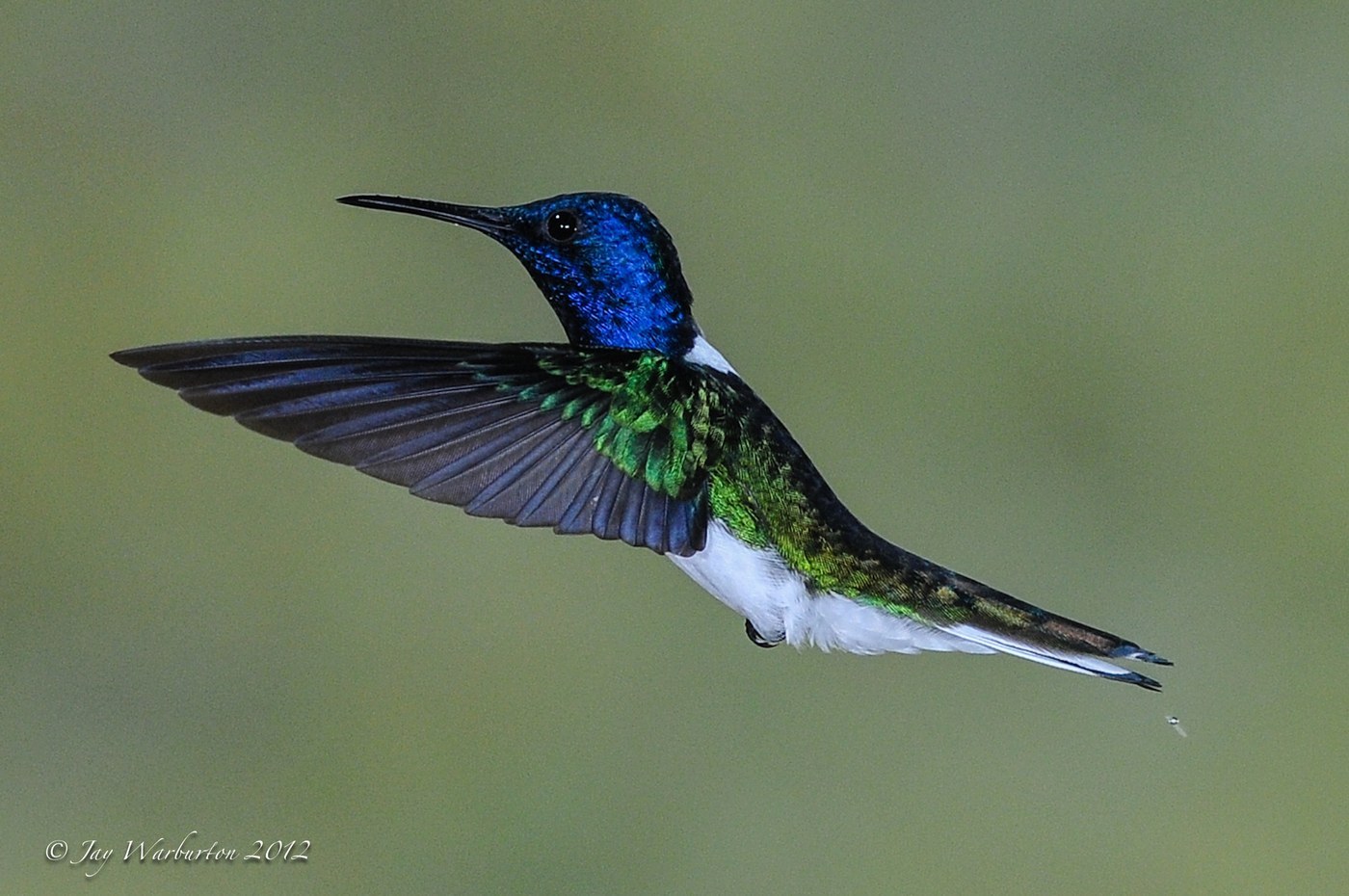
White-necked Jacobin
Iridescent head feathers, contrasting white nape and belly

White-eared Hummingbird
Iridescent gorget feathers, bold facial stripe
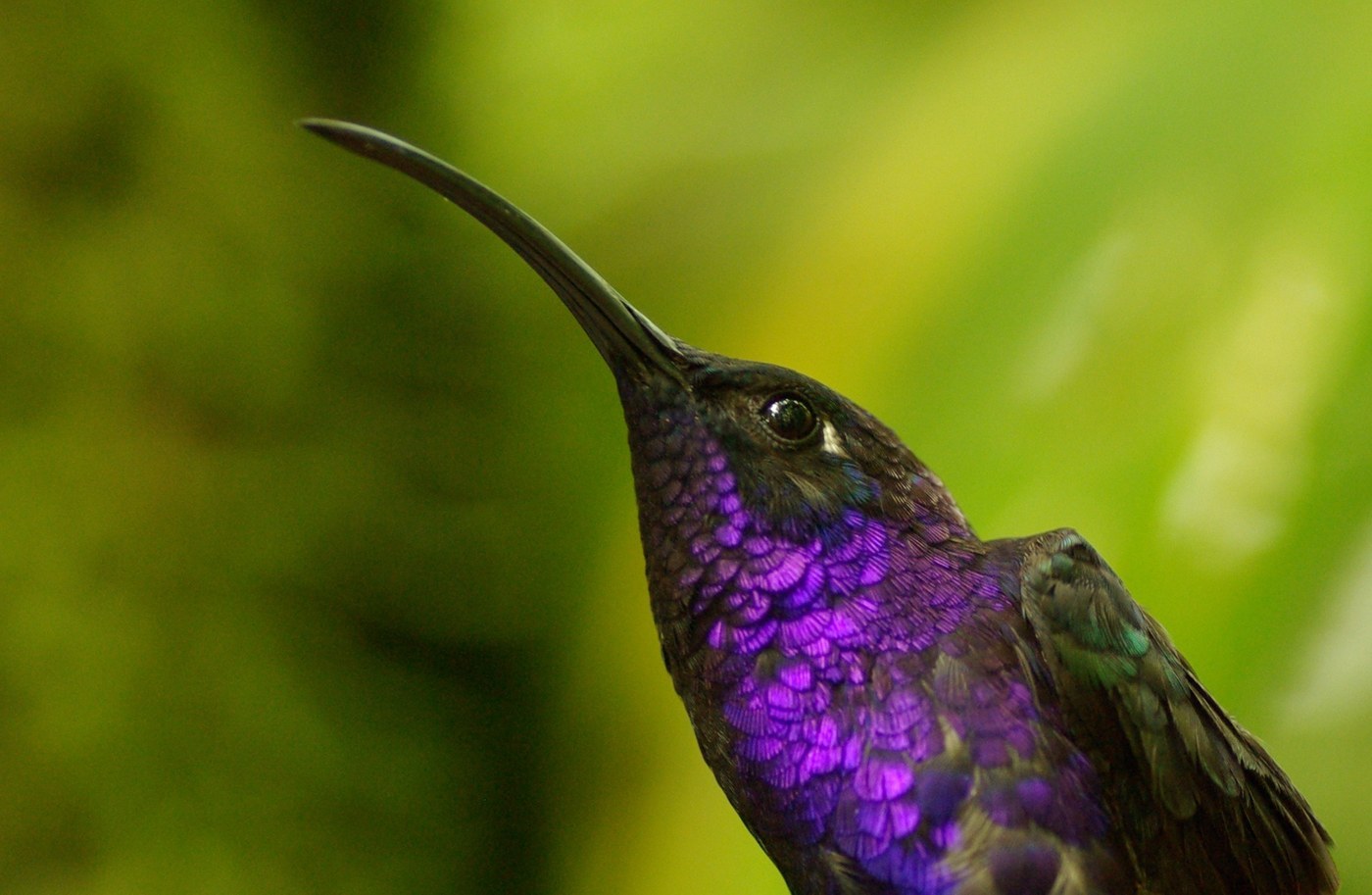
Violet Sabrewing
Iridescent body feathers, thickened curved primary shafts

Velvet-purple Coronet
Dense, velvety contour feathers with iridescent crown patch

Violet-crowned Hummingbird
Iridescent crown feathers, clean white underparts

Shining Sunbeam
Iridescent contour feathers with coppery-bronze wing sheen

Rufous Hummingbird
Tiny contour, gorget, and narrow flight feathers