
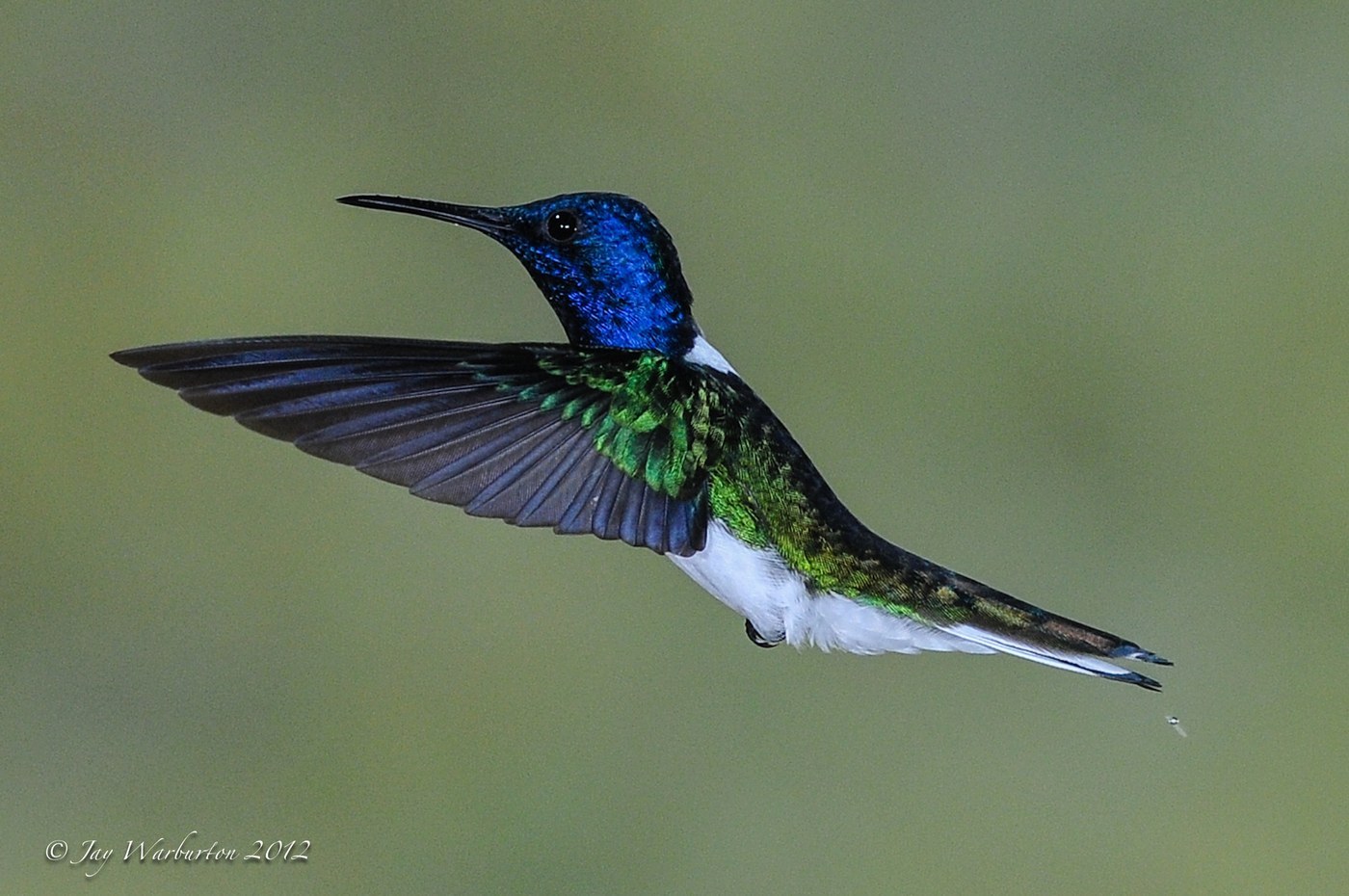
White-necked Jacobin
Florisuga mellivora
A striking tropical forest hummingbird whose male combines a deep blue-violet head with a bold white collar and mostly white underparts and tail.
- Feather type
- Iridescent head feathers, contrasting white nape and belly
- Colours
- Blue-violet head and throat, white nape band, white belly and tail
- Bird size
- Medium, ~11-12 cm
Found a feather like this?
Identify any feather from a photo, free.
Overview
Overview
The White-necked Jacobin is a fairly large, boldly patterned hummingbird found in lowland and foothill forest, forest edge, and clearings from southern Mexico through Central America and into much of northern and central South America. Its strong color-blocking makes males particularly easy to recognize compared to many more uniformly green hummingbird species.
Males show a deep blue-violet head and upper breast sharply divided from a broad white band across the nape, with white extending across the belly and much of the tail, giving an overall pied appearance unlike most other hummingbirds sharing its habitat.
Identifying the Feather
Feather ID Notes
The male's head and throat feathers show deep blue-violet iridescence, sharply bordered by a wide white band of feathers across the nape - a clean, high-contrast boundary rather than a gradual blend. The belly is white, and the tail shows white outer feathers with a dark central band, visible as a white tail with a dark tip in flight.
- Head/throat feathers: blue-violet, iridescent
- Nape feathers: broad white band, sharply demarcated from the head color
- Belly feathers: white
- Tail feathers: mostly white with a dark terminal band This strongly pied combination of blue-violet, white, and a dark tail band is distinctive and not closely matched by other hummingbirds in its range.
Plumage & Molt
Plumage Details
Adult males show the bold pied pattern described above. Females and immatures are more variable, generally green above with a scaled or mottled throat and breast pattern and white underparts, lacking the male's solid blue-violet head; some females can show plumage intermediate between typical female and male patterns. There is no strong seasonal plumage change, with feather condition maintained by an annual molt.
Habitat & Range
Habitat & Range
This species occupies lowland and foothill humid forest, forest edge, and clearings from southern Mexico through Central America and across much of northern and central South America. Most populations are resident, though some local movements occur in response to flowering patterns.
Behavior & Field Notes
Behavior & Field Notes
White-necked Jacobins feed on nectar from a wide range of forest flowers and flowering trees, often foraging in the canopy as well as at lower forest edges, and also take small insects. They can be aggressive around rich nectar sources, chasing off other hummingbirds. Nests are cup-shaped, built on slender branches, sometimes over water. Calls include sharp chips and buzzy chattering notes during interactions.
Frequently asked questions
How can you recognize a male White-necked Jacobin?
Look for a blue-violet head sharply bordered by a broad white band on the nape, with white underparts and a white tail showing a dark band.
Do females look like males?
No, females are more variable, typically green above with a mottled throat and white underparts, lacking the solid blue-violet head.
Where does this species live?
In lowland and foothill forest, forest edge, and clearings from southern Mexico through Central and South America.
Is the White-necked Jacobin territorial?
Yes, it can be quite aggressive, defending productive nectar sources against other hummingbirds.
White-necked Jacobin guides
In-depth guides for identifying and understanding White-necked Jacobin.
Other feathers you may enjoy

Speckled Hummingbird
Small contour feathers with fine speckled underpart markings
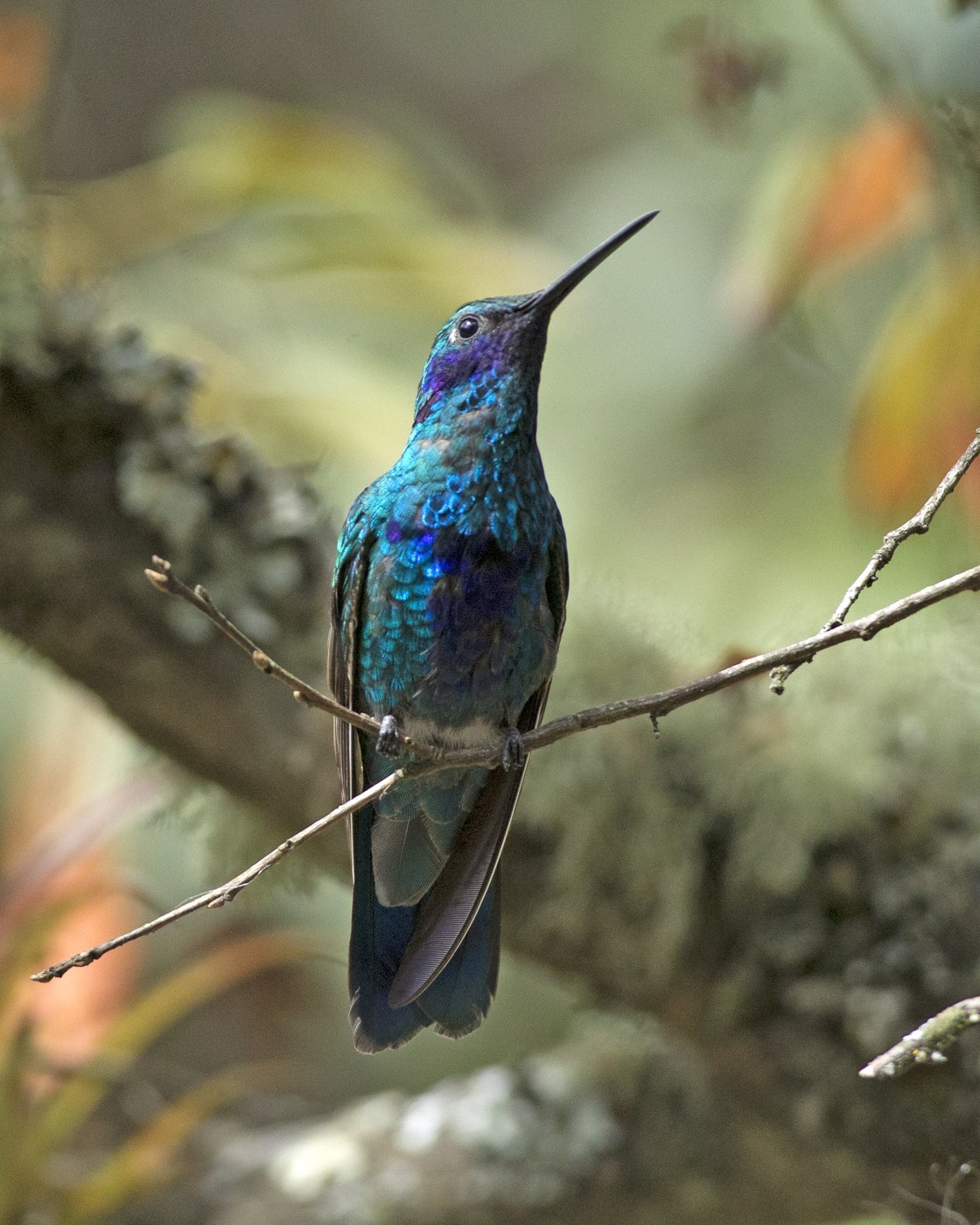
Sparkling Violetear
Iridescent body feathers, large violet ear and chest patches
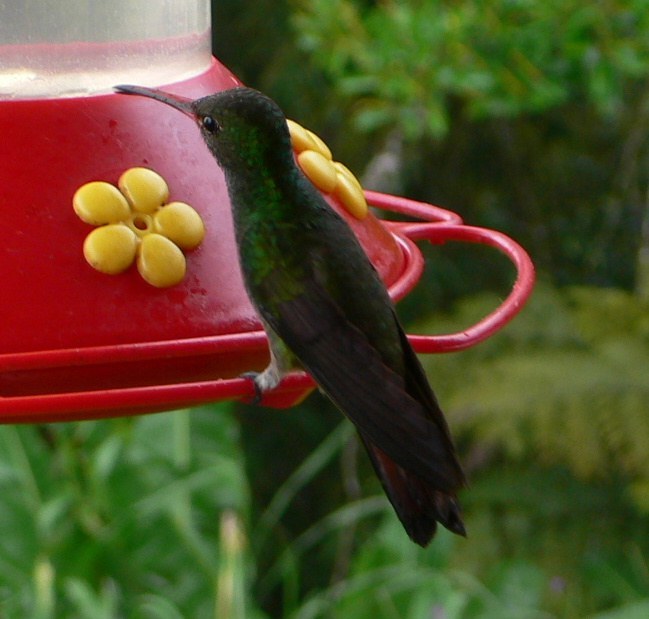
Rufous-tailed Hummingbird
Iridescent throat and breast feathers, rufous tail feathers

Rufous-breasted Hermit
Slightly decurved bill with rufous-washed contour feathers
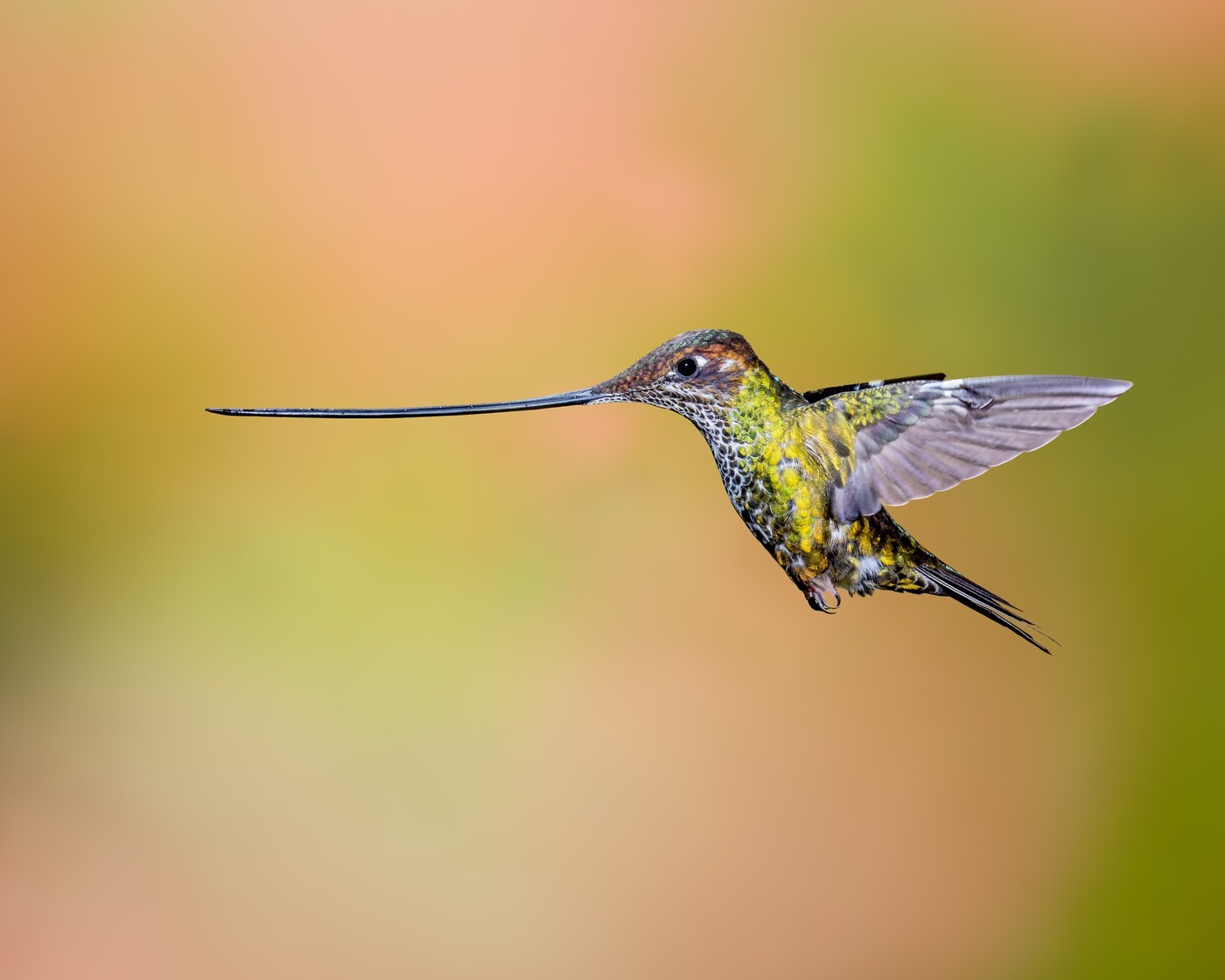
Sword-billed Hummingbird
Iridescent body feathers, extraordinarily long bill (non-feather feature)

White-eared Hummingbird
Iridescent gorget feathers, bold facial stripe
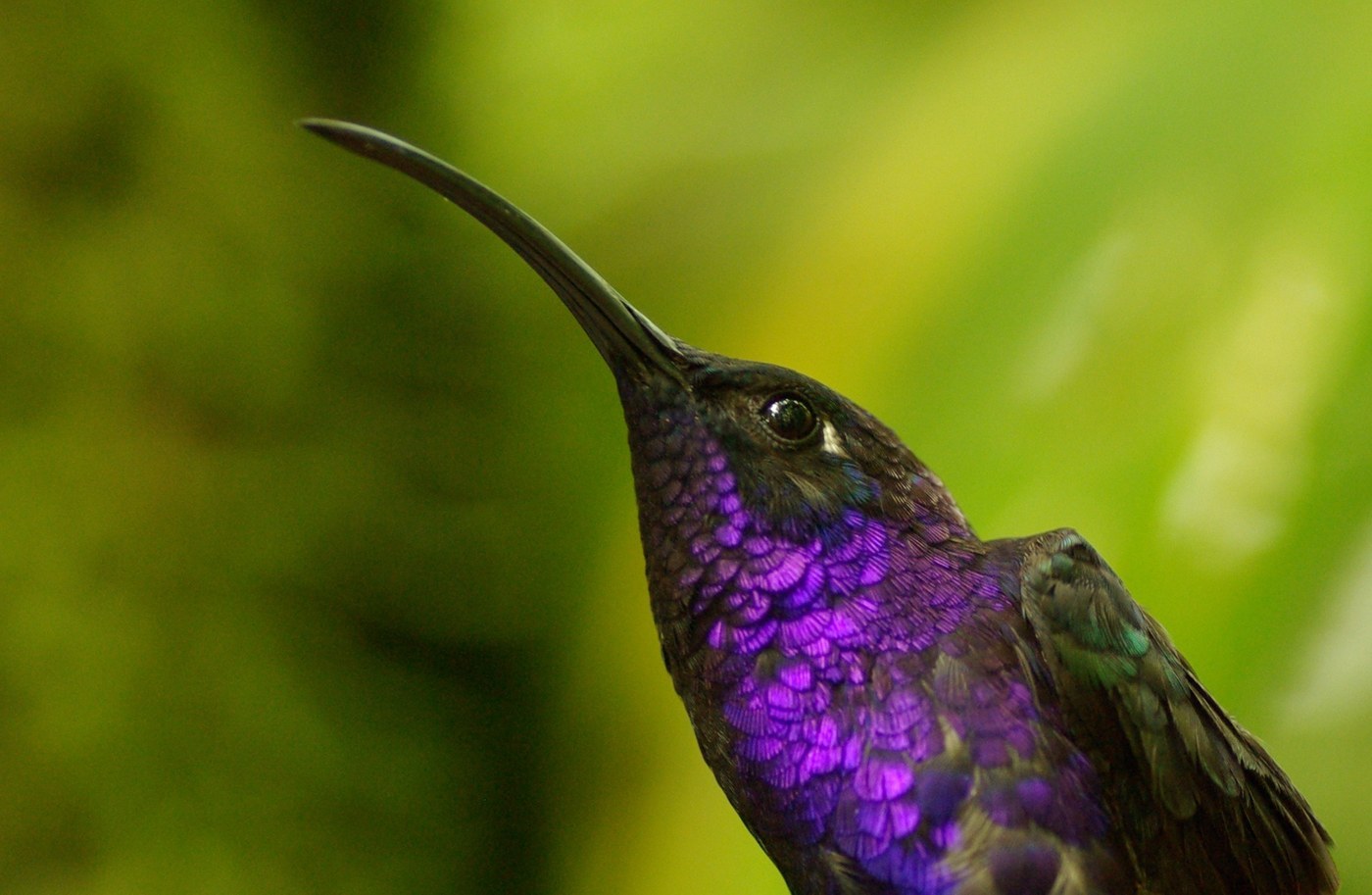
Violet Sabrewing
Iridescent body feathers, thickened curved primary shafts

Velvet-purple Coronet
Dense, velvety contour feathers with iridescent crown patch

Violet-crowned Hummingbird
Iridescent crown feathers, clean white underparts

Shining Sunbeam
Iridescent contour feathers with coppery-bronze wing sheen

Rufous Hummingbird
Tiny contour, gorget, and narrow flight feathers
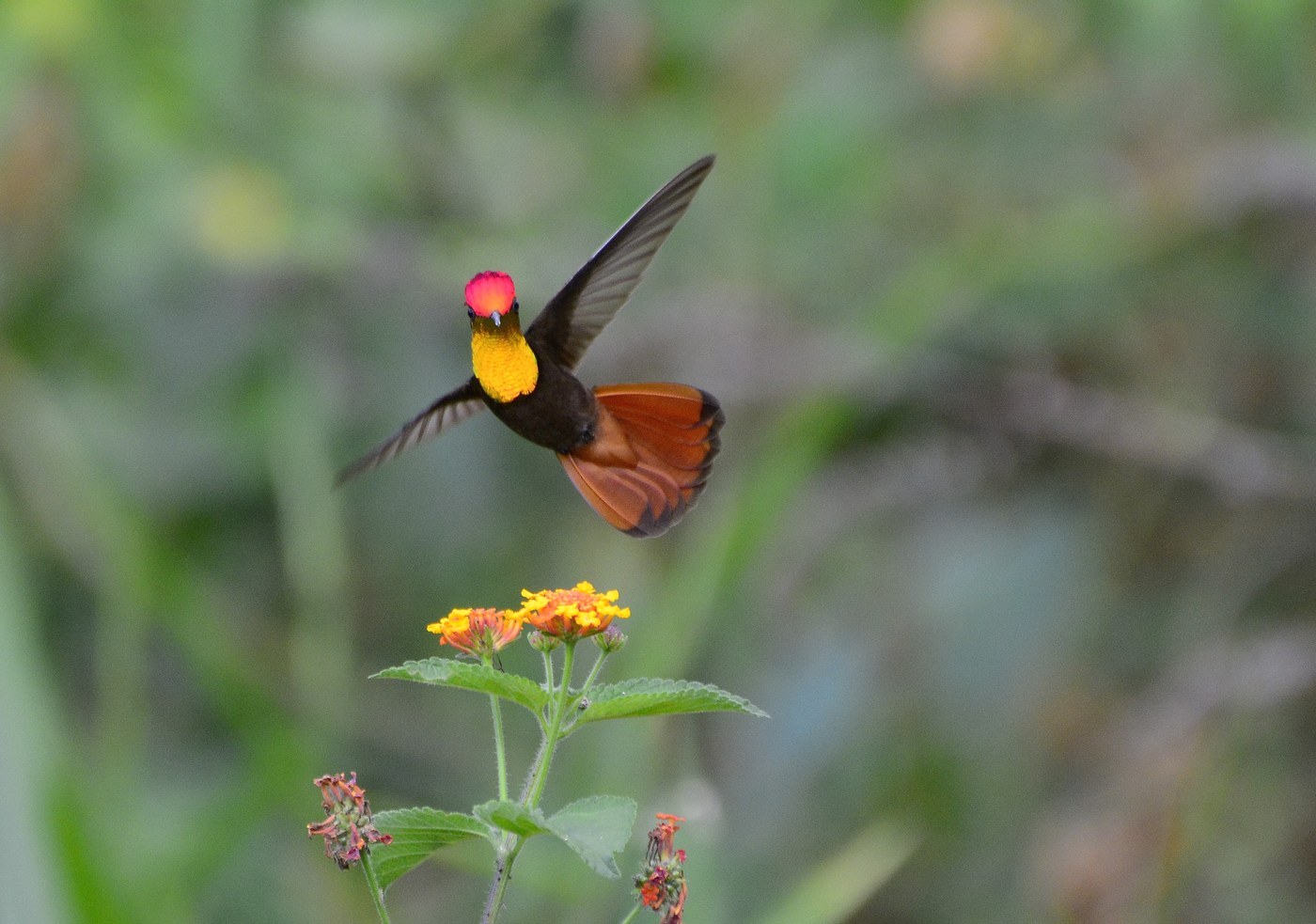
Ruby-topaz Hummingbird
Iridescent crown and gorget feathers, chestnut body feathers