

Black-chinned Hummingbird
Archilochus alexandri
A widespread western hummingbird whose males show a velvety black throat with a thin iridescent purple band at the base, often appearing entirely dark unless caught at just the right angle.
- Feather type
- Tiny contour, gorget, and narrow flight feathers
- Colours
- Iridescent purple lower throat band, black upper throat, green
- Bird size
- Tiny, ~9 cm
Found a feather like this?
Identify any feather from a photo, free.
Overview
The Black-chinned Hummingbird is a common and adaptable species across much of the western United States, often found along riparian corridors and desert washes as well as suburban gardens. Its feathers show iridescent green upperparts, and males have a throat patch that appears mostly velvety black, with only a narrow band of iridescent purple visible at the lower edge when lit at the right angle, giving it a subtler look than many other hummingbird gorgets.
Identifying the Feather
Size and Shape
Feathers are tiny and narrow, consistent with other hummingbirds of similar size, with the gorget feathers on the male's throat slightly elongated at the base.
Color and Pattern
- Crown and back feathers: iridescent green
- Male upper throat feathers: velvety black
- Male lower throat band: narrow iridescent purple, visible only in good light
- Underparts: pale grayish-white with some green flanking
Distinguishing from Similar Species
Black-chinned Hummingbird males are distinguished from Ruby-throated and Anna's by the black throat with only a thin purple lower band, rather than an all-red or all-magenta gorget. Females closely resemble female Ruby-throated Hummingbirds and are best separated by range, since the two species have largely non-overlapping breeding distributions.
Plumage & Molt
Adult males show a black upper throat with a narrow iridescent purple band at the base and green upperparts; adult females have a plain whitish throat and duller green upperparts, closely resembling females of other Archilochus hummingbirds. Juveniles resemble females. Adults undergo a complete molt primarily after breeding or on wintering grounds.
Habitat & Range
Black-chinned Hummingbirds breed across much of the western United States, from the Pacific states east to the western Great Plains and south into Mexico, favoring riparian corridors, canyons, desert washes with flowering shrubs, and increasingly suburban gardens. The species is migratory, wintering mainly in Mexico.
Behavior & Field Notes
This hummingbird feeds on nectar from a wide range of flowering plants and feeders and takes small insects for protein, especially important for feeding nestlings. Females build a small cup nest of plant down and spider silk, often over a stream or wash. Males perform a pendulum-shaped display flight to court females, and the species gives soft, high chip notes. Black-chinned Hummingbirds are adaptable to disturbed and urban habitats within their range, making them a common backyard visitor across much of the West.
Frequently asked questions
What does a Black-chinned Hummingbird throat feather look like?
The upper throat is velvety black with only a narrow band of iridescent purple visible at the base in good light.
How do I tell Black-chinned Hummingbird females from Ruby-throated females?
The two look very similar; range is usually the most reliable clue, since their breeding distributions barely overlap.
Where do Black-chinned Hummingbirds live?
Across much of the western United States, in riparian corridors, canyons, desert washes, and suburban gardens.
Is the Black-chinned Hummingbird's gorget always visible?
No, the purple band is only visible at certain angles in direct light; otherwise the throat can look entirely black.
Black-chinned Hummingbird guides
In-depth guides for identifying and understanding Black-chinned Hummingbird.

Other feathers you may enjoy

Speckled Hummingbird
Small contour feathers with fine speckled underpart markings
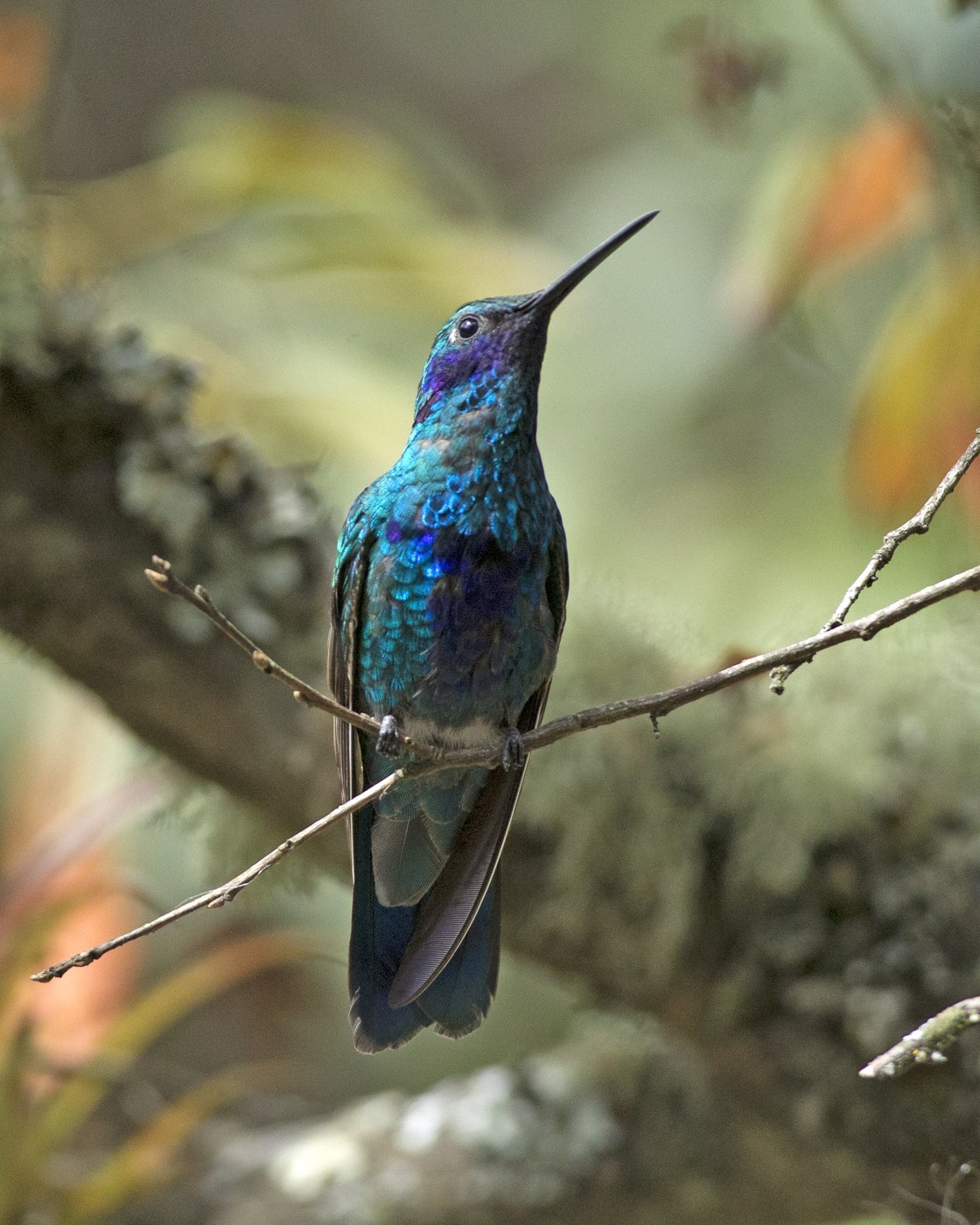
Sparkling Violetear
Iridescent body feathers, large violet ear and chest patches
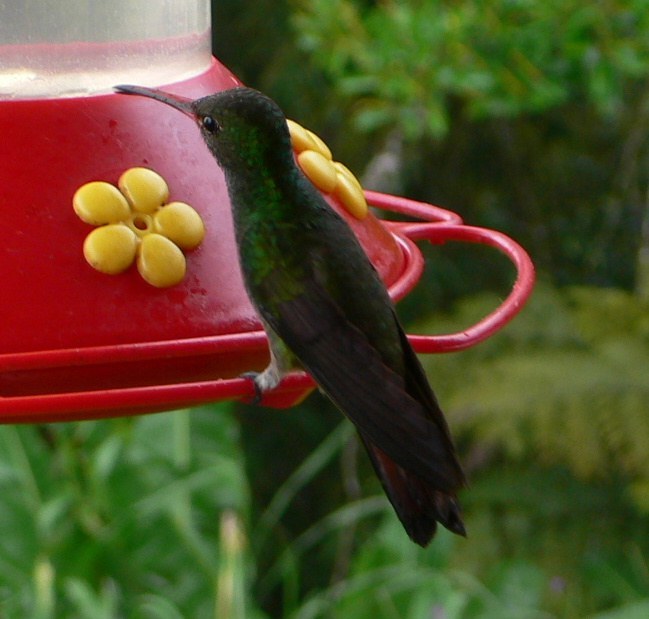
Rufous-tailed Hummingbird
Iridescent throat and breast feathers, rufous tail feathers

Rufous-breasted Hermit
Slightly decurved bill with rufous-washed contour feathers
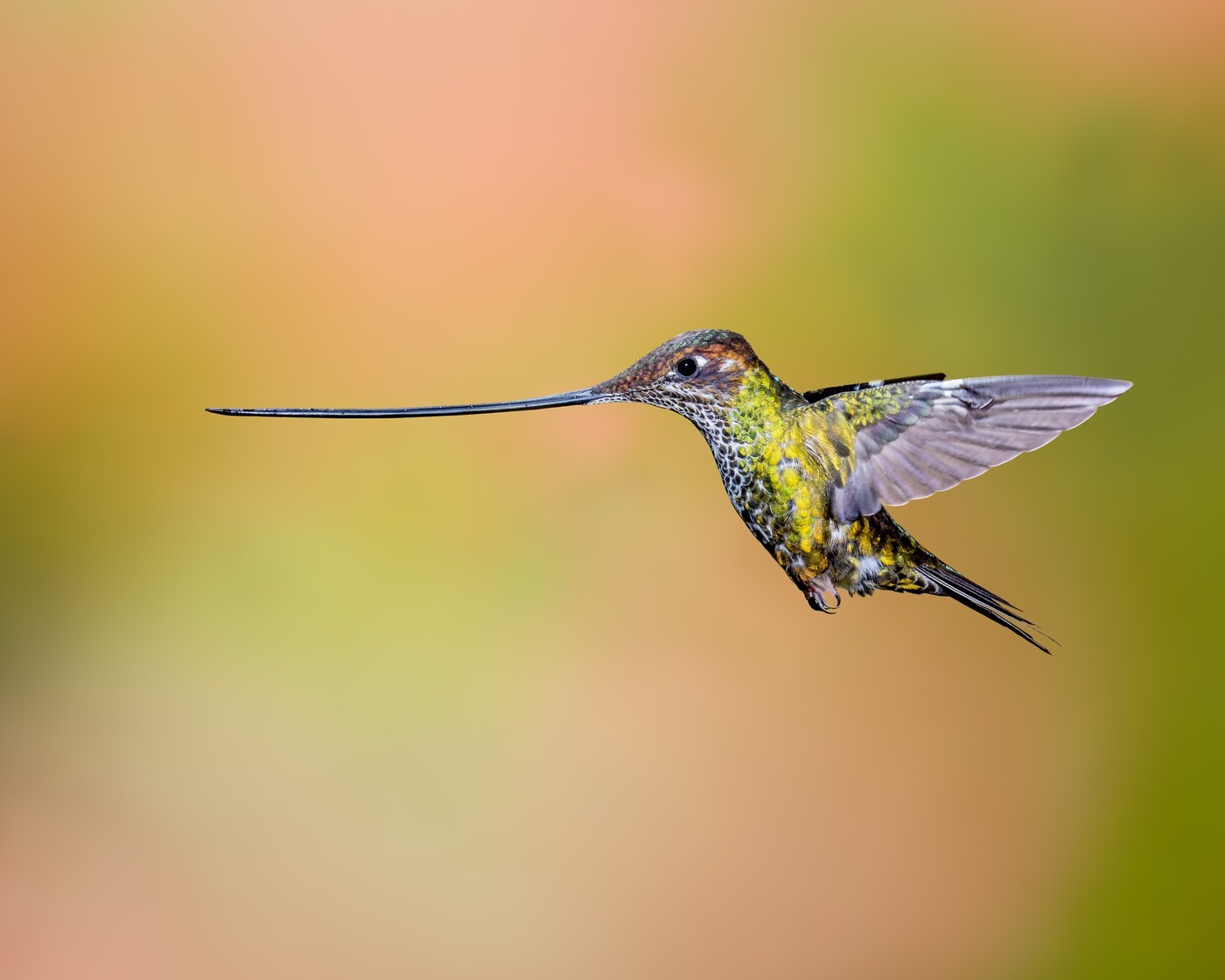
Sword-billed Hummingbird
Iridescent body feathers, extraordinarily long bill (non-feather feature)
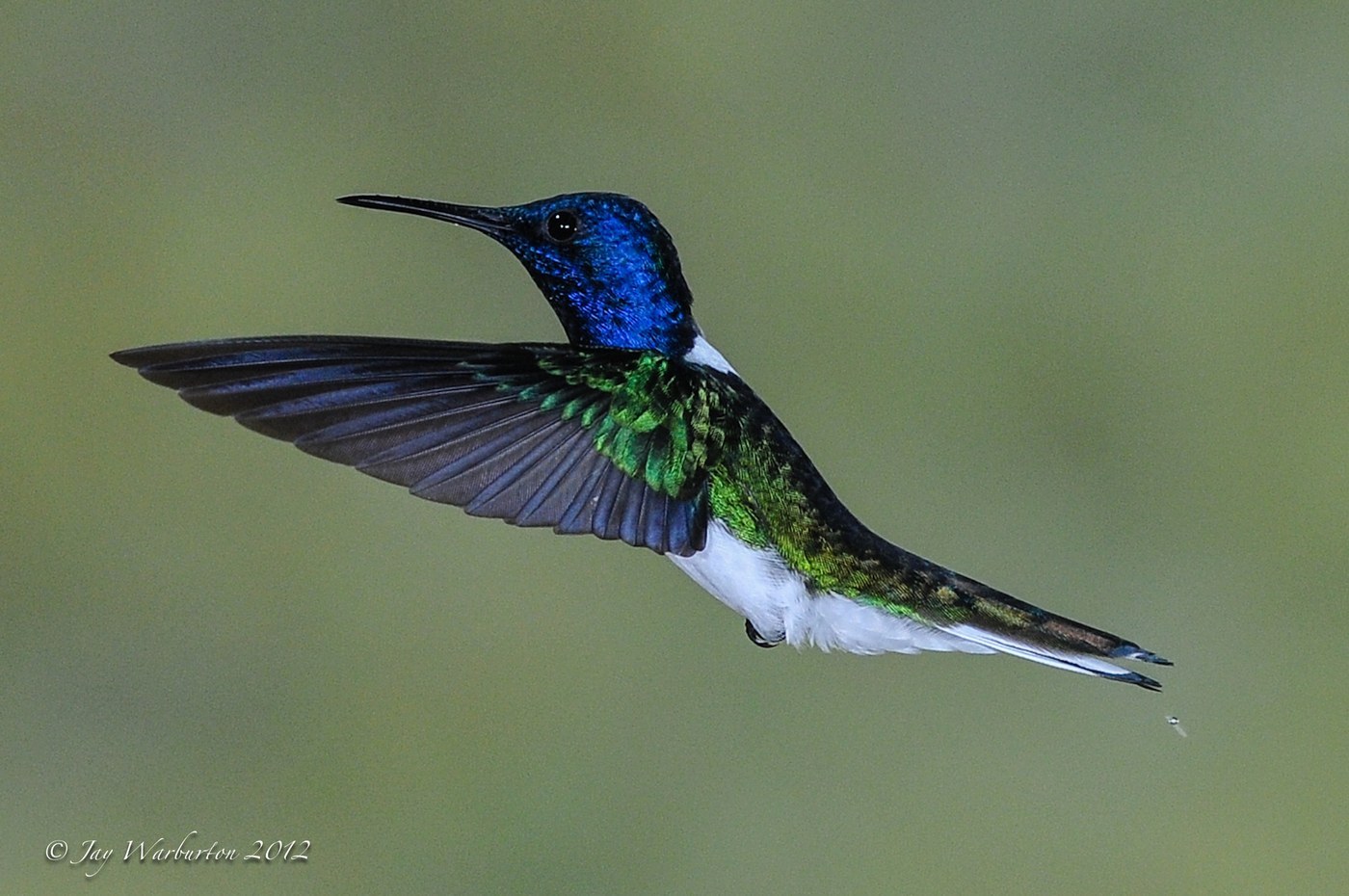
White-necked Jacobin
Iridescent head feathers, contrasting white nape and belly

White-eared Hummingbird
Iridescent gorget feathers, bold facial stripe
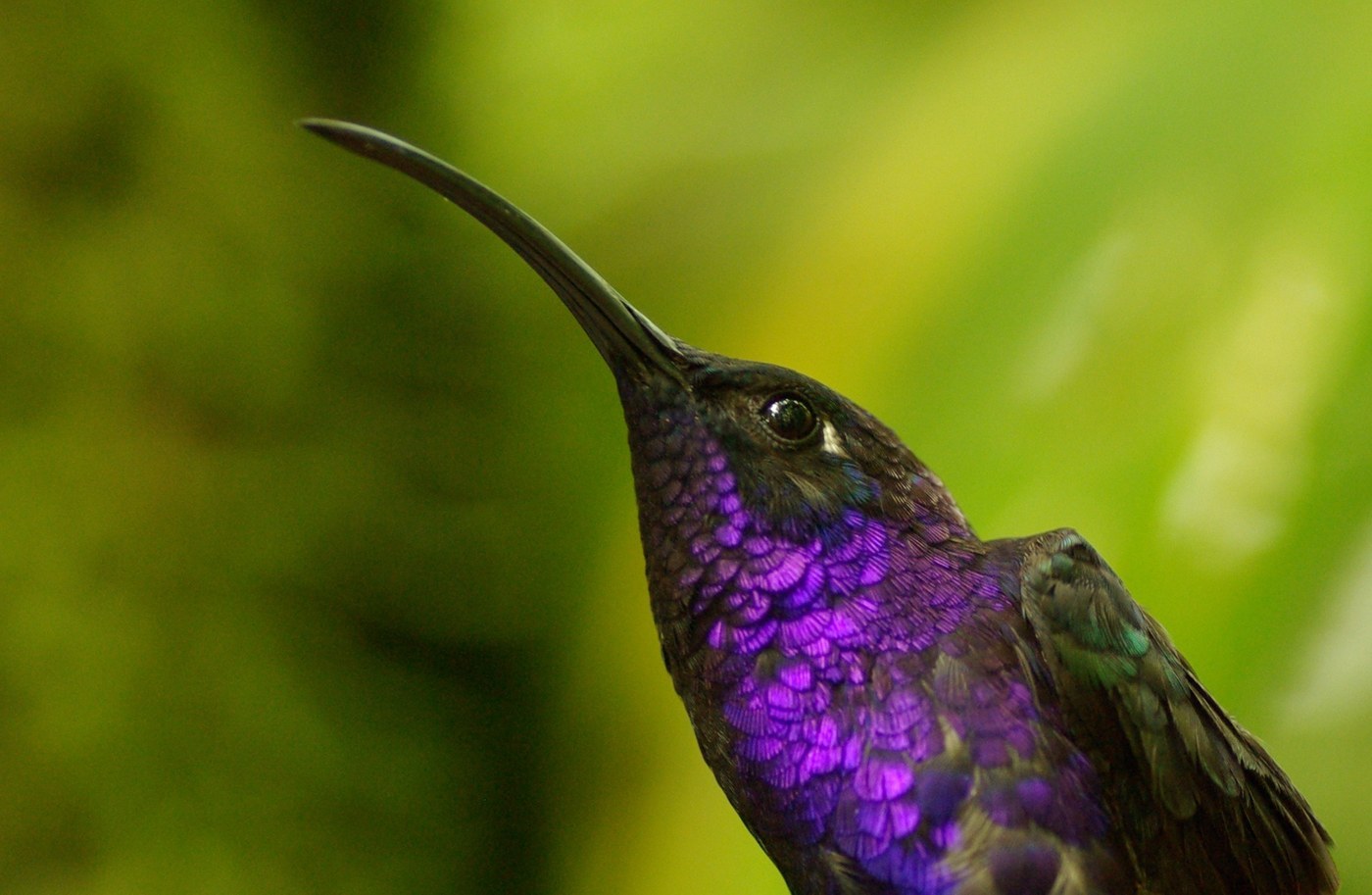
Violet Sabrewing
Iridescent body feathers, thickened curved primary shafts

Velvet-purple Coronet
Dense, velvety contour feathers with iridescent crown patch

Violet-crowned Hummingbird
Iridescent crown feathers, clean white underparts

Shining Sunbeam
Iridescent contour feathers with coppery-bronze wing sheen

Rufous Hummingbird
Tiny contour, gorget, and narrow flight feathers