
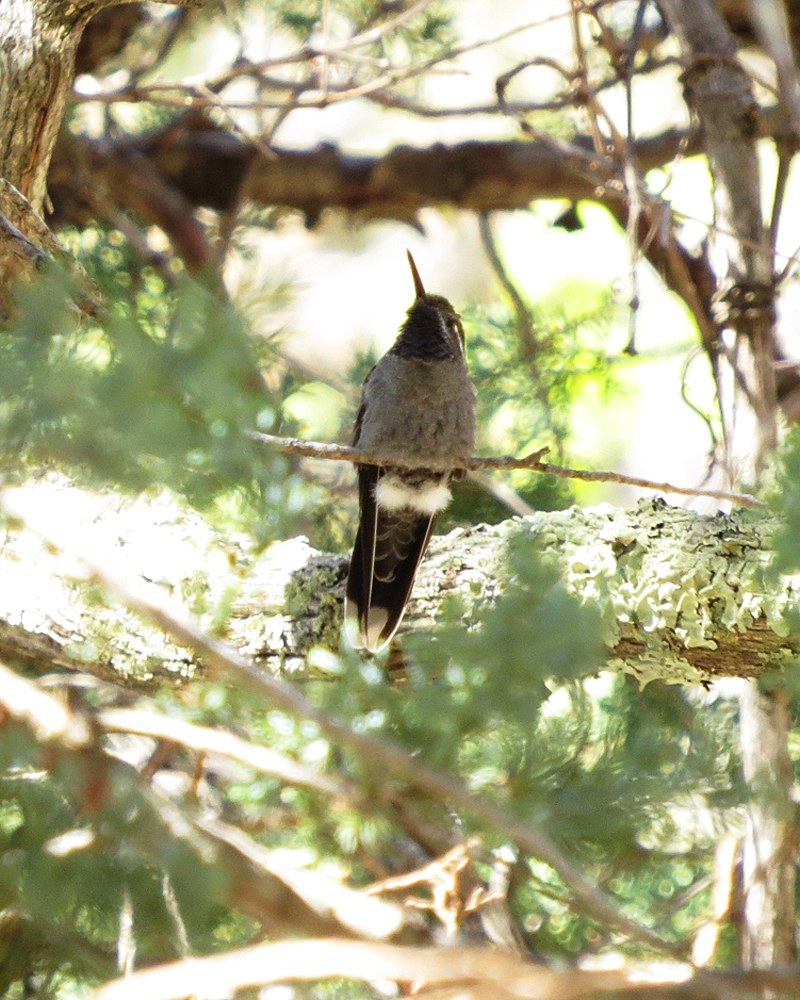
Blue-throated Mountain-gem
Lampornis clemenciae
A large mountain-canyon hummingbird known for its deep blue throat patch and an unusually broad, dark tail edged with bold white corners.
- Feather type
- Iridescent gorget feathers, broad white-cornered tail
- Colours
- Deep blue throat, bronze-green upperparts, broad tail with white corners
- Bird size
- Large for a hummingbird, ~12.5 cm
Found a feather like this?
Identify any feather from a photo, free.
Overview
Overview
The Blue-throated Mountain-gem is among the largest hummingbirds occurring in the United States, favoring shady, humid canyons and streamside woodland in mountainous parts of the Southwest and Mexico. Its broad tail and deliberate flight style give it a somewhat different flight impression from smaller, faster hummingbird species sharing its habitat.
Males carry a rich blue throat patch that can look almost black without direct light, while both sexes show bold white stripes above and below the eye and a tail proportionally larger than that of most other hummingbirds in its range.
Identifying the Feather
Feather ID Notes
The male's gorget feathers show deep blue iridescence, often looking dark until light catches them directly. The tail is the best structural clue: broad, dark, and squared with large white corner patches visible from below, larger and more conspicuous than the tail markings of similar species.
- Gorget feathers: deep blue, can appear blackish in shade
- Facial feathers: bold white stripes above and below the eye
- Tail feathers: broad and dark with prominent white corners
- Upperparts: bronze-green, relatively dull compared to gorget The combination of a large, white-cornered tail and bold facial striping helps separate this species from other large montane hummingbirds.
Plumage & Molt
Plumage Details
Adult males show the blue gorget and prominent tail markings described above, while females lack the blue throat, instead showing a plain grayish throat and the same bold facial stripes and tail pattern as males. Juveniles resemble females. There is no strong seasonal plumage variation, with an annual molt maintaining feather condition.
Habitat & Range
Habitat & Range
This species favors humid, shaded canyons, streamside woodland, and pine-oak forest at moderate elevations in mountain ranges of the southwestern United States and Mexico, extending south into parts of Central America. Some populations are resident while northern edge populations withdraw southward for the winter.
Behavior & Field Notes
Behavior & Field Notes
Blue-throated Mountain-gems feed on nectar from canyon wildflowers and readily visit hummingbird feeders, often dominating smaller species due to their larger size. They also glean small insects from foliage and spider webs. Nests are built on rock ledges or under overhangs near water, sometimes reused across seasons. Calls include a distinctive, sharp "seep" note repeated persistently while perched or foraging.
Frequently asked questions
What feather feature best identifies the Blue-throated Mountain-gem?
Its unusually broad tail with large white corner patches, combined with bold white facial stripes, is highly distinctive.
Do females have a blue throat too?
No, females have a plain grayish throat, though they share the tail pattern and facial stripes with males.
Where is this species typically found?
In humid mountain canyons and streamside woodland in the southwestern United States and Mexico.
Is the Blue-throated Mountain-gem larger than most hummingbirds?
Yes, it is one of the largest hummingbird species found in the United States.
Blue-throated Mountain-gem guides
In-depth guides for identifying and understanding Blue-throated Mountain-gem.
Other feathers you may enjoy

Speckled Hummingbird
Small contour feathers with fine speckled underpart markings
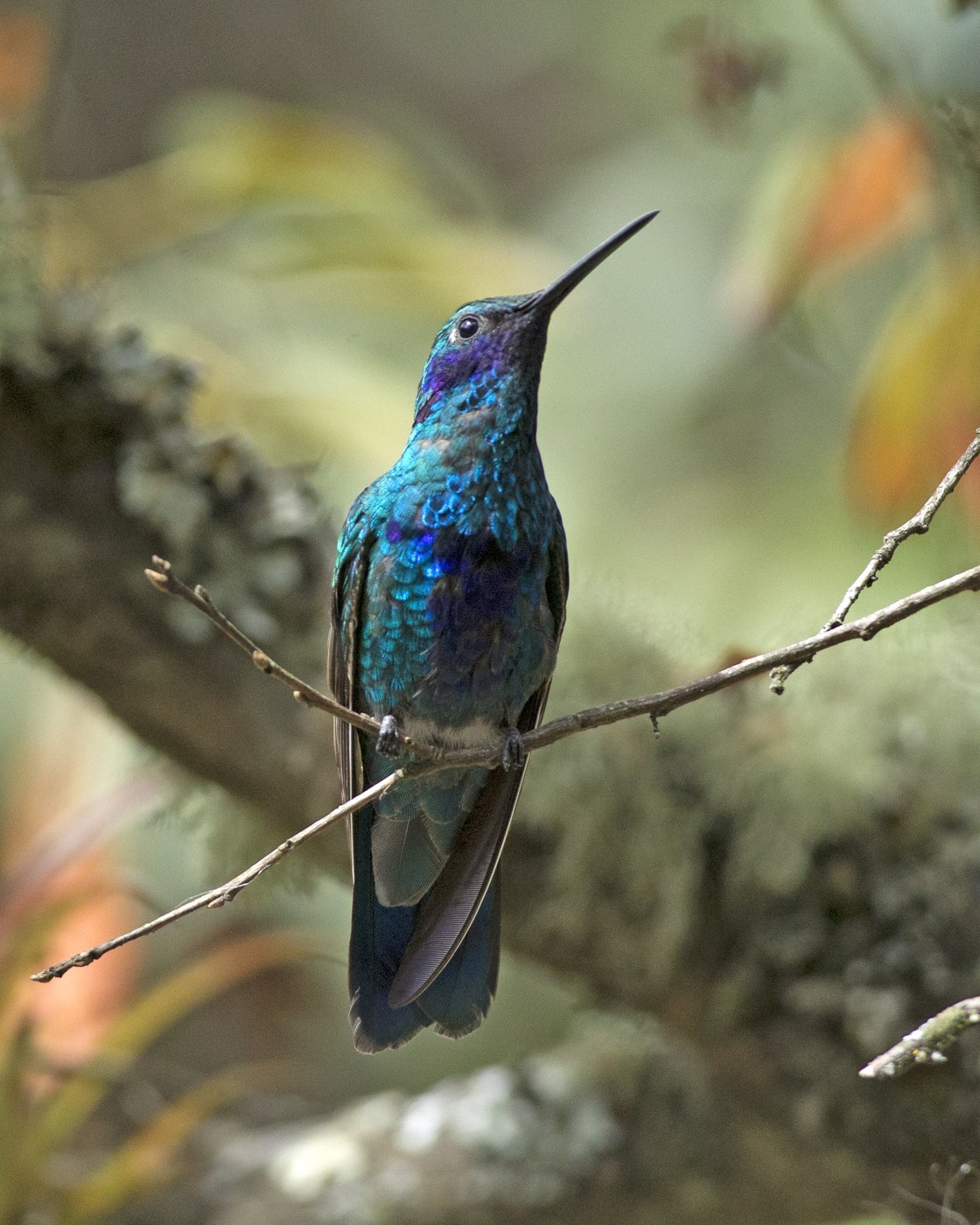
Sparkling Violetear
Iridescent body feathers, large violet ear and chest patches
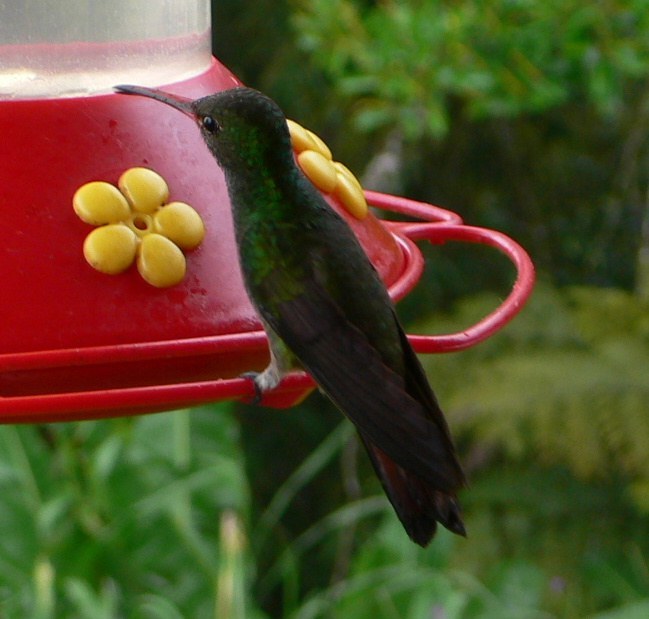
Rufous-tailed Hummingbird
Iridescent throat and breast feathers, rufous tail feathers

Rufous-breasted Hermit
Slightly decurved bill with rufous-washed contour feathers
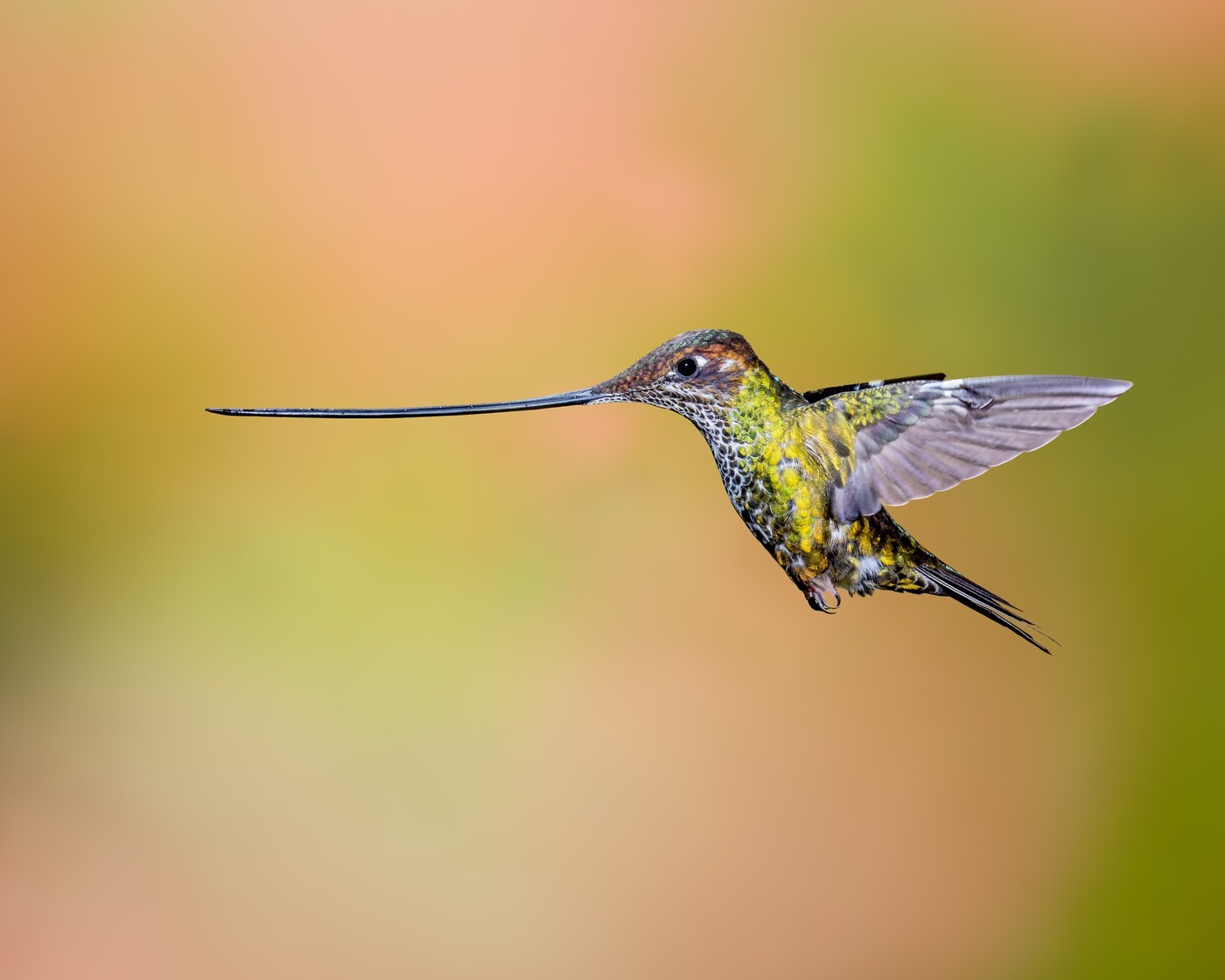
Sword-billed Hummingbird
Iridescent body feathers, extraordinarily long bill (non-feather feature)
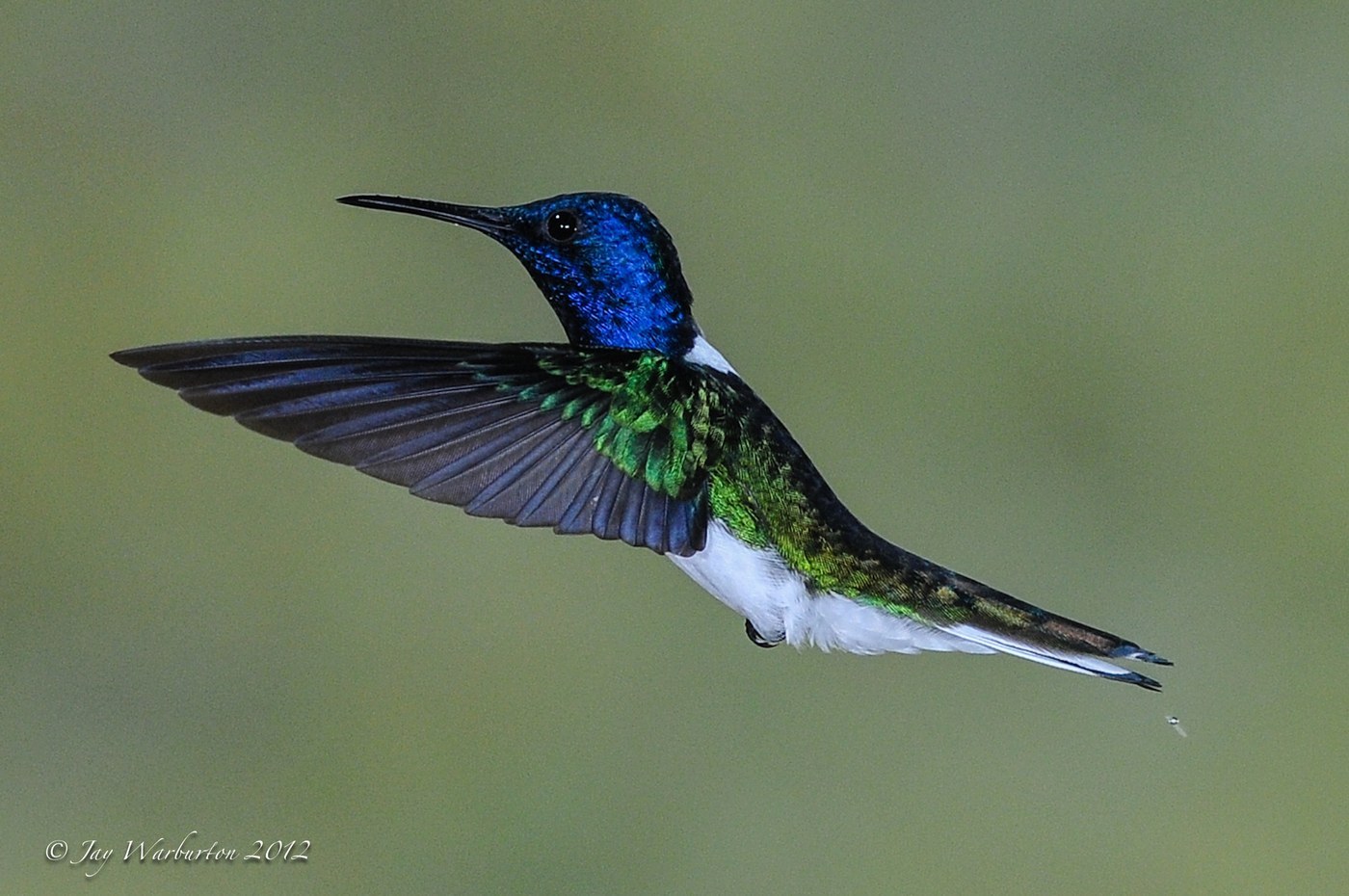
White-necked Jacobin
Iridescent head feathers, contrasting white nape and belly

White-eared Hummingbird
Iridescent gorget feathers, bold facial stripe
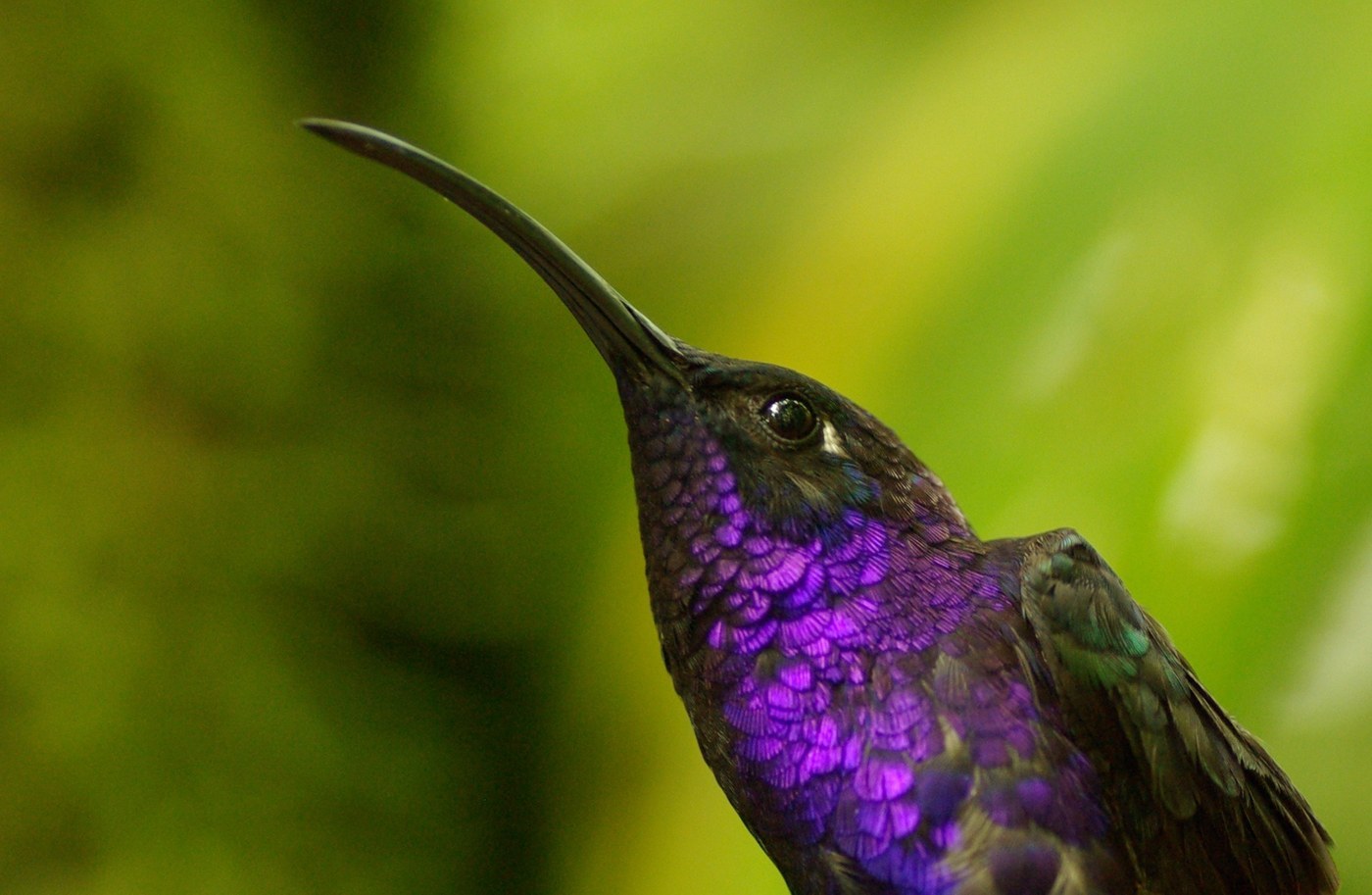
Violet Sabrewing
Iridescent body feathers, thickened curved primary shafts

Velvet-purple Coronet
Dense, velvety contour feathers with iridescent crown patch

Violet-crowned Hummingbird
Iridescent crown feathers, clean white underparts

Shining Sunbeam
Iridescent contour feathers with coppery-bronze wing sheen

Rufous Hummingbird
Tiny contour, gorget, and narrow flight feathers