

Demoiselle Crane
Grus virgo
The smallest of the world's cranes, a blue-grey bird with a black head and breast set off by long, drooping white ear-tuft plumes trailing behind the eyes.
- Feather type
- Blue-grey contour feathers with elongated white ear plumes and black breast feathers
- Colours
- Blue-grey body with a black head, neck, and breast, and long white ear tufts
- Bird size
- Smallest crane species, ~85-100 cm tall
Found a feather like this?
Identify any feather from a photo, free.
Overview
The Demoiselle Crane is the smallest crane species, breeding across the steppes and semi-arid plains of Central Asia and parts of Europe, and undertaking one of the most challenging migrations of any bird as it crosses the high Himalayas to reach wintering grounds in South Asia, alongside populations wintering in sub-Saharan Africa. Its delicate build and ornamental white ear plumes give it a more elegant appearance than the larger, bulkier crane species.
Identifying the Feather
- Body feathers are blue-grey, generally paler and softer in tone than the darker slate-grey of the Common Crane.
- Head, neck, and breast feathers are black, with elongated black breast plumes that hang down over the chest in a loose plume rather than lying flat.
- Ear-tuft plumes are long, white, and drooping, extending backward from behind the eye - a feature unique among cranes and one of the best identification points for this species.
- The tertial bustle feathers are present but less pronounced than in larger crane species, being shorter and less dramatically curled.
- Distinguish from the Common Crane by smaller overall feather size, an entirely black (rather than black-and-white striped) neck, and the unique white ear plumes.
Plumage & Molt
Adults are blue-grey with a black face, head, neck, and upper breast, long white plumes trailing back from behind the red eye, and elongated black feathers drooping from the breast. Sexes look alike. Juveniles are duller grey-brown, lacking the black head/neck pattern and white ear plumes, which develop as the bird matures over its first year. Molt follows breeding, timed to allow completion before the demanding migration.
Habitat & Range
Demoiselle Cranes breed across the steppes and semi-desert plains of Central Asia, with smaller populations in parts of Eastern Europe and North Africa. They are strongly migratory, with Central Asian populations making a notably difficult crossing of the Himalayas to reach wintering grounds in India, while other populations winter in sub-Saharan Africa.
Behavior & Field Notes
This crane forages on open steppe and agricultural land for seeds, grains, and small invertebrates. It nests on the ground in open, sparsely vegetated steppe, relying on camouflage rather than dense cover to protect the nest. Its call is a rolling, trumpeting bugle, generally higher-pitched than that of larger crane species. It is well known for its arduous high-altitude migration over the Himalayas, one of the most demanding migratory routes among all birds, and for elaborate dancing displays similar to those of other cranes.
Frequently asked questions
How can you identify a Demoiselle Crane feather?
Look for blue-grey body feathers combined with black head/neck/breast feathers and, if present, the distinctive long white ear-tuft plumes.
Why is the Demoiselle Crane notable among cranes?
It is the smallest crane species and undertakes a particularly demanding high-altitude migration over the Himalayas.
How does it differ from the Common Crane?
It is smaller, with an entirely black neck rather than a black-and-white striped pattern, and unique white ear-tuft plumes.
Is the Demoiselle Crane migratory?
Yes, it migrates long distances, including a difficult crossing of the Himalayas for Central Asian populations.
Demoiselle Crane guides
In-depth guides for identifying and understanding Demoiselle Crane.

Other feathers you may enjoy

Yellow-billed Spoonbill
White contour and flight feathers with fine breeding plumes on the back and breast
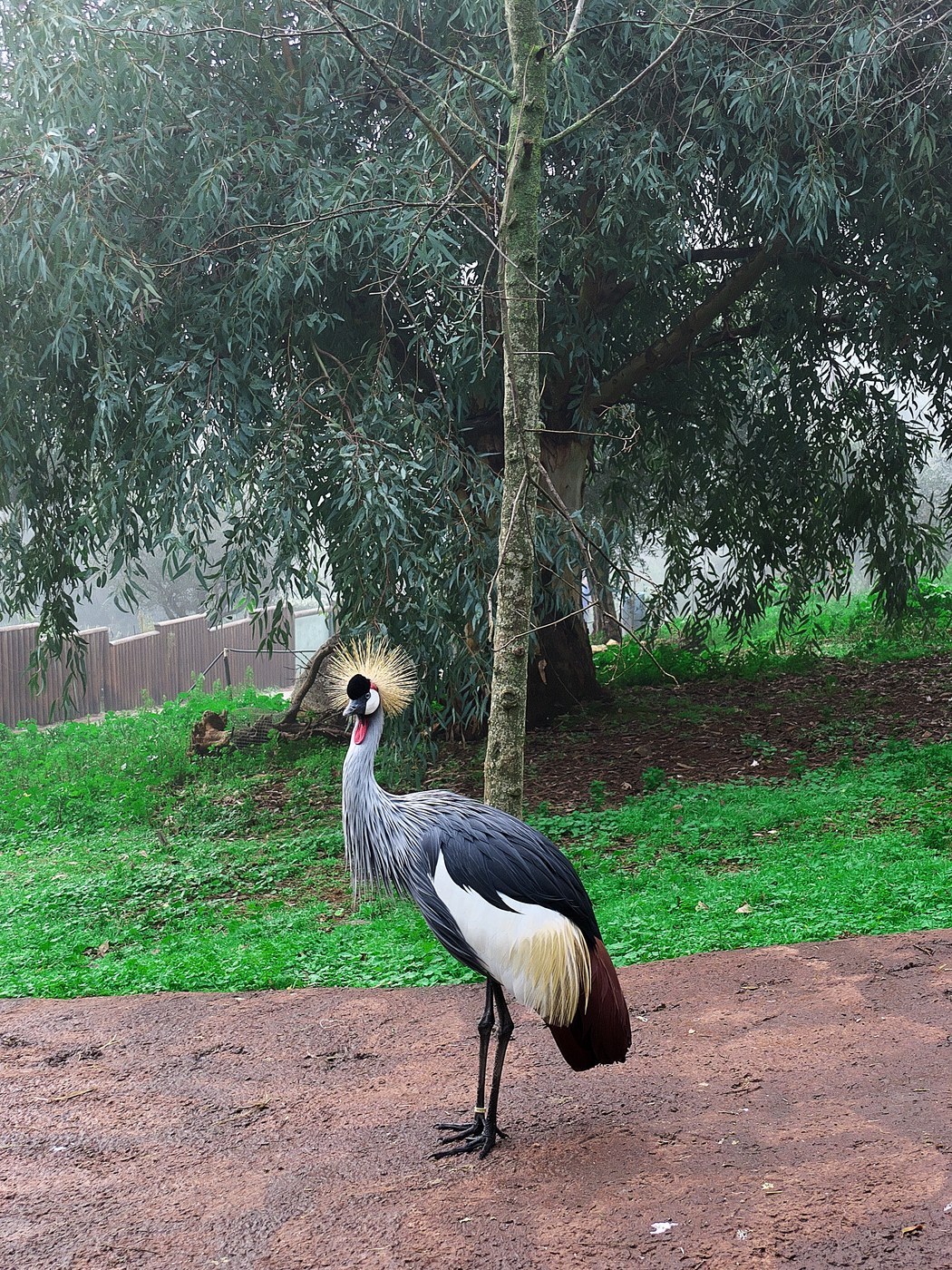
Grey Crowned Crane
Grey body feathers with white wing coverts, chestnut flight feathers, and stiff golden crown bristles
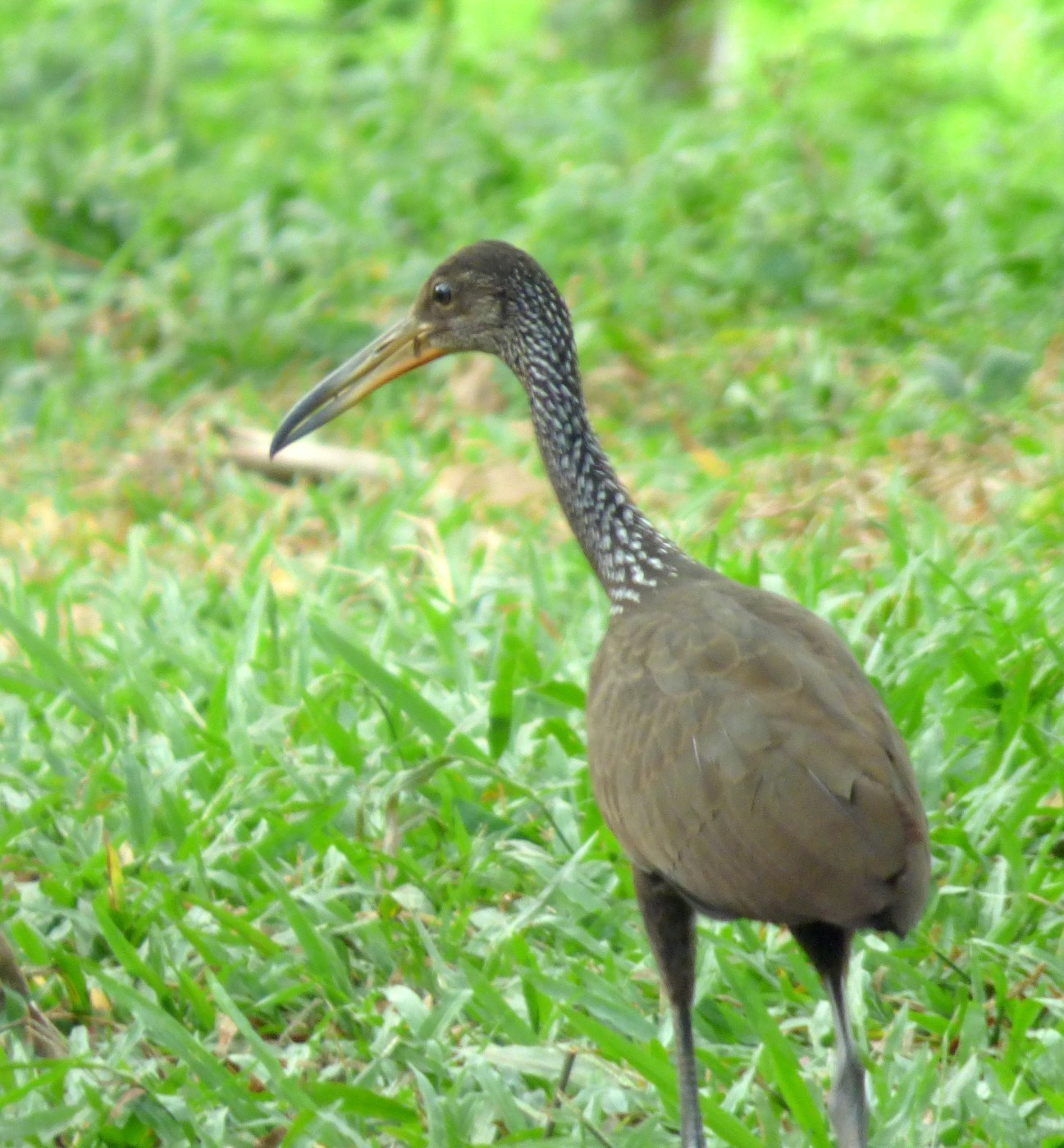
Limpkin
Brown contour feathers with white teardrop-shaped spots and streaks
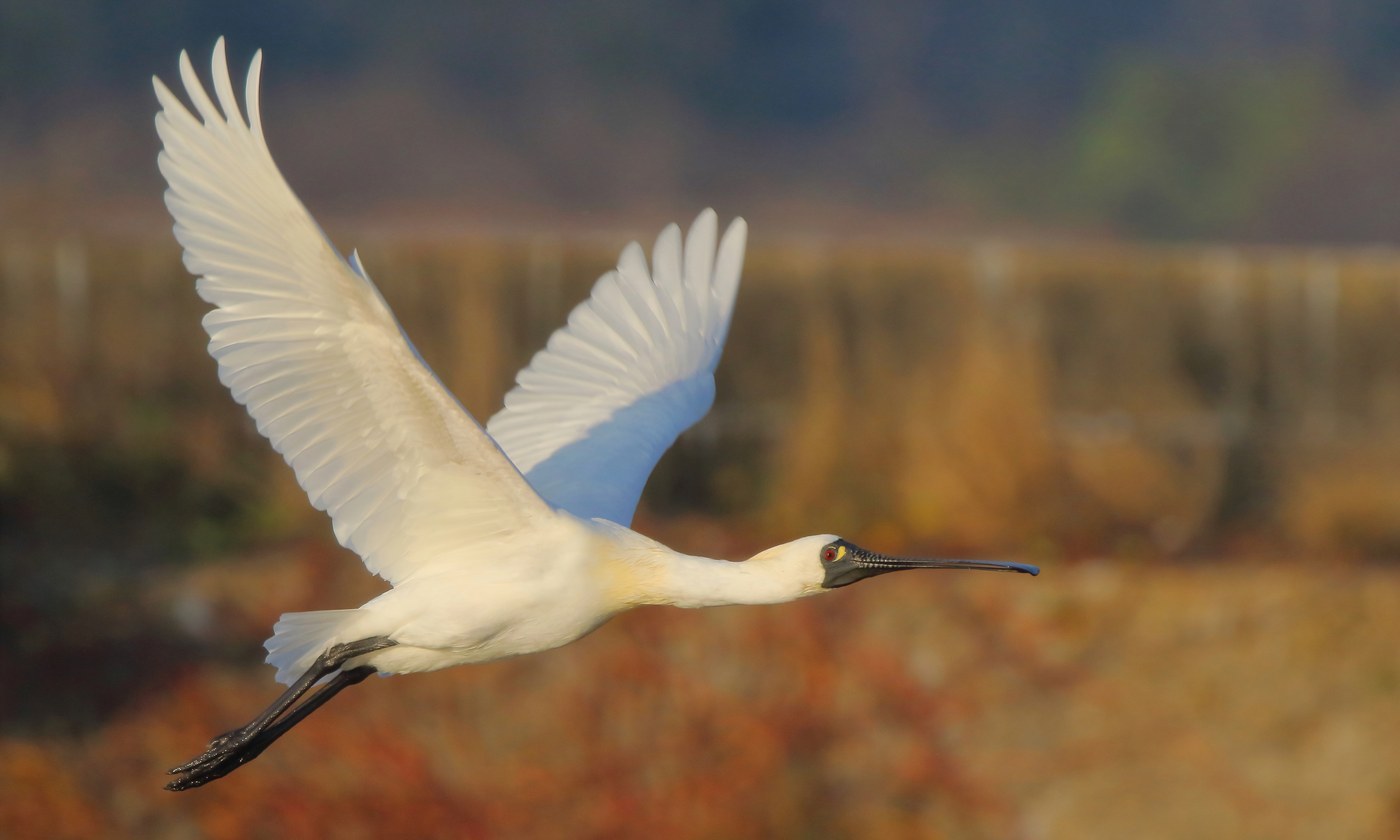
Black-faced Spoonbill
White contour and flight feathers with fine breeding crest and breast plumes
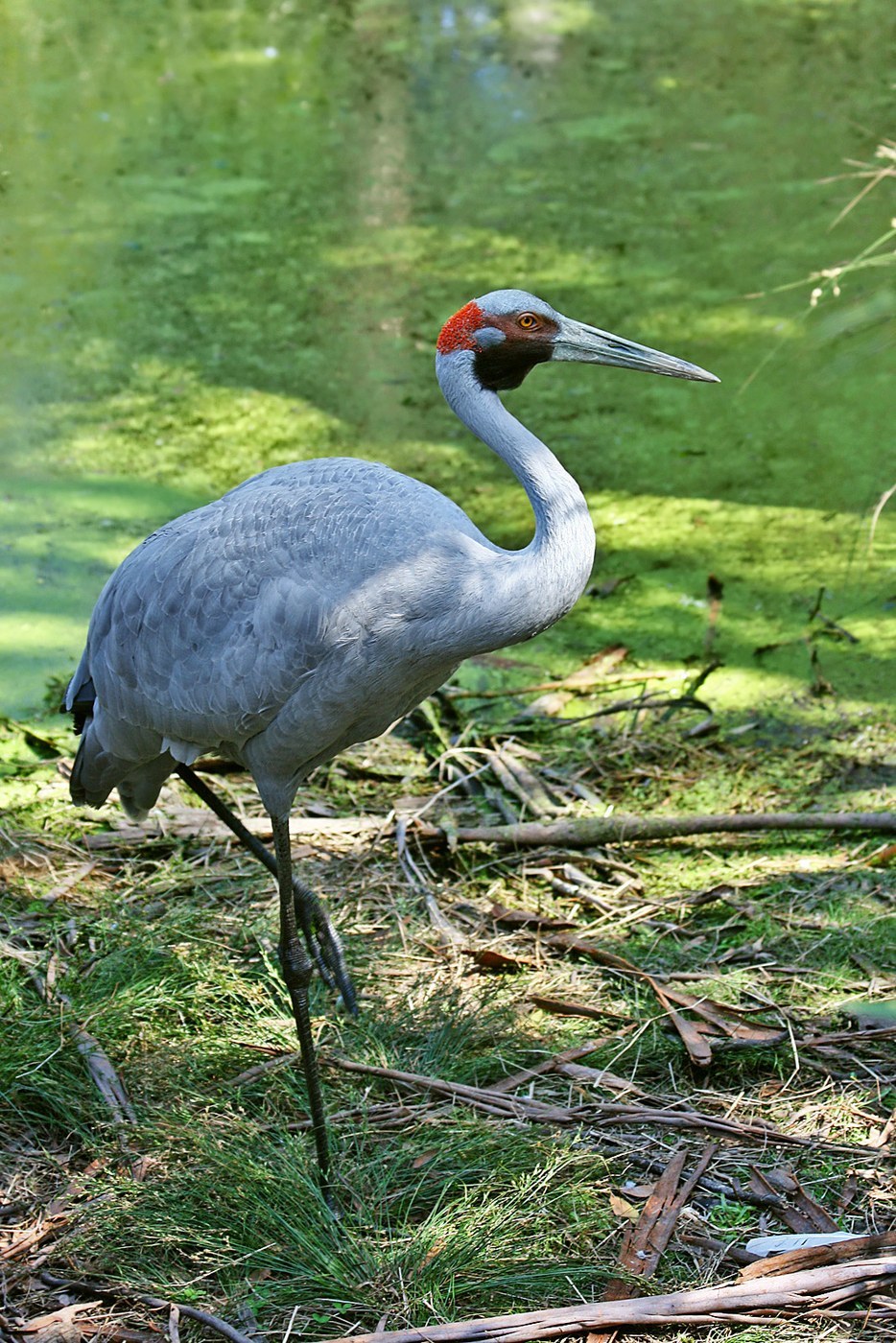
Brolga
Grey contour feathers with drooping bustle plumes
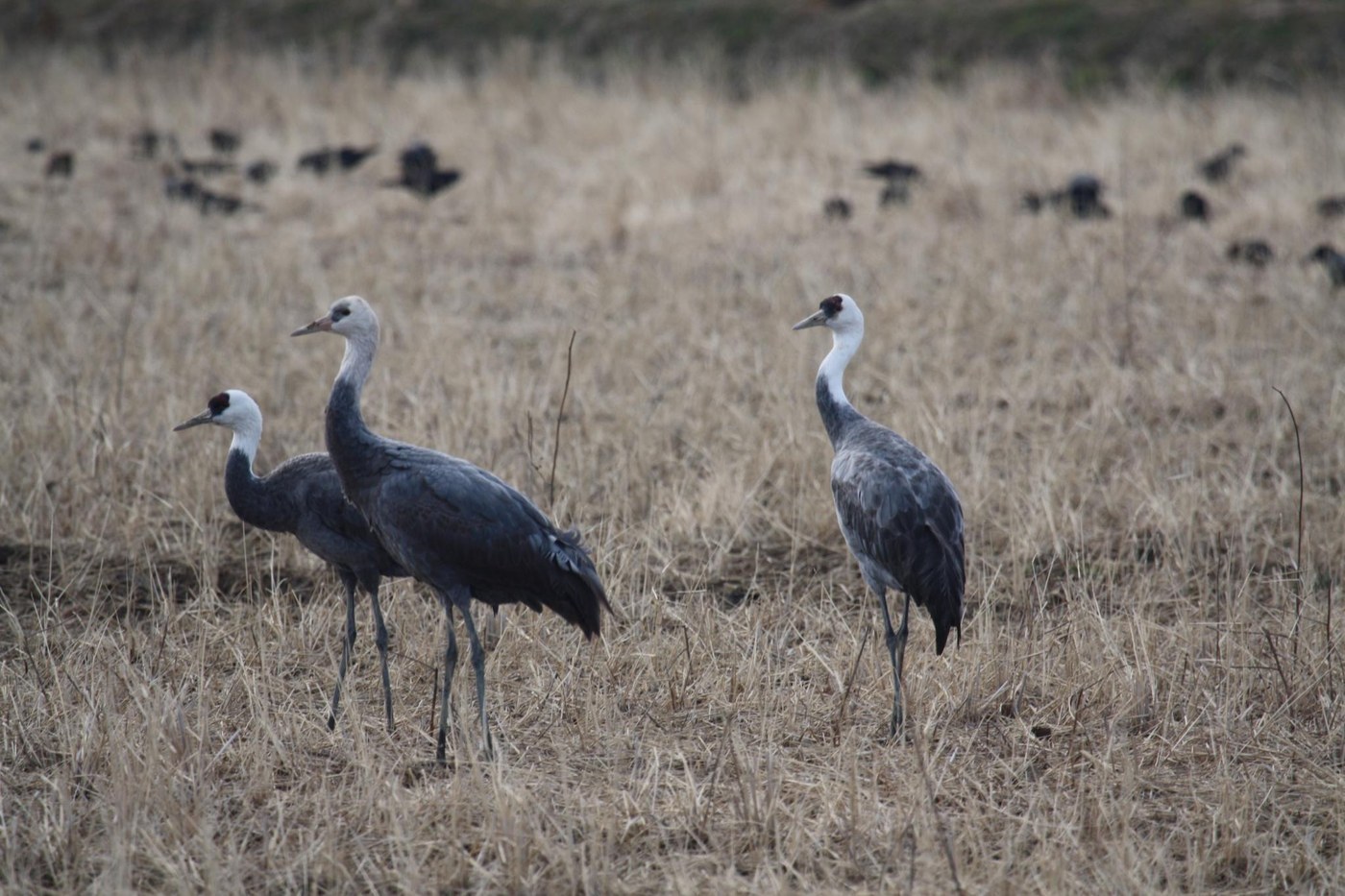
Hooded Crane
Dark slate-grey body feathers with a white head/upper neck 'hood' and black bustle plumes
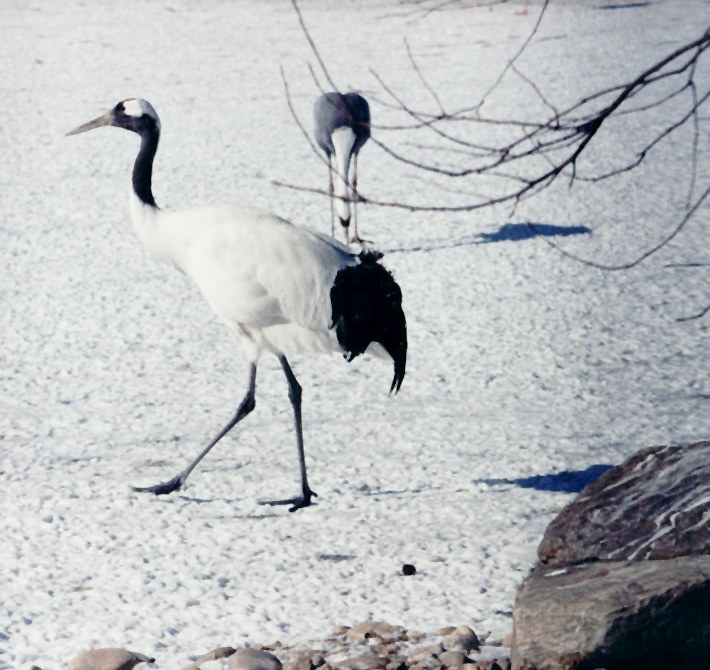
Red-crowned Crane
White contour feathers with black secondary/tertial bustle feathers and a bare red crown

Common Crane
Grey contour feathers with black head/neck feathers and drooping bustle plumes
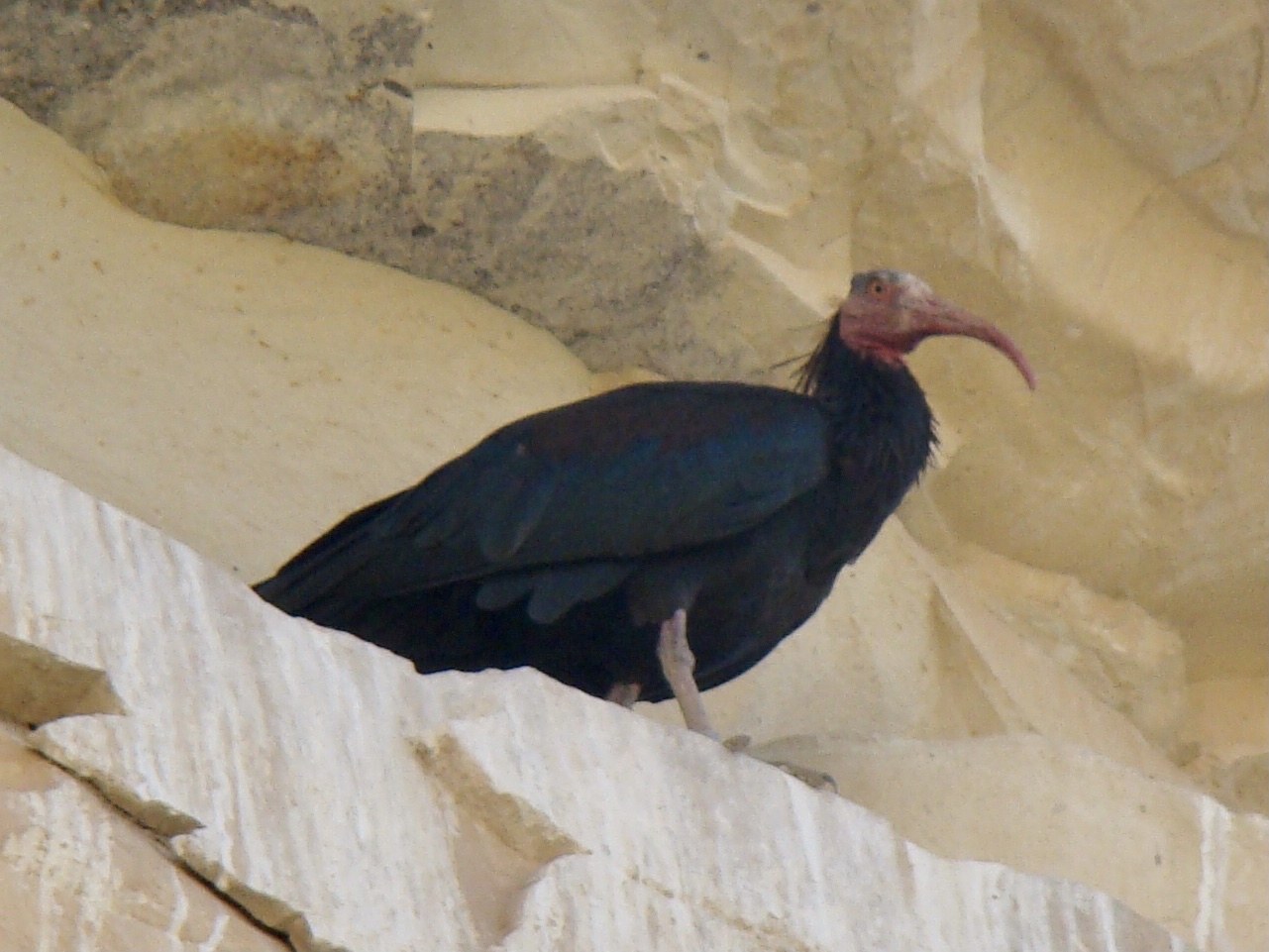
Northern Bald Ibis
Glossy black contour feathers with elongated nape plumes
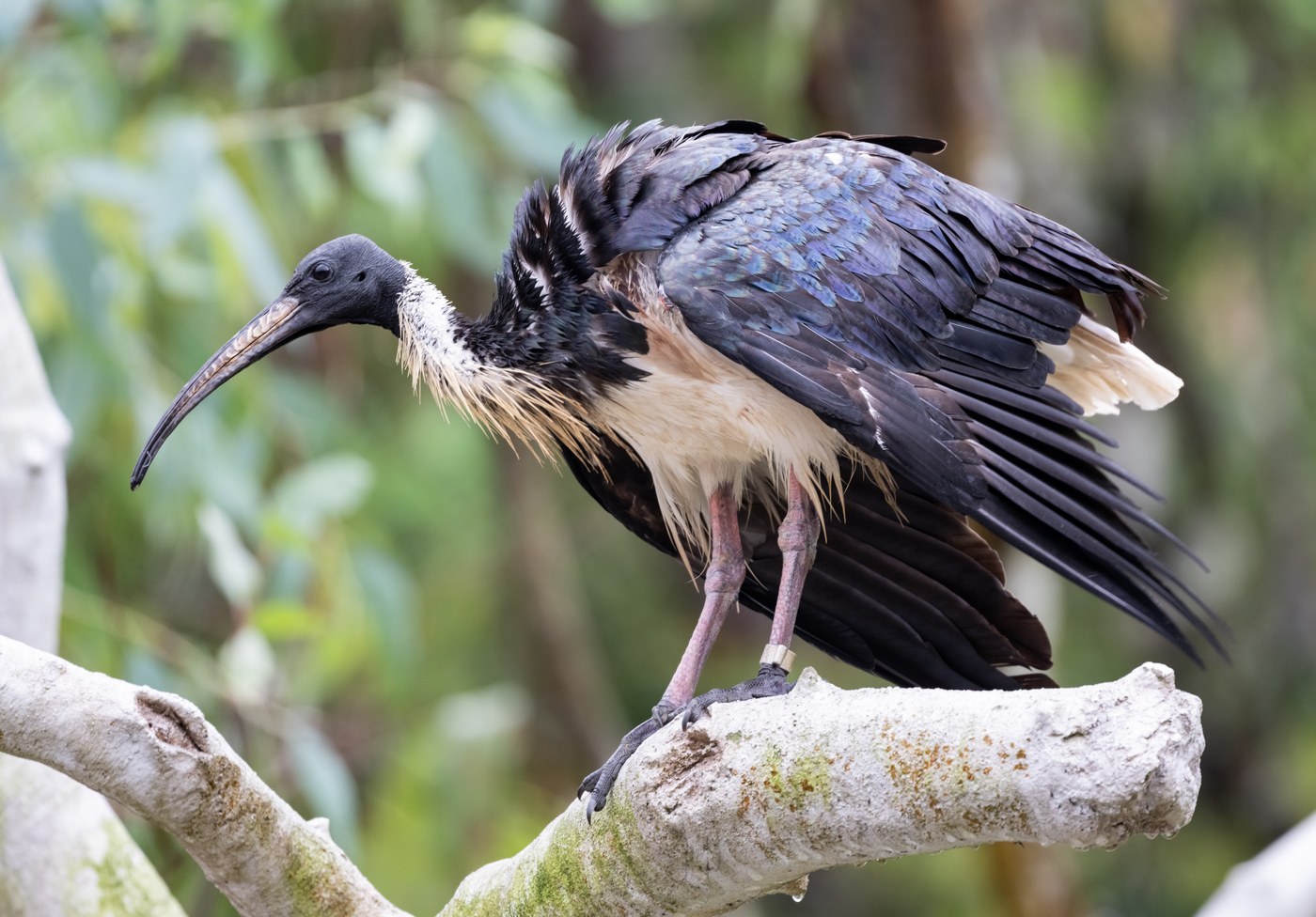
Straw-necked Ibis
Glossy contour feathers with unique straw-like neck plumes
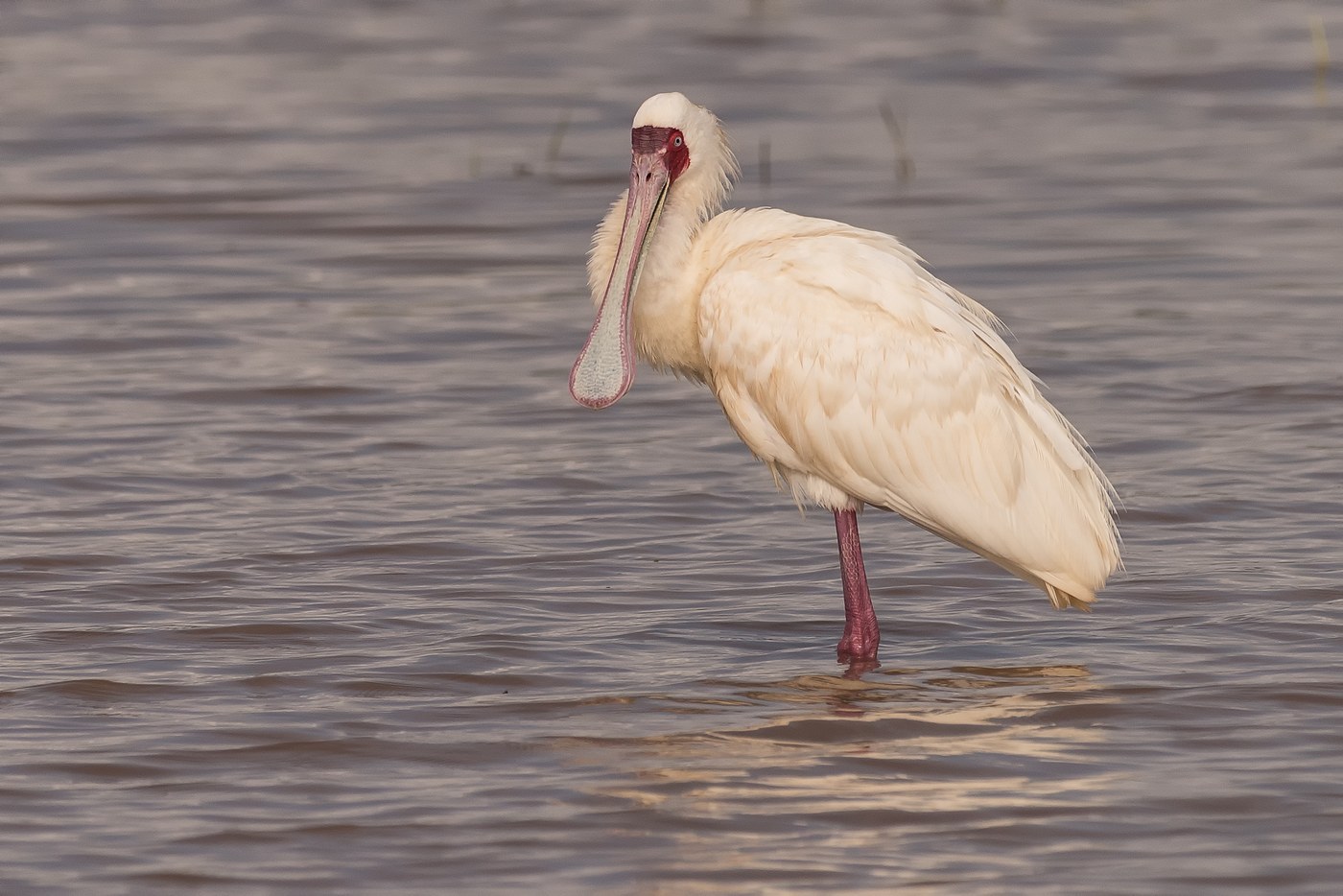
African Spoonbill
White contour and flight feathers, unmarked by black tips

Roseate Spoonbill
Pink and white contour and flight feathers with a carmine shoulder patch