

Dusky Turtle Dove
Streptopelia lugens
A darkly plumaged highland dove of East Africa's mountains, notably duskier overall than lowland turtle doves, with a black patch on the back of the neck.
- Feather type
- Contour feathers with dark half-collar
- Colours
- Dark brownish-grey with a black neck patch
- Bird size
- Medium dove, ~25-27 cm
Found a feather like this?
Identify any feather from a photo, free.
Overview
The Dusky Turtle Dove inhabits the cooler highlands of East Africa, particularly the mountains of Ethiopia and nearby ranges, where it is noticeably darker and more heavily toned than many of its lowland relatives. It occupies forest edge and montane scrub, often at considerable elevation.
Identifying the Feather
Overall plumage is a dark, somewhat smoky brownish-grey, deeper in tone than most other Streptopelia doves in the region. A solid black patch is present on the back of the neck, without the white edging seen in some related collared doves. Wing feathers are plain, lacking strong contrasting spots or bars. Compare with the Mourning Collared Dove, which is paler grey overall with a more sharply defined black-and-white neck patch, aiding separation in areas where ranges may approach one another.
Plumage & Molt
Sexes are alike, both showing the dark overall tone and black neck patch. Juveniles are duller and browner, with the neck patch developing after their first molt. There is little seasonal plumage change, consistent with its stable highland habitat.
Habitat & Range
Found in the highlands of Ethiopia and adjacent parts of East Africa, occupying montane forest edge, scrub, and cultivated highland areas, often at higher elevations than related turtle doves. It is largely resident, with some local altitudinal movement possible.
Behavior & Field Notes
Forages on the ground for seeds, often in pairs within its highland habitat. Its call is a low, soft cooing typical of turtle doves. Nests are simple stick platforms built in trees or dense shrubs. Its darker plumage and highland habitat set it apart ecologically from lowland turtle dove species in the same broader region.
Frequently asked questions
What makes the Dusky Turtle Dove distinctive?
Its notably dark, smoky brownish-grey plumage combined with a solid black neck patch.
Where does it live?
In the highlands of Ethiopia and nearby East African mountains, in forest edge and montane scrub.
How does it differ from the Mourning Collared Dove?
The Mourning Collared Dove is paler grey with a more sharply defined black-and-white neck patch, while the Dusky Turtle Dove is darker overall.
Does it move seasonally?
It is mostly resident, though some local movement between elevations can occur.
Dusky Turtle Dove guides
In-depth guides for identifying and understanding Dusky Turtle Dove.

Other feathers you may enjoy

Victoria Crowned Pigeon
Large lace-like fan crest plumes over dense body contour feathers

Plain Pigeon
Contour feathers, plain and uniformly toned, with a white wing patch

Zenaida Dove
Contour and flight feathers, faint iridescent sheen on neck

Pink Pigeon
Soft contour feathers with graduated tail

Nicobar Pigeon
Long, hackle-like elongated neck feathers with iridescent sheen
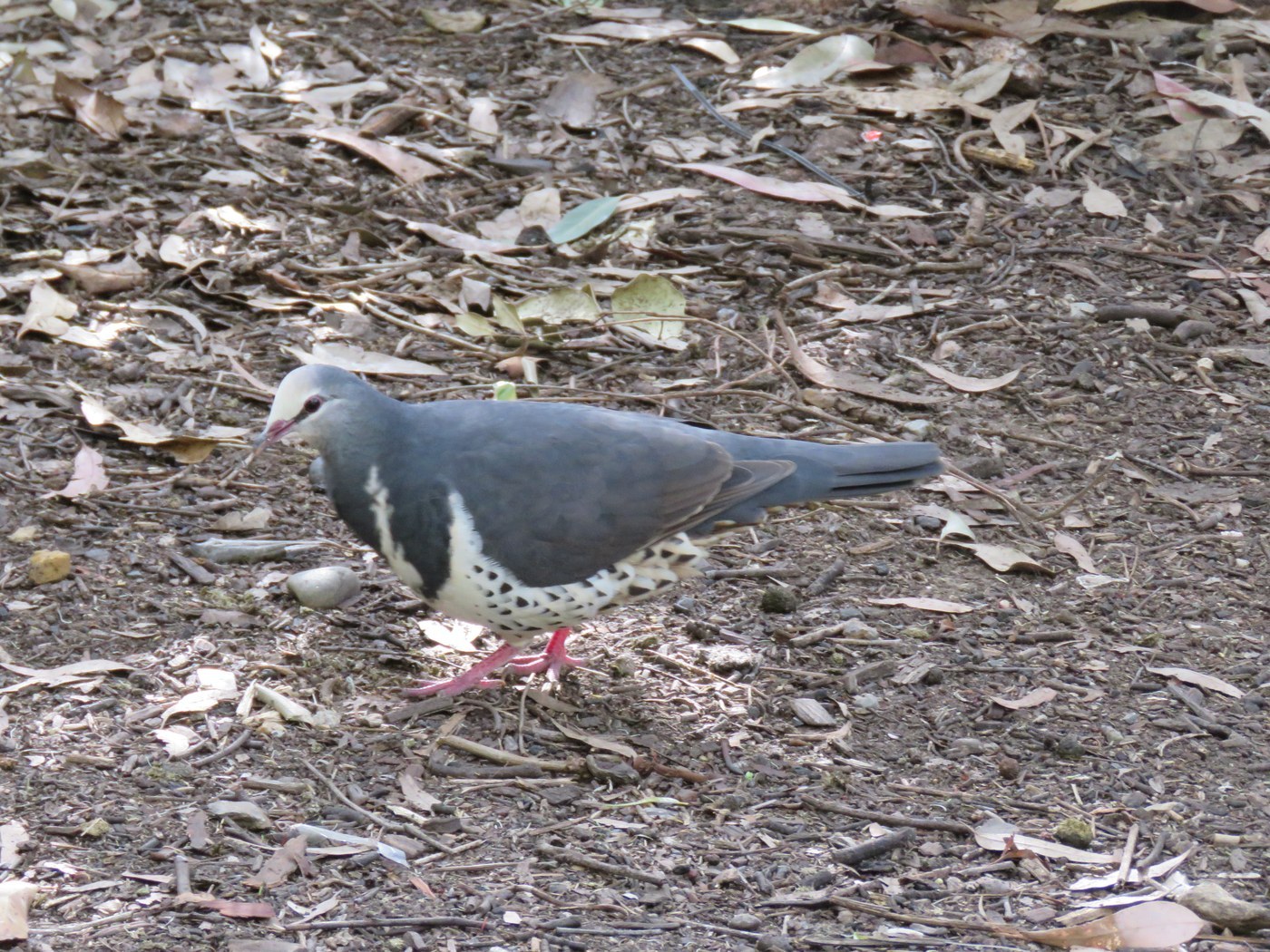
Wonga Pigeon
Dense, soft body contour feathers over a stocky frame

Squatter Pigeon
Dense, cryptic body contour feathers with a bold facial pattern

White-winged Dove
Broad, sturdy flight feathers with a bold white wing stripe

Western Crowned Pigeon
Rounded fan crest plumes over dense soft body feathers

Snow Pigeon
Dense insulating body contour feathers with a bold white rump and belly patch

Zebra Dove
Contour feathers with bold, extensive black-and-white barring

Scaly-naped Pigeon
Contour feathers with iridescent scaled nape pattern