
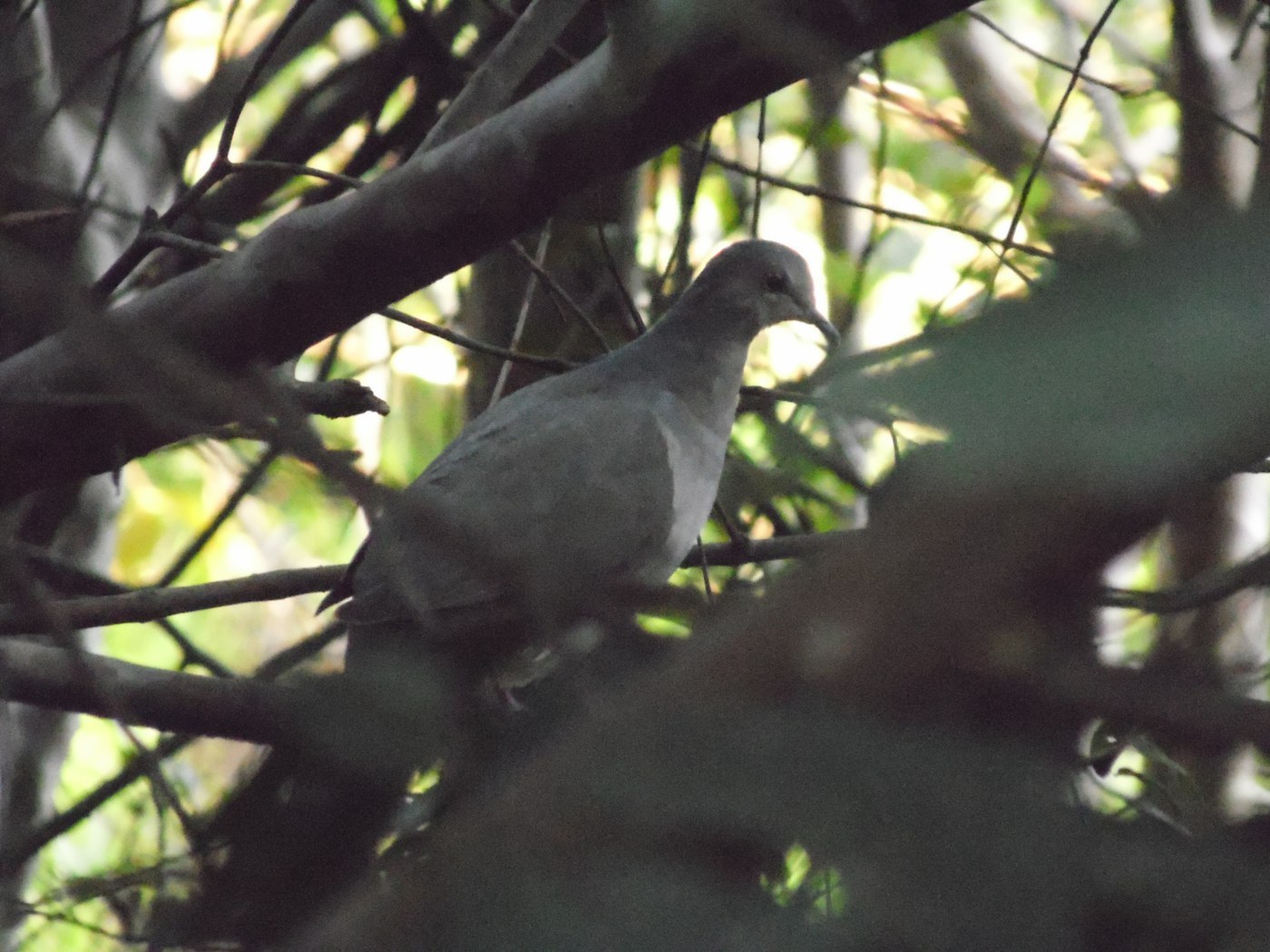
White-tipped Dove
Leptotila verreauxi
A stocky, plain grayish-brown dove of tropical and subtropical woodland, best identified by the crisp white tips on its outer tail feathers and its low, mournful call.
- Feather type
- Broad, sturdy body feathers; white-tipped outer tail feathers
- Colours
- Plain grayish-brown with a pale forehead and white tail-tip corners
- Bird size
- Medium dove, ~28 cm
Found a feather like this?
Identify any feather from a photo, free.
Overview
The White-tipped Dove is a widespread dove of the American tropics and subtropics, found from the southern United States through much of Mexico, Central America, and South America. It favors dense woodland understory and thickets, where it is more often heard than seen, its low, hollow, owl-like call carrying through the forest.
Identifying the Feather
Flight feathers: plain grayish-brown, unmarked and lacking any bold wing patch or stripe. Tail feathers: dark centrally with crisp white tips on the outer feathers, most visible when the tail is fanned in flight or during display. Body feathers: overall plain grayish-brown with a paler, buffy-white forehead and face, a subtle purplish-pink iridescent wash on the neck sides, and a red to pinkish orbital eye-ring. The lack of any bold wing markings combined with the crisp white tail-corner tips is the key combination for identifying this species' feathers.
Plumage & Molt
Sexes look similar, though males may show slightly more iridescence on the neck. Adults are plain grayish-brown above, paler below, with a buffy-white forehead, a faint iridescent neck patch, and white-tipped outer tail feathers. Juveniles are duller and more uniformly brown, with less defined facial paling and less iridescence, gaining full adult features within their first year. There is no strong seasonal plumage variation.
Habitat & Range
White-tipped Doves inhabit dense woodland understory, forest edges, and thickets from the southernmost United States through Mexico, Central America, and much of South America. The species is generally resident and non-migratory, remaining within suitable forested or shrubby habitat year-round.
Behavior & Field Notes
This dove forages on the ground within dense cover, feeding mainly on seeds and fallen fruit, and tends to walk quietly through leaf litter rather than fly conspicuously. It builds a simple platform nest of twigs low in a tree or shrub. Its call is a distinctive low, mournful, owl-like hooting, often given from a concealed perch, making the species easier to detect by ear than by sight in dense understory habitat.
Frequently asked questions
What feather feature is most useful for identifying the White-tipped Dove?
Crisp white tips on the outer tail feathers, combined with an otherwise plain grayish-brown body lacking any bold wing markings, is the key identifying combination.
How does this species differ from the Mourning Dove?
White-tipped Dove feathers lack the dark wing spots typical of the Mourning Dove and instead show a plainer wing along with a stockier body shape and more contrasting white tail-tip corners.
Why is this species more often heard than seen?
It favors dense woodland understory and thickets, where its low, hollow, owl-like call is more easily detected than the bird itself as it moves quietly through cover.
Do juveniles show the same white tail tips?
Juveniles show similar but less crisply defined white tail tips, along with duller overall plumage, before acquiring the fuller adult pattern.
White-tipped Dove guides
In-depth guides for identifying and understanding White-tipped Dove.
Other feathers you may enjoy

Victoria Crowned Pigeon
Large lace-like fan crest plumes over dense body contour feathers

Plain Pigeon
Contour feathers, plain and uniformly toned, with a white wing patch

Zenaida Dove
Contour and flight feathers, faint iridescent sheen on neck

Pink Pigeon
Soft contour feathers with graduated tail

Nicobar Pigeon
Long, hackle-like elongated neck feathers with iridescent sheen
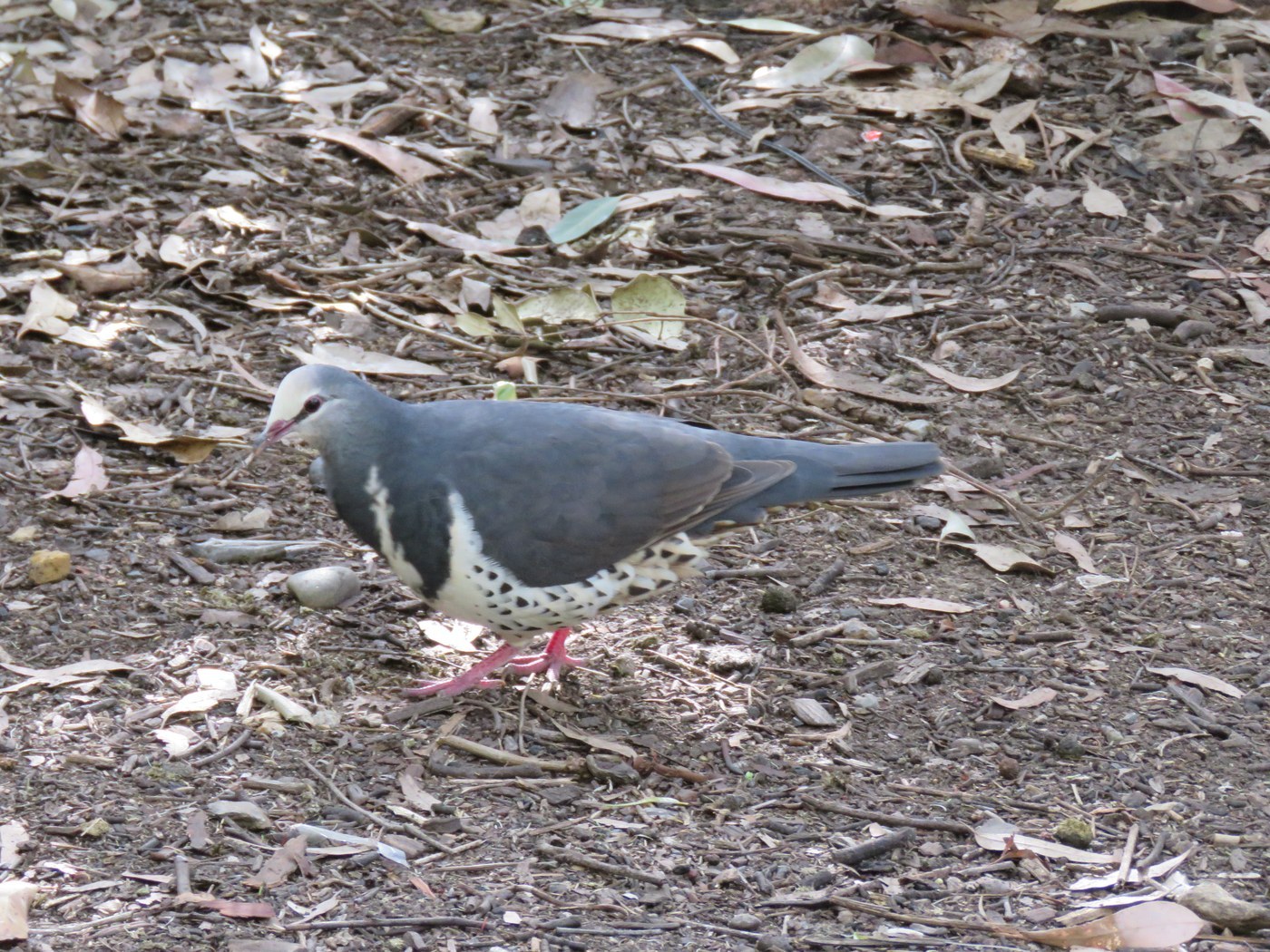
Wonga Pigeon
Dense, soft body contour feathers over a stocky frame

Squatter Pigeon
Dense, cryptic body contour feathers with a bold facial pattern

White-winged Dove
Broad, sturdy flight feathers with a bold white wing stripe

Western Crowned Pigeon
Rounded fan crest plumes over dense soft body feathers

Snow Pigeon
Dense insulating body contour feathers with a bold white rump and belly patch

Zebra Dove
Contour feathers with bold, extensive black-and-white barring

Scaly-naped Pigeon
Contour feathers with iridescent scaled nape pattern