
Stock Dove
Columba oenas
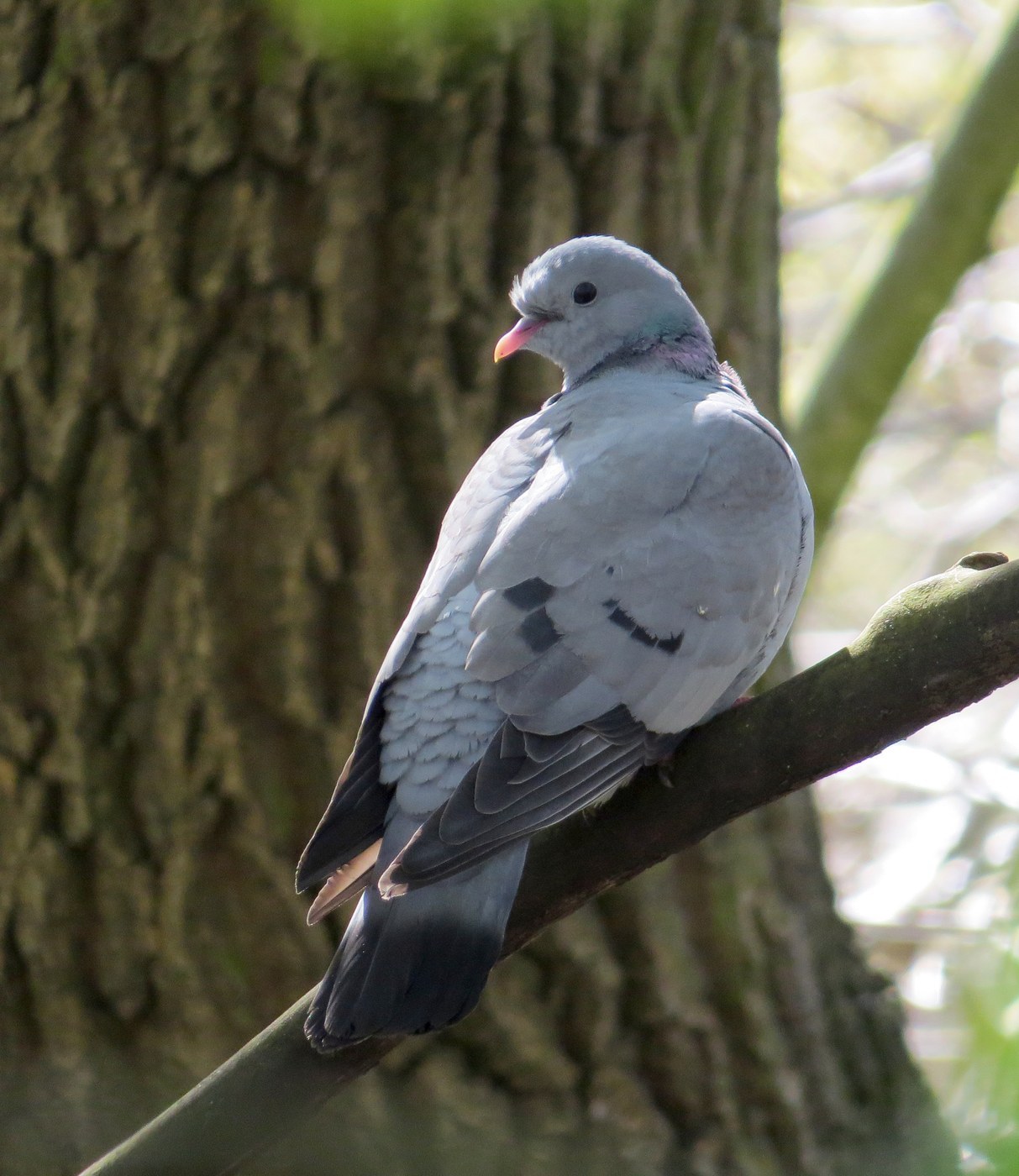
A plainer, smaller relative of the Wood Pigeon lacking white markings, identified instead by two short black wing bars and an iridescent green neck patch.
- Feather type
- Plain blue-grey wing feathers with two short black bars; iridescent green neck feathers
- Colours
- Blue-grey overall with a green-purple neck sheen and two short black wing bars
- Bird size
- Medium pigeon, ~33 cm
Found a feather like this?
Identify any feather from a photo, free.
Overview
The Stock Dove is a subtly plumaged pigeon, easily overlooked among more common Wood Pigeons but distinguished by its smaller size, plainer grey coloring, and lack of any white in the plumage.
It nests in cavities, favoring old trees with holes, quarries, and sometimes cliffs and buildings, and is somewhat less tied to towns than the Wood Pigeon or Rock Dove.
A Stock Dove feather is best recognized by what it lacks — no white wing bar and no white neck patch — combined with two short, neat black bars across the closed wing and a shimmering green-purple patch on the neck feathers.
Identifying the Feather
Wing feathers
- Plain blue-grey overall, crossed by two short, well-defined black bars near the base of the folded wing — shorter and less prominent than a Rock Dove's bars.
- No white patch or bar anywhere on the wing, unlike Wood Pigeon.
Neck feathers
- Show an iridescent green and purple sheen on a small patch, without any white present.
Body feathers
- Soft blue-grey overall, slightly darker and more uniform than Wood Pigeon, lacking the pinkish breast wash.
Confusion species
Wood Pigeon feathers are larger with a bold white wing bar and white neck patch; Rock Dove feathers often show a white rump feather and longer black wing bars. A grey pigeon feather with two short black bars and no white anywhere points to Stock Dove.
Plumage & Molt
Adults are blue-grey overall with a small iridescent green and purple patch on the neck sides, and two short black bars crossing each folded wing. There is no white in the plumage at any age.
Males and females look alike. Juveniles are duller, lacking the iridescent neck sheen until maturity.
Stock Doves undergo a complete molt after breeding, generally in summer.
Habitat & Range
Stock Doves favor woodland edges, parkland, and farmland with mature trees offering nesting cavities, as well as quarries, cliffs, and old buildings in some areas. They are less commonly seen in dense urban centers than Wood Pigeons or feral Rock Doves.
The species is resident across much of Europe, with some northern and eastern populations moving south in winter.
Behavior & Field Notes
Stock Doves feed mainly on seeds, grain, and other plant material, foraging on the ground often alongside Wood Pigeons. They nest in cavities such as old tree holes, quarries, and building crevices rather than building an open stick nest.
Their call is a repetitive, low cooing, softer and more monotone than the Wood Pigeon's song.
A plain blue-grey feather with two neat black bars and no white markings, found near old trees or farmland with cavity nesting sites, points toward Stock Dove.
Frequently asked questions
What is the key difference between Stock Dove and Wood Pigeon feathers?
Stock Dove feathers lack any white markings, while Wood Pigeon feathers show a bold white wing bar and white neck patch.
How many wing bars does a Stock Dove feather show?
Two short, well-defined black bars cross the closed wing, shorter than those typically seen on Rock Dove.
Does the Stock Dove have iridescent feathers?
Yes, a small patch on the neck shows green and purple iridescence, similar in tone to other pigeons but without any accompanying white.
Could a Stock Dove feather be confused with a Rock Dove feather?
They are similar, but Rock Dove often shows longer, bolder wing bars and sometimes a white rump feather, which Stock Dove lacks.
Where would I find a Stock Dove feather?
Near woodland edges, farmland with old trees, or occasionally quarries and cliffs where the species nests in cavities.
Stock Dove guides
In-depth guides for identifying and understanding Stock Dove.
Other feathers you may enjoy

Victoria Crowned Pigeon
Large lace-like fan crest plumes over dense body contour feathers

Plain Pigeon
Contour feathers, plain and uniformly toned, with a white wing patch

Zenaida Dove
Contour and flight feathers, faint iridescent sheen on neck

Pink Pigeon
Soft contour feathers with graduated tail

Nicobar Pigeon
Long, hackle-like elongated neck feathers with iridescent sheen
Wonga Pigeon
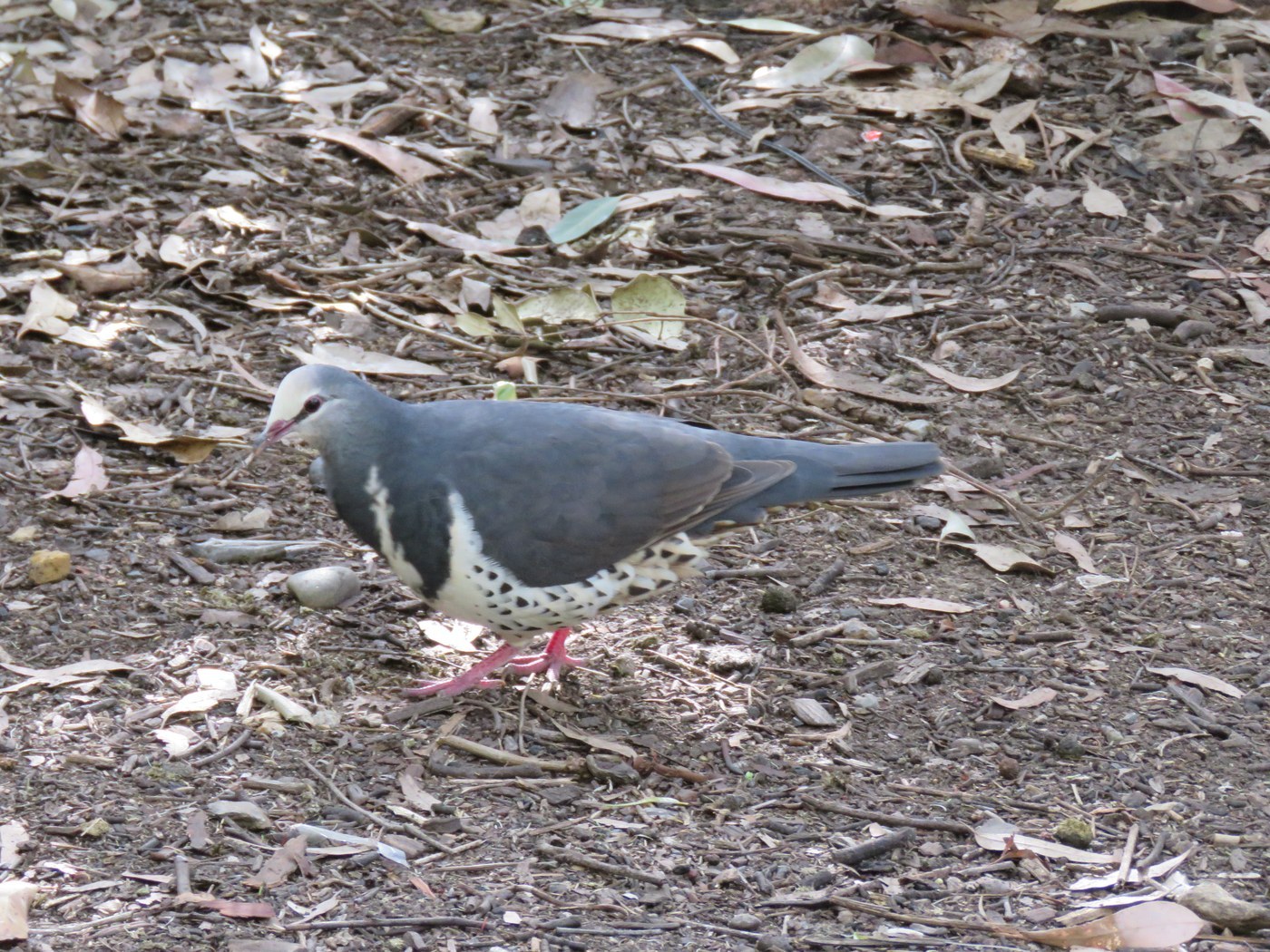
Dense, soft body contour feathers over a stocky frame

Squatter Pigeon
Dense, cryptic body contour feathers with a bold facial pattern

White-winged Dove
Broad, sturdy flight feathers with a bold white wing stripe

Western Crowned Pigeon
Rounded fan crest plumes over dense soft body feathers

Snow Pigeon
Dense insulating body contour feathers with a bold white rump and belly patch

Zebra Dove
Contour feathers with bold, extensive black-and-white barring

Scaly-naped Pigeon
Contour feathers with iridescent scaled nape pattern