
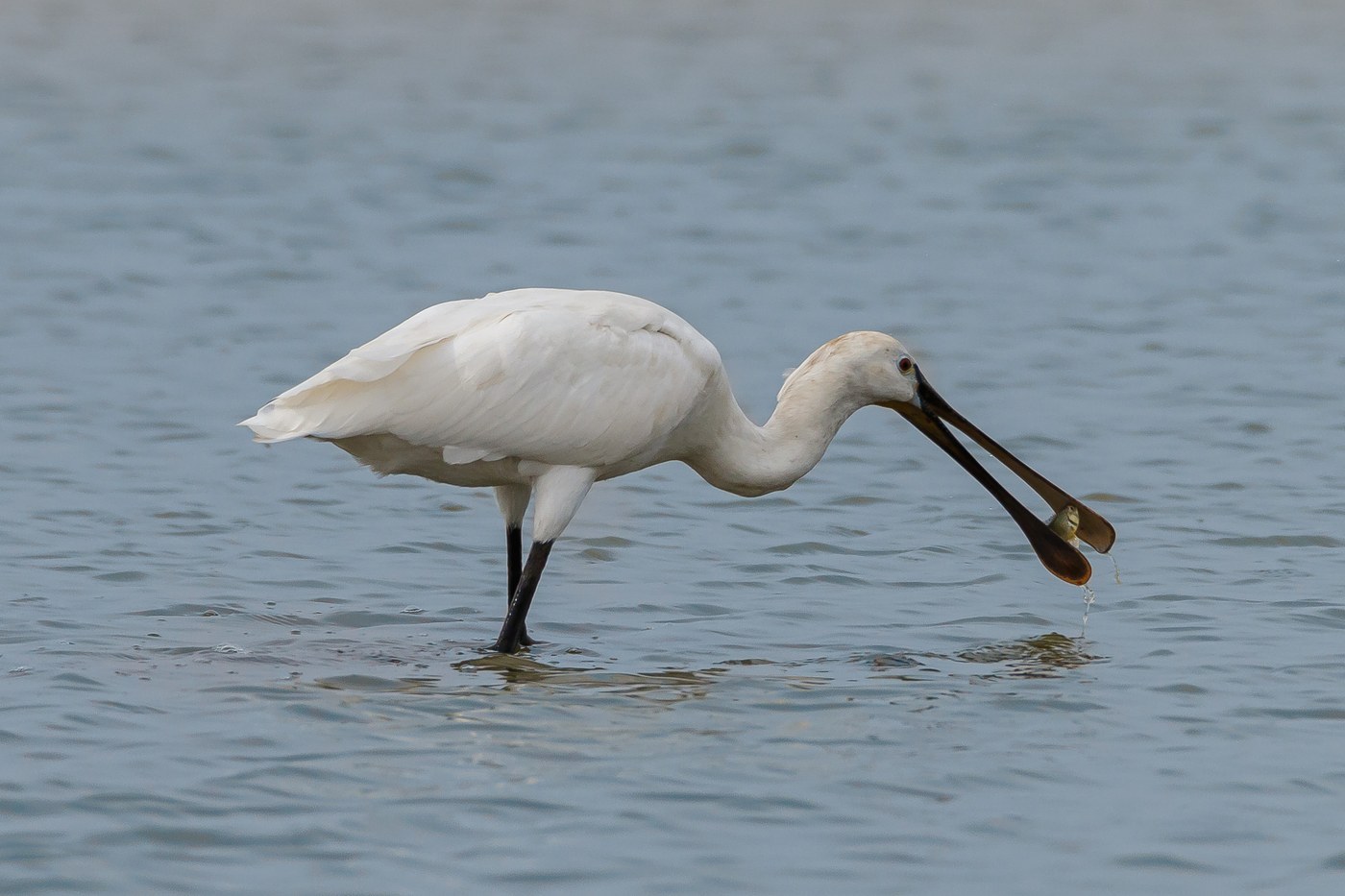
Eurasian Spoonbill
Platalea leucorodia
A tall, all-white wading bird with a distinctive spoon-shaped bill, recognized by its clean white plumage and, in breeding season, a shaggy nape crest and pale yellow breast band.
- Feather type
- Pure white contour and flight feathers with breeding crest plumes
- Colours
- White overall, with a buff-yellow breast wash in breeding adults
- Bird size
- Large wading bird, ~80-95 cm
Found a feather like this?
Identify any feather from a photo, free.
Overview
The Eurasian Spoonbill is a striking white wading bird found across scattered wetlands from Western Europe through Asia and into parts of Africa. Its name comes from its long, flattened bill with a spoon-shaped tip, which it sweeps side to side through shallow water. In the breeding season it develops a loose crest of elongated nape feathers and a soft yellow wash across the upper breast, both of which disappear outside the breeding period.
Identifying the Feather
- Body and flight feathers are entirely white, without the black wingtips seen in some other large white wading birds, so a found feather will typically be plain white throughout.
- Breeding crest feathers on the nape are long, narrow, and drooping, distinct in texture from the shorter, broader contour feathers of the body.
- Feather shafts are white to pale, without dark barring.
- The buff-yellow tinge sometimes present on breast feathers of breeding adults is subtle and can fade in worn or non-breeding plumage.
- Distinguish from egrets by feather shape (spoonbill body feathers tend to be somewhat stiffer) and from the pink-tinged Roseate Spoonbill, which does not occur in the same range.
Plumage & Molt
Adults are all white, with breeding birds showing a shaggy nape crest and a pale yellow-buff wash on the breast, both lost after the breeding season. Sexes look alike, though males average slightly larger with a longer bill. Juveniles show black tips to the primary flight feathers and a pinkish rather than black bill, gradually acquiring the all-black, spoon-tipped adult bill and losing the dark wingtips over their first couple of years. Molt follows breeding, with flight feathers replaced gradually to maintain flying ability.
Habitat & Range
Eurasian Spoonbills breed locally across Western Europe, Eastern Europe, and Asia, favoring shallow freshwater and brackish wetlands, reedbeds, and coastal lagoons. Northern and inland breeding populations are migratory, wintering in southern Europe, the Middle East, and parts of Africa and South Asia, while some southern populations are largely resident.
Behavior & Field Notes
This spoonbill feeds by wading through shallow water and sweeping its open, spoon-tipped bill side to side to detect small fish, crustaceans, and aquatic invertebrates by touch. It nests colonially, often alongside herons and egrets, building stick nests in reedbeds, low trees, or on the ground on predator-free islands. It is largely silent away from the colony, where it gives low grunting and bill-clattering displays. Flocks often fly in coordinated lines with necks outstretched, unlike the retracted-neck flight of herons.
Frequently asked questions
How can you tell a Eurasian Spoonbill feather from a heron or egret feather?
Spoonbill body feathers are plain white without the plume-like aigrettes of egrets, and lack any grey or black shading typical of many herons.
Does the Eurasian Spoonbill have any color other than white?
Breeding adults show a subtle yellow-buff wash on the breast and a shaggy crest, but these fade outside the breeding season.
How do juvenile feathers differ from adult feathers?
Juveniles show black tips on their primary flight feathers, a feature absent in adults.
Is the Eurasian Spoonbill migratory?
Many northern and inland populations migrate to winter in southern Europe, Africa, or Asia, while some southern populations remain resident.
Eurasian Spoonbill guides
In-depth guides for identifying and understanding Eurasian Spoonbill.
Other feathers you may enjoy

Yellow-billed Spoonbill
White contour and flight feathers with fine breeding plumes on the back and breast
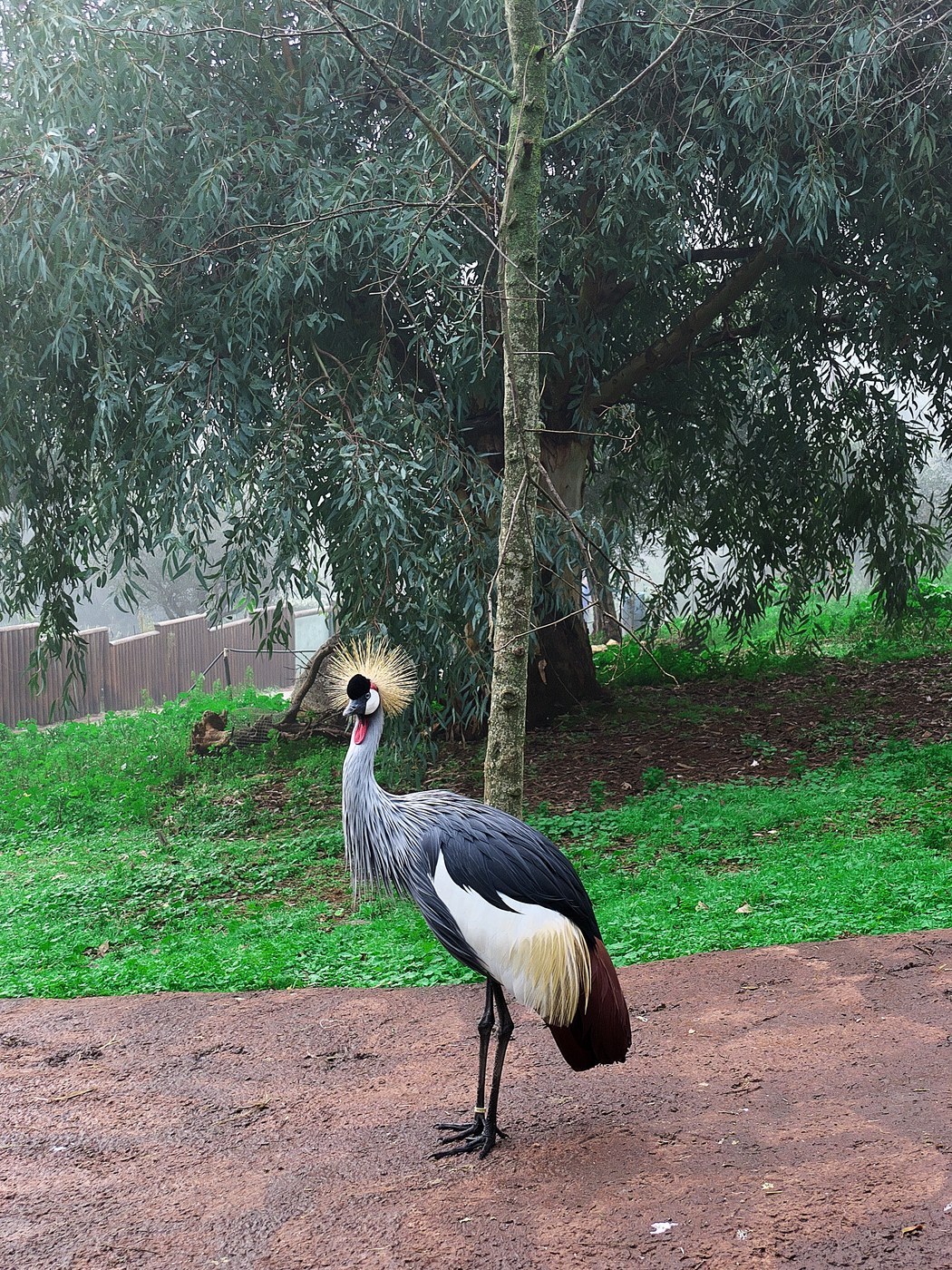
Grey Crowned Crane
Grey body feathers with white wing coverts, chestnut flight feathers, and stiff golden crown bristles
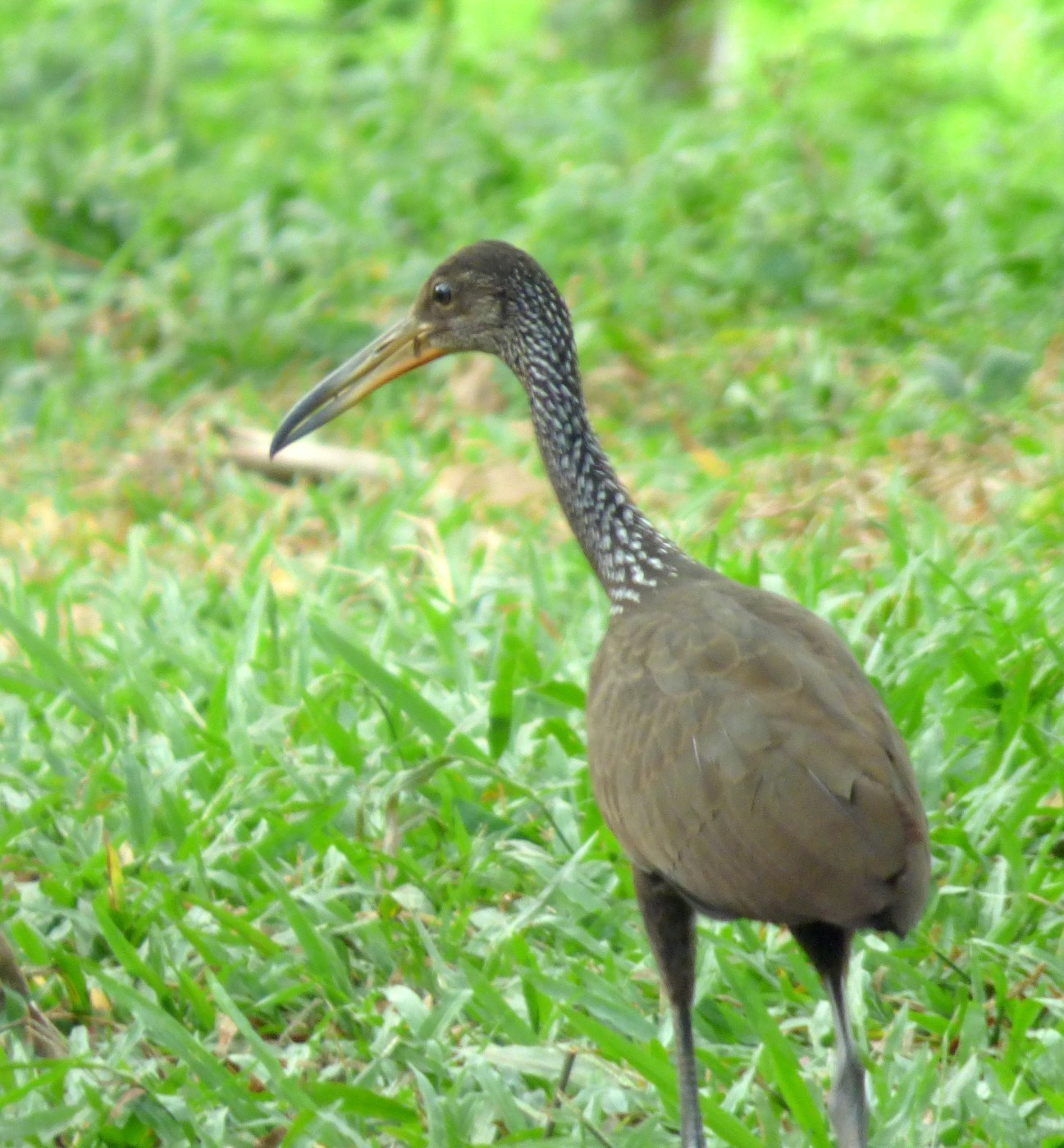
Limpkin
Brown contour feathers with white teardrop-shaped spots and streaks
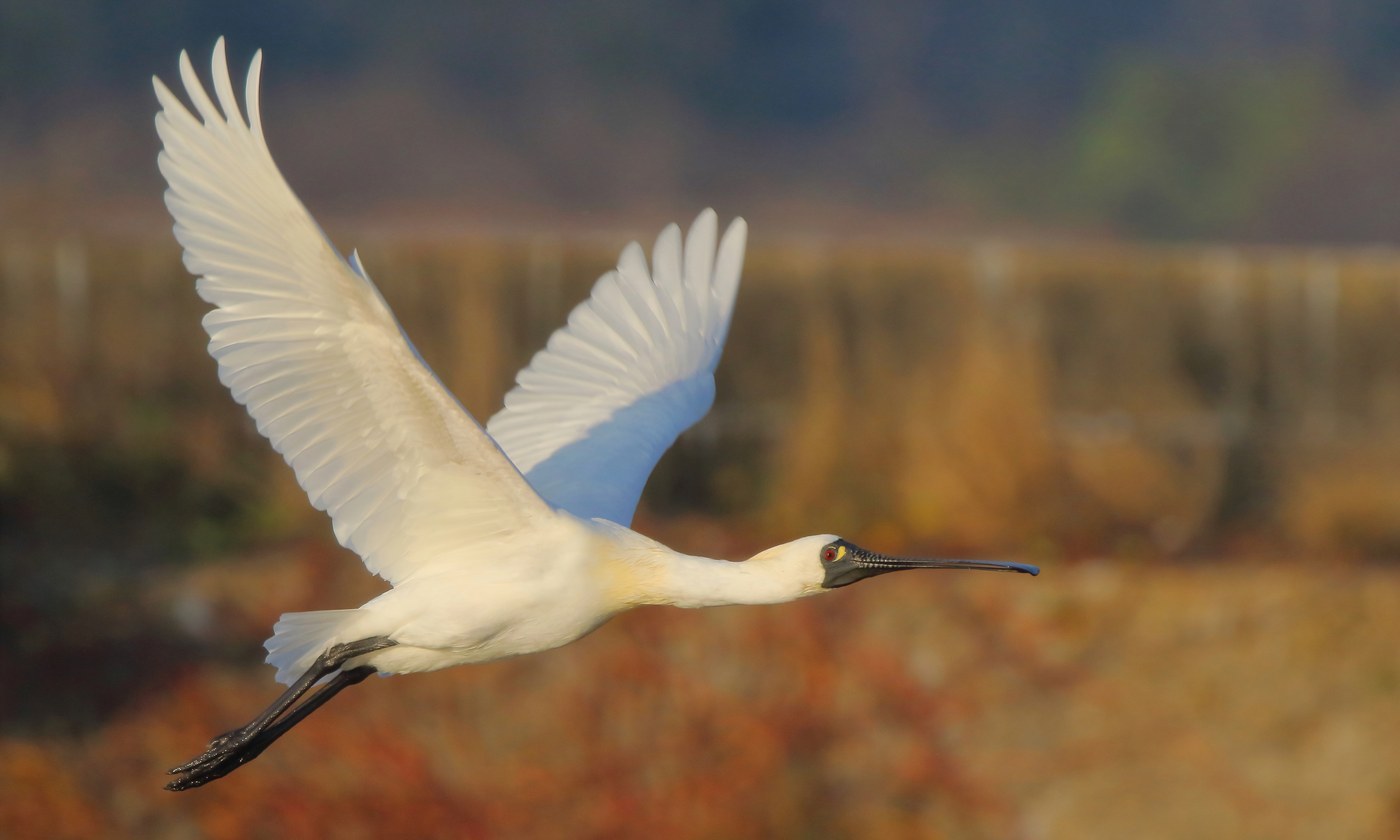
Black-faced Spoonbill
White contour and flight feathers with fine breeding crest and breast plumes
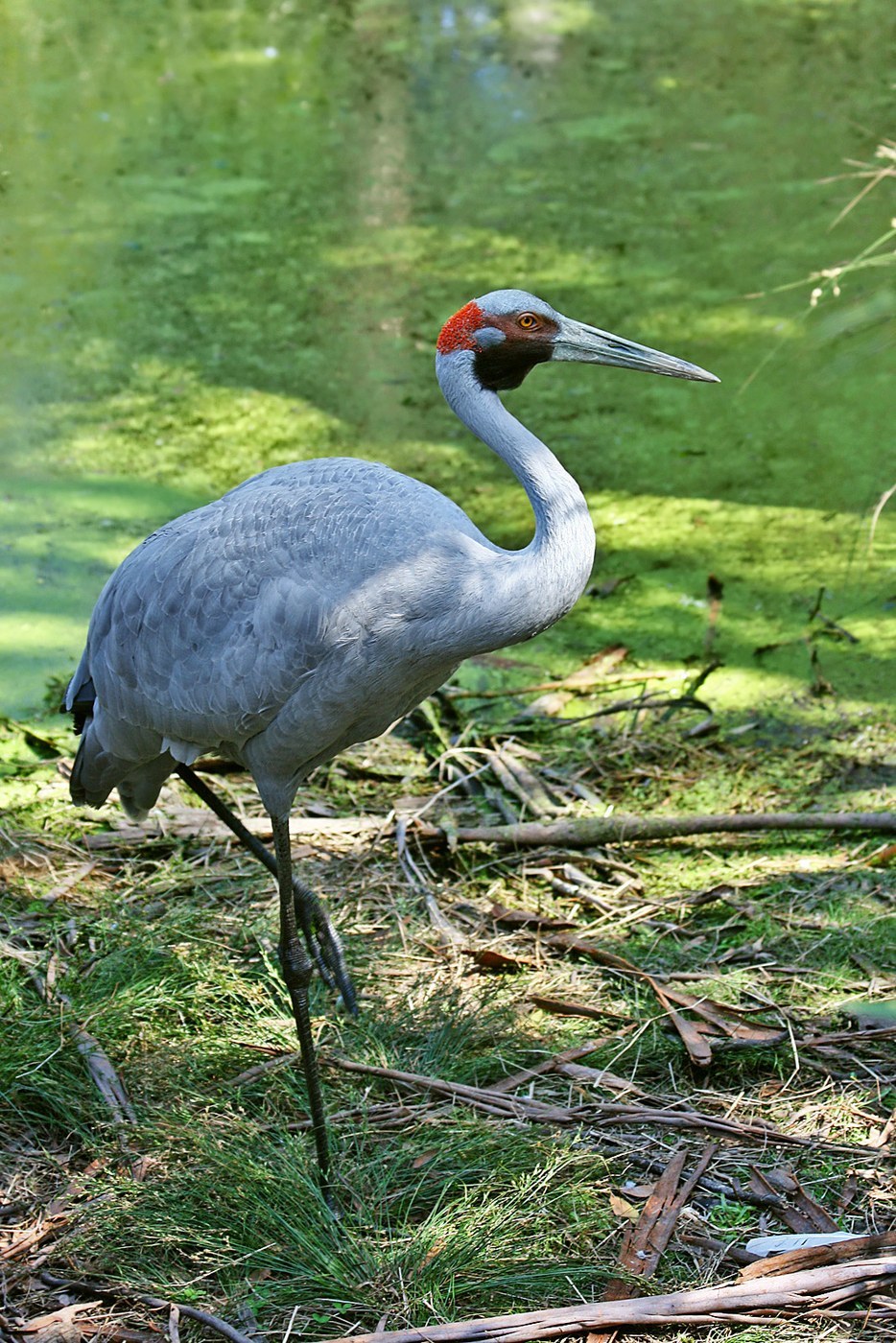
Brolga
Grey contour feathers with drooping bustle plumes
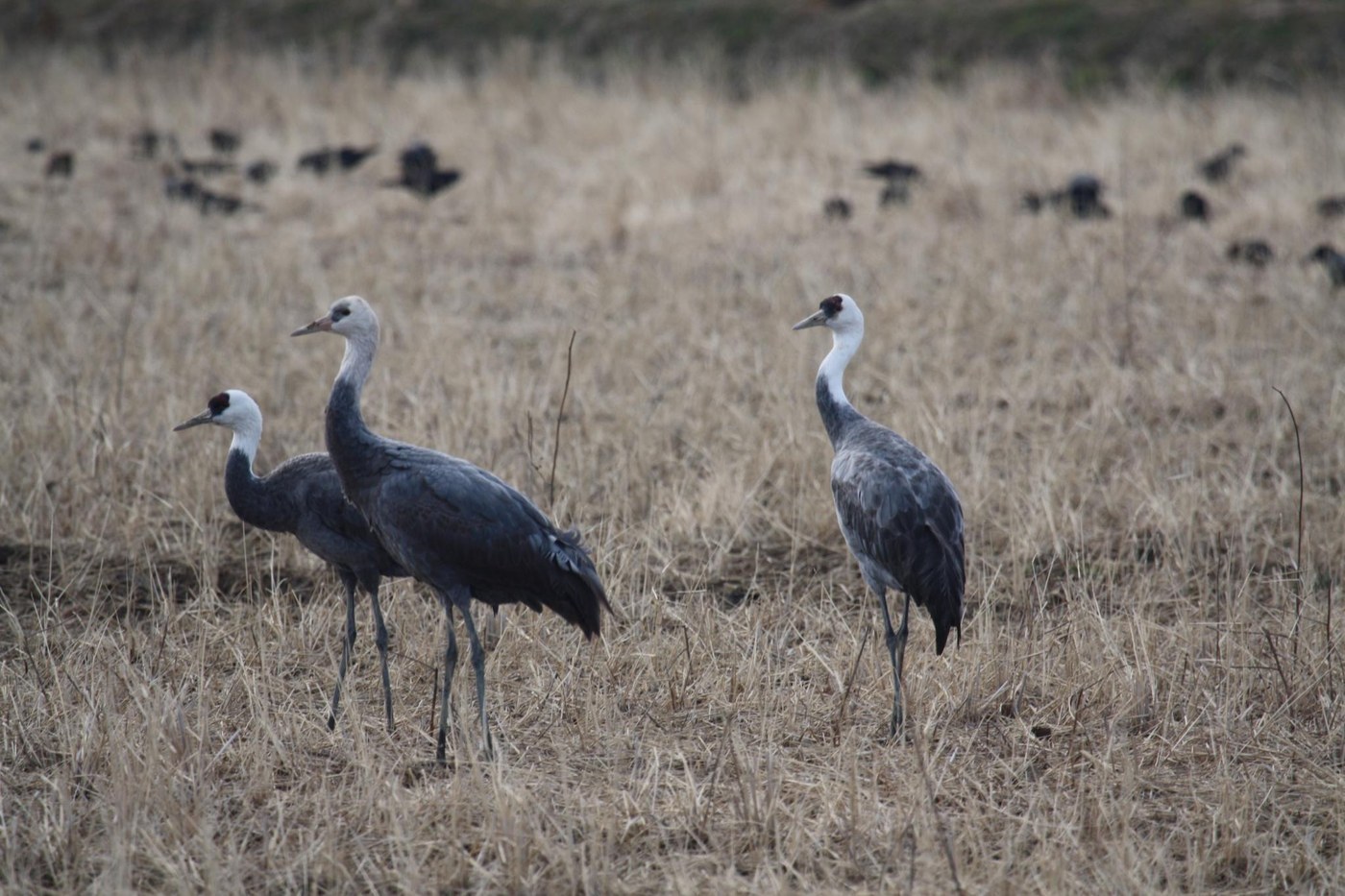
Hooded Crane
Dark slate-grey body feathers with a white head/upper neck 'hood' and black bustle plumes
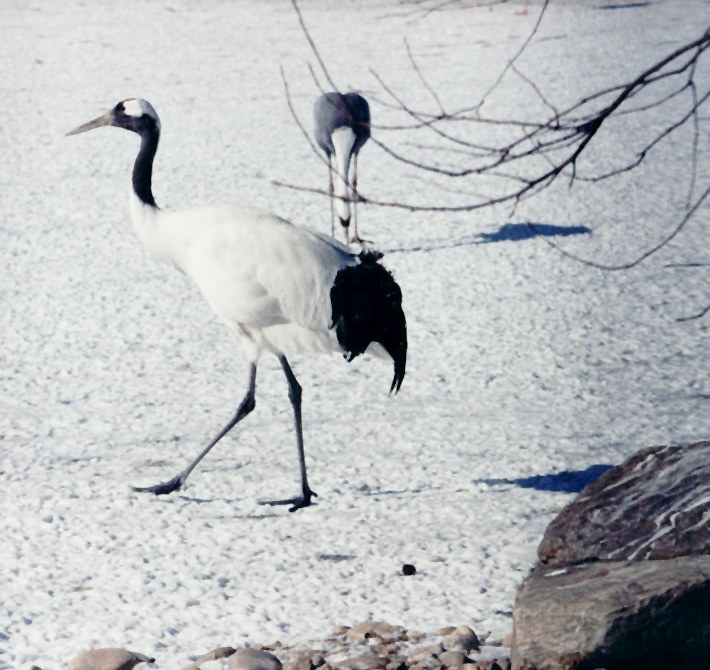
Red-crowned Crane
White contour feathers with black secondary/tertial bustle feathers and a bare red crown

Common Crane
Grey contour feathers with black head/neck feathers and drooping bustle plumes
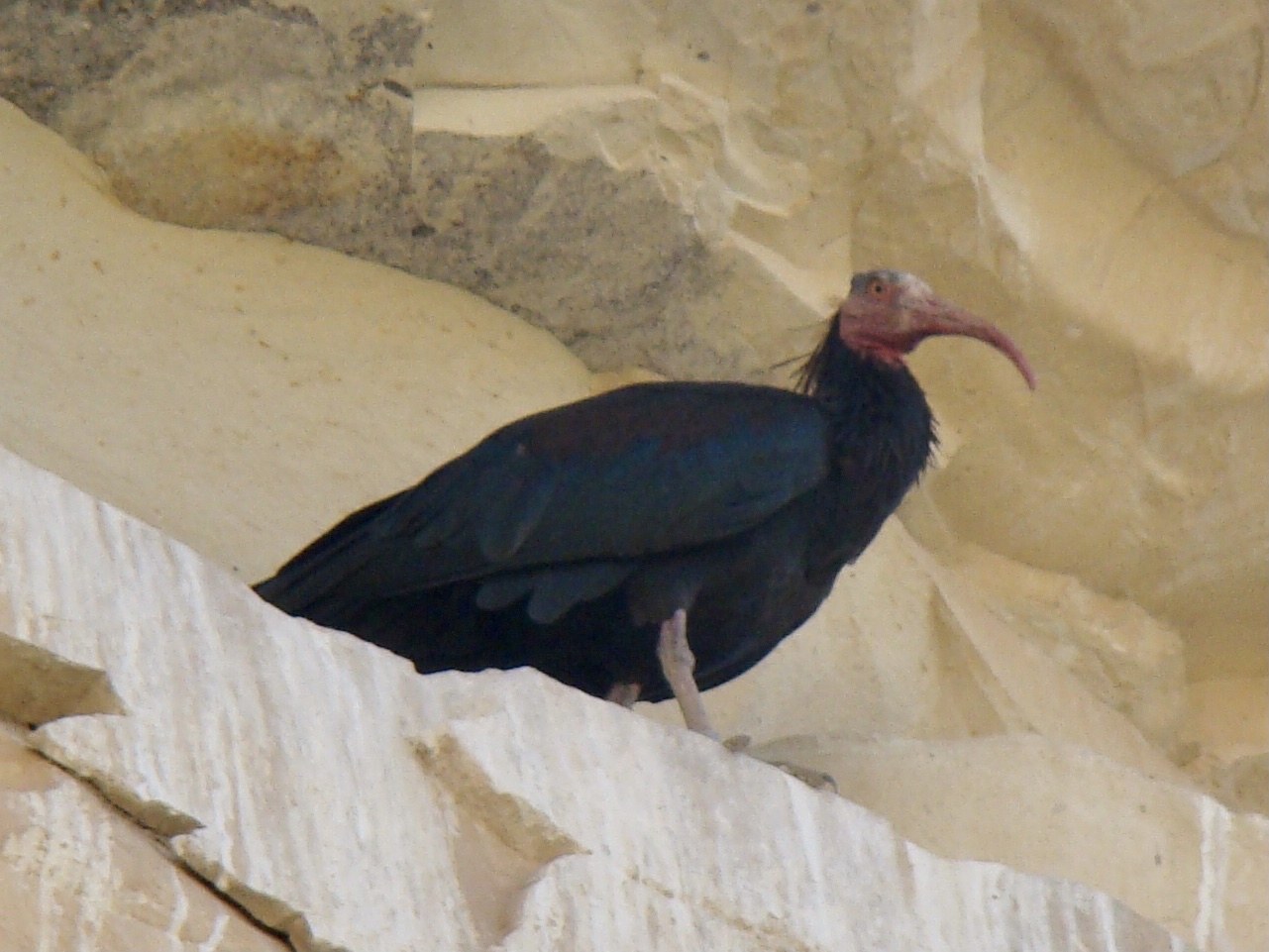
Northern Bald Ibis
Glossy black contour feathers with elongated nape plumes
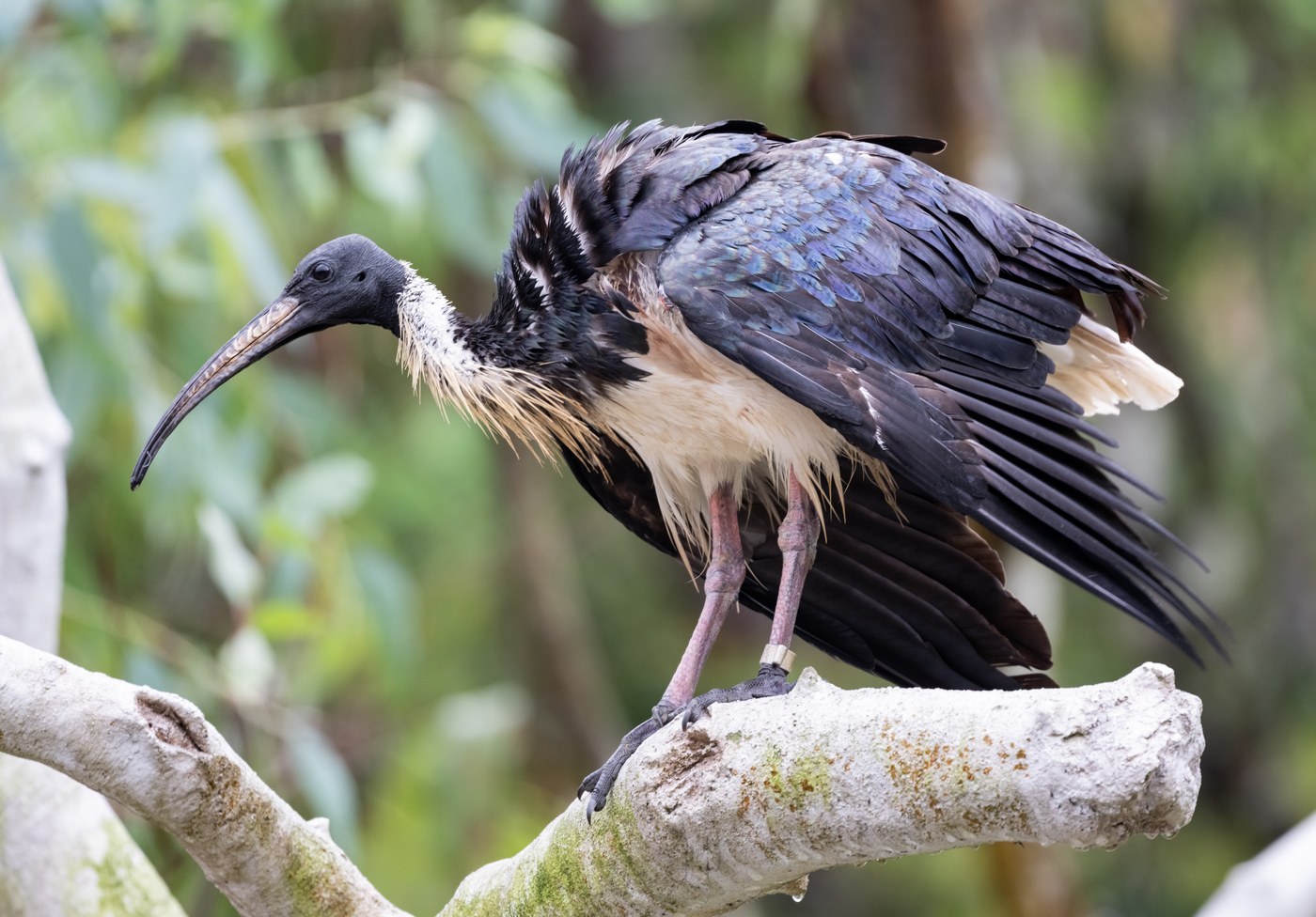
Straw-necked Ibis
Glossy contour feathers with unique straw-like neck plumes
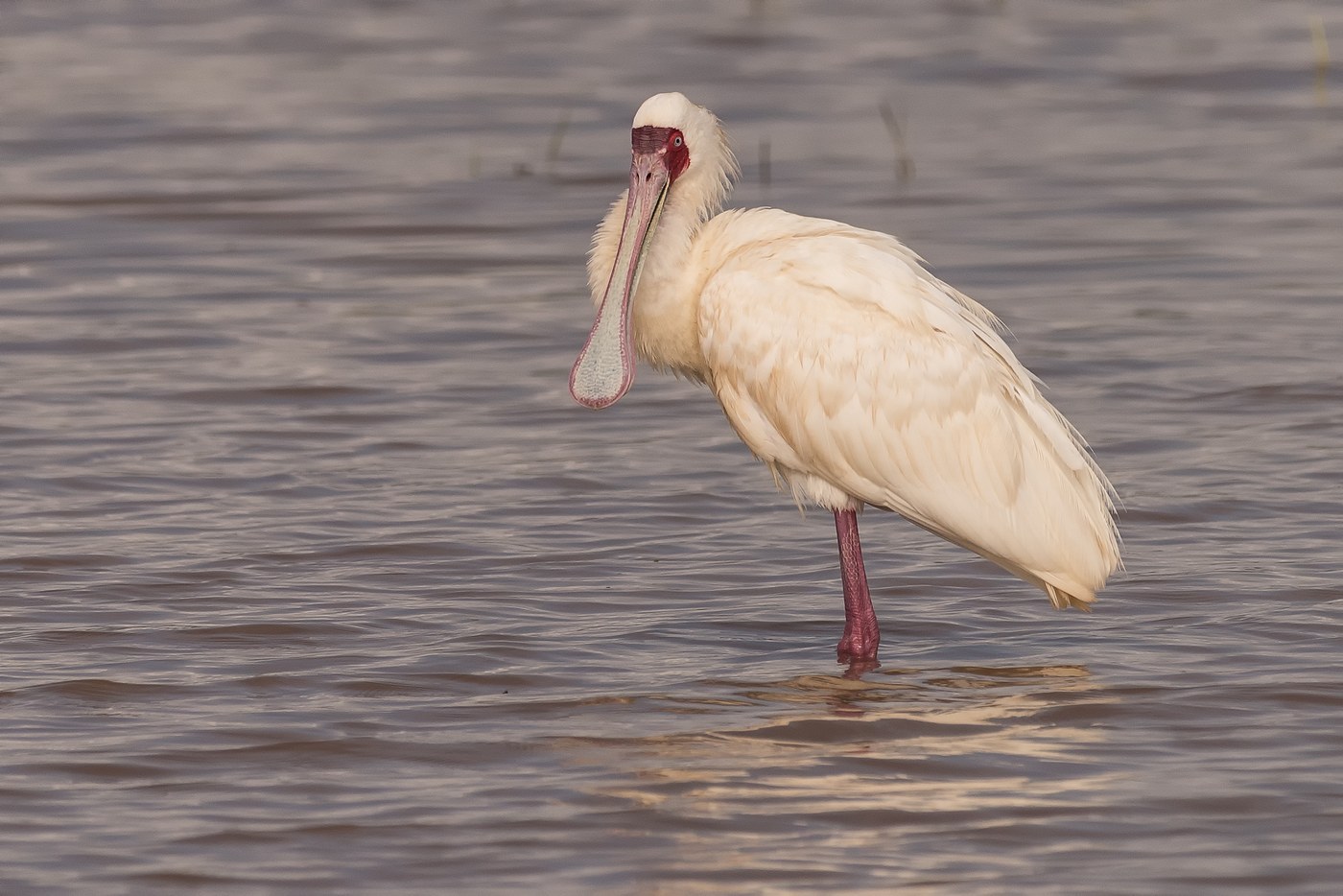
African Spoonbill
White contour and flight feathers, unmarked by black tips

Roseate Spoonbill
Pink and white contour and flight feathers with a carmine shoulder patch