
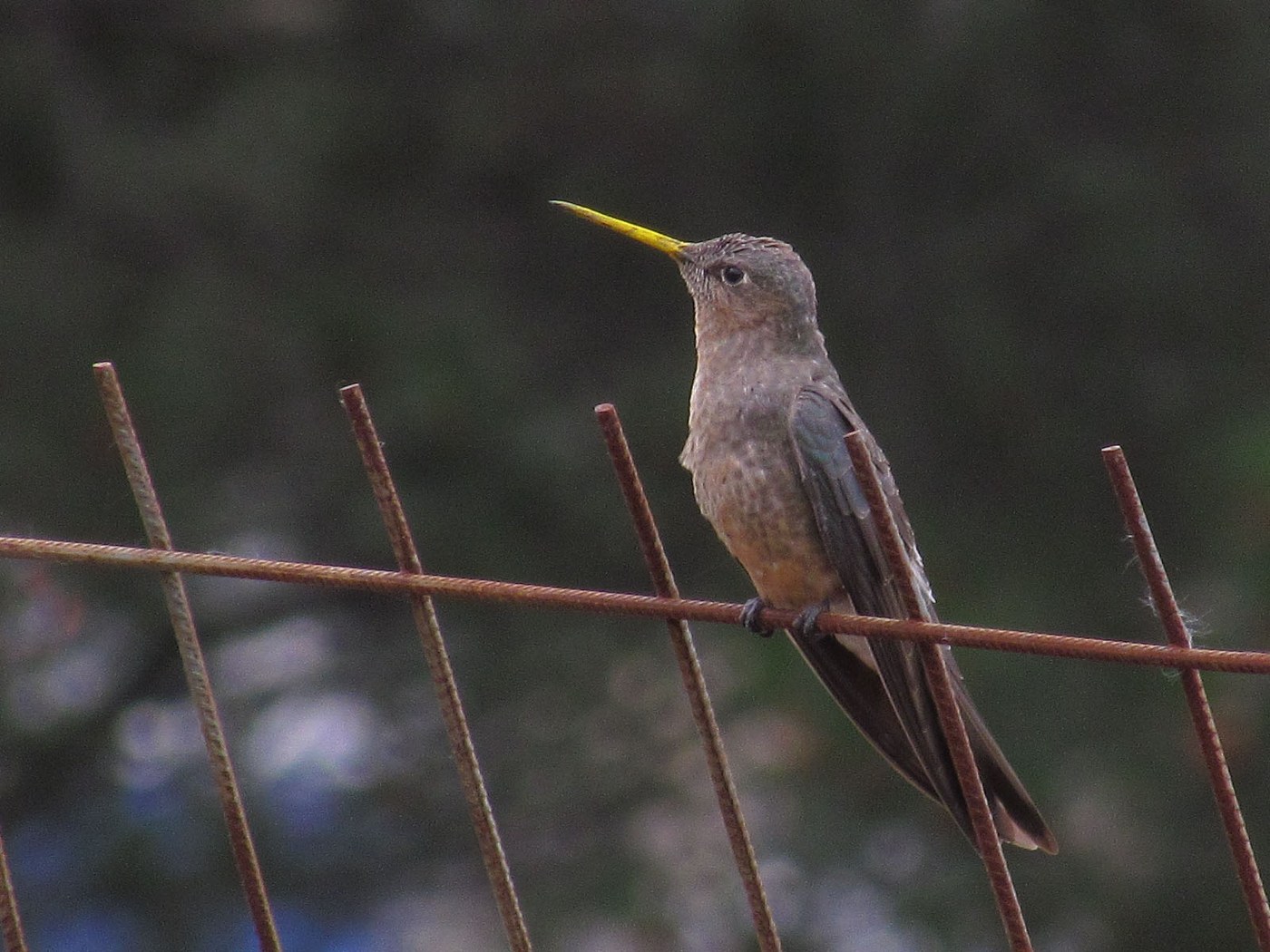
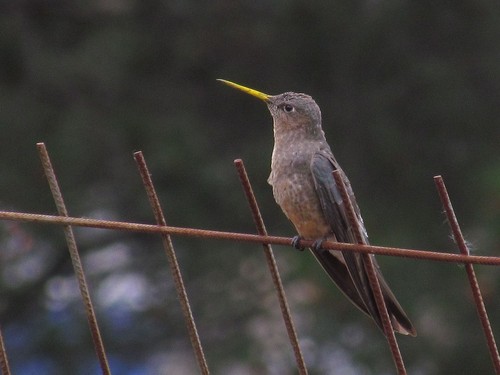
Giant Hummingbird
Patagona gigas
The largest living hummingbird, notable for its comparatively dull, sparrow-like coloring and slow, distinctly audible wingbeats compared to smaller relatives.
- Feather type
- Body contour feathers, slow-beating flight feathers
- Colours
- Brownish-gray upperparts, buffy-cinnamon underparts, dull overall tones
- Bird size
- Very large for a hummingbird, ~20-23 cm
Found a feather like this?
Identify any feather from a photo, free.
Overview
Overview
The Giant Hummingbird is the largest species of hummingbird in the world, found along the Andes and adjacent lowlands of western South America. Unlike many of its dazzling relatives, its plumage is relatively subdued, and it is often first noticed by its size and unusually slow wingbeat rather than by bright iridescent color.
Its larger body size changes its flight style noticeably compared to smaller hummingbirds, with slower, more powerful wingbeats that can even be visible to the naked eye rather than appearing as a blur.
Identifying the Feather
Feather ID Notes
Feathers lack the intense, saturated iridescence typical of many hummingbirds, instead showing brownish-gray to bronze-green upperparts and buffy-cinnamon underparts with a somewhat matte appearance. The tail is dark and can show a scaled pattern on the breast in some individuals.
- Upperpart feathers: brownish-gray to bronze-green, subdued
- Underpart feathers: buffy-cinnamon, sometimes lightly scaled or streaked
- Tail feathers: dark, moderately long
- Overall size: much larger than any other hummingbird, an immediate clue The combination of large size and relatively dull, non-iridescent plumage separates this species from all other hummingbirds sharing its range.
Plumage & Molt
Plumage Details
Sexes are similar in the Giant Hummingbird, both showing the same subdued brownish-gray and buffy coloring, with little sexual dimorphism compared to most hummingbird species. Juveniles show finer feather scaling on the underparts. There is no strong seasonal plumage change, with an annual molt maintaining feather condition.
Habitat & Range
Habitat & Range
This species occupies arid to semi-arid Andean valleys, scrubland, agricultural areas, and gardens from Ecuador south through Peru, Bolivia, Chile, and Argentina, generally at moderate to high elevations. Some populations undertake seasonal elevational movements, descending to lower valleys outside the breeding season, while others are more sedentary.
Behavior & Field Notes
Behavior & Field Notes
Giant Hummingbirds feed on nectar from a variety of Andean flowering plants, including cacti and agave-like species, and also take small insects. Their larger body size allows for a distinctive hovering flight with slower, deeper wingbeats than smaller hummingbirds, sometimes even appearing to glide briefly between beats. Nests are cup-shaped structures built in shrubs or on rock ledges. Calls include a range of chattering and squeaky notes.
Frequently asked questions
How can you recognize a Giant Hummingbird?
Its unusually large size for a hummingbird, combined with dull brownish-gray and buffy-cinnamon plumage rather than bright iridescence, sets it apart.
Is the Giant Hummingbird's flight different from other hummingbirds?
Yes, its wingbeats are noticeably slower and can sometimes be seen individually rather than appearing as a blur.
Where does the Giant Hummingbird live?
In Andean valleys, scrubland, and gardens from Ecuador south through Chile and Argentina.
Do males and females look different?
No, both sexes share similar subdued coloring, unlike many other hummingbird species with strong plumage differences.
Giant Hummingbird guides
In-depth guides for identifying and understanding Giant Hummingbird.
Other feathers you may enjoy

Speckled Hummingbird
Small contour feathers with fine speckled underpart markings
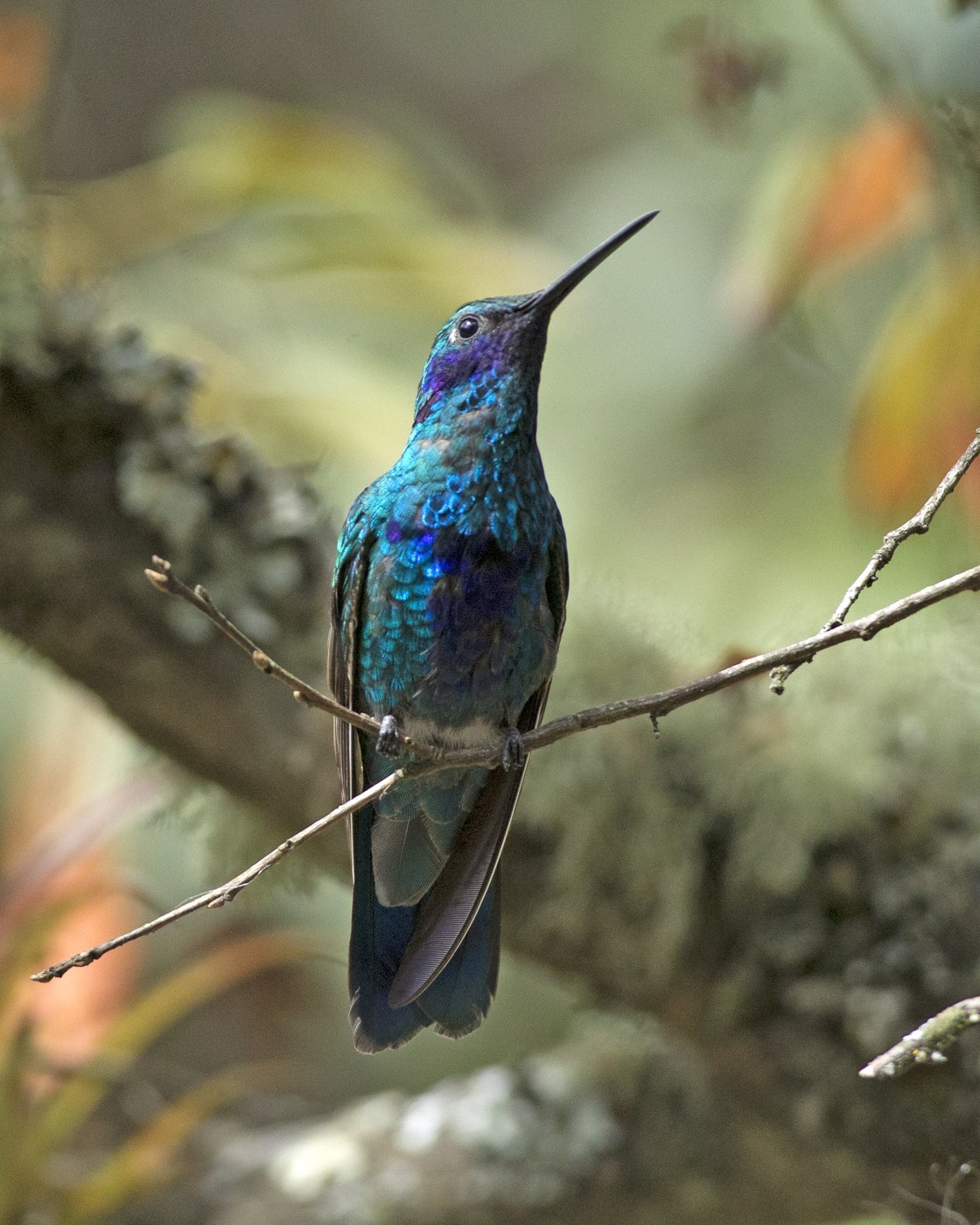
Sparkling Violetear
Iridescent body feathers, large violet ear and chest patches
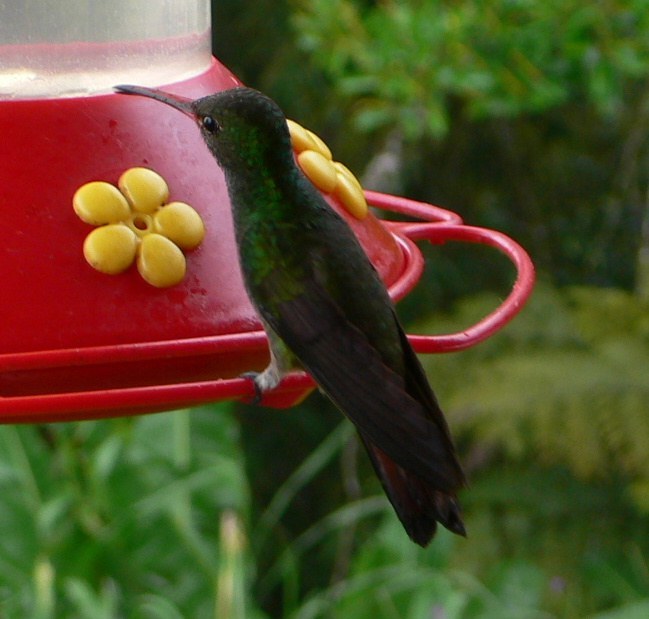
Rufous-tailed Hummingbird
Iridescent throat and breast feathers, rufous tail feathers

Rufous-breasted Hermit
Slightly decurved bill with rufous-washed contour feathers
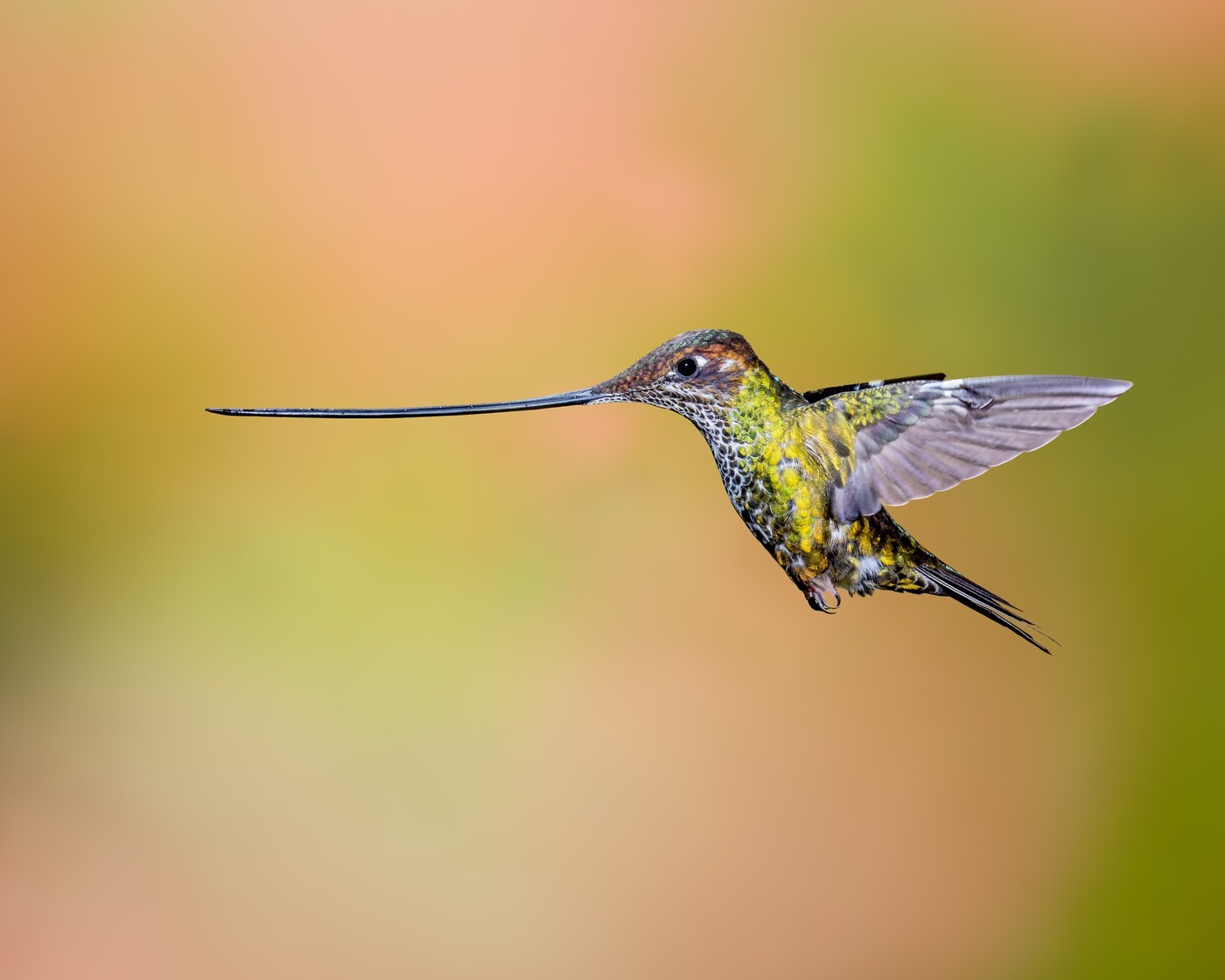
Sword-billed Hummingbird
Iridescent body feathers, extraordinarily long bill (non-feather feature)
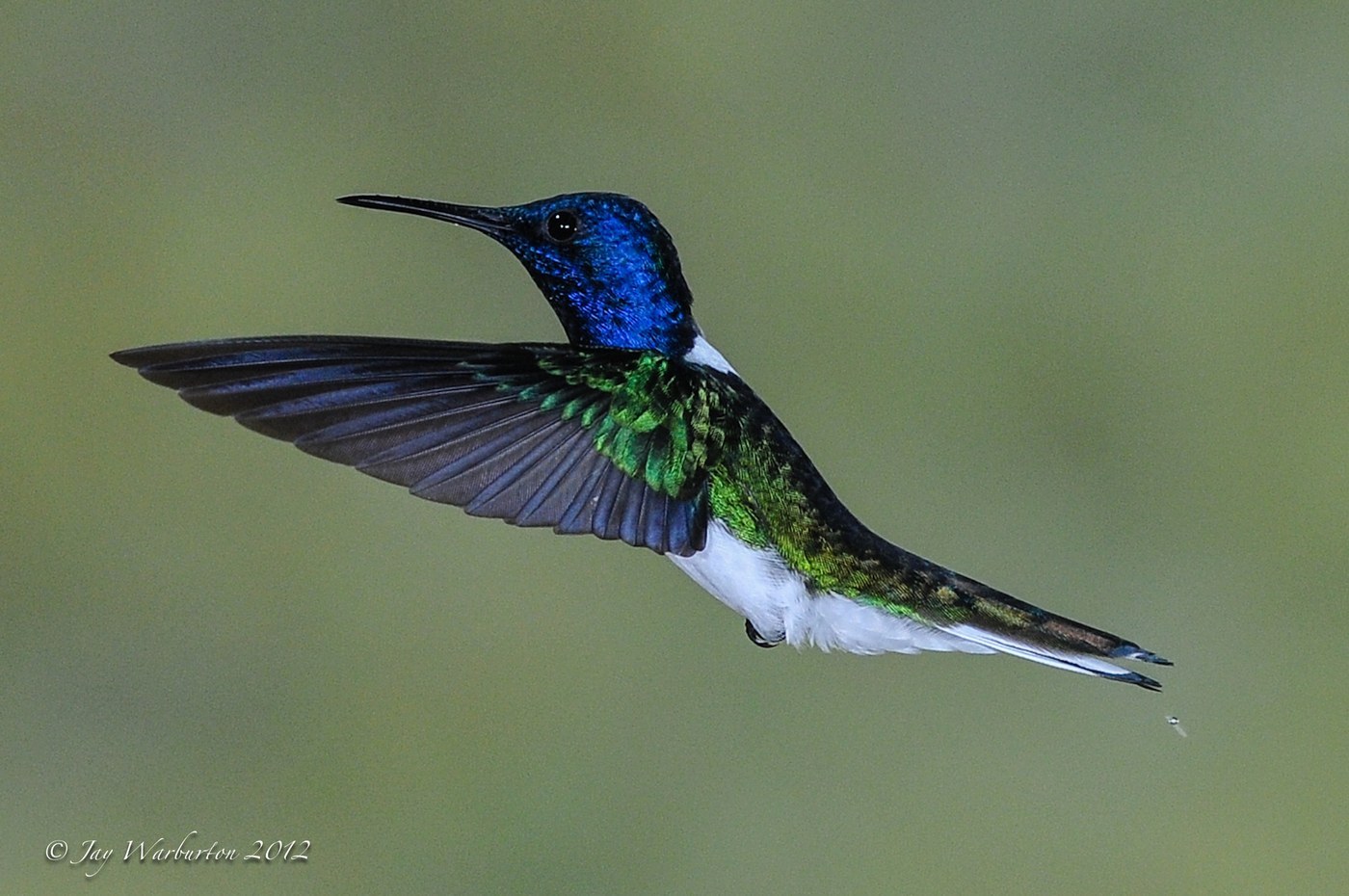
White-necked Jacobin
Iridescent head feathers, contrasting white nape and belly

White-eared Hummingbird
Iridescent gorget feathers, bold facial stripe
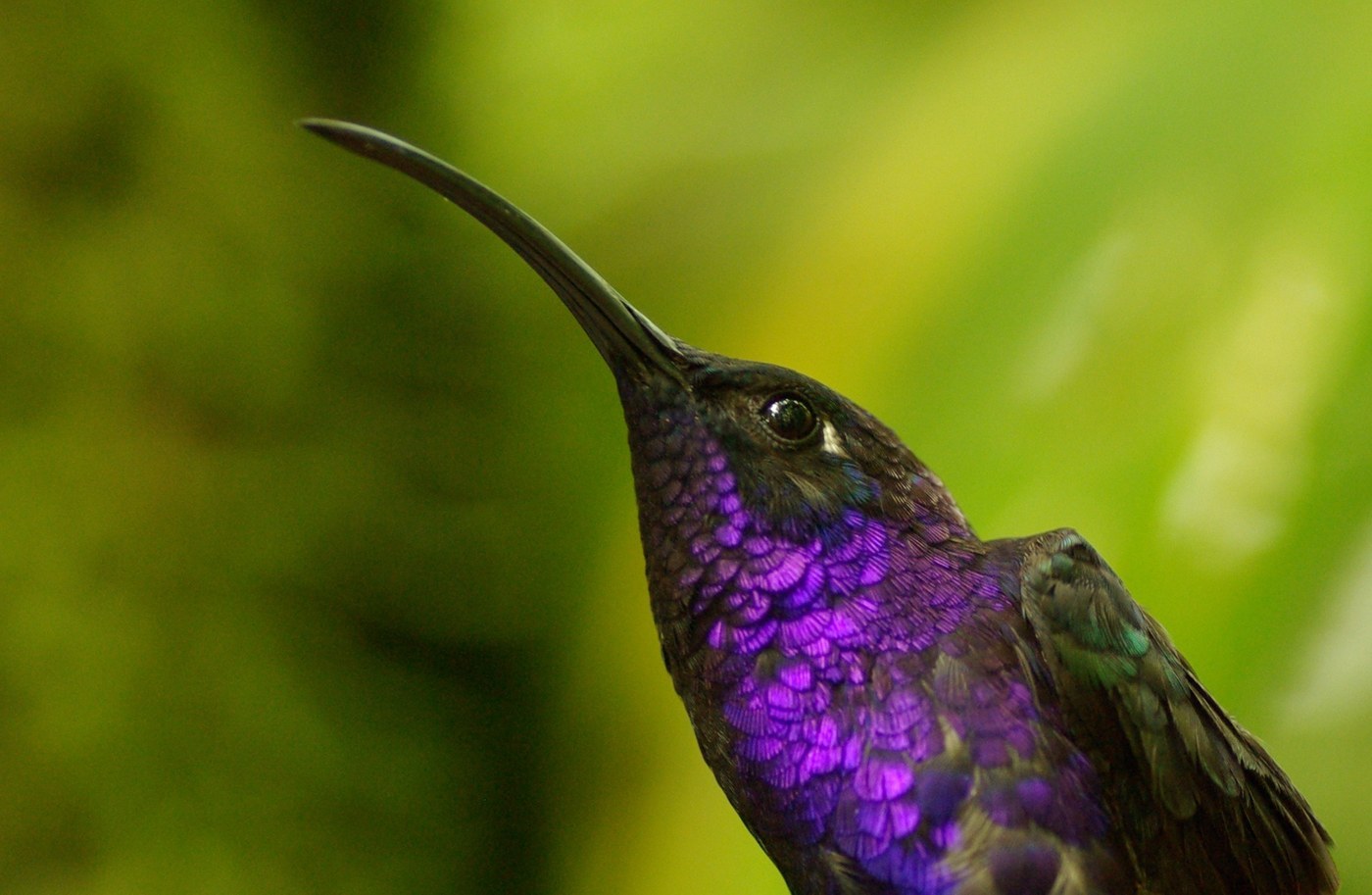
Violet Sabrewing
Iridescent body feathers, thickened curved primary shafts

Velvet-purple Coronet
Dense, velvety contour feathers with iridescent crown patch

Violet-crowned Hummingbird
Iridescent crown feathers, clean white underparts

Shining Sunbeam
Iridescent contour feathers with coppery-bronze wing sheen

Rufous Hummingbird
Tiny contour, gorget, and narrow flight feathers