
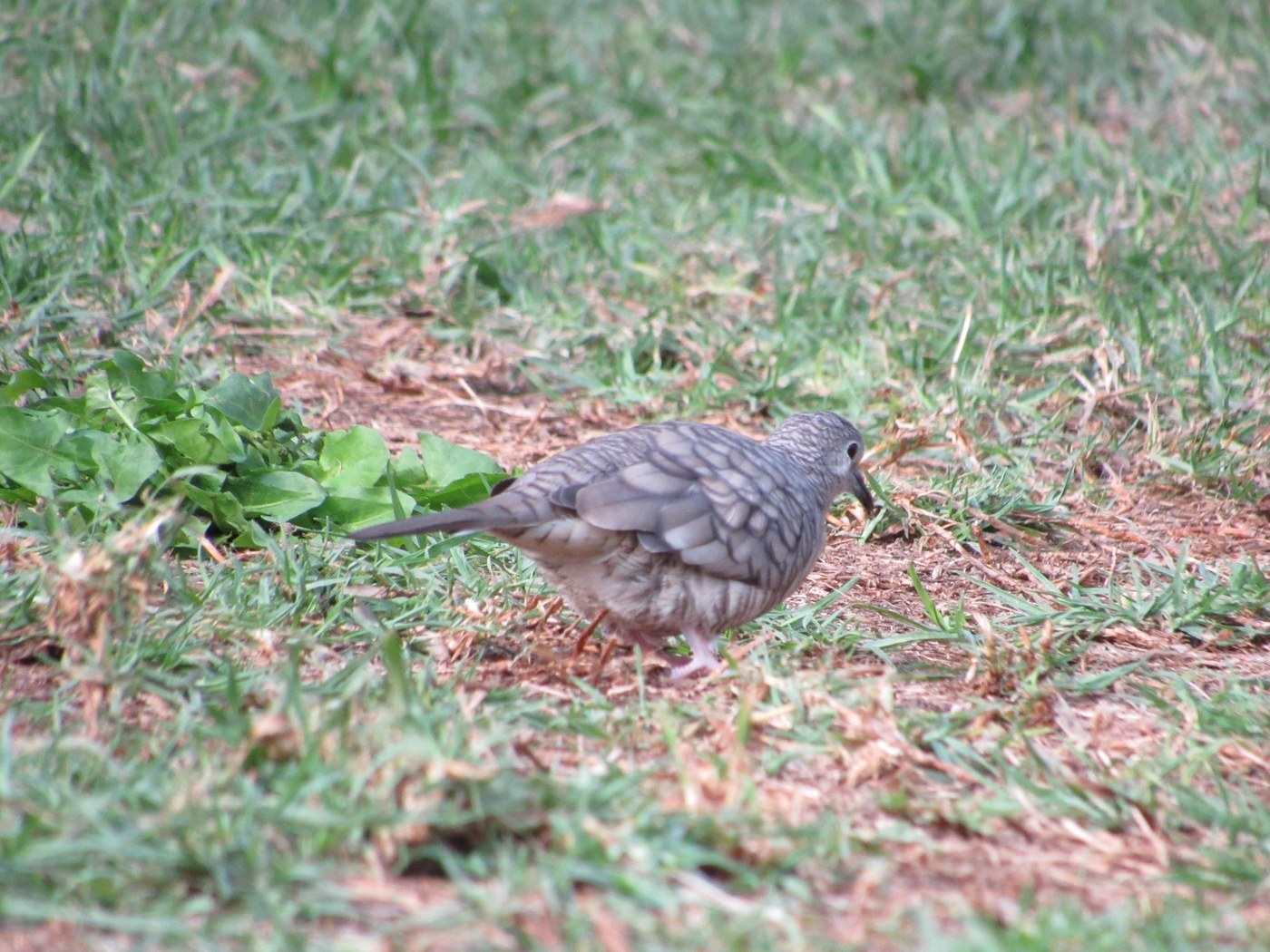
Inca Dove
Columbina inca
A small, pale dove with an overall scaly appearance created by dark-edged feathers, common around towns and arid scrub of the southwestern United States and Mexico.
- Feather type
- Small, scaly-patterned body feathers; long tail with white edges
- Colours
- Pale grayish-brown with a distinct scaly pattern
- Bird size
- Small dove, ~20-23 cm
Found a feather like this?
Identify any feather from a photo, free.
Overview
The Inca Dove is a small, slender dove found across the southwestern United States, Mexico, and parts of Central America, easily recognized by the scaly pattern covering nearly its entire body, created by dark crescent edges on pale feathers. It is a common and confiding bird around towns, parks, and arid scrub habitats.
Identifying the Feather
Flight feathers: pale grayish-brown with rufous-chestnut visible on the primaries, flashing in flight similar to other small ground-doves. Tail feathers: notably long and graduated for such a small dove, dark centrally with white outer edges visible from below when fanned. Body feathers: pale grayish-buff overall, with essentially every body feather edged in a fine dark crescent, producing a uniform scaly pattern across the head, breast, back, and wings. This overall scaliness combined with a longer, white-edged tail distinguishes Inca Dove feathers from the more boldly rufous-flashed, short-tailed Common Ground Dove.
Plumage & Molt
Sexes look similar, with males sometimes showing a slightly warmer buff tone. Adults show the characteristic scaly pattern over nearly the entire body, rufous primaries, and a long tail with white outer edges. Juveniles show a duller, less crisply scaled pattern, developing the fuller adult scaling after their first molt. There is no significant seasonal plumage variation.
Habitat & Range
Inca Doves are common in urban and suburban areas, arid scrub, and open country across the southwestern United States, Mexico, and parts of Central America. The species is largely resident and highly associated with human settlement, often found around parks, yards, and bird feeders.
Behavior & Field Notes
This dove forages on the ground, often in pairs or small groups, feeding mainly on seeds. It builds a small, flimsy platform nest of twigs, typically low in a shrub or tree, sometimes on structures near buildings. Its call is a distinctive, repetitive two-note cooing often rendered as sounding like 'no hope,' and the species is known for huddling together in a pyramid-like stack with other Inca Doves to conserve heat in cold weather.
Frequently asked questions
What feather feature is most diagnostic for the Inca Dove?
A nearly complete scaly pattern covering the head, breast, and back, created by dark crescent-shaped feather edges, combined with a long tail edged in white.
How does this species differ from the Common Ground Dove in the field?
The Inca Dove has a longer, white-edged tail and a more uniformly scaly pattern overall, while the Common Ground Dove is smaller, shorter-tailed, and shows a bolder rufous wing flash.
Do juvenile Inca Doves show the scaly pattern?
Juveniles show a duller, less crisply defined scaly pattern that becomes fuller and more contrasting after their first molt.
Where is this species typically found?
In urban and suburban areas, arid scrub, and open country across the southwestern United States, Mexico, and parts of Central America, often closely associated with human settlement.
Inca Dove guides
In-depth guides for identifying and understanding Inca Dove.
Other feathers you may enjoy

Victoria Crowned Pigeon
Large lace-like fan crest plumes over dense body contour feathers

Plain Pigeon
Contour feathers, plain and uniformly toned, with a white wing patch

Zenaida Dove
Contour and flight feathers, faint iridescent sheen on neck

Pink Pigeon
Soft contour feathers with graduated tail

Nicobar Pigeon
Long, hackle-like elongated neck feathers with iridescent sheen
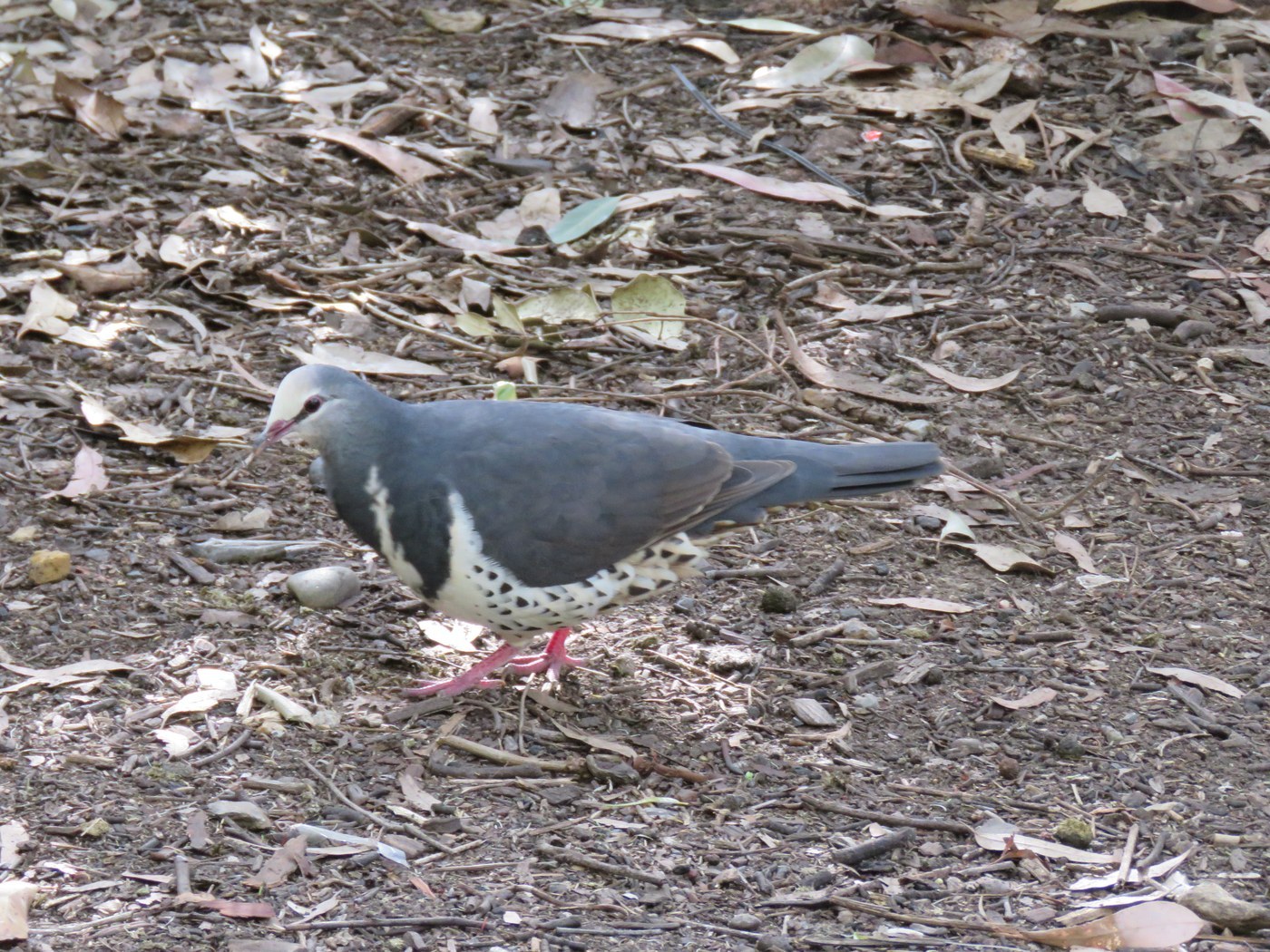
Wonga Pigeon
Dense, soft body contour feathers over a stocky frame

Squatter Pigeon
Dense, cryptic body contour feathers with a bold facial pattern

White-winged Dove
Broad, sturdy flight feathers with a bold white wing stripe

Western Crowned Pigeon
Rounded fan crest plumes over dense soft body feathers

Snow Pigeon
Dense insulating body contour feathers with a bold white rump and belly patch

Zebra Dove
Contour feathers with bold, extensive black-and-white barring

Scaly-naped Pigeon
Contour feathers with iridescent scaled nape pattern