
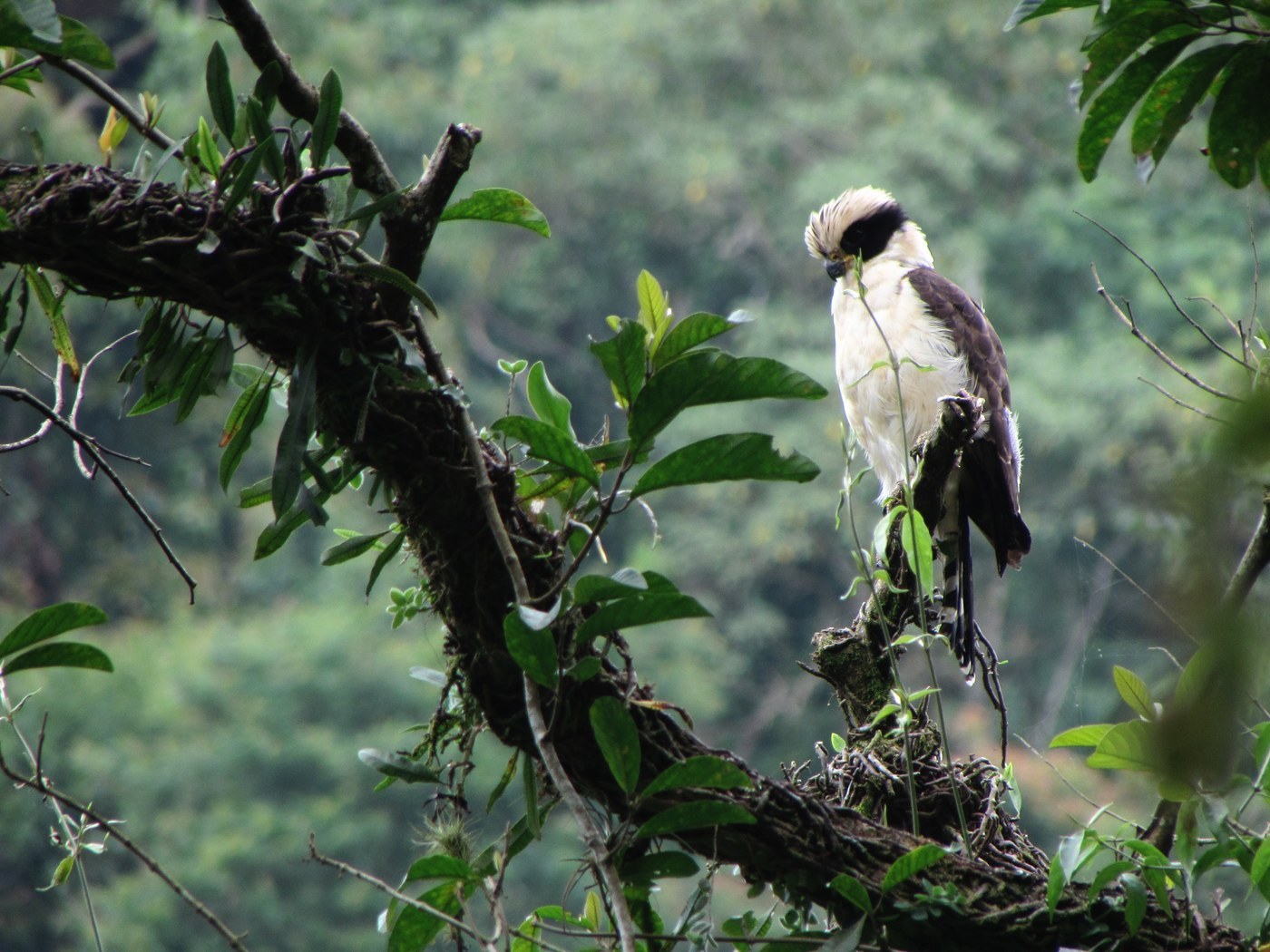
Laughing Falcon
Herpetotheres cachinnans
A distinctive Neotropical falcon named for its loud, laughing call, with a bold dark facial mask set against a pale cream head that makes its feathers easy to recognize.
- Feather type
- Broad rounded flight feathers; boldly banded tail; dense cream and dark body feathers
- Colours
- Creamy buff head and underparts with a broad dark facial mask; dark brown back and wings
- Bird size
- Medium-large falcon, ~45-56 cm
Found a feather like this?
Identify any feather from a photo, free.
Overview
The Laughing Falcon is a large, deliberate forest falcon found across Central and South America, easily recognized by its pale cream head marked with a broad blackish mask running through the eyes, contrasting with its dark brown back and wings.
Unlike fast-flying open-country falcons, it perches for long periods watching for prey, and its feathers are correspondingly broader and less streamlined than those of true falcons like kestrels or peregrines.
Its loud, far-carrying calls at dawn and dusk often reveal its presence well before a feather is found, typically near forest edges or savanna woodland where it hunts.
Identifying the Feather
Shape and size
- Flight feathers are broader and more rounded than typical fast-flying falcons, reflecting its more perch-and-pounce hunting style; primaries can reach 20-25 cm.
- Tail feathers are long and boldly banded with alternating dark brown and pale bands.
Color and pattern
- Head and underparts feathers are creamy buff to pale cinnamon, unmarked except at the mask.
- The distinctive dark facial mask feathers are blackish-brown and sharply defined against the pale head.
- Back and wing feathers are dark chocolate-brown, sometimes with a faint pale scaling.
- Shafts are pale on head/underpart feathers, dark brown on back and flight feathers.
Similar species
- No other Neotropical falcon combines a pale cream head with such a bold, mask-like dark eye stripe; the broad, rounded flight feather shape also separates it from slimmer true falcons.
Plumage & Molt
Adults show a pale buff-cream head and underparts, a bold dark mask through the eye, and dark brown upperparts with a boldly banded tail. Sexes look similar. Juveniles are similar overall but may show slightly more mottling on the underparts, reaching adult appearance without a dramatic plumage change.
Habitat & Range
Found from Mexico south through Central America into much of South America, in lowland forest, forest edge, gallery woodland, and savanna with scattered trees. It is a non-migratory resident throughout its range.
Behavior & Field Notes
Specializes heavily on snakes and other reptiles, which it locates from a high, exposed perch before dropping down to seize them. Nests in tree cavities or on old stick platforms. Its name comes from its loud, laughing or yelping call, often given repeatedly at dawn and dusk.
Field note: broad, boldly banded tail feathers with a pale cream base color and a dark masked head feather are strong indicators of this species over other Neotropical raptors.
Frequently asked questions
What is the easiest way to identify a Laughing Falcon feather?
A pale cream-buff head feather showing part of the bold dark eye mask, paired with broad, boldly banded tail feathers, is very distinctive.
Why are its flight feathers broader than other falcons?
It hunts by watching from a perch and dropping onto prey rather than chasing in fast flight, so it does not need the narrow, high-speed wing shape of true falcons.
Do males and females have different feathers?
No significant difference; both sexes share the same head and body pattern.
Where in the habitat are feathers most likely found?
Near forest edges, savanna woodland, and gallery forest where the bird perches to hunt.
Laughing Falcon guides
In-depth guides for identifying and understanding Laughing Falcon.
Other feathers you may enjoy

Australian Hobby
Long, narrow pointed flight feathers; slender tail feathers

California Condor
Massive flight feathers; long broad primaries; large tail feathers

Brown Falcon
Broad, rounded flight feathers; variable-toned contour feathers
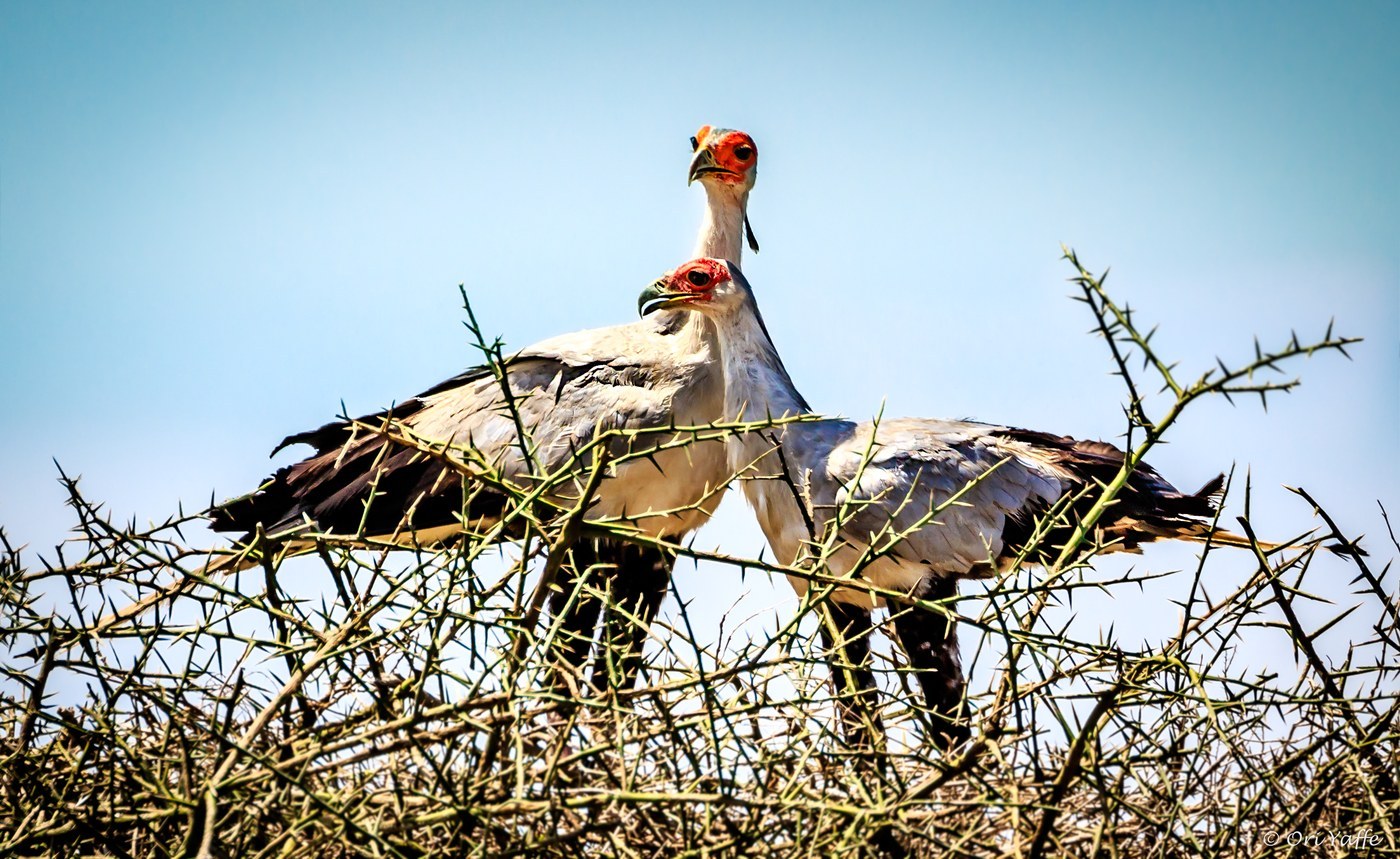
Secretarybird
Long crest feathers; broad flight feathers; elongated central tail feathers

Orange-breasted Falcon
Broad-based pointed flight feathers; bold breast and belly feathers
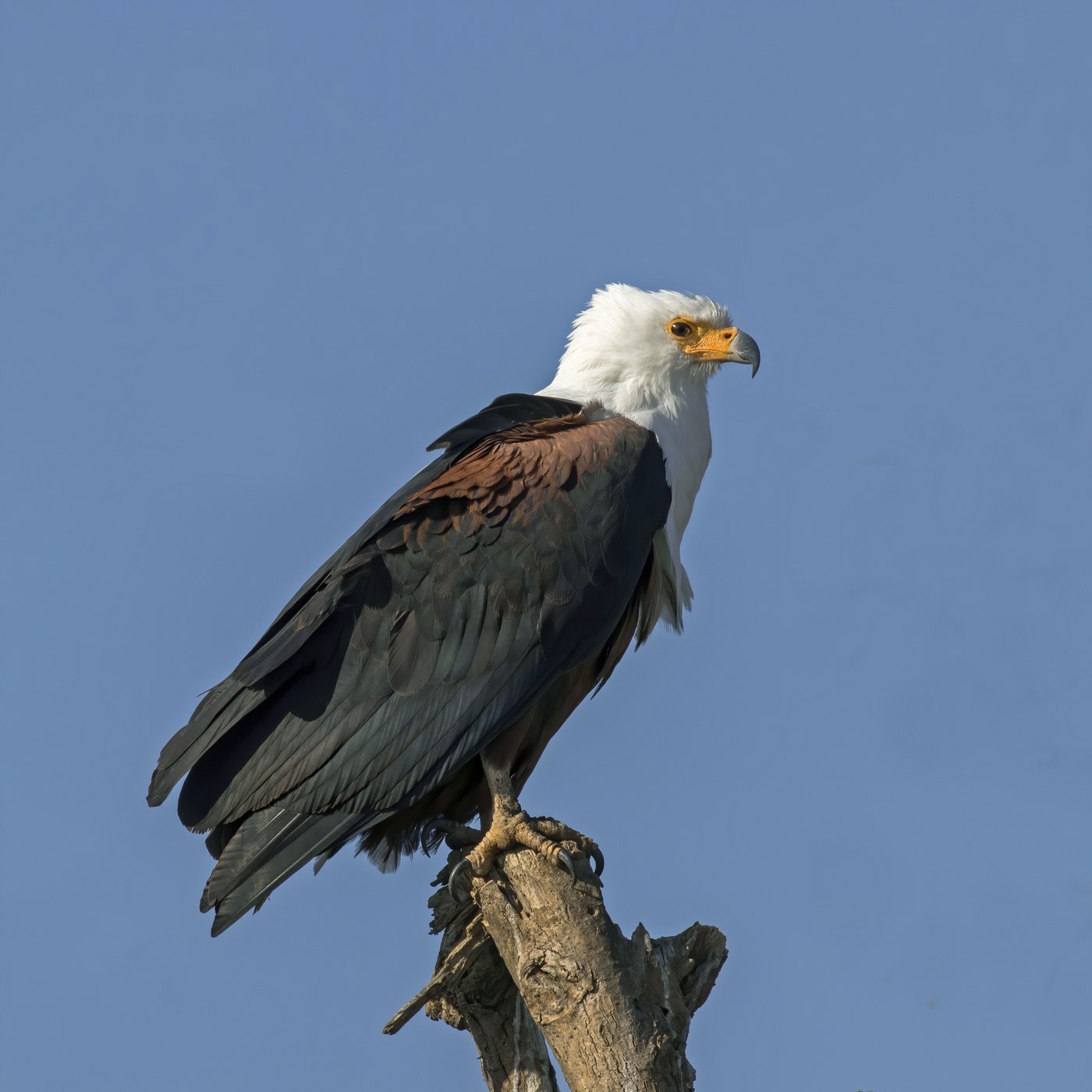
African Fish Eagle
Flight, tail, and body feathers

Amur Falcon
Slender pointed flight feathers; soft slate or orange-buff contour feathers
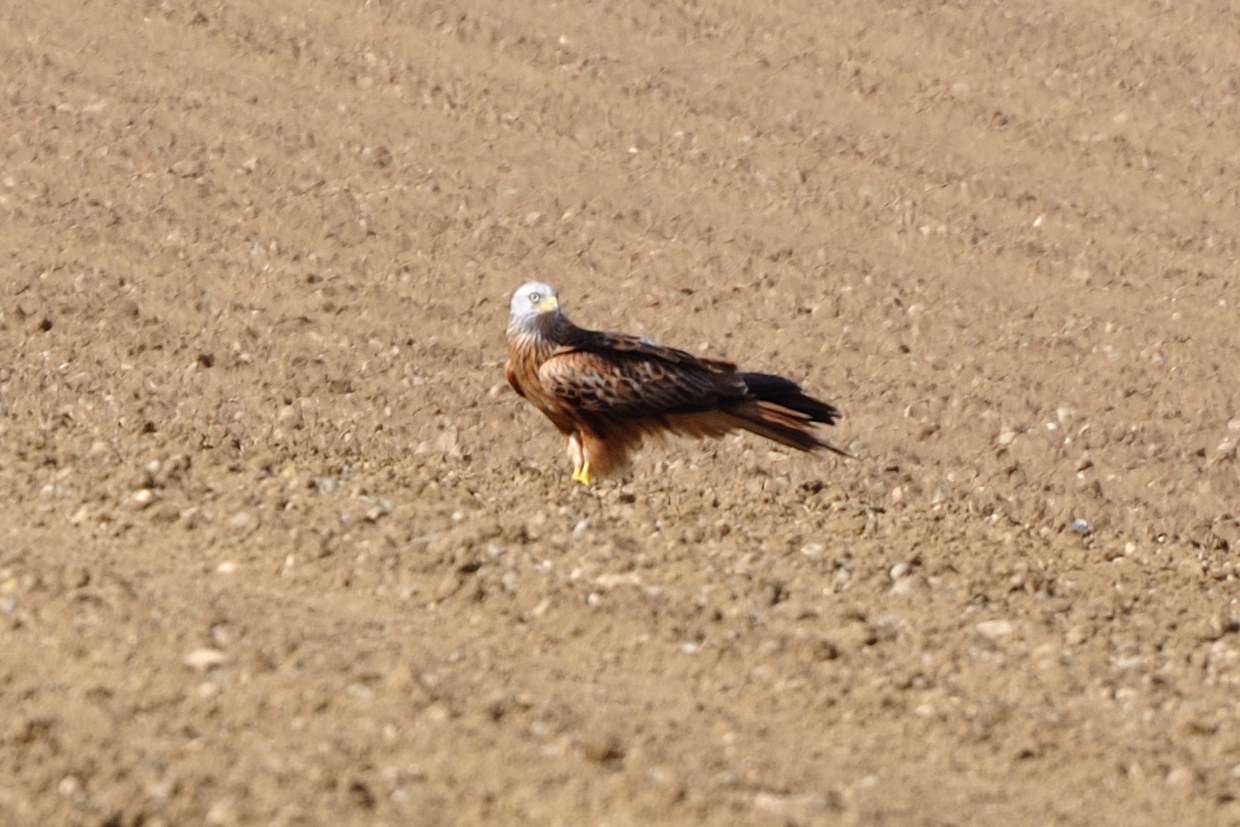
Red Kite
Flight (wing) and tail feathers
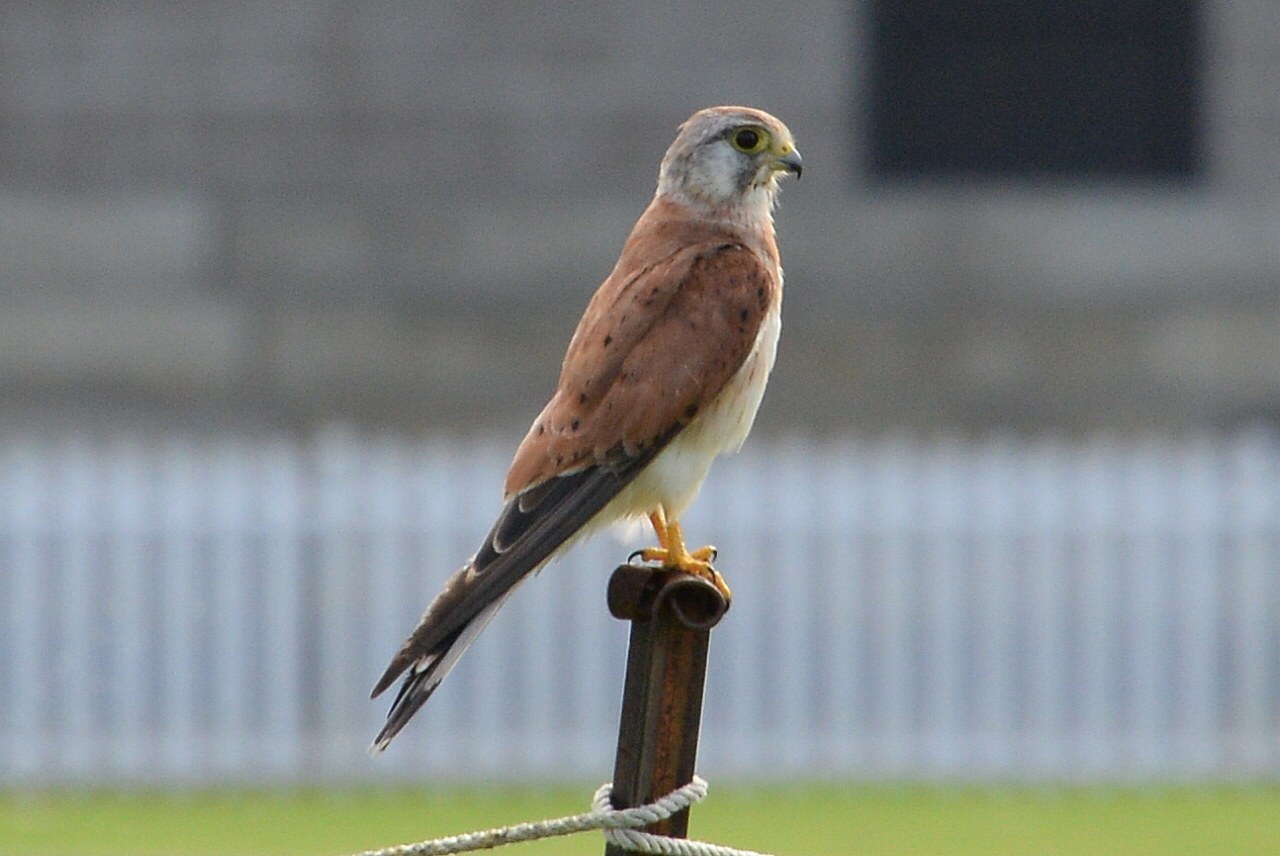
Nankeen Kestrel
Slim pointed flight feathers; lightly marked contour feathers

Andean Condor
Massive flight feathers; broad primaries and secondaries; sturdy tail feathers

Plumbeous Forest Falcon
Short rounded flight feathers; finely barred tail feathers

Sooty Falcon
Long pointed flight feathers; slim tail feathers