

Long-billed Hermit
Phaethornis longirostris
A large hermit hummingbird of Central American rainforest understory, identified by its long decurved bill, buffy underparts, and elongated white-tipped central tail feathers.
- Feather type
- Elongated, decurved bill with long central tail streamer feathers
- Colours
- Bronze-green above, buffy underparts, with a rufous rump and white-tipped tail
- Bird size
- Medium hummingbird, ~14-15 cm including tail streamer
Found a feather like this?
Identify any feather from a photo, free.
Overview
Overview
The Long-billed Hermit is a large member of the hermit hummingbird group, found in the understory of lowland and foothill rainforest from southern Mexico through Central America into northwestern South America. Like other hermits, it lacks the bright iridescent gorgets of many hummingbirds, relying instead on its distinctive shape and buffy tones for identification.
Both sexes are similar, showing bronze-green upperparts, buffy underparts, and a long, strongly decurved bill suited to probing tubular flowers in the forest understory.
Identifying the Feather
Feather Identification
- Body feathers: Bronze-green above, buffy-cinnamon below, without bright iridescent patches
- Tail feathers: Central pair elongated into a narrow streamer tipped in white, distinctive among hermits
- Rump feathers: Often show a rufous or cinnamon tone
- Shaft color: Pale, especially on the buffy underpart feathers
- Size: Larger than many hermit species, with a notably long, decurved bill relative to head size
- Similar species: Similar to Green Hermit but larger overall with buffier underparts; distinguished from smaller hermits by its greater size and longer tail streamer
Plumage & Molt
Plumage Details
Adults show bronze-green upperparts, buffy-cinnamon underparts, and a rufous-tinged rump, with an elongated white-tipped central tail streamer. Sexes look alike, a common trait among hermit hummingbirds. Juveniles are similar but with less defined buffy tones and a shorter tail streamer until maturity. There is no notable seasonal plumage change.
Habitat & Range
Habitat & Range
Long-billed Hermits inhabit the understory of humid lowland and foothill rainforest from southern Mexico through Central America and into western Colombia and Ecuador. The species is resident, though individuals may make local movements following the bloom cycles of understory flowers along established feeding routes known as trap-lines.
Behavior & Field Notes
Behavior & Field Notes
This hermit feeds on nectar from a variety of understory flowers along regular trap-line routes, and also gleans small insects and spiders from foliage. Unlike territorial hummingbirds, hermits generally do not defend flowers but instead visit a circuit of scattered blooms. Males gather at communal display sites called leks, where they sing repetitive, high-pitched songs to attract females. Nests are cone-shaped, suspended from the underside of large leaves.
Frequently asked questions
What identifies a Long-billed Hermit feather?
Bronze-green upperparts and buffy underparts paired with an elongated, white-tipped central tail streamer and a long decurved bill.
Do hermits have bright iridescent throats like other hummingbirds?
No, hermits generally lack bright gorget colors, instead showing subdued bronze and buff tones.
How does this species find food?
It follows a regular trap-line route between scattered understory flowers rather than defending a single feeding territory.
What is a hermit lek?
A gathering site where males sing to attract mates, a behavior distinctive to hermit hummingbirds and a few other groups.
Long-billed Hermit guides
In-depth guides for identifying and understanding Long-billed Hermit.

Other feathers you may enjoy

Speckled Hummingbird
Small contour feathers with fine speckled underpart markings
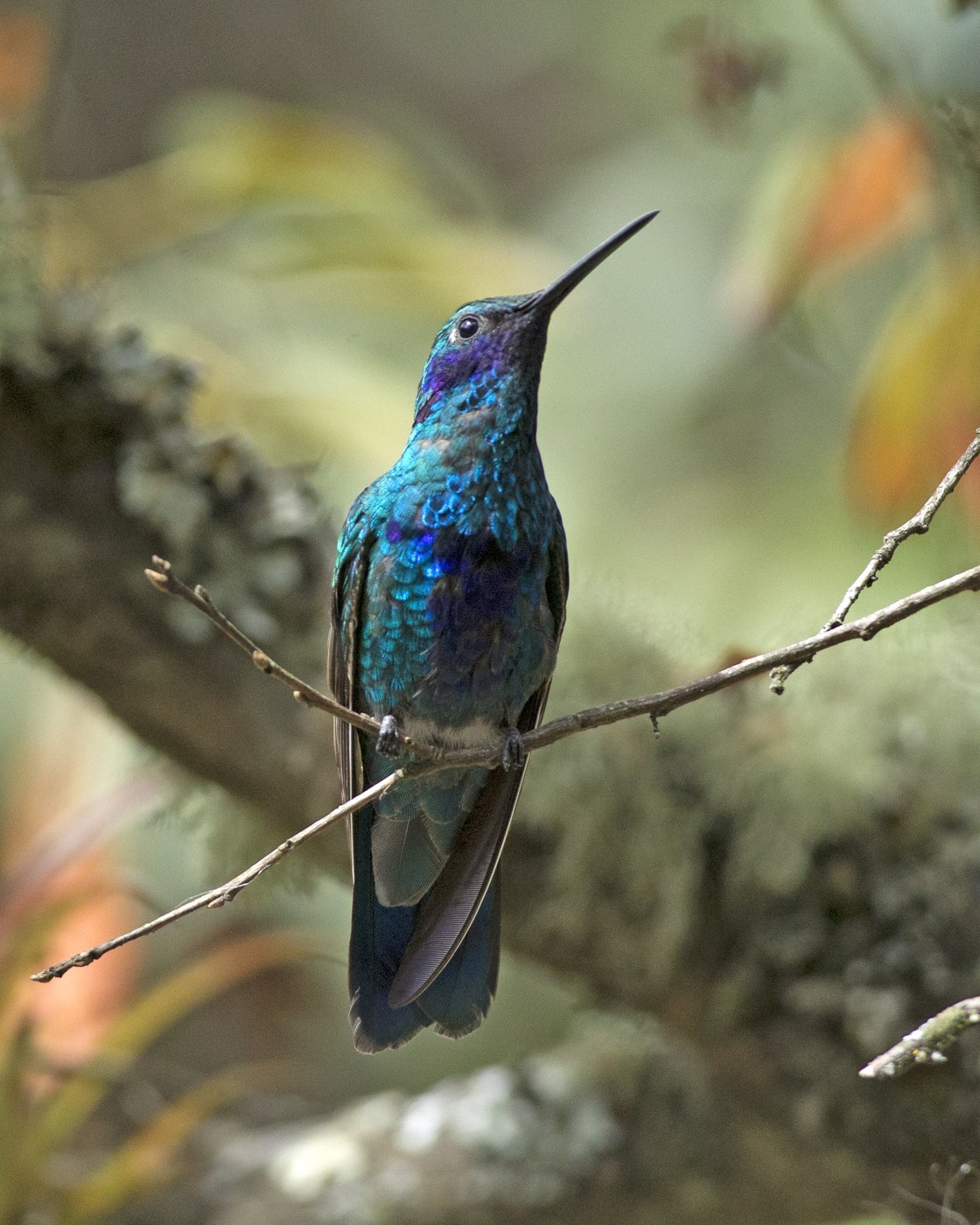
Sparkling Violetear
Iridescent body feathers, large violet ear and chest patches
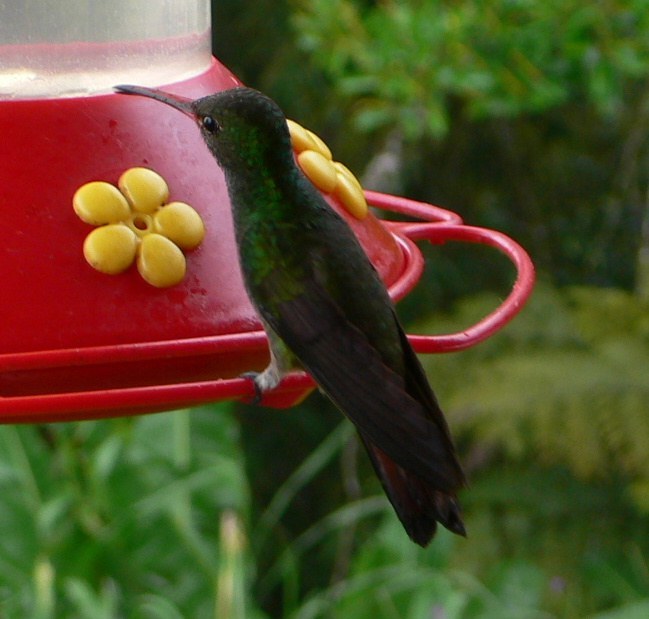
Rufous-tailed Hummingbird
Iridescent throat and breast feathers, rufous tail feathers

Rufous-breasted Hermit
Slightly decurved bill with rufous-washed contour feathers
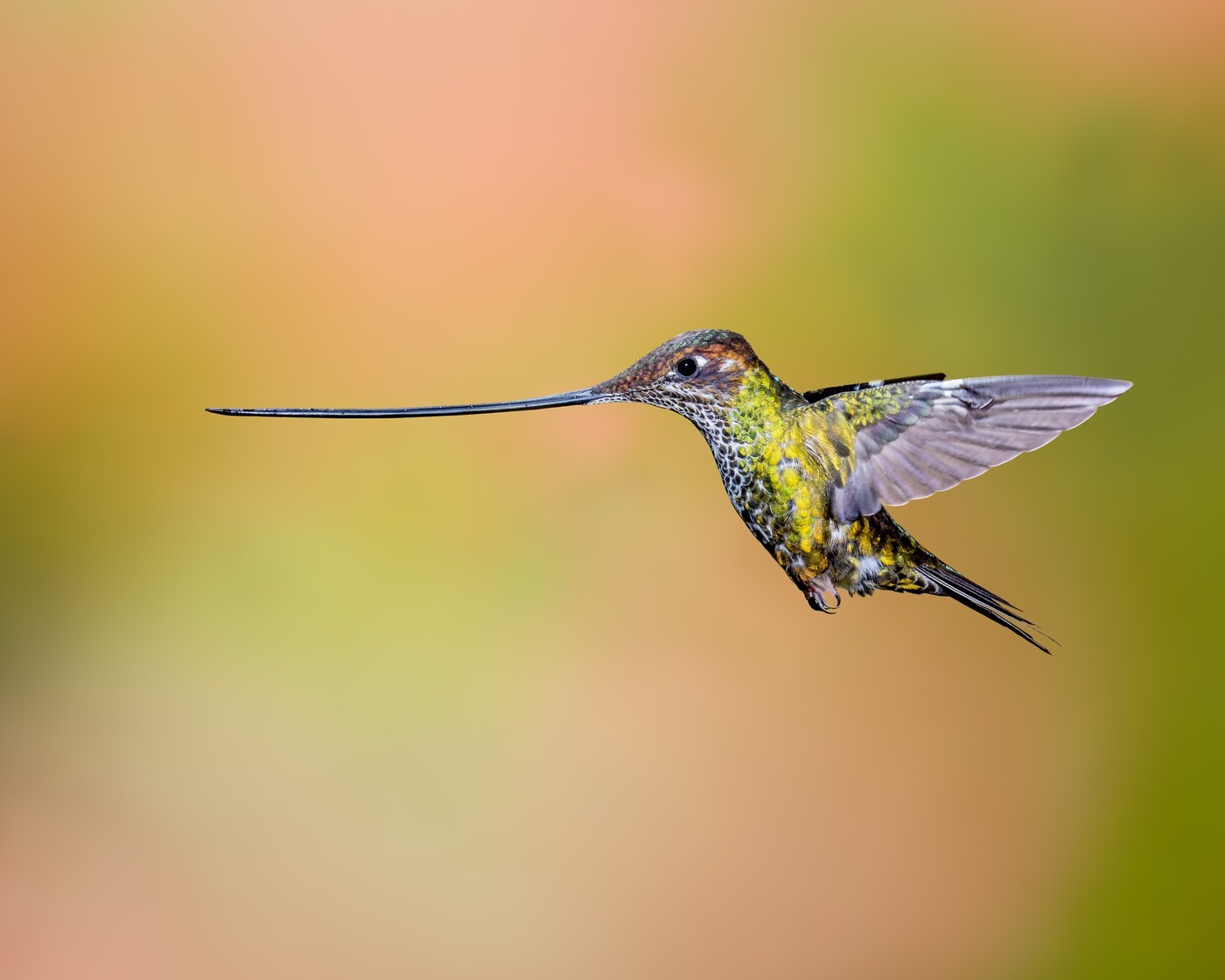
Sword-billed Hummingbird
Iridescent body feathers, extraordinarily long bill (non-feather feature)
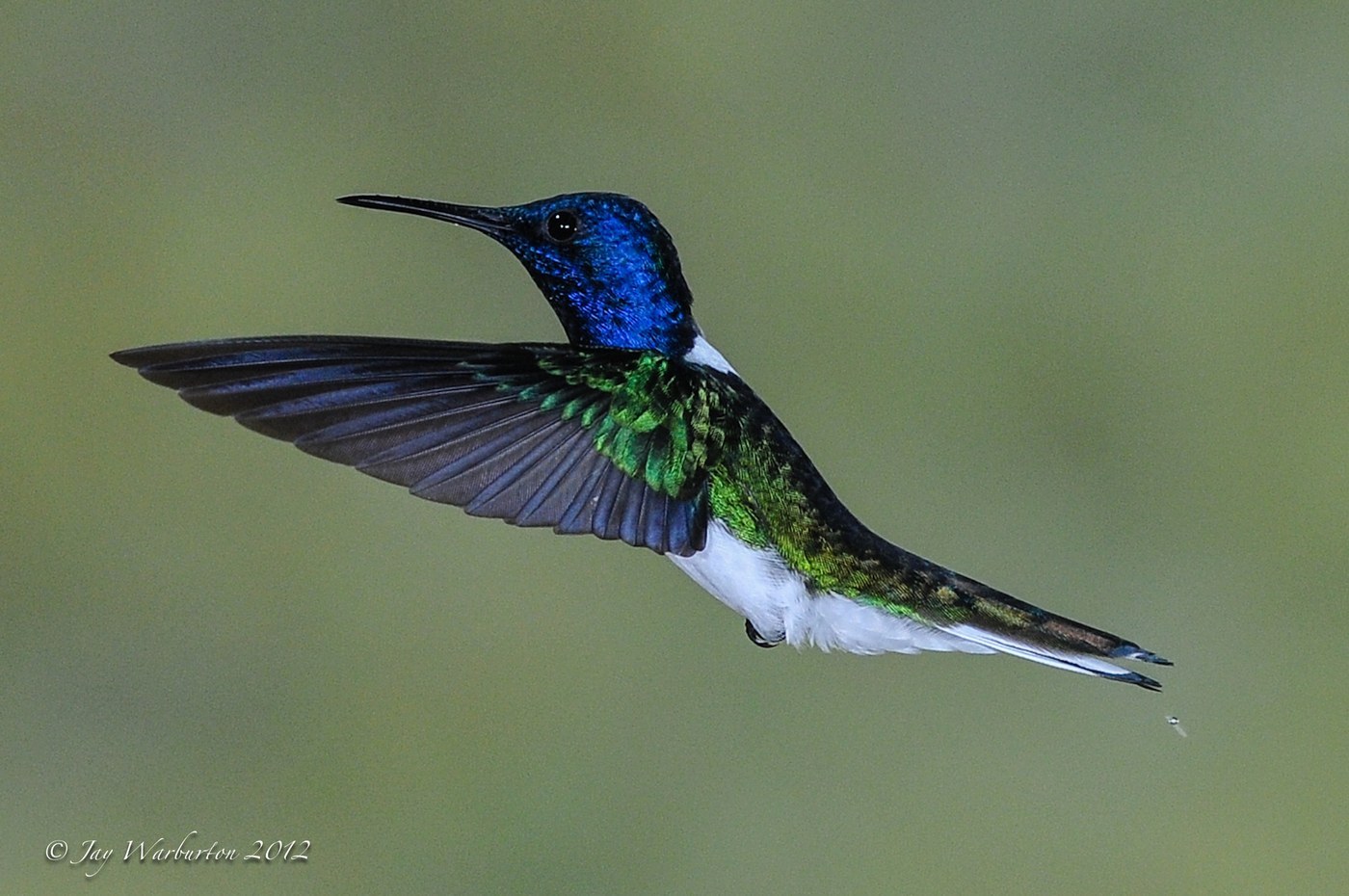
White-necked Jacobin
Iridescent head feathers, contrasting white nape and belly

White-eared Hummingbird
Iridescent gorget feathers, bold facial stripe
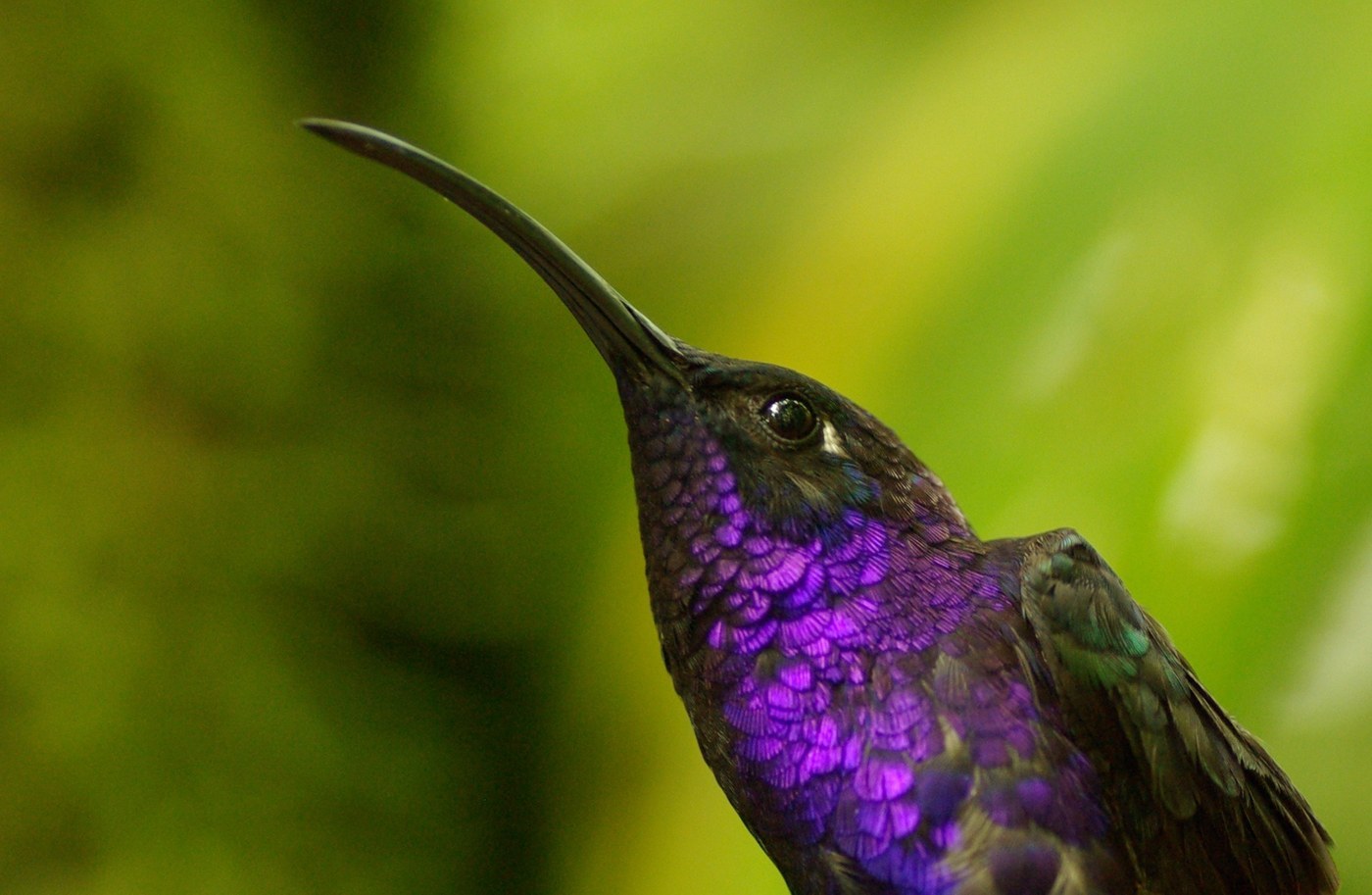
Violet Sabrewing
Iridescent body feathers, thickened curved primary shafts

Velvet-purple Coronet
Dense, velvety contour feathers with iridescent crown patch

Violet-crowned Hummingbird
Iridescent crown feathers, clean white underparts

Shining Sunbeam
Iridescent contour feathers with coppery-bronze wing sheen

Rufous Hummingbird
Tiny contour, gorget, and narrow flight feathers