

Pink Pigeon
Nesoenas mayeri
A pale pink-headed pigeon found only on Mauritius, its soft blush-colored head and underparts contrasting with warm rufous-brown wings and a long graduated tail.
- Feather type
- Soft contour feathers with graduated tail
- Colours
- Pale pink head and underparts, rufous-brown wings and tail
- Bird size
- Pigeon-sized, ~32-36 cm
Found a feather like this?
Identify any feather from a photo, free.
Overview
The Pink Pigeon is a Mauritian endemic once reduced to a handful of individuals in the wild, now recovering thanks to sustained conservation efforts. It is a heavy-bodied pigeon with a soft pale pink wash across its head and underparts, set off against darker rufous-brown wings and a notably long tail for a pigeon of its size.
Identifying the Feather
The head, neck, and underparts show a pale, dusty pink tone unusual among pigeons, contrasting with darker reddish-brown wings and back. The tail is unusually long and graduated for a pigeon, tipped with subtly paler edges. Wing feathers lack strong iridescence or bold patterning, appearing as a fairly uniform warm brown. Compare with the Madagascar Turtle Dove found in the same region, which is smaller, grey-brown, and shows a barred neck patch rather than an overall pink wash.
Plumage & Molt
Sexes are similar in plumage, with both showing the pink head and rufous-brown wings, though males can appear marginally brighter. Juveniles are duller and browner, lacking the distinct pink tone until after their first molt. No pronounced seasonal plumage change occurs in this tropical island resident.
Habitat & Range
Endemic to Mauritius, where it now persists mainly in and around remnant native forest managed for conservation, having been reintroduced to several protected sites after near-extinction in the wild. It is non-migratory and sedentary within its limited island range.
Behavior & Field Notes
Feeds on seeds, leaves, and small fruit, foraging both on the ground and in trees. Its call is a deep, resonant cooing. Nests are stick platforms built in trees or dense shrubs. The species has been the focus of long-term captive breeding and reintroduction work, and its recovery from critically low numbers is considered a notable conservation success.
Frequently asked questions
What does a Pink Pigeon look like?
It has a pale pink head and underparts contrasting with rufous-brown wings and back, plus an unusually long, graduated tail.
Where does it live?
Only on the island of Mauritius, mainly around remnant and restored native forest.
How does it compare to the Madagascar Turtle Dove?
The Madagascar Turtle Dove is smaller, grey-brown, and shows a barred neck patch, unlike the overall pink-toned Pink Pigeon.
Pink Pigeon guides
In-depth guides for identifying and understanding Pink Pigeon.

Other feathers you may enjoy

Victoria Crowned Pigeon
Large lace-like fan crest plumes over dense body contour feathers

Plain Pigeon
Contour feathers, plain and uniformly toned, with a white wing patch

Zenaida Dove
Contour and flight feathers, faint iridescent sheen on neck

Nicobar Pigeon
Long, hackle-like elongated neck feathers with iridescent sheen
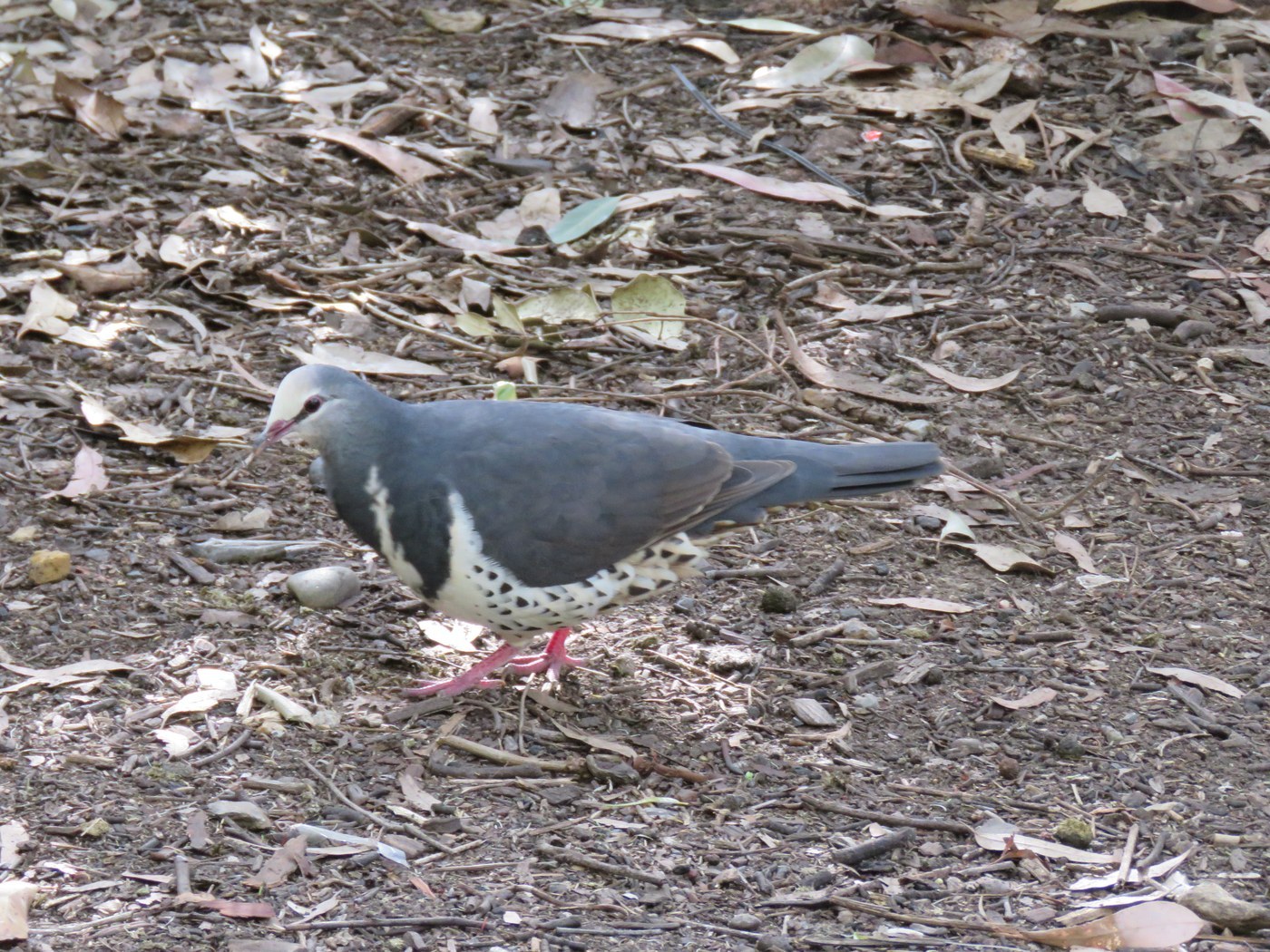
Wonga Pigeon
Dense, soft body contour feathers over a stocky frame

Squatter Pigeon
Dense, cryptic body contour feathers with a bold facial pattern

White-winged Dove
Broad, sturdy flight feathers with a bold white wing stripe

Western Crowned Pigeon
Rounded fan crest plumes over dense soft body feathers

Snow Pigeon
Dense insulating body contour feathers with a bold white rump and belly patch

Zebra Dove
Contour feathers with bold, extensive black-and-white barring

Scaly-naped Pigeon
Contour feathers with iridescent scaled nape pattern
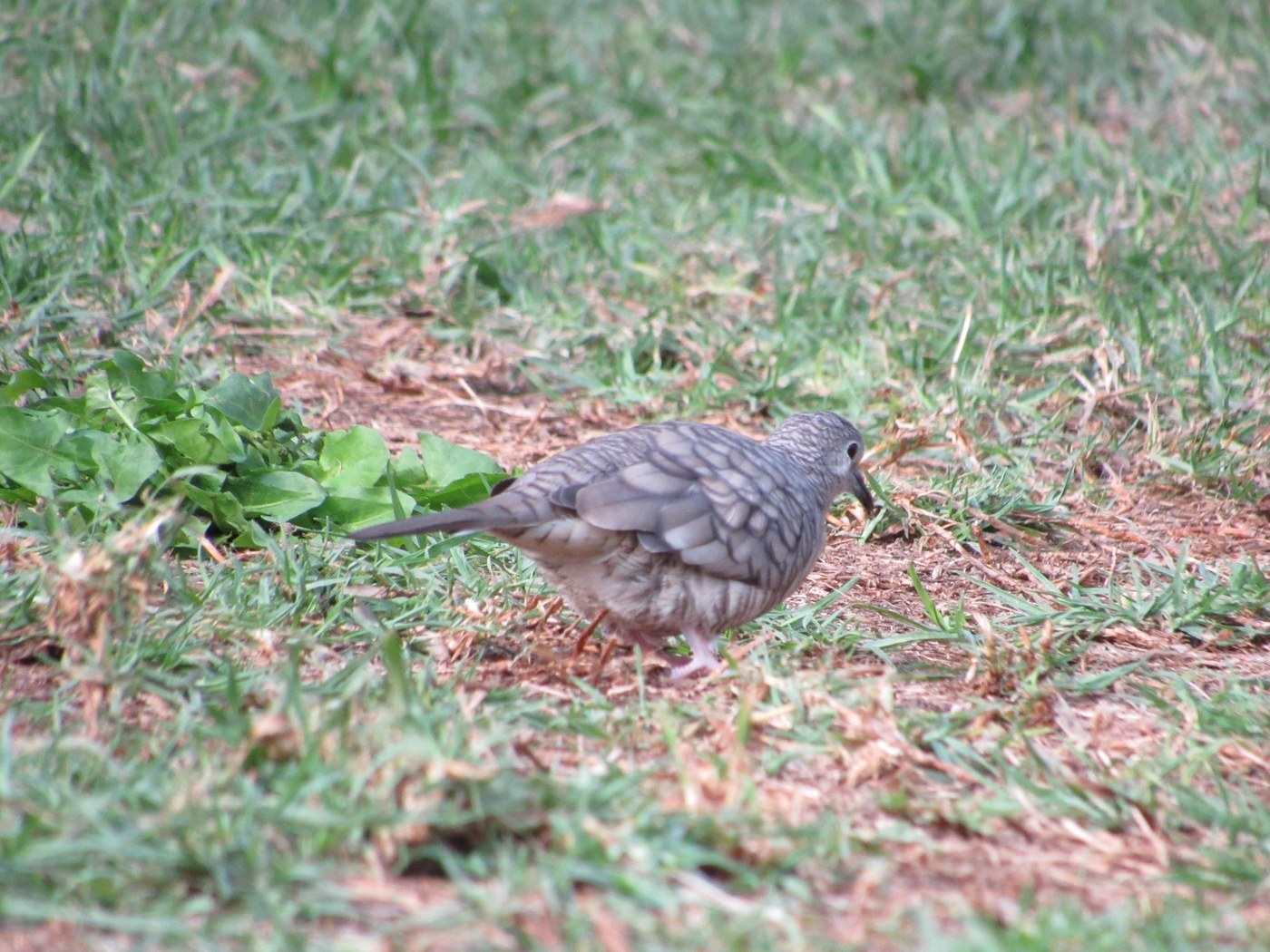
Scaled Dove
Contour feathers with dark scalloped edging