

Rivoli's Hummingbird
Eugenes fulgens
One of the largest hummingbirds in the United States, appearing nearly black in dim light until its violet crown and emerald throat flash brilliantly in direct sun.
- Feather type
- Large iridescent gorget and crown feathers
- Colours
- Dark violet crown, glittering emerald-green throat, blackish-green body
- Bird size
- Large for a hummingbird, ~12 cm
Found a feather like this?
Identify any feather from a photo, free.
Overview
Overview
Rivoli's Hummingbird, formerly lumped with a related species under the name Magnificent Hummingbird, is a large, robust hummingbird of montane pine-oak and cloud forest habitats from the southwestern United States south through Mexico and Central America. Its size alone helps set it apart from most other hummingbirds sharing its range.
Males appear dark and unremarkable in shade, but in good light reveal an intensely violet crown and a shimmering green gorget, a combination that makes them one of the most dramatic hummingbirds to observe when lighting conditions cooperate.
Identifying the Feather
Feather ID Notes
The crown feathers of adult males show an intense violet iridescence distinct from the green gorget below, a two-toned iridescent pattern that is diagnostic among North American hummingbirds. Body feathers otherwise appear blackish-green and can look nearly black without direct light hitting the iridescent structures.
- Crown feathers: violet, sharply set off from the throat color
- Gorget feathers: emerald green, broad and rounded
- Body feathers: dark blackish-green overall
- Size: notably larger and bulkier than most sympatric hummingbirds Females lack the iridescent crown and gorget, appearing dusky green above and pale grayish below with faint spotting on the throat.
Plumage & Molt
Plumage Details
Adult males display the diagnostic violet crown and green gorget against an otherwise dark body. Females are considerably plainer, with dull green upperparts, grayish underparts, and light throat speckling rather than solid iridescence. Immatures resemble females, with young males slowly developing gorget and crown color as they mature. Plumage is stable year-round with a single annual molt.
Habitat & Range
Habitat & Range
This species occupies montane pine-oak woodland, cloud forest, and forest edge, generally at moderate to high elevations, ranging from the mountains of the southwestern United States (notably in "sky island" ranges) south through Mexico and Central America. Northern populations are migratory, withdrawing south in winter, while more southerly populations tend to be resident.
Behavior & Field Notes
Behavior & Field Notes
Rivoli's Hummingbirds forage for nectar at a variety of montane wildflowers and shrubs and also take small insects in flight, often perching prominently between foraging bouts. Males can be territorial at rich nectar sources, including feeders, sometimes dominating smaller hummingbird species. Nests are compact cups built on a horizontal branch, often over a stream or ravine. Vocalizations include sharp, high-pitched chip notes.
Frequently asked questions
How do you recognize a male Rivoli's Hummingbird?
Look for a violet crown paired with an emerald-green gorget on an otherwise dark, blackish-green body.
Why might this species look all black in the field?
Iridescent feathers only flash color in direct light; in shade the crown and gorget can appear dark or blackish.
How big is Rivoli's Hummingbird compared to other hummingbirds?
It is one of the largest hummingbirds found in the United States, noticeably bulkier than most other species sharing its range.
What habitat does it prefer?
Montane pine-oak and cloud forest, typically at moderate to high elevations.
Rivoli's Hummingbird guides
In-depth guides for identifying and understanding Rivoli's Hummingbird.

Other feathers you may enjoy

Speckled Hummingbird
Small contour feathers with fine speckled underpart markings
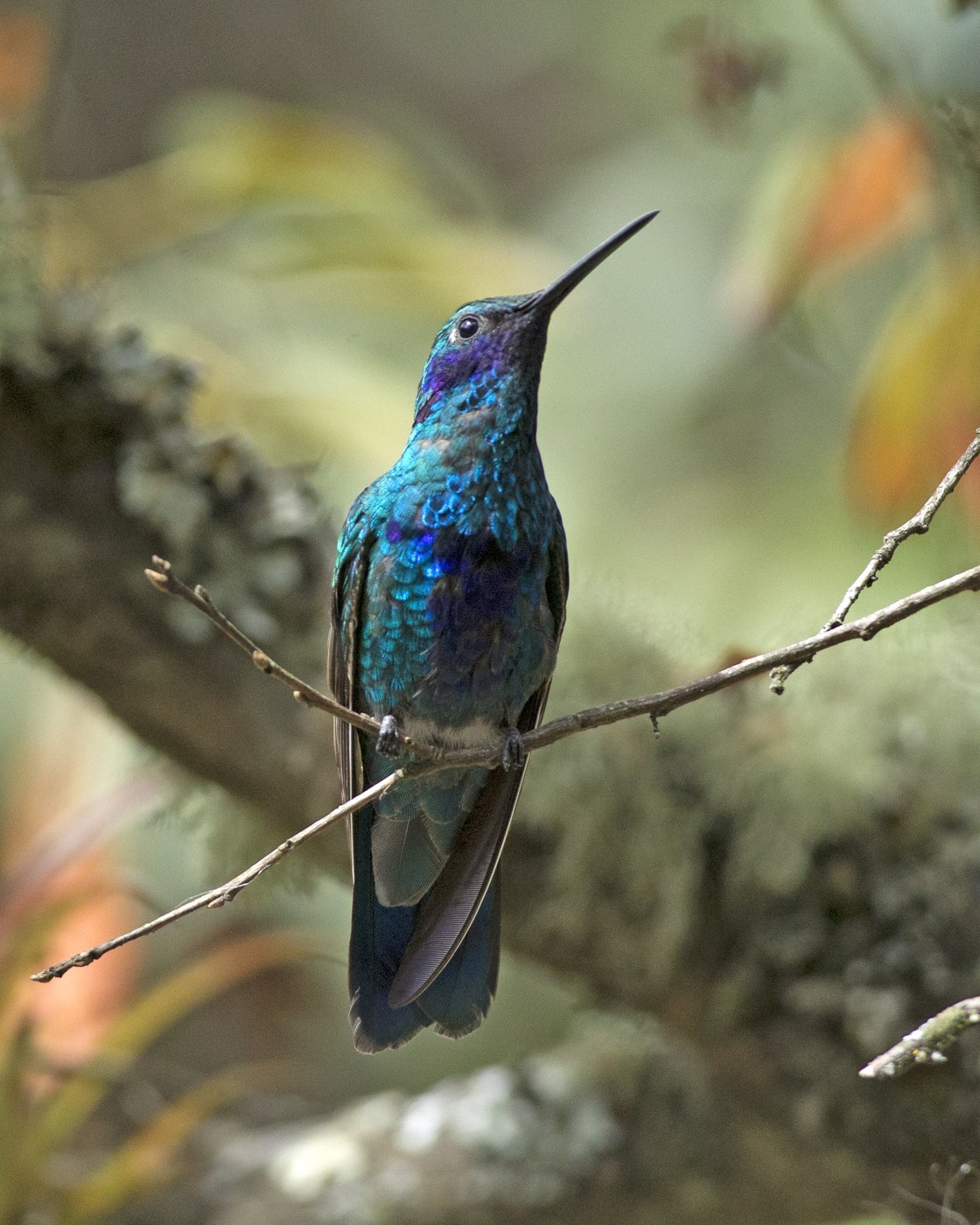
Sparkling Violetear
Iridescent body feathers, large violet ear and chest patches
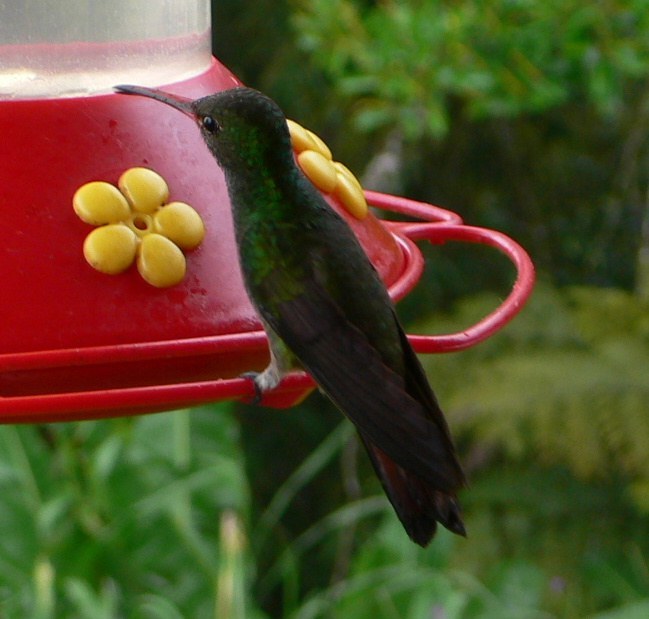
Rufous-tailed Hummingbird
Iridescent throat and breast feathers, rufous tail feathers

Rufous-breasted Hermit
Slightly decurved bill with rufous-washed contour feathers
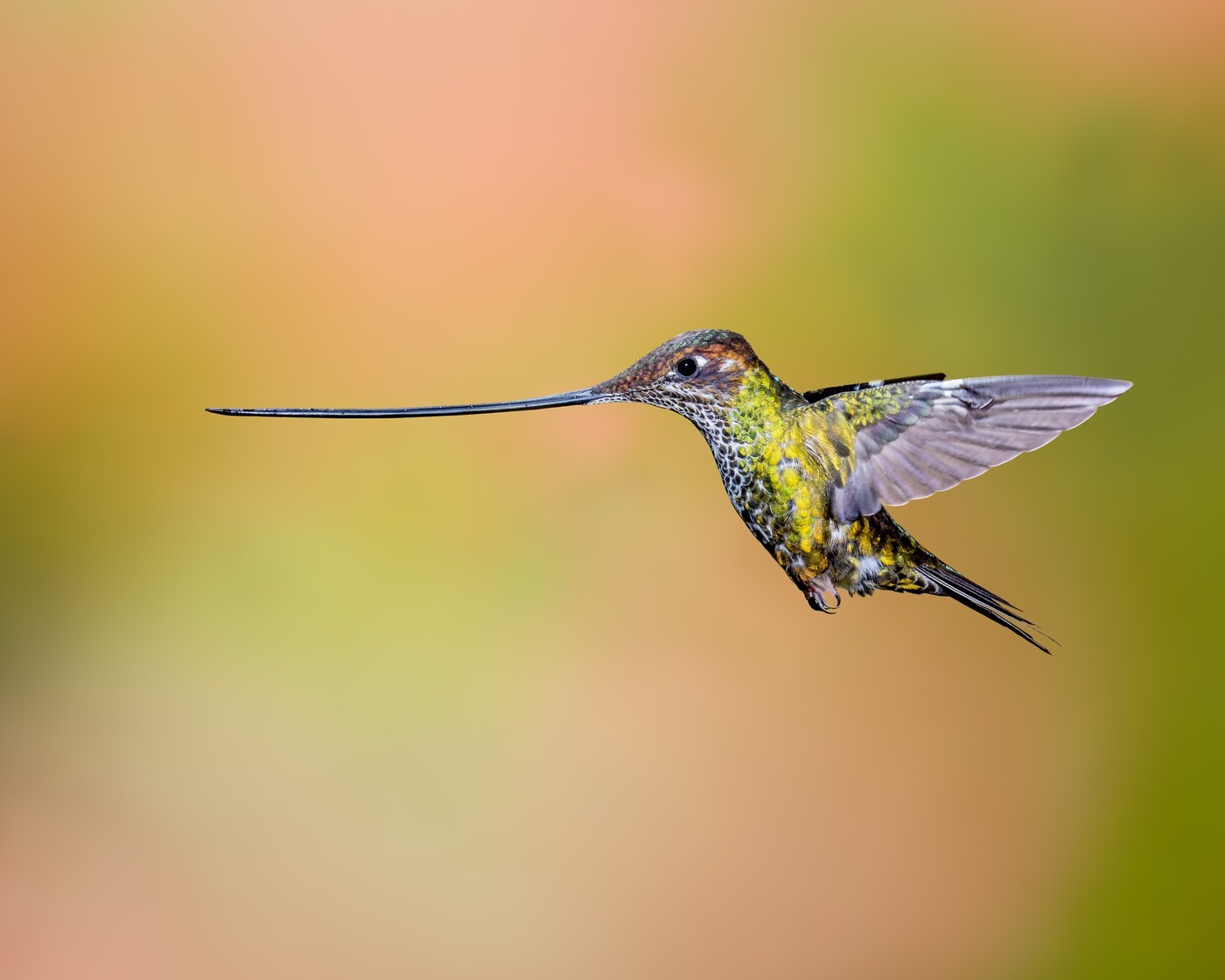
Sword-billed Hummingbird
Iridescent body feathers, extraordinarily long bill (non-feather feature)
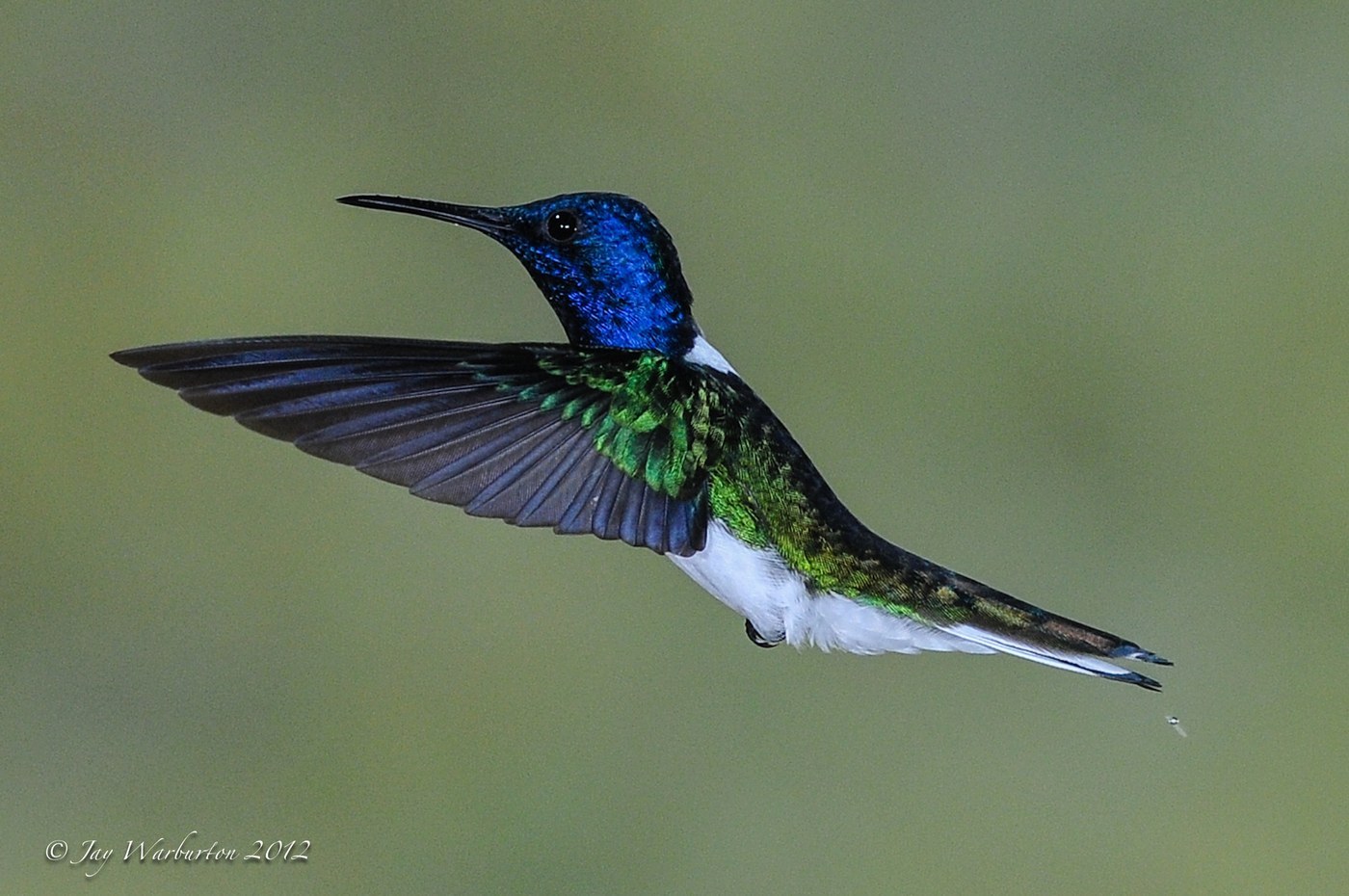
White-necked Jacobin
Iridescent head feathers, contrasting white nape and belly

White-eared Hummingbird
Iridescent gorget feathers, bold facial stripe
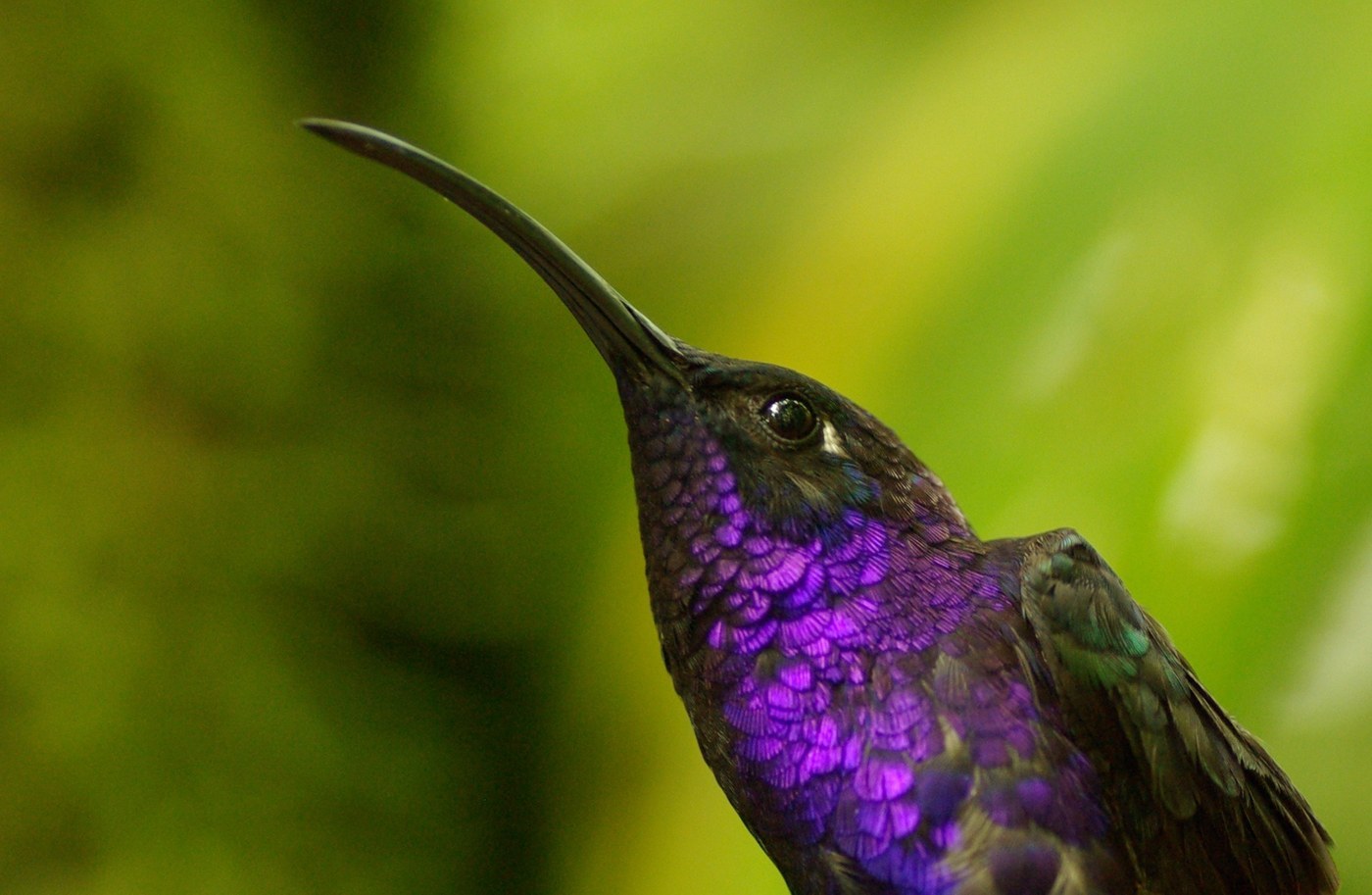
Violet Sabrewing
Iridescent body feathers, thickened curved primary shafts

Velvet-purple Coronet
Dense, velvety contour feathers with iridescent crown patch

Violet-crowned Hummingbird
Iridescent crown feathers, clean white underparts

Shining Sunbeam
Iridescent contour feathers with coppery-bronze wing sheen

Rufous Hummingbird
Tiny contour, gorget, and narrow flight feathers