
Cape Gannet
Morus capensis
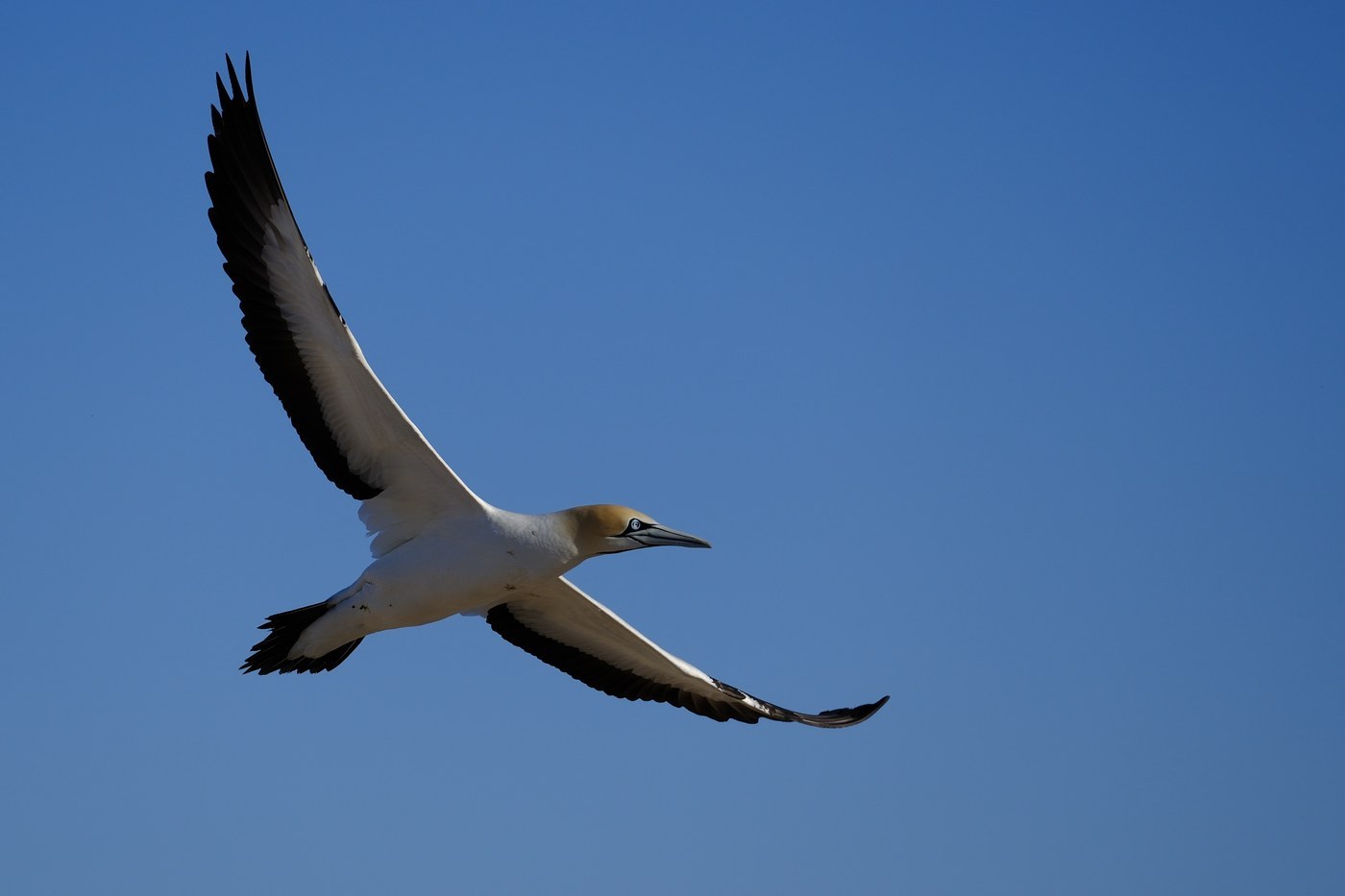
A large white seabird closely related to the Northern Gannet, distinguished by a black tail and a black band crossing the secondary flight feathers.
- Feather type
- Large, sturdy flight feathers with a long, pointed wing shape
- Colours
- White with a black tail, black secondary band, and yellow head wash
- Bird size
- Large, similar to Northern Gannet, ~84-94 cm
Found a feather like this?
Identify any feather from a photo, free.
Overview
Overview
The Cape Gannet is a large, gleaming white seabird of southern African waters, closely resembling its northern relative the Northern Gannet but distinguishable by additional black plumage features: a solid black tail and a black band across the secondary flight feathers.
It breeds in large, dense colonies on a small number of offshore islands off South Africa and Namibia, and shares the same spectacular plunge-diving feeding technique as other gannets.
Identifying the Feather
Cape Gannet feathers share the general white-and-black gannet pattern but with extra black features.
- Tail feathers: Solid black, a key difference from the all-white tail of the Northern Gannet.
- Secondary flight feathers: Marked with a black band across the trailing edge, absent in Northern Gannet.
- Primaries: Black, similar to other gannet species.
- Body feathers: White with a yellow-buff wash on the head, often slightly deeper yellow than in Northern Gannet.
- Compared to Northern Gannet: The black tail and black secondary band are the most reliable feather-based distinctions between the two species.
Plumage & Molt
Adults are white overall with black primaries, a black band across the secondaries, and a solid black tail, along with a yellow-buff wash on the head and upper neck. Sexes look alike. Juveniles are dark brown speckled with white, resembling young Northern Gannets, and take several years to reach full adult plumage through successive molts.
Habitat & Range
Cape Gannets breed in a small number of large colonies on islands off the coasts of South Africa and Namibia, foraging over the productive cold-water currents of the region. Outside the breeding season, they disperse along the southern African coastline and adjacent offshore waters, generally remaining closer to their breeding range than some other gannet species.
Behavior & Field Notes
Cape Gannets feed by spectacular plunge-diving into schools of small fish, often in large, coordinated flocks that can include hundreds of birds diving in quick succession. They nest in dense, tightly packed colonies on offshore islands, laying a single egg and raising one chick over an extended nestling period. Calls are harsh, repeated braying notes typical of gannets, given constantly at breeding colonies.
Frequently asked questions
What feather feature best identifies a Cape Gannet?
A solid black tail feather or a secondary flight feather crossed by a black band, both features that Northern Gannet lacks.
How similar are Cape Gannet and Northern Gannet feathers overall?
Very similar in general white-and-black pattern, since the two are closely related, but the black tail and black secondary band distinguish Cape Gannet.
Do juvenile Cape Gannet feathers look different from adults?
Yes, juveniles are dark brown speckled with white and take several years of successive molts to reach the clean adult pattern.
Where would a Cape Gannet feather likely be found?
Near breeding islands off South Africa and Namibia, or along the adjacent southern African coastline where the species forages.
Cape Gannet guides
In-depth guides for identifying and understanding Cape Gannet.
Other feathers you may enjoy

Western Gull
Body, flight, and tail feathers
Glaucous Gull
Body, flight, and tail feathers

American Herring Gull
Body, flight, and tail feathers

Great Black-backed Gull
Body, flight, and tail feathers

Common Gull
Body, flight, and tail feathers
Iceland Gull
Body, flight, and tail feathers

Ring-billed Gull
Body, flight, and tail feathers

Glaucous-winged Gull
Body, flight, and tail feathers

Herring Gull
Body, flight, and tail feathers

Lesser Black-backed Gull
Body, flight, and tail feathers

California Gull
Body, flight, and tail feathers
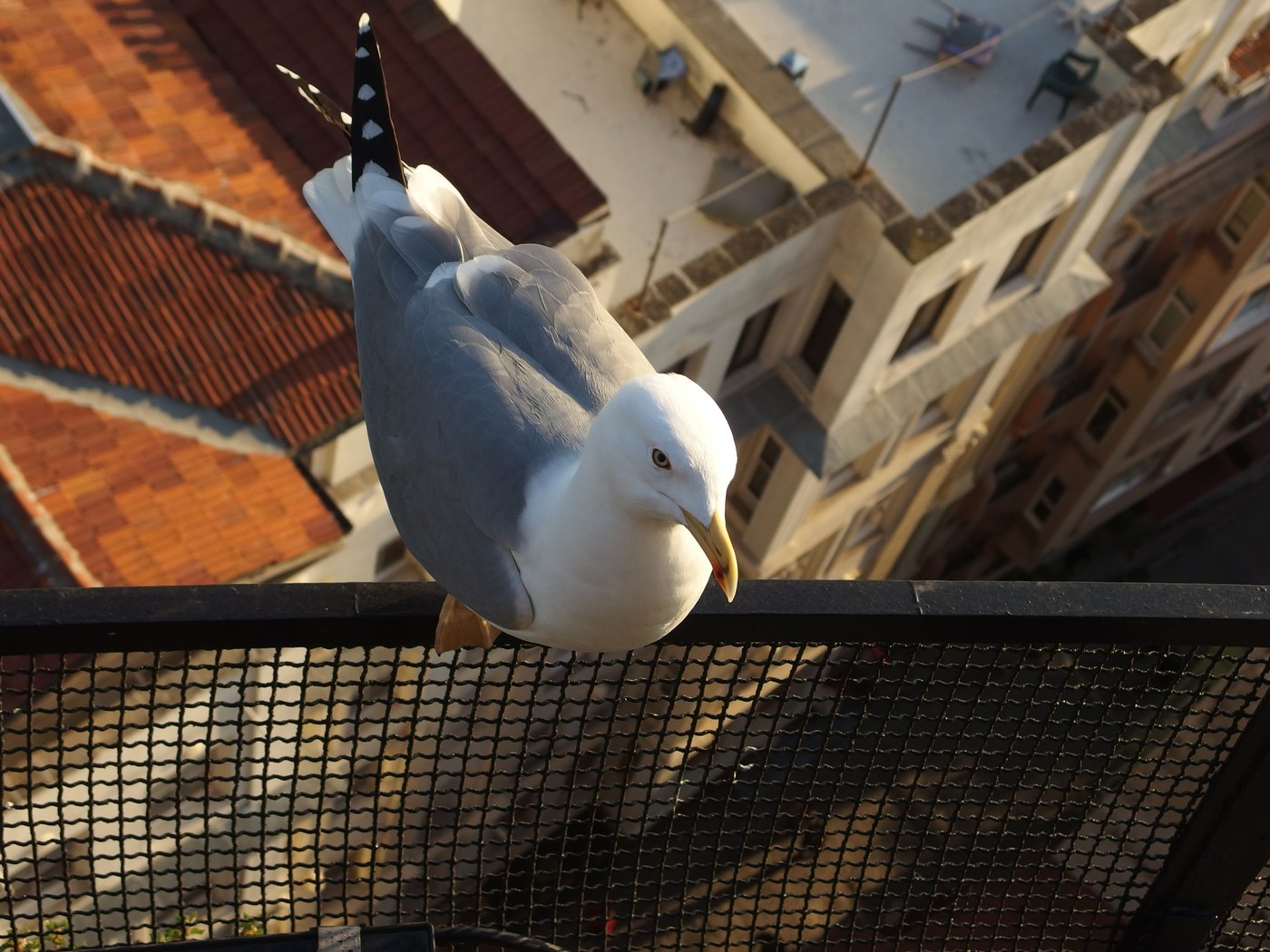
Yellow-legged Gull
Body, wing covert, and flight feathers