
Costa's Hummingbird
Calypte costae
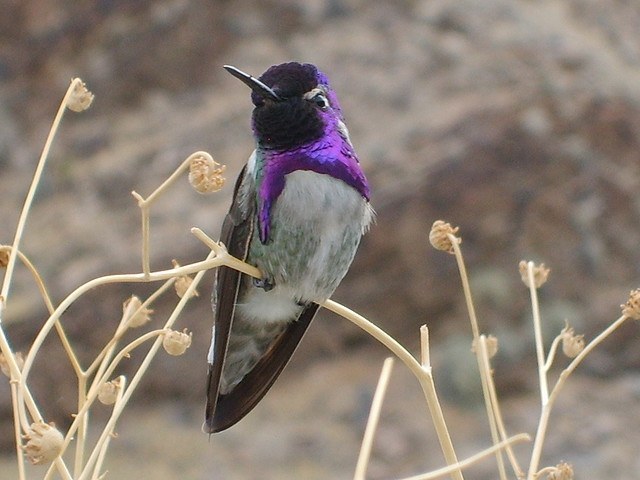
A desert hummingbird whose male sports a brilliant violet-purple throat patch that flares outward into elongated points like a mustache.
- Feather type
- Iridescent gorget feathers with elongated throat plumes
- Colours
- Vivid violet-purple gorget, green back, white underparts
- Bird size
- Very small, ~7-9 cm
Found a feather like this?
Identify any feather from a photo, free.
Overview
Costa's Hummingbird is a small hummingbird of arid desert regions in the southwestern United States and northwestern Mexico, well adapted to hot, dry scrub habitat. The male's gorget is especially dramatic, extending well past the throat into elongated side plumes that give it a distinctive flared, mustache-like shape when displayed.
Identifying the Feather
The male's gorget is a brilliant iridescent violet to purple, extending into long pointed feathers that flare outward past the sides of the throat, a shape unlike the rounder gorgets of many other hummingbirds. The crown may also show some violet iridescence. The back is green and the underparts whitish-grey. Females lack the violet gorget, showing a plain whitish throat, green back, and pale underparts, requiring more care to separate from other female desert hummingbirds. Compare structurally with Black-chinned Hummingbird females, which are similarly plain but lack Costa's slightly shorter tail proportions and different wingbeat sound in flight.
Plumage & Molt
Males display the elongated violet-purple gorget and crown iridescence described above; females are plain green-backed and whitish below without a colored throat patch. Juveniles resemble females, with young males developing gorget feathers gradually through their first year. Feather freshness after molt affects how vividly the male's throat iridescence appears.
Habitat & Range
Found in arid desert scrub, chaparral, and dry washes across the southwestern United States, including California, Arizona, and Nevada, extending into northwestern Mexico. Some populations are resident while others shift seasonally, moving to track flowering desert plants.
Behavior & Field Notes
Feeds on nectar from desert-flowering plants and small insects, well suited to hot, dry conditions. Males perform a steep diving display flight accompanied by a high, whistling sound during courtship. Its call includes thin, high-pitched notes. Nests are tiny cups of plant down, often placed in desert shrubs or small trees, timed to coincide with seasonal desert bloom.
Frequently asked questions
What is distinctive about a male Costa's Hummingbird?
A brilliant violet-purple gorget that extends into long, pointed feathers flaring past the sides of the throat.
What does a female look like?
She has a plain whitish throat, green back, and pale underparts, lacking the male's colored gorget.
Where does this hummingbird live?
In arid desert scrub and dry washes across the southwestern United States and northwestern Mexico.
How is its courtship display recognized?
Males perform a steep diving flight accompanied by a distinctive high, whistling sound.
Costa's Hummingbird guides
In-depth guides for identifying and understanding Costa's Hummingbird.

Other feathers you may enjoy

Speckled Hummingbird
Small contour feathers with fine speckled underpart markings
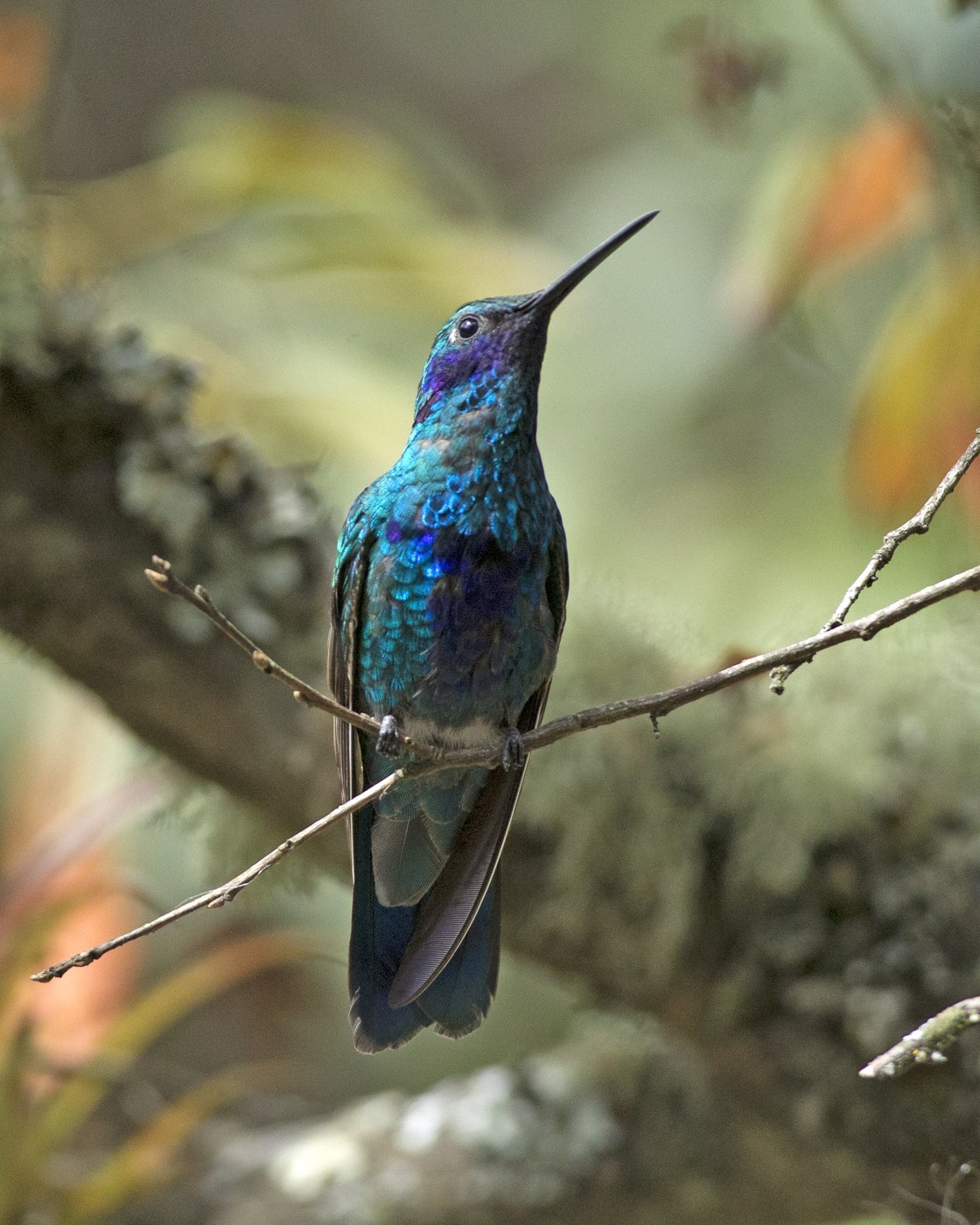
Sparkling Violetear
Iridescent body feathers, large violet ear and chest patches
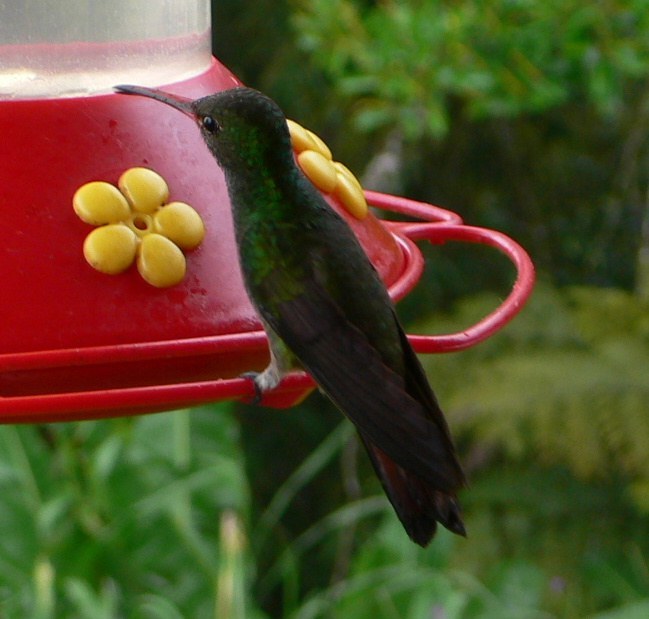
Rufous-tailed Hummingbird
Iridescent throat and breast feathers, rufous tail feathers

Rufous-breasted Hermit
Slightly decurved bill with rufous-washed contour feathers
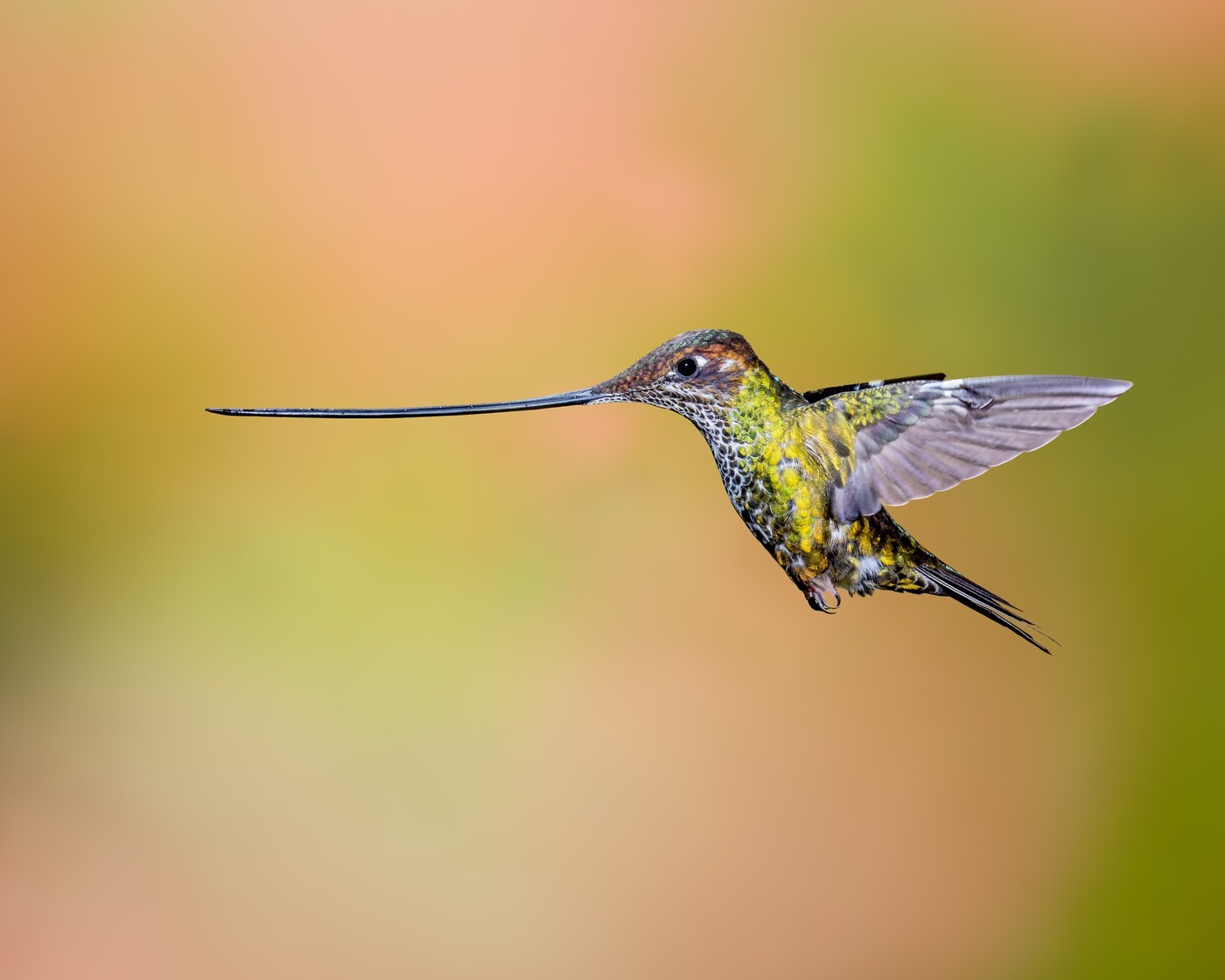
Sword-billed Hummingbird
Iridescent body feathers, extraordinarily long bill (non-feather feature)
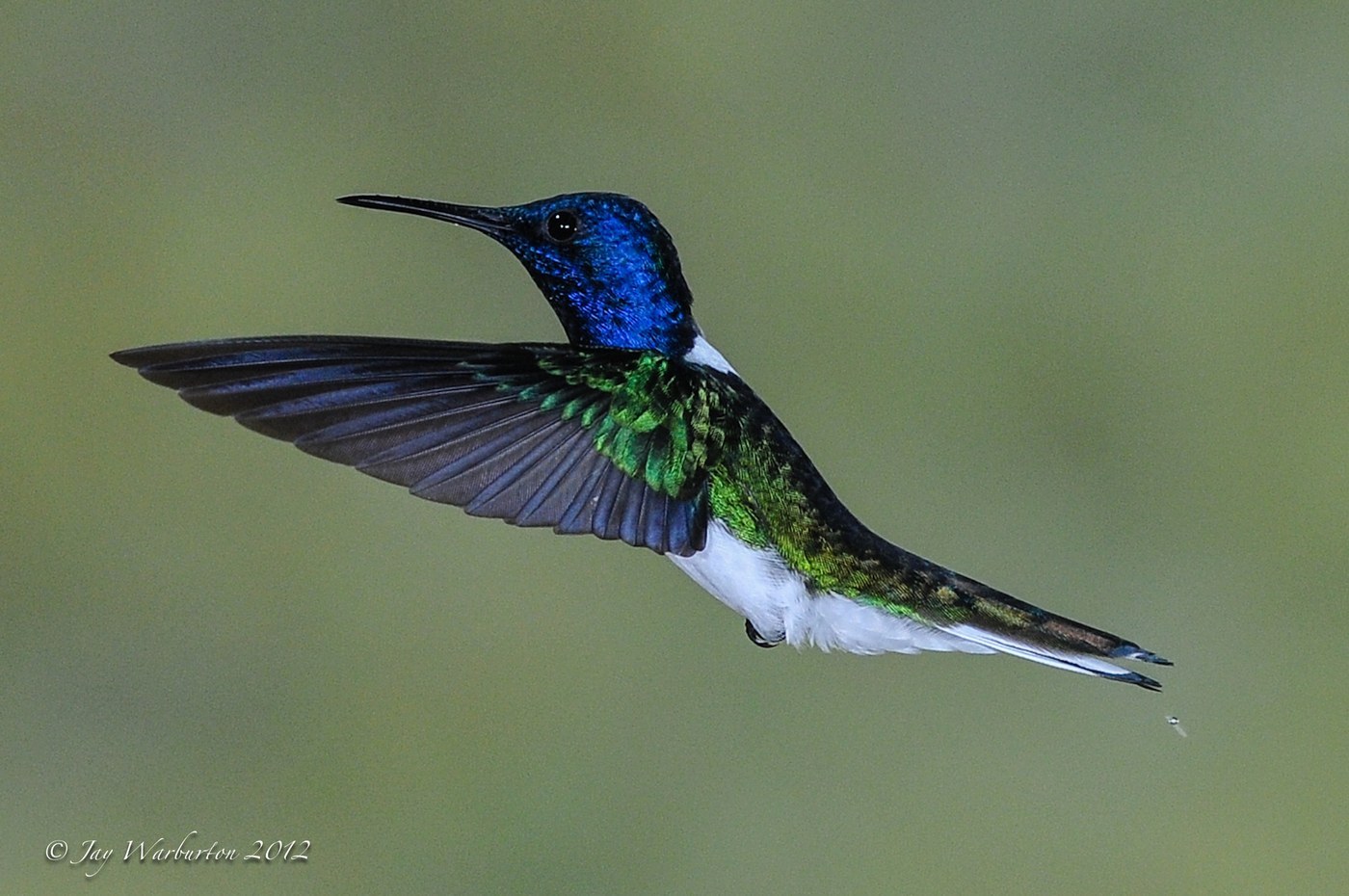
White-necked Jacobin
Iridescent head feathers, contrasting white nape and belly

White-eared Hummingbird
Iridescent gorget feathers, bold facial stripe
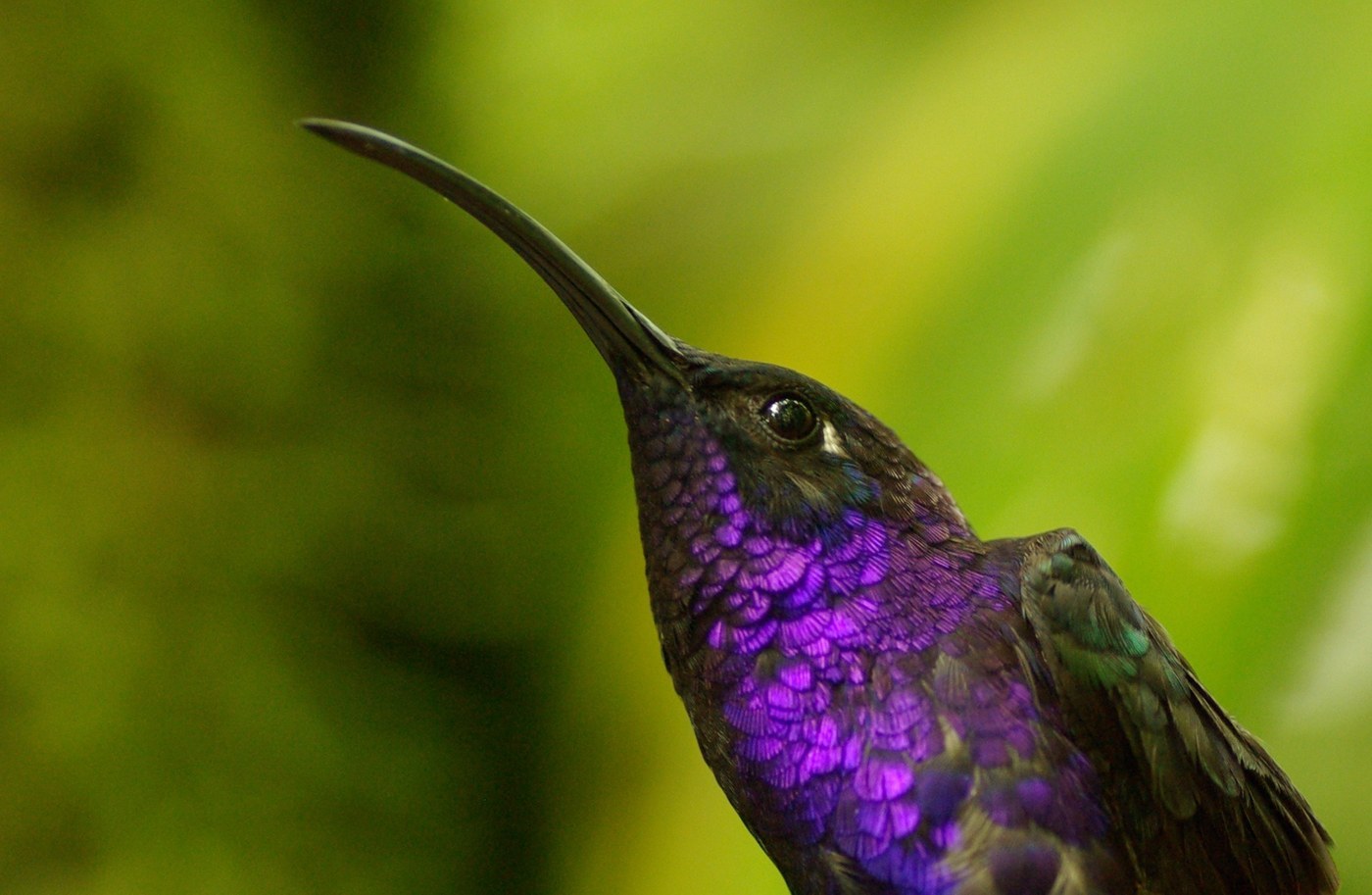
Violet Sabrewing
Iridescent body feathers, thickened curved primary shafts

Velvet-purple Coronet
Dense, velvety contour feathers with iridescent crown patch

Violet-crowned Hummingbird
Iridescent crown feathers, clean white underparts

Shining Sunbeam
Iridescent contour feathers with coppery-bronze wing sheen

Rufous Hummingbird
Tiny contour, gorget, and narrow flight feathers