

Elliot's Pheasant
Syrmaticus ellioti
A richly patterned Chinese forest pheasant, with males showing a chestnut body, blue-grey head, crisp white throat patch, and a long chestnut tail barred in black and white.
- Feather type
- Long, broad tail feathers with bold barring; glossy body contour feathers
- Colours
- Chestnut, blue-grey, and black-and-white barred wings with a white throat patch
- Bird size
- Large pheasant, males ~80 cm including tail
Found a feather like this?
Identify any feather from a photo, free.
Overview
Elliot's Pheasant is native to hill forests of southeastern China, where it inhabits subtropical evergreen and mixed woodland with dense understory. Named after the naturalist Daniel Giraud Elliot, it is one of several long-tailed Syrmaticus pheasants and is prized for its striking combination of chestnut, grey, and barred black-and-white plumage. It remains a forest-floor specialist, foraging beneath the canopy and roosting in trees at night.
Identifying the Feather
Male body feathers are a rich chestnut on the breast and flanks, contrasting with a soft blue-grey crown and nape and a clean white patch on the throat and upper breast. The wing coverts show bold black-and-white barring, creating a scalloped pattern distinct from the plainer wings of many other pheasants. The tail is long and graduated, chestnut-orange with narrow black bars and white tips on the outer feathers, and the central tail feathers are notably elongated with a stiff shaft. Female feathers are shorter overall and mottled buff-brown with fine dark vermiculation, lacking the male's white throat and barred wings, and can be told from female Mikado Pheasant by their warmer, more rufous tone and shorter tail.
Plumage & Molt
Males display the full chestnut-grey-and-white pattern described above, while females are cryptically mottled brown and buff with dark streaking, an adaptation for concealment while incubating on the ground. Juveniles resemble females but with softer, looser plumage and a shorter tail that lengthens with maturity. A complete molt occurs annually after the breeding season, with males regrowing their long central tail feathers gradually over subsequent months.
Habitat & Range
The species is restricted to hill and lower-montane forests of southeastern China, favoring evergreen broadleaf and mixed forest with a dense shrub layer for cover. It is non-migratory, remaining resident within forested hill ranges year-round, though habitat fragmentation has isolated some populations into smaller forest blocks.
Behavior & Field Notes
Elliot's Pheasants forage on the forest floor for seeds, shoots, berries, and small invertebrates, typically alone or in small, loose groups outside the breeding season. Males perform display behavior to attract mates, including tail-fanning and wing-whirring sounds. Nests are simple ground scrapes hidden among dense vegetation. Calls include harsh, repeated crowing notes given mainly at dawn, along with a distinctive wing-whirring display sound produced during territorial encounters.
Frequently asked questions
What do Elliot's Pheasant tail feathers look like?
Long and chestnut-orange with narrow black bars and white tips, especially on the outer feathers.
How can I tell male from female Elliot's Pheasant feathers?
Males have chestnut bodies with a white throat patch and barred black-and-white wings; females are mottled buff-brown throughout with no white throat.
Where is Elliot's Pheasant found?
In hill and lower-montane forests of southeastern China.
Is Elliot's Pheasant migratory?
No, it is a non-migratory, forest-resident species.
Elliot's Pheasant guides
In-depth guides for identifying and understanding Elliot's Pheasant.

Other feathers you may enjoy

Ring-necked Pheasant
Body (contour), tail, and wing feathers

Bornean Peacock-pheasant
Contour and tail feathers with iridescent ocelli

Crested Argus
Extremely elongated, ocellated (eyespot-patterned) tail feathers among the longest of any bird; tall, erectile crest

Grey Partridge
Body and flank feathers

Willow Ptarmigan
Larger, stockier body feathers with warmer rufous tones in summer; tail feathers black year-round

Wild Turkey
Broad, iridescent body feathers and large flight and tail feathers

Bulwer's Pheasant
Contour feathers and elongated white tail feathers
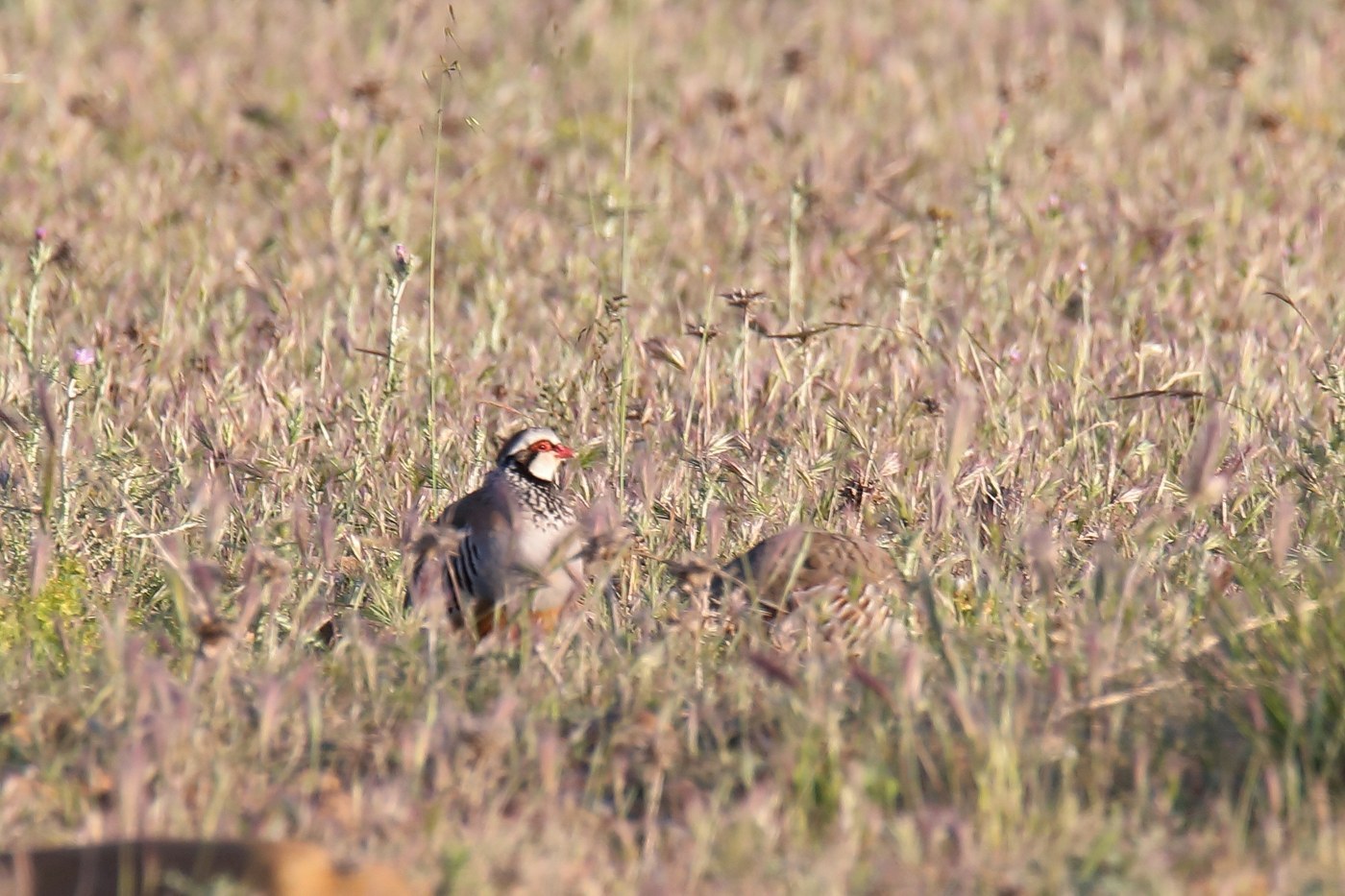
Red-legged Partridge
Flank, body, and flight feathers

White-tailed Ptarmigan
Small body feathers with a tail that stays pure white year-round, unlike other ptarmigan

Edwards's Pheasant
Contour and tail feathers

Sooty Grouse
Dense, plain contour feathers with a pale-tipped, fanned tail

Snow Partridge
Finely vermiculated barred contour feathers