
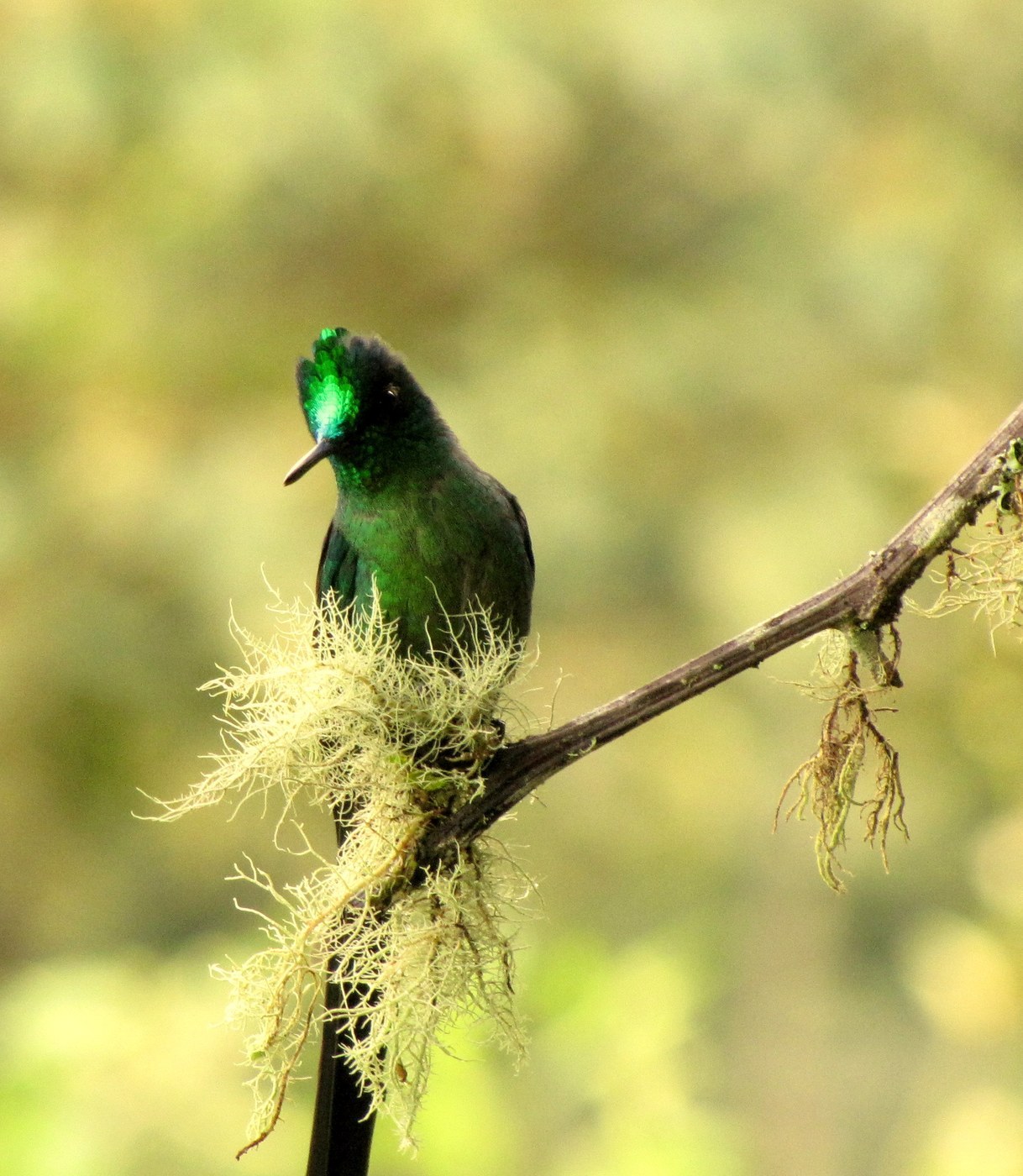
Long-tailed Sylph
Aglaiocercus kingii
An Andean cloud-forest hummingbird whose male trails an extravagantly long, deeply forked, iridescent blue-green tail far exceeding the length of its body.
- Feather type
- Iridescent body feathers, extremely elongated forked tail feathers
- Colours
- Green body, blue crown and throat, iridescent blue-green elongated tail
- Bird size
- Body small, ~10 cm, but tail adds substantially more length in males
Found a feather like this?
Identify any feather from a photo, free.
Overview
Overview
The Long-tailed Sylph inhabits humid montane and cloud forest along the Andes in South America, where males are unmistakable thanks to an extremely elongated, deeply forked tail that streams behind them in flight. This ornamental tail is used in courtship display and adds dramatically to the visual impression of an otherwise typically sized hummingbird body.
Aside from the tail, the body shows a blue crown and throat contrasting with green body plumage, but it is the tail length and shape that immediately set this species apart from other Andean hummingbirds.
Identifying the Feather
Feather ID Notes
The male's central tail feathers are greatly elongated and iridescent blue-green, deeply forked so the two outer streamers trail well beyond the rest of the tail - a feature unmatched by nearly any other similarly sized hummingbird in the region. The crown and throat show blue iridescence, while the back is green.
- Tail feathers (male): greatly elongated, deeply forked, blue-green iridescent
- Crown/throat feathers: blue, glossy
- Back feathers: green
- Underparts: green, sometimes with a paler wash Females lack the elongated tail, showing a much shorter, more typically proportioned tail along with green upperparts and paler, sometimes buffy underparts.
Plumage & Molt
Plumage Details
Adult males show the spectacular long forked tail along with the blue crown and throat described above. Females are far plainer, with a short tail, green upperparts, and buffy or grayish underparts, lacking both the blue head color and tail elongation. Immature males show intermediate tail lengths as they mature. There is no strong seasonal plumage variation, though tail length can be affected by feather wear and molt timing.
Habitat & Range
Habitat & Range
This species occupies humid montane and cloud forest, forest edge, and adjacent shrubby areas at moderate to high elevations along the Andes, from Venezuela and Colombia south through Ecuador, Peru, and into Bolivia. Populations are generally resident, with some local elevational movement outside the breeding season.
Behavior & Field Notes
Behavior & Field Notes
Long-tailed Sylphs feed on nectar from a variety of montane flowering plants, often trap-lining between scattered flower patches, and also take small insects. Males use their long tails in courtship flight displays to attract females. Nests are cup-shaped structures built in dense vegetation. Calls include soft chips and twittering notes.
Frequently asked questions
What is the most distinctive feature of the Long-tailed Sylph?
The male's greatly elongated, deeply forked, iridescent blue-green tail, which trails far beyond the body.
Do females have long tails too?
No, females have a much shorter, more typically proportioned tail and lack the male's blue head coloring.
What is the tail used for?
Males use the elongated tail in courtship flight displays to attract mates.
Where does this hummingbird live?
In humid montane and cloud forest along the Andes in South America.
Long-tailed Sylph guides
In-depth guides for identifying and understanding Long-tailed Sylph.
Other feathers you may enjoy

Speckled Hummingbird
Small contour feathers with fine speckled underpart markings
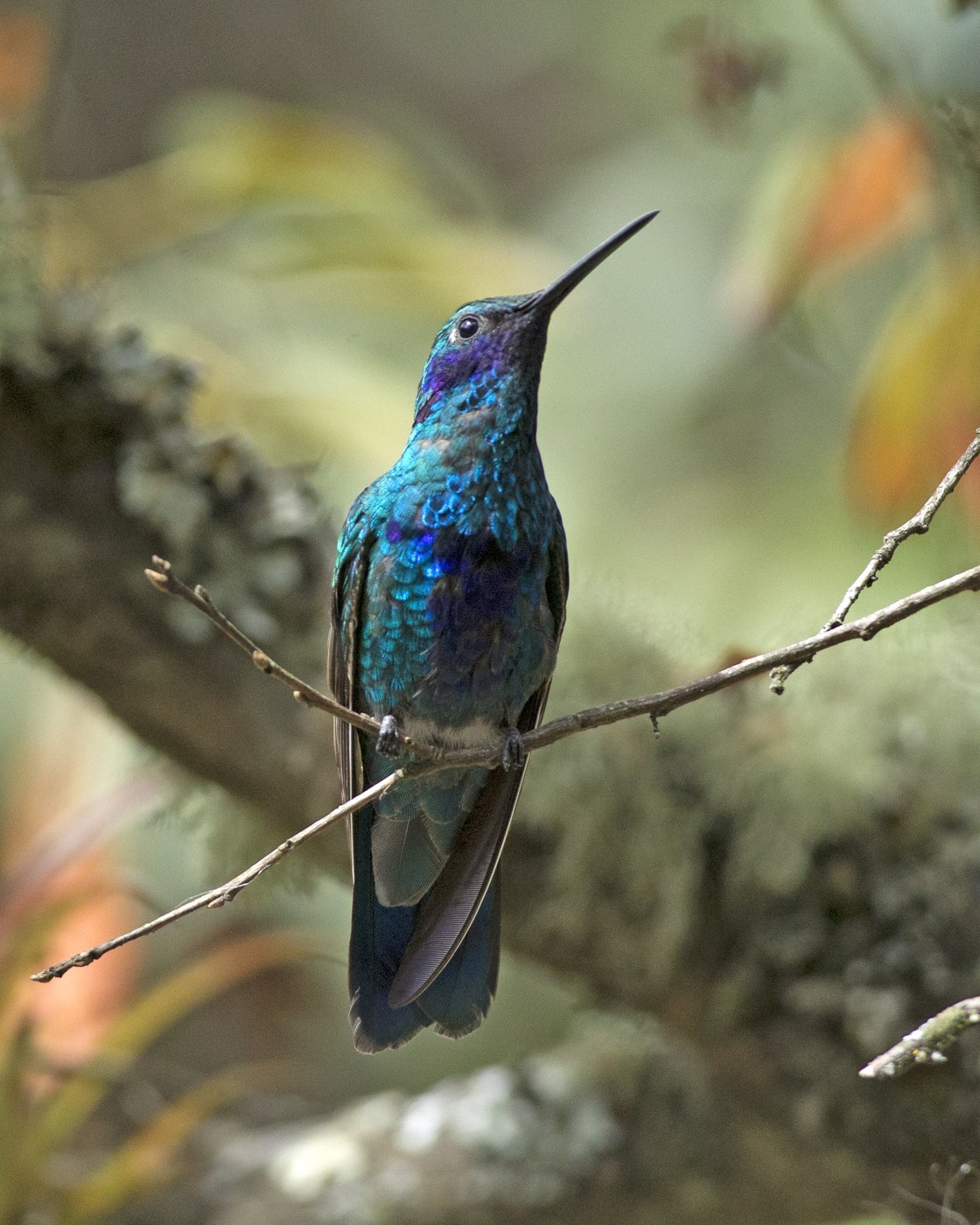
Sparkling Violetear
Iridescent body feathers, large violet ear and chest patches
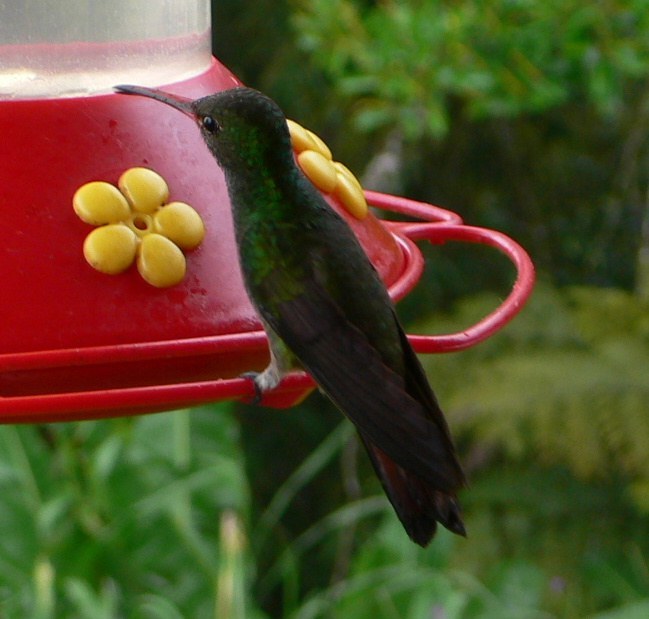
Rufous-tailed Hummingbird
Iridescent throat and breast feathers, rufous tail feathers

Rufous-breasted Hermit
Slightly decurved bill with rufous-washed contour feathers
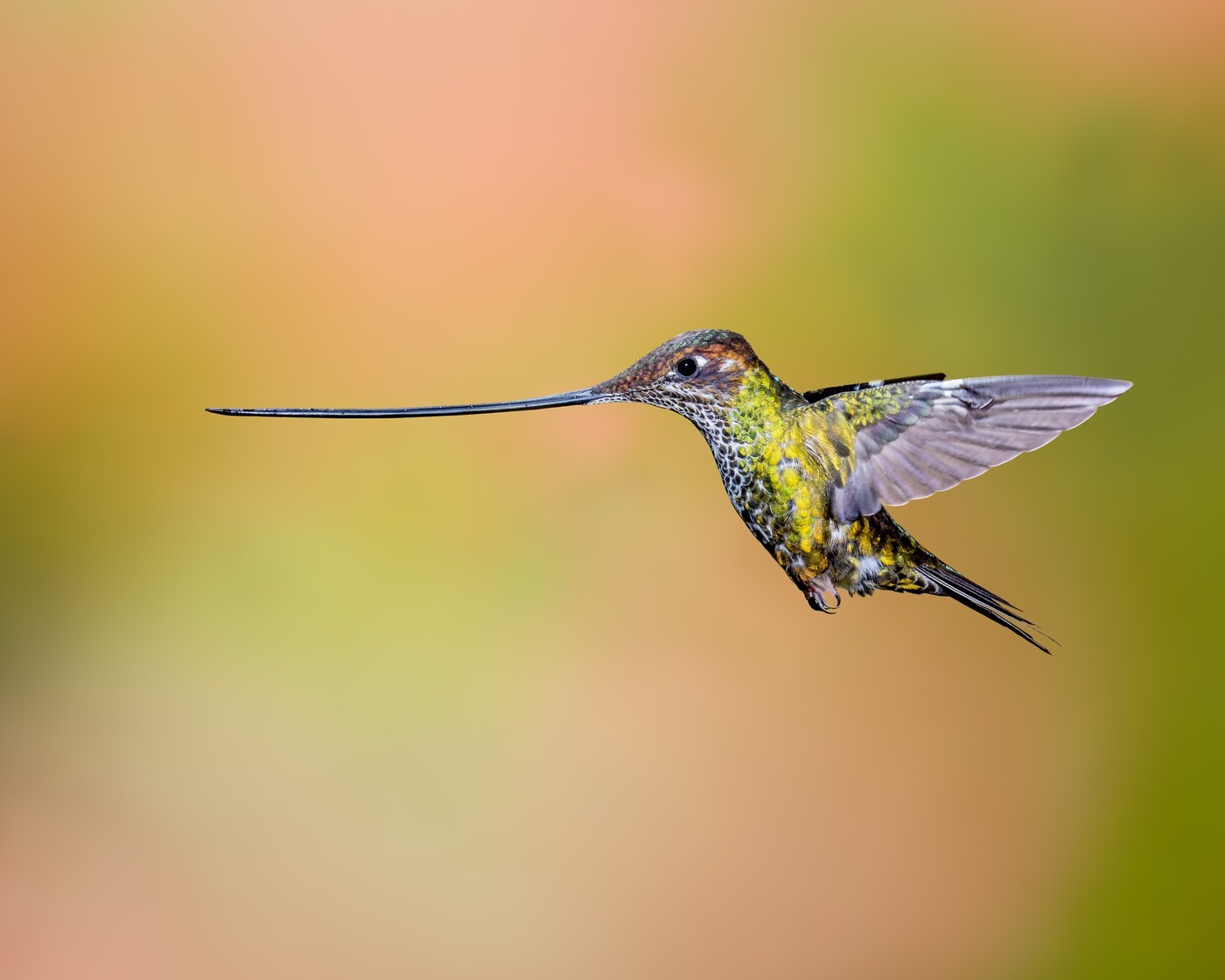
Sword-billed Hummingbird
Iridescent body feathers, extraordinarily long bill (non-feather feature)
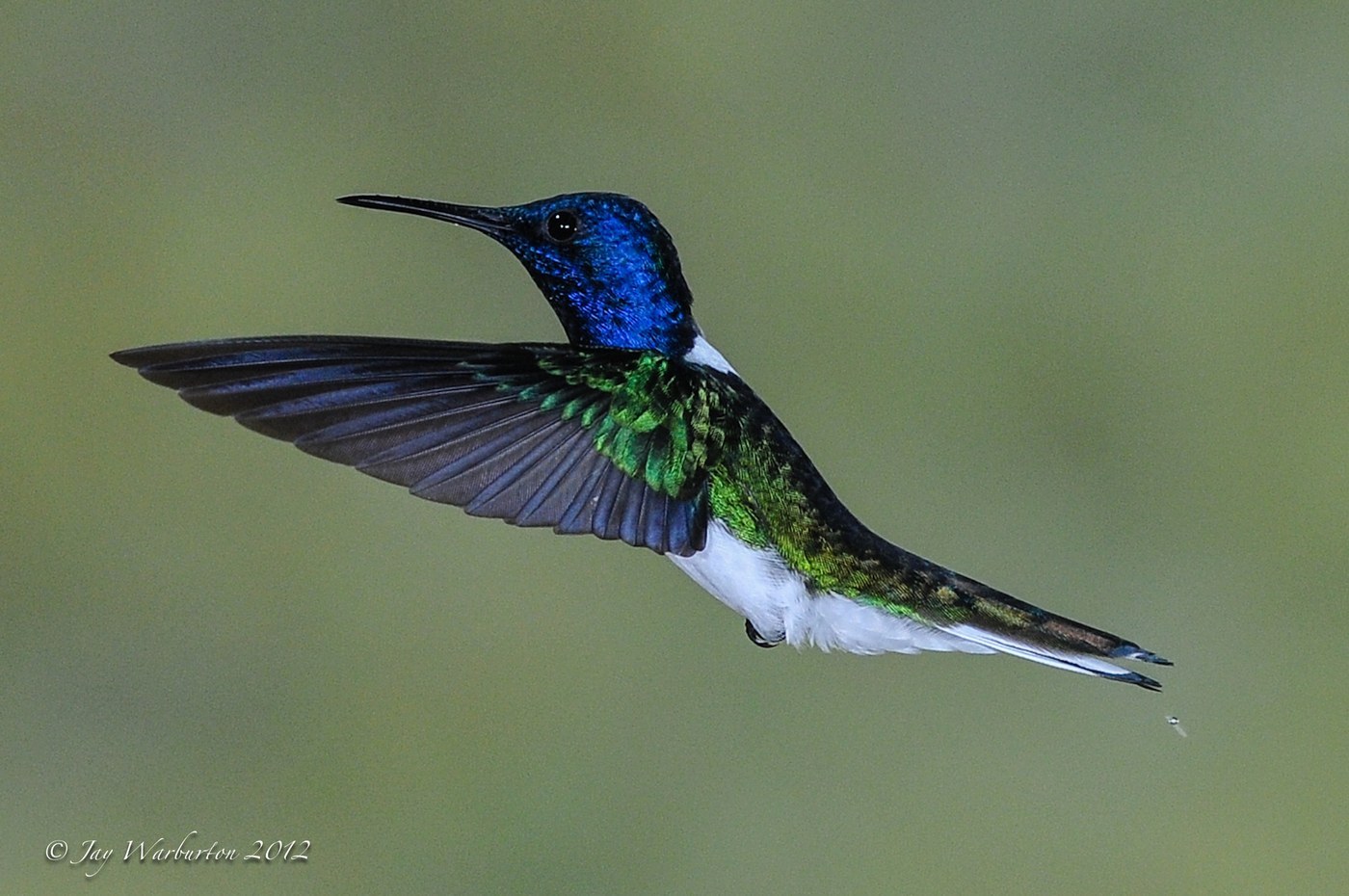
White-necked Jacobin
Iridescent head feathers, contrasting white nape and belly

White-eared Hummingbird
Iridescent gorget feathers, bold facial stripe
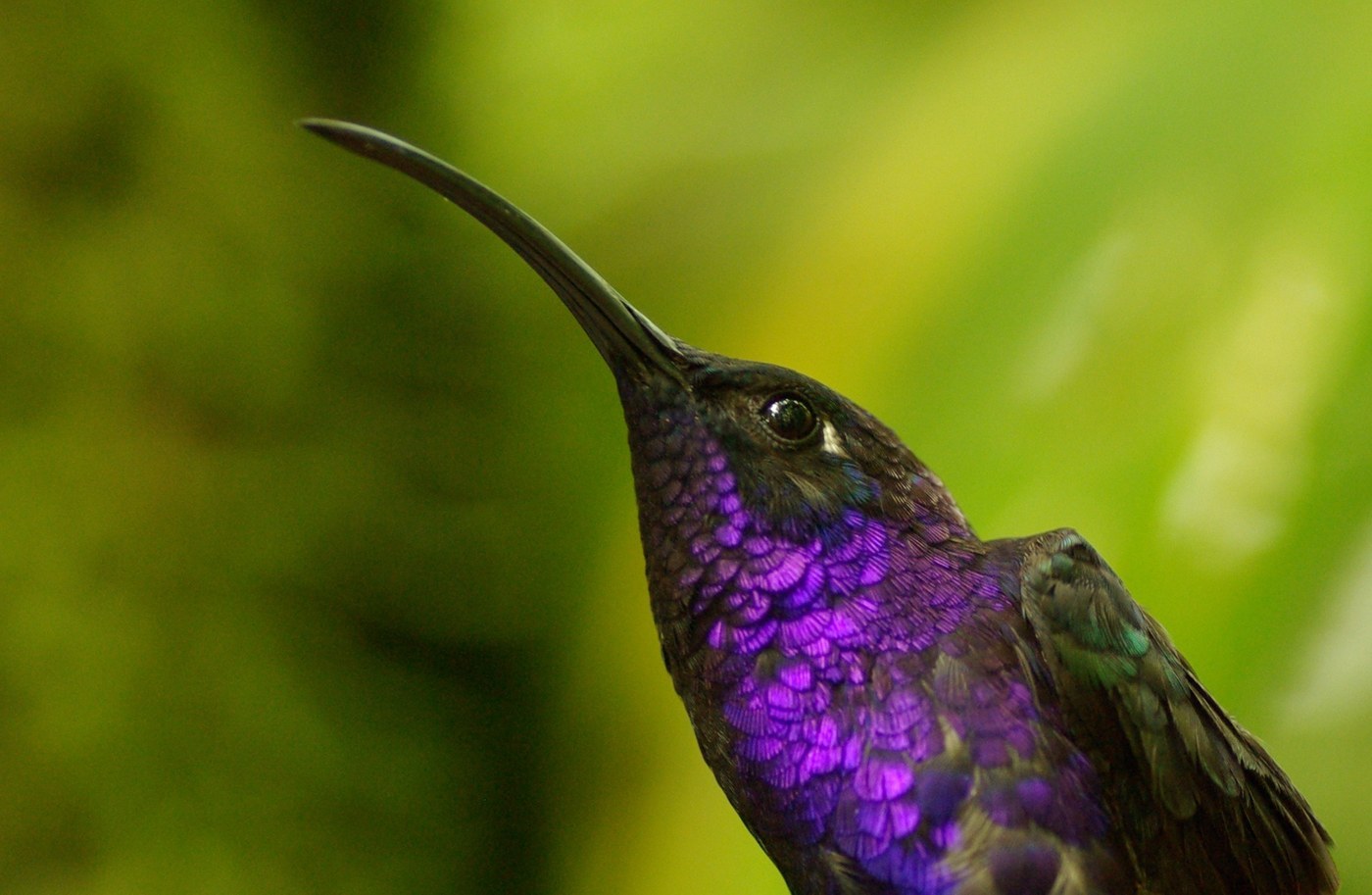
Violet Sabrewing
Iridescent body feathers, thickened curved primary shafts

Velvet-purple Coronet
Dense, velvety contour feathers with iridescent crown patch

Violet-crowned Hummingbird
Iridescent crown feathers, clean white underparts

Shining Sunbeam
Iridescent contour feathers with coppery-bronze wing sheen

Rufous Hummingbird
Tiny contour, gorget, and narrow flight feathers