

Yellow Grosbeak
Pheucticus chrysopeplus
A large, big-billed songbird of Mexican dry forests, the Yellow Grosbeak shows a golden-yellow body set off by boldly patterned black-and-white wings.
- Feather type
- Robust contour feathers, bright yellow with contrasting black-and-white wings
- Colours
- Golden yellow body, black wings marked with bold white patches
- Bird size
- Large grosbeak, ~23 cm
Found a feather like this?
Identify any feather from a photo, free.
Overview
The Yellow Grosbeak is one of the largest members of the cardinal-grosbeak family, found in dry tropical and subtropical woodlands from Mexico south into parts of Central America, with occasional wanderers reaching the southwestern United States. It is instantly recognizable by its deep golden-yellow body plumage paired with contrastingly patterned black wings marked by broad white patches, along with a massive pale conical bill built for cracking hard seeds.
Identifying the Feather
Adult males show a rich golden-yellow head, breast, and underparts, with a slightly more olive tone across the back. The wings are black with bold white patches formed by white tips and edges on the coverts and flight feathers, creating a striking two-tone pattern visible both at rest and in flight. The tail is black with white corners visible when spread. The bill is notably large, thick, and pale horn-colored, one of the most robust bills among New World grosbeaks, useful for distinguishing this species from smaller yellow-bodied songbirds. Females are similarly patterned but with a more subdued, olive-yellow tone and slightly less contrasting wing markings.
Plumage & Molt
Adult males show the brightest, most saturated yellow plumage with crisp black-and-white wing contrast. Adult females and immatures are duller and more olive-yellow, with wing markings present but less crisp. There is no strong seasonal plumage difference; the bold pattern is maintained year-round with fresh feathers appearing brightest right after the post-breeding molt.
Habitat & Range
Yellow Grosbeaks inhabit dry tropical deciduous forest, thorn forest, and adjacent woodland edge along the Pacific slope of Mexico and into parts of Central America. They are generally non-migratory residents within this range, though some local movements occur in response to seasonal food availability, and vagrant individuals occasionally appear well north of the usual range.
Behavior & Field Notes
This species forages in the forest canopy and understory for seeds, fruit, and invertebrates, using its heavy bill to crack tough seed coats. It often moves in pairs or small family groups, sometimes joining mixed-species foraging flocks. The song is a rich, warbling series of whistled phrases, and both sexes may vocalize. Nests are cup-shaped and placed in tree branches, with both parents typically involved in raising the young.
Frequently asked questions
What is the most distinctive feather feature of the Yellow Grosbeak?
Its bold black-and-white wing pattern set against an otherwise golden-yellow body, combined with an unusually large pale bill.
How do male and female Yellow Grosbeaks differ?
Males show a richer, more saturated yellow with crisper black-and-white wing contrast, while females and immatures are duller and more olive-toned.
Where does the Yellow Grosbeak live?
It is found in dry tropical forest and woodland edge along the Pacific slope of Mexico and into parts of Central America.
Is the Yellow Grosbeak migratory?
It is largely a non-migratory resident, though it can wander and occasionally shows up outside its usual range.
Yellow Grosbeak guides
In-depth guides for identifying and understanding Yellow Grosbeak.

Other feathers you may enjoy

Yellow-breasted Bunting
Contour and flight feathers, chestnut-and-yellow breeding pattern
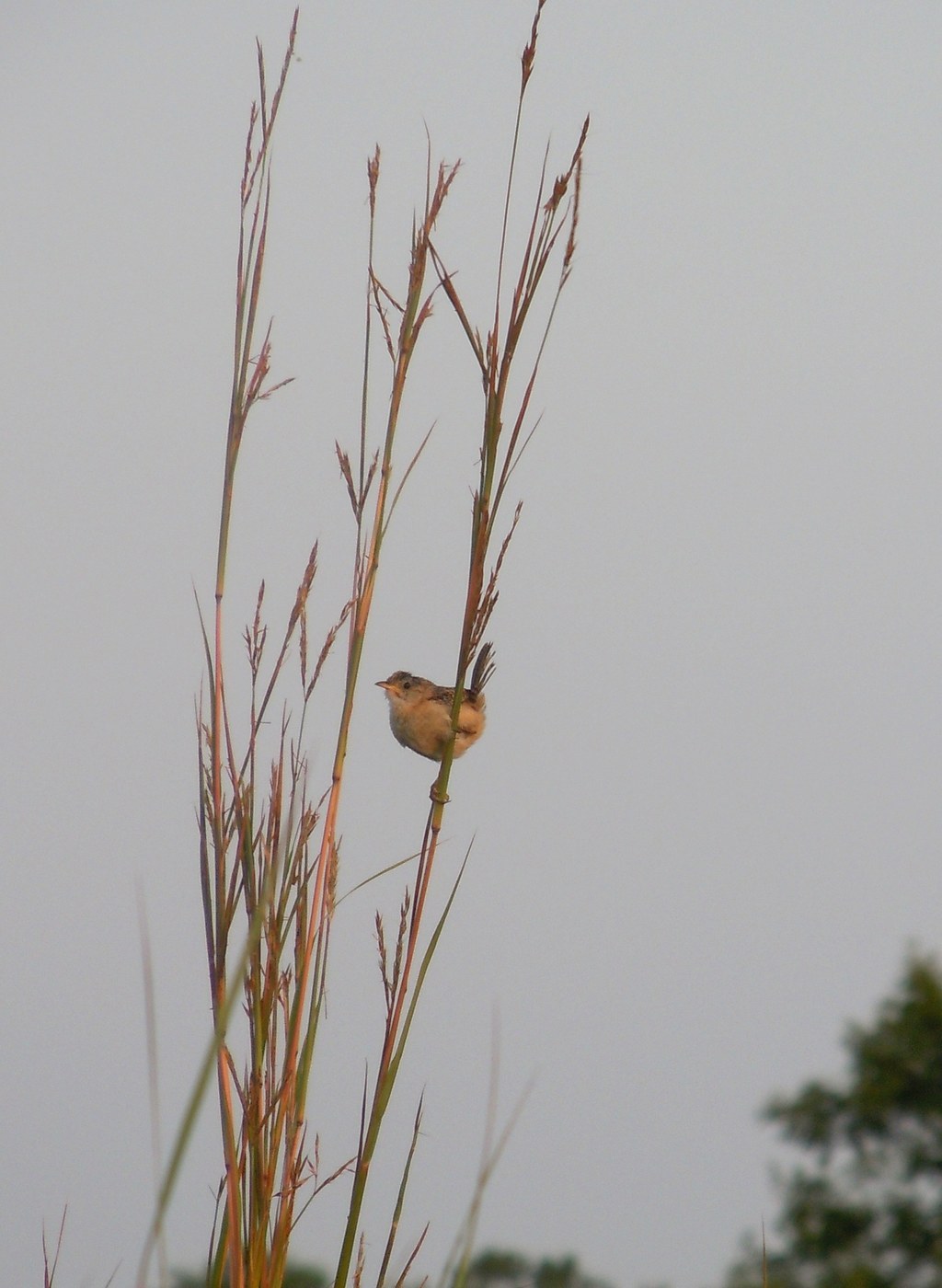
Sedge Wren
Tiny streaked crown and back feathers

Yellow-winged Cacique
Glossy black body feathers, yellow wing patch, shaggy crest

Yellow Warbler
Small contour and flight feathers
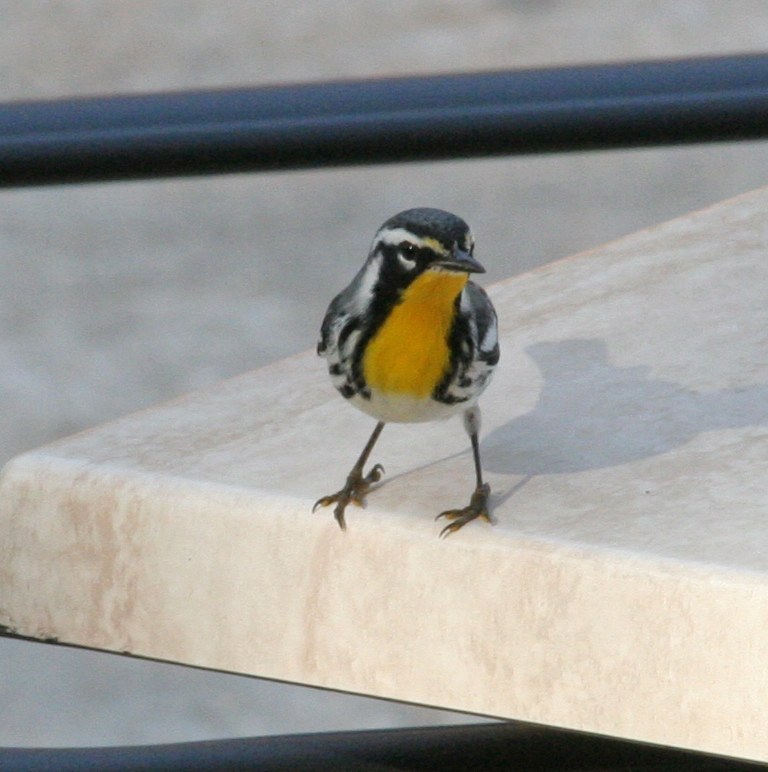
Yellow-throated Warbler
Small contour and flight feathers
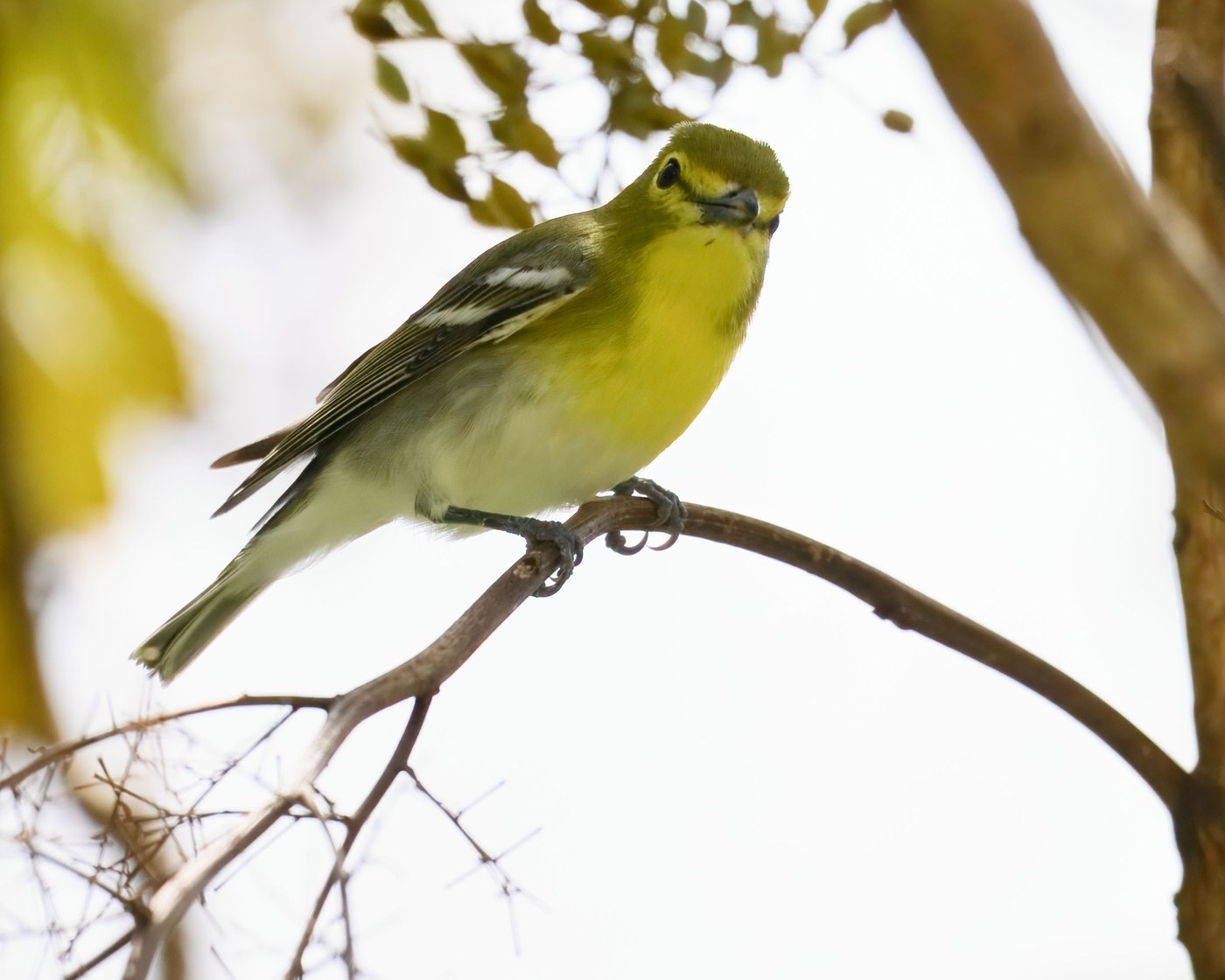
Yellow-throated Vireo
Bright yellow throat and spectacle feathers; olive-green back feathers; two white wing-bar feathers

Yellow-rumped Warbler
Small contour and flight feathers
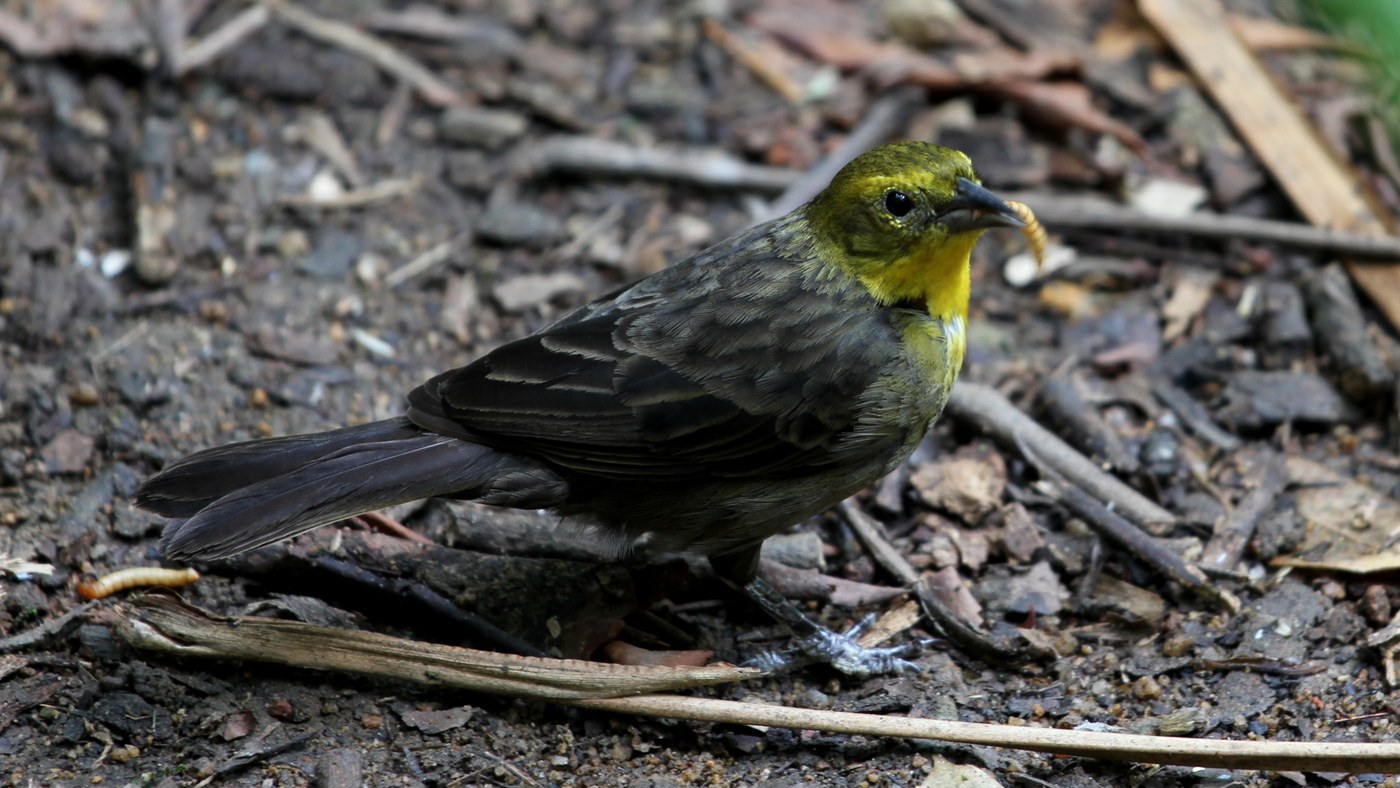
Yellow-hooded Blackbird
Contrasting hood and body feathers
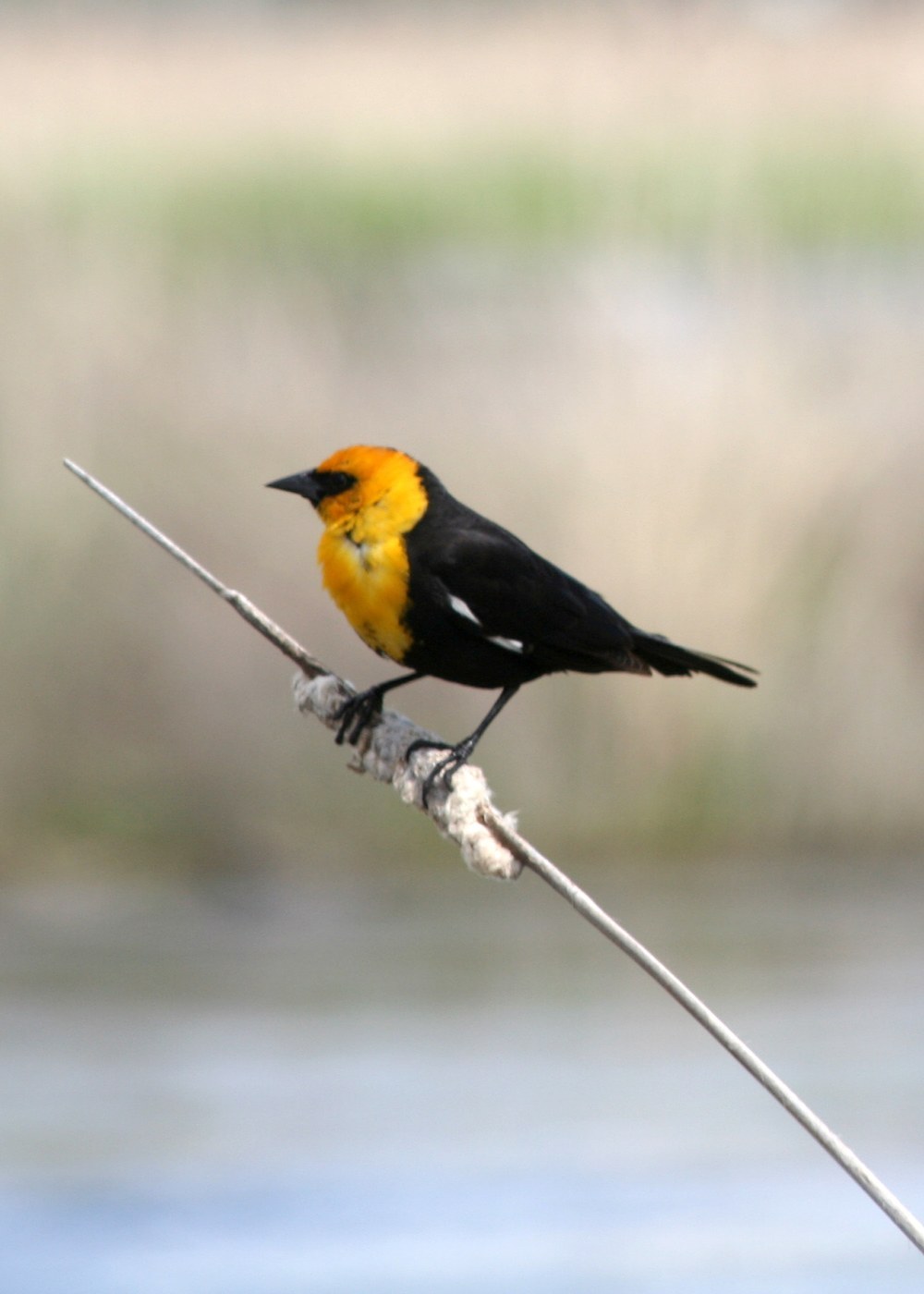
Yellow-headed Blackbird
Glossy black body plumage with a bright yellow head and breast

Yellow-eyed Junco
Contour and flight feathers

Yellow-fronted Canary
Small, smooth body plumage

Yellow-breasted Greenfinch
Compact, smooth body plumage