

Acorn Woodpecker
Melanerpes formicivorus
A social, boldly patterned oak-woodland woodpecker famous for hoarding acorns by the thousands in specially drilled storage trees.
- Feather type
- Glossy black back feathers with a bold clown-like facial pattern
- Colours
- Glossy black back, white face patches, red cap, pale eye
- Bird size
- Robin-sized, ~22 cm
Found a feather like this?
Identify any feather from a photo, free.
Overview
The Acorn Woodpecker is one of the most recognizable and socially complex woodpeckers, living in family groups across oak woodlands of the western United States, Mexico, and Central America. Its striking clown-like face - pale eyes, black-and-white markings, and a red cap - makes it easy to identify at a glance.
It is best known for its habit of drilling thousands of small holes into a single "granary" tree or structure, each hole snugly fitted with a single acorn for later use by the group.
Identifying the Feather
- Face: bold black-and-white pattern with a pale, almost white iris
- Crown: red cap in both sexes, though the extent of black on the forehead differs
- Back: glossy black, contrasting with white rump and wing patches visible in flight
- Underparts: whitish with black streaking on the upper breast
- Vs. Lewis's Woodpecker: Acorn Woodpecker shows a crisp black-and-white clown face with a red cap, unlike the dark red face and pinkish belly of Lewis's Woodpecker
Plumage & Molt
Males show a red cap extending closer to the bill, separated from a black forehead band, while females show a wider black forehead band between the bill and the red cap. Juveniles have dark eyes rather than the pale adult iris and a duller, less defined face pattern. A single annual molt follows breeding.
Habitat & Range
Resident in oak and oak-pine woodland from the western and southwestern United States south through Mexico and Central America into parts of South America's northern Andes. It is non-migratory and depends on a reliable annual acorn crop within its territory.
Behavior & Field Notes
Lives in cooperative family groups that jointly defend and maintain granary trees, riddled with holes each holding a single stored acorn for later use, alongside foraging for insects caught in flight or gleaned from bark. Nesting is also cooperative, with multiple group members helping raise young in a shared cavity. Calls include loud, raucous "waka-waka" notes exchanged constantly within the group.
Frequently asked questions
What is a granary tree?
It is a tree, pole, or other wooden structure that Acorn Woodpeckers drill full of small holes, each snugly fitted with a single acorn stored for later consumption by the group.
How can I identify Acorn Woodpecker feathers or markings?
Look for the glossy black back combined with a bold black-and-white clown-like face, red cap, and pale, almost white eyes.
Does the Acorn Woodpecker live alone or in groups?
It lives in cooperative family groups that jointly defend territory, maintain granary trees, and often share nesting duties.
How do male and female Acorn Woodpeckers differ?
Males show a red cap extending closer to the bill with a narrower black forehead band, while females have a wider black band separating the bill from the red cap.
Acorn Woodpecker guides
In-depth guides for identifying and understanding Acorn Woodpecker.

Acorn Woodpecker identified by the community
Real feathers identified with Feather Identifier.


Other feathers you may enjoy

Ivory-billed Woodpecker
Very large flight feathers with a solid white trailing patch

Great Slaty Woodpecker
Massive, uniformly colored contour feathers

Yellow-tufted Woodpecker
Black body feathers with bright yellow forehead tufts

Magellanic Woodpecker
Very large, glossy contour feathers with a recurved crest

Yellow-bellied Sapsucker
Black-and-white patterned back and facial-stripe feathers
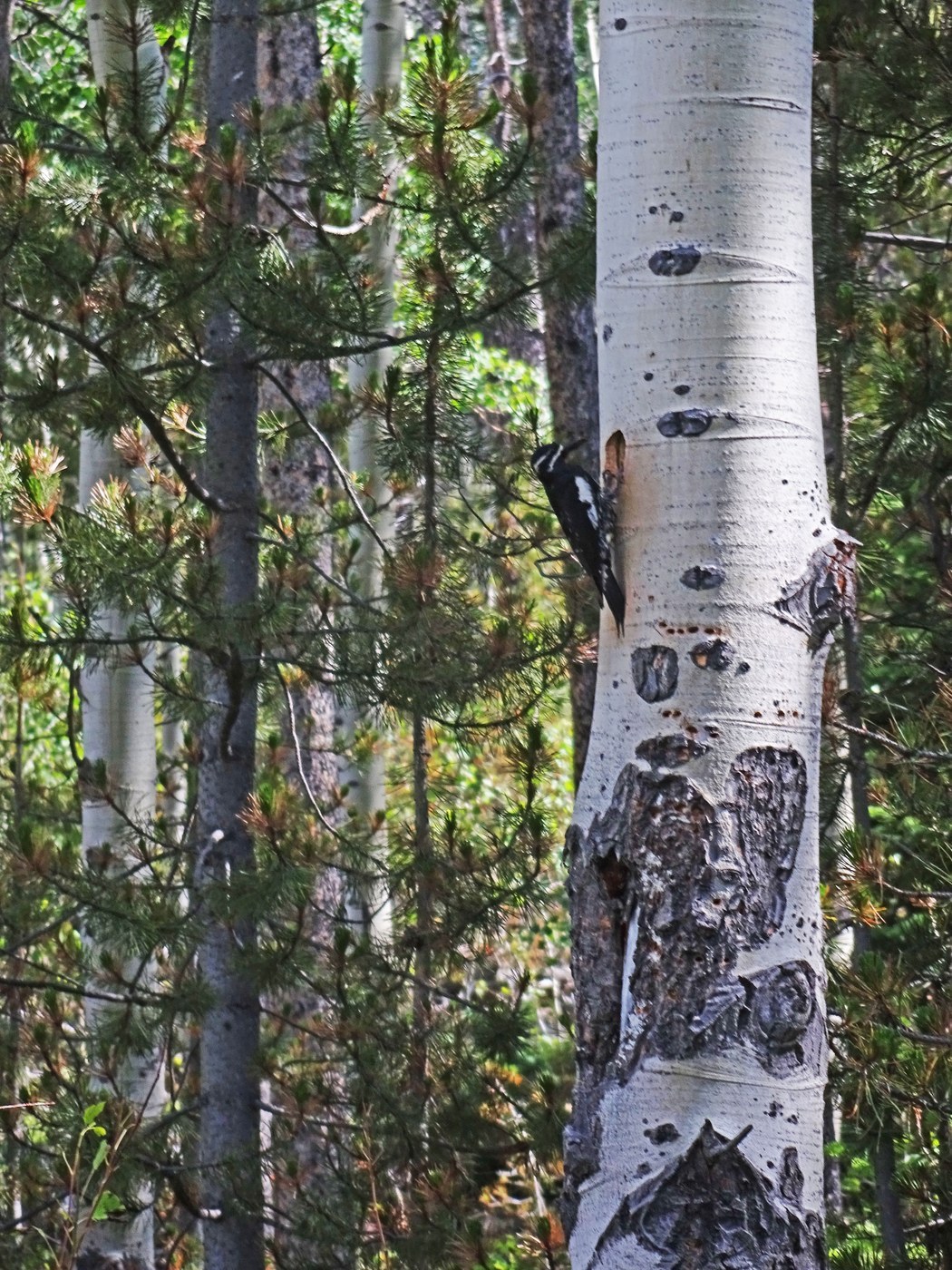
Williamson's Sapsucker
Strongly sexually dimorphic body feathers, glossy black or finely barred brown

Yellow-crowned Woodpecker
Contour and flight feathers

White Woodpecker
Mostly white body feathers with contrasting black wings and back

Red-throated Wryneck
Soft, cryptically mottled contour feathers

White-bellied Woodpecker
Large, glossy black contour and flight feathers

White-backed Woodpecker
Barred back feathers rather than a solid white patch
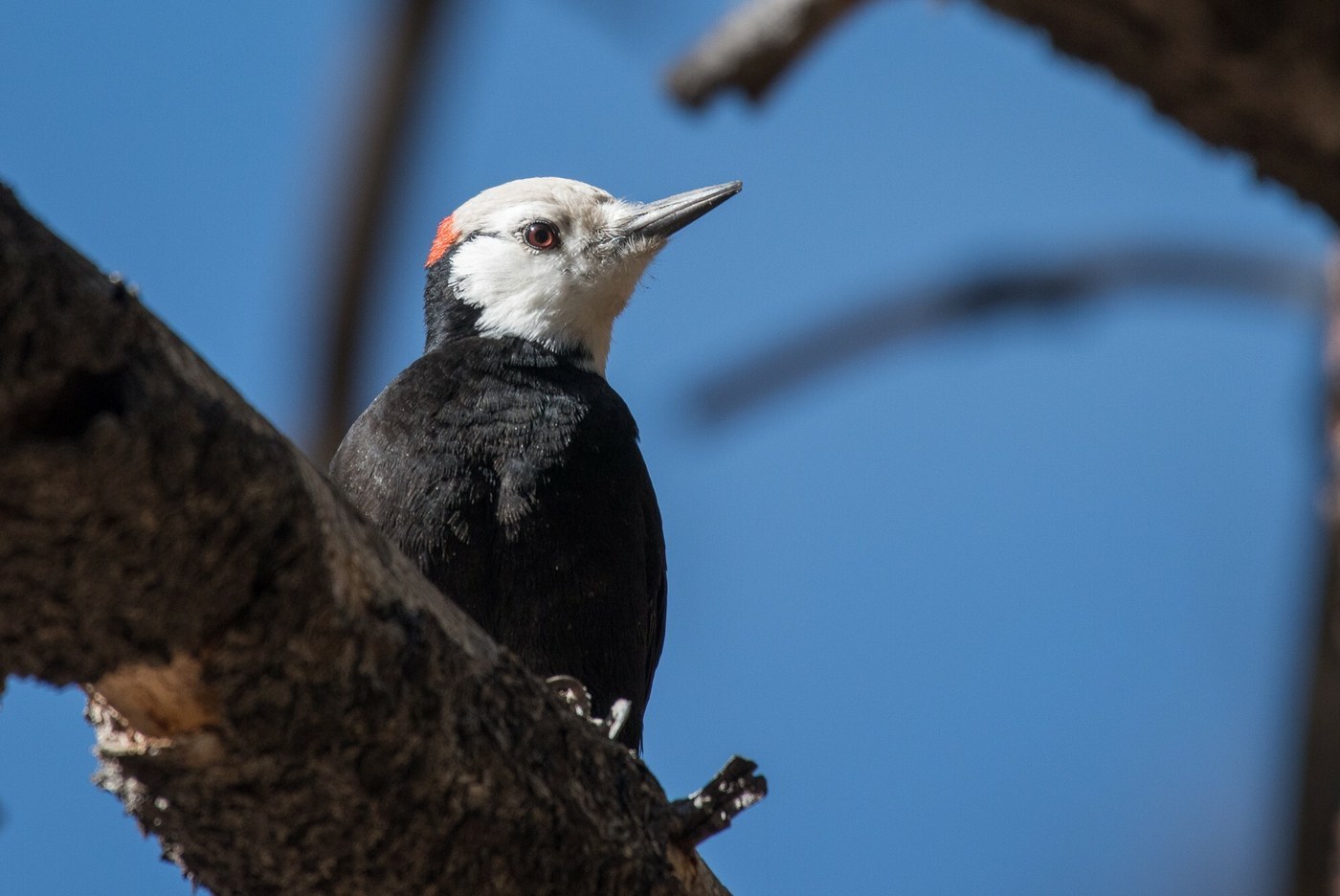
White-headed Woodpecker
Solid black body feathers with an entirely white head