
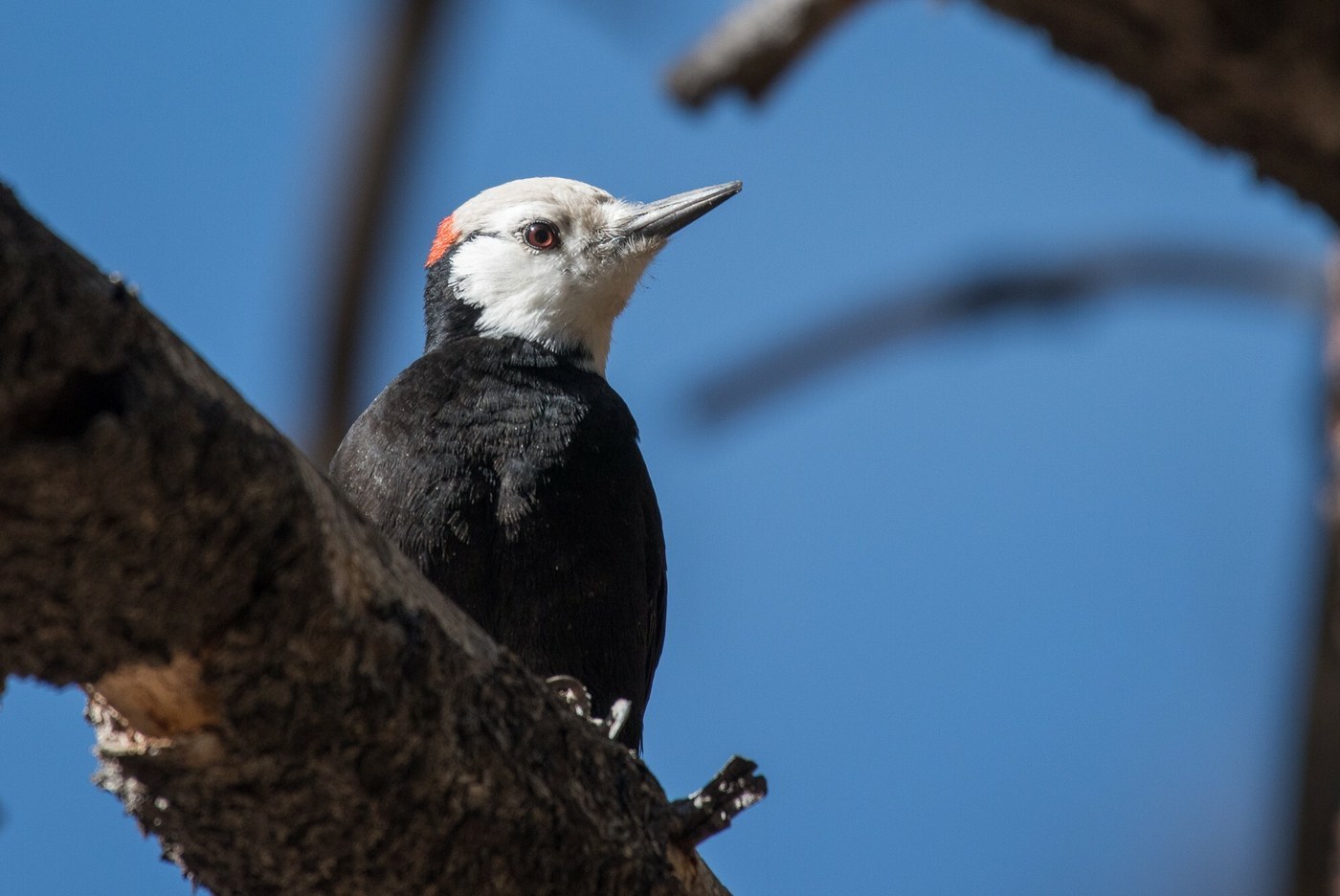
White-headed Woodpecker
Leuconotopicus albolarvatus
A distinctive western pine forest woodpecker with an entirely white head set against an otherwise black body.
- Feather type
- Solid black body feathers with an entirely white head
- Colours
- White head, black body, white wing patch, red nape patch on male
- Bird size
- Robin-sized, ~23 cm
Found a feather like this?
Identify any feather from a photo, free.
Overview
The White-headed Woodpecker inhabits montane pine forest of the western United States, particularly stands with mature ponderosa or sugar pine. Its entirely white head against a black body is unmistakable and unlike any other North American woodpecker.
It forages more on cone-bearing branches than on trunks compared to many other woodpeckers, reflecting its close association with pine seed as a food source alongside insects.
Identifying the Feather
- Head: entirely white, unique among North American woodpeckers
- Body: solid black overall
- Wings: white patch visible at rest and prominent in flight
- Nape: males show a red patch; females lack it
- Vs. all other US woodpeckers: the solid white head is diagnostic and not shared by any similarly sized species
Plumage & Molt
Males show a red patch on the nape that females lack; otherwise the sexes share the same white head and black body pattern. Juveniles show a duller white head, sometimes with a small red crown patch in young birds regardless of sex, lost after the first molt. A single annual molt follows breeding.
Habitat & Range
Resident in montane pine forest, especially ponderosa and Jeffrey pine with mature cone-bearing trees, from Washington and Oregon south through California's mountains and into the Sierra Nevada. It is largely non-migratory, with some altitudinal movement in harsh winters.
Behavior & Field Notes
Forages on pine cones and bark for seeds and insects, spending more time working cones than many other woodpeckers, which supplements its insect diet with pine seed. It excavates nest cavities in dead pine snags. Calls include sharp, high-pitched notes, and its drumming is a fairly soft, quick roll.
Frequently asked questions
What makes the White-headed Woodpecker so easy to identify?
Its entirely white head against an otherwise solid black body is unique among North American woodpeckers and unmistakable in the field.
What does the White-headed Woodpecker eat?
It feeds on pine seeds extracted from cones as well as insects gleaned from bark, relying more on conifer seed than many other woodpeckers.
Where does this species live?
It is found in montane pine forest, especially stands of mature ponderosa or Jeffrey pine, from Washington and Oregon south through the mountains of California.
How do you tell males and females apart?
Males show a red patch on the nape, while females have an entirely white head without any red.
White-headed Woodpecker guides
In-depth guides for identifying and understanding White-headed Woodpecker.
Other feathers you may enjoy

Ivory-billed Woodpecker
Very large flight feathers with a solid white trailing patch

Great Slaty Woodpecker
Massive, uniformly colored contour feathers

Yellow-tufted Woodpecker
Black body feathers with bright yellow forehead tufts

Magellanic Woodpecker
Very large, glossy contour feathers with a recurved crest

Yellow-bellied Sapsucker
Black-and-white patterned back and facial-stripe feathers
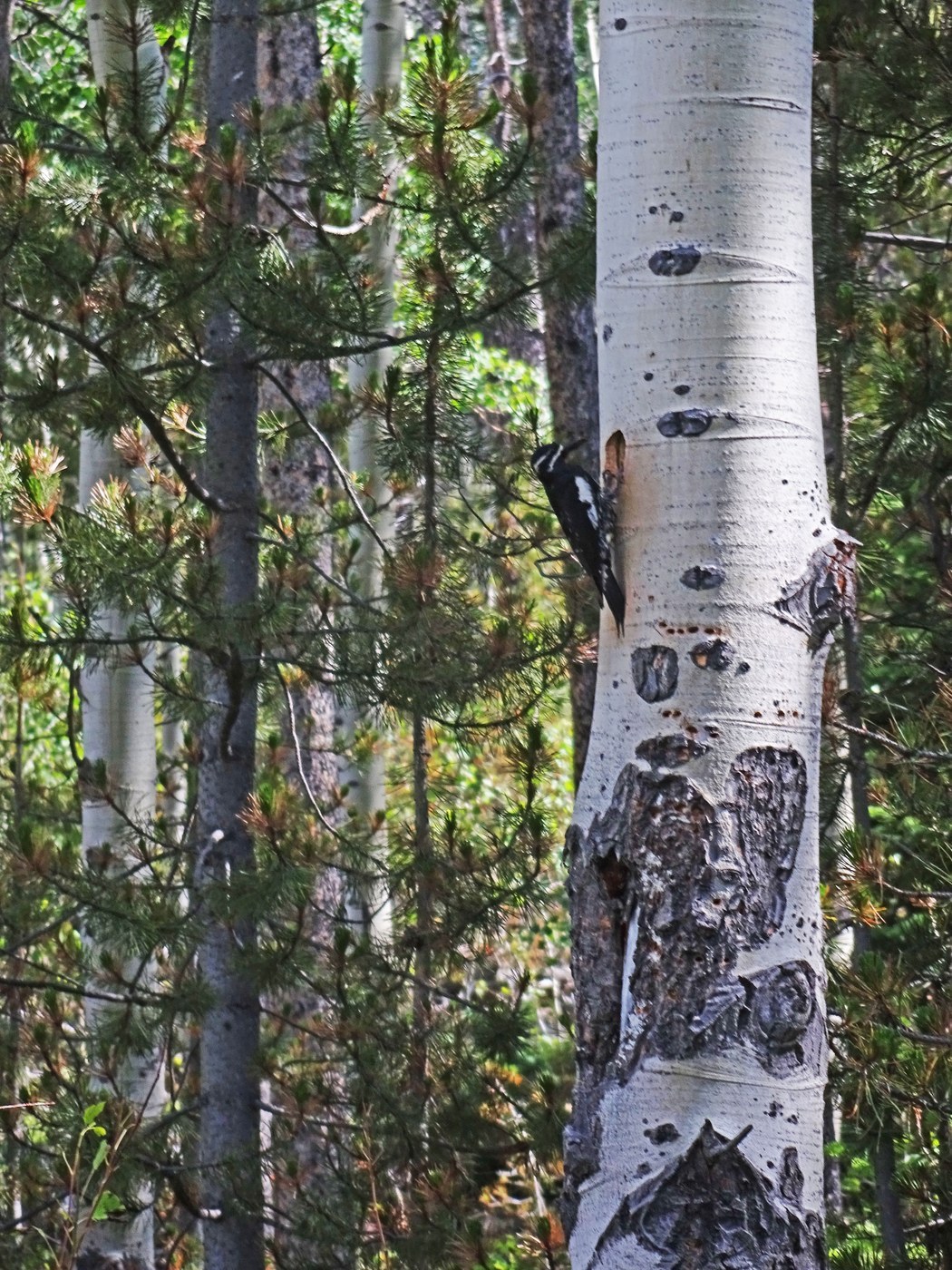
Williamson's Sapsucker
Strongly sexually dimorphic body feathers, glossy black or finely barred brown

Yellow-crowned Woodpecker
Contour and flight feathers

White Woodpecker
Mostly white body feathers with contrasting black wings and back

Red-throated Wryneck
Soft, cryptically mottled contour feathers

White-bellied Woodpecker
Large, glossy black contour and flight feathers

White-backed Woodpecker
Barred back feathers rather than a solid white patch

Syrian Woodpecker
Great Spotted-type contour feathers with an incomplete neck bar