

White Woodpecker
Melanerpes candidus
An unusually pale South American woodpecker, mostly white with contrasting black wings and back and a patch of bare yellow facial skin.
- Feather type
- Mostly white body feathers with contrasting black wings and back
- Colours
- White body, black wings and back, yellow bare facial skin patch
- Bird size
- Robin-to-jay-sized, ~28 cm
Found a feather like this?
Identify any feather from a photo, free.
Overview
The White Woodpecker stands out among its family for its predominantly pale plumage, a stark contrast to the typically black, barred, or dark-toned bodies of most woodpeckers. It occupies open savanna, palm groves, and gallery forest edges across central South America.
Its white body plumage set against black wings and back, along with a patch of bare yellow skin around the eye, gives it one of the most distinctive silhouettes among South American woodpeckers, often seen in small social groups.
Identifying the Feather
- Body: mostly white overall, unusual for a woodpecker
- Wings and back: solid black, contrasting sharply with the white body
- Face: patch of bare yellow skin around the eye
- Crown: black in both sexes, without a red patch typical of many woodpeckers
- Vs. other Melanerpes woodpeckers: the largely white body plumage is unique in the genus, immediately separating it from barred or brown-backed relatives
Plumage & Molt
Sexes are similar, both showing the same white body and black wing-and-back pattern; there is little sexual dimorphism in this species compared to many other woodpeckers. Juveniles are duller and can show some brownish wash on the white areas before their first molt.
Habitat & Range
Found across savanna, palm groves, gallery forest edges, and adjacent open country in central South America, including parts of Brazil, Paraguay, Bolivia, and northern Argentina. It is a non-migratory resident, often encountered in small flocks moving between feeding areas.
Behavior & Field Notes
Forages in a varied manner, taking insects from bark as well as fruit and palm nuts, and is often seen perched conspicuously in the open rather than clinging tightly to trunks like many woodpeckers. It is a social species, frequently found in small groups outside the breeding season. Nest cavities are excavated in dead trees or palm trunks, and its calls include harsh chattering notes given from perches or in flight.
Frequently asked questions
Why is the White Woodpecker's plumage so unusual?
Unlike most woodpeckers, which are dark or barred, this species is predominantly white-bodied with contrasting black wings and back, a distinctive pattern within the family.
Does the White Woodpecker have a red crown patch like many other woodpeckers?
No, both sexes show a black crown without any red marking, unlike many related Melanerpes species.
Is the White Woodpecker a social species?
Yes, it is often found in small flocks or groups, more gregarious than many solitary woodpecker species.
What does the bare yellow facial skin patch look like?
It appears as an unfeathered patch of yellow skin around the eye, adding a splash of color to the otherwise white-and-black plumage.
White Woodpecker guides
In-depth guides for identifying and understanding White Woodpecker.

Other feathers you may enjoy

Ivory-billed Woodpecker
Very large flight feathers with a solid white trailing patch

Great Slaty Woodpecker
Massive, uniformly colored contour feathers

Yellow-tufted Woodpecker
Black body feathers with bright yellow forehead tufts

Magellanic Woodpecker
Very large, glossy contour feathers with a recurved crest

Yellow-bellied Sapsucker
Black-and-white patterned back and facial-stripe feathers
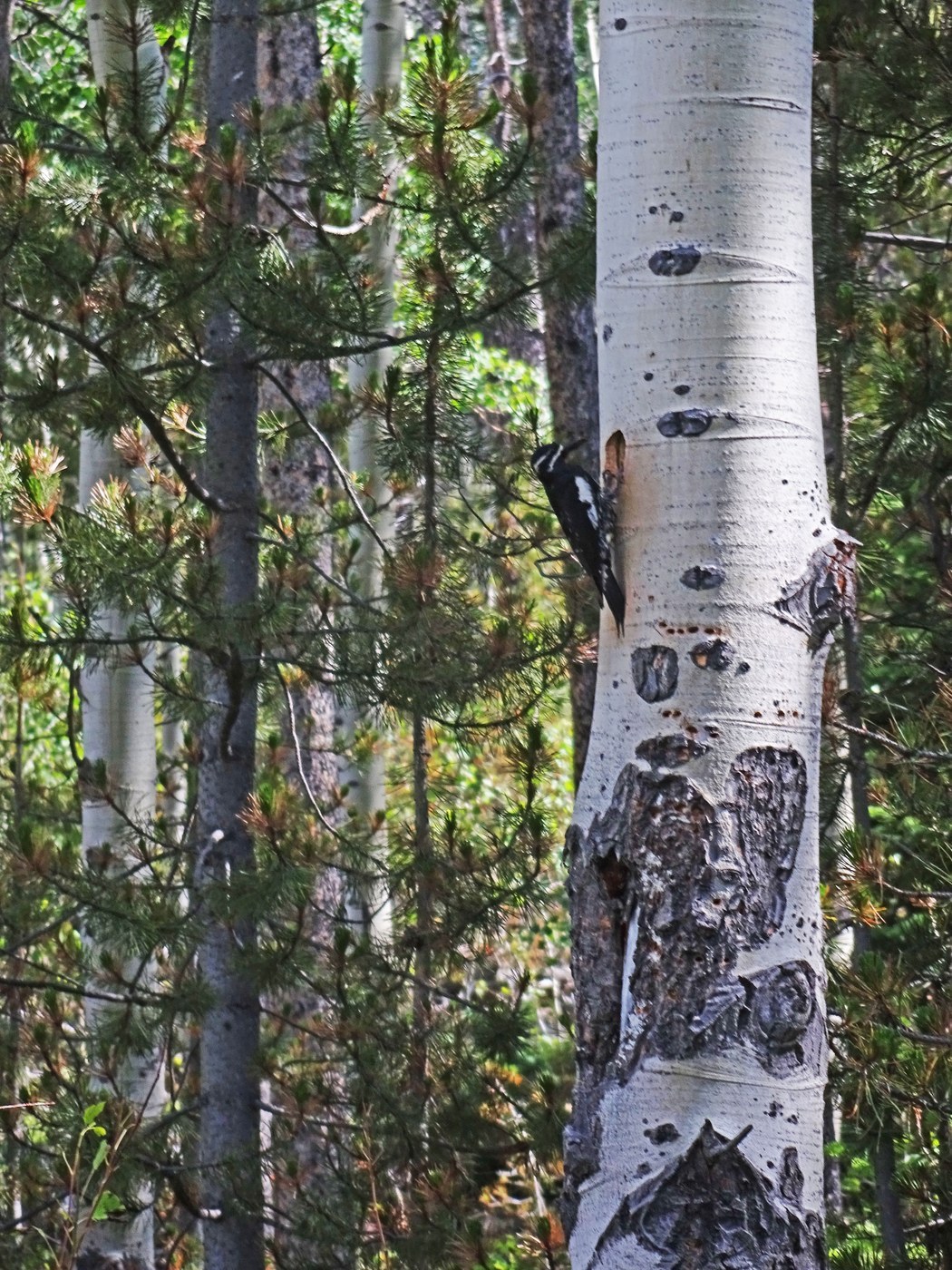
Williamson's Sapsucker
Strongly sexually dimorphic body feathers, glossy black or finely barred brown

Yellow-crowned Woodpecker
Contour and flight feathers

Red-throated Wryneck
Soft, cryptically mottled contour feathers

White-bellied Woodpecker
Large, glossy black contour and flight feathers

White-backed Woodpecker
Barred back feathers rather than a solid white patch
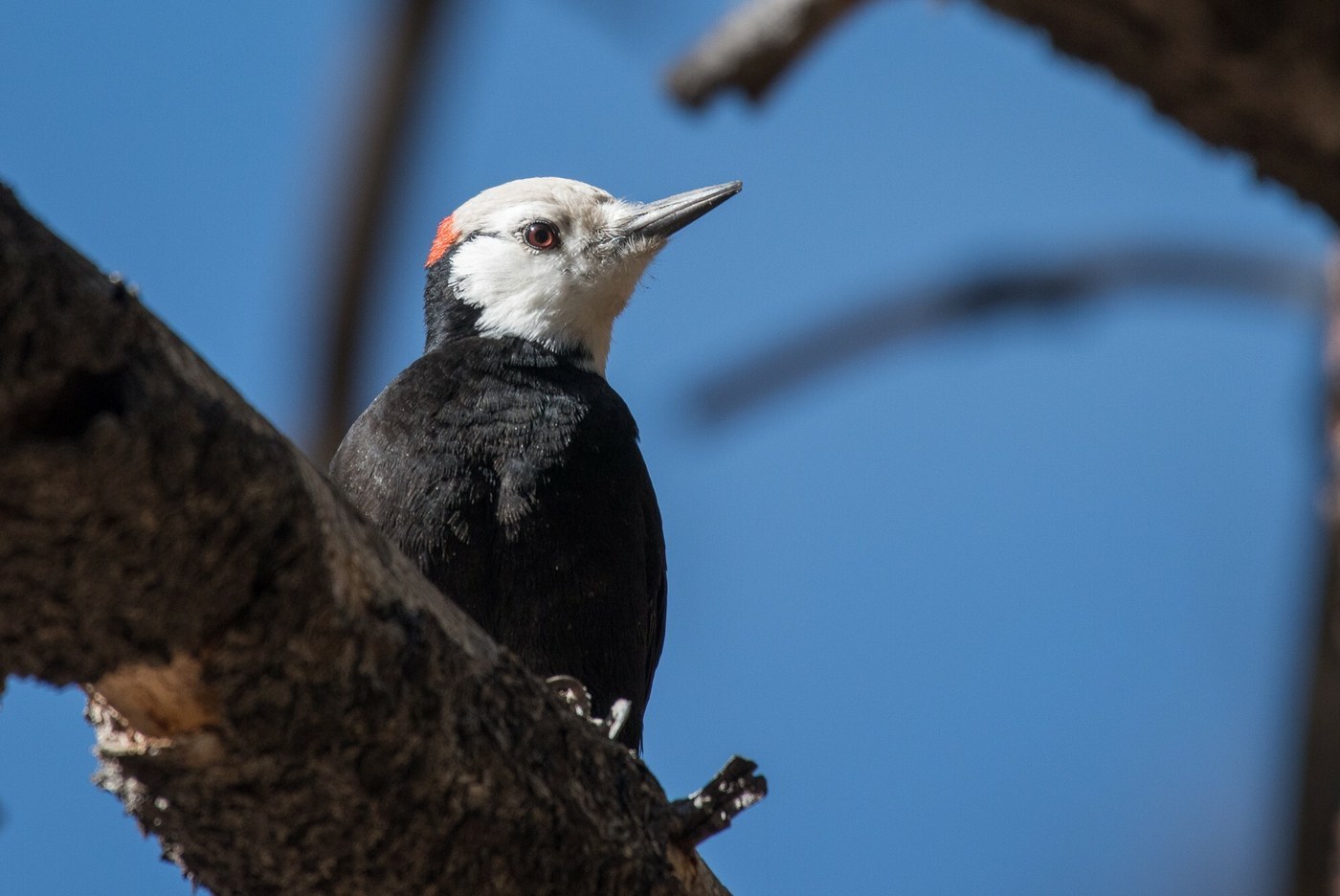
White-headed Woodpecker
Solid black body feathers with an entirely white head

Syrian Woodpecker
Great Spotted-type contour feathers with an incomplete neck bar