

White-backed Woodpecker
Dendrocopos leucotos
A large, heavily barred woodpecker of old-growth forest, distinguished from the similar Great Spotted Woodpecker by its finely barred (rather than solid white) back and extensive pink-red vent.
- Feather type
- Barred back feathers rather than a solid white patch
- Colours
- Black-and-white barred with a pink-red vent
- Bird size
- Large, ~25-28 cm
Found a feather like this?
Identify any feather from a photo, free.
Overview
The White-backed Woodpecker occurs patchily across Europe and eastward through Russia to Japan, favoring mature, largely unmanaged deciduous or mixed forest with abundant standing dead wood. It is larger and longer-billed than the more familiar Great Spotted Woodpecker, and its reliance on old-growth conditions has made it an important indicator species for forest conservation across much of its range.
Several geographically distinct subspecies are recognized, varying somewhat in overall coloration and the extent of barring.
Identifying the Feather
Key features:
- Back and mantle feathers show fine black-and-white barring across the entire back, rather than the large solid white oval patches seen on the Great Spotted Woodpecker
- Underparts are whitish with heavy black streaking concentrated on the flanks
- Vent and undertail feathers show extensive red or pink coloring
- Males show red extending from the crown onto the nape; females have an all-black crown
Compared to similar species: the barred (rather than solid white) back is the single most reliable feather feature separating this species from the Great Spotted Woodpecker, which shows large unbroken white patches on the scapulars.
Plumage & Molt
Males show red on the crown extending onto the nape, while females have an entirely black crown and nape. Juveniles show variable amounts of red on the crown regardless of sex. The extensive pink-red vent and heavily streaked flanks are consistent in both sexes. A single complete molt occurs annually.
Habitat & Range
This species is patchily distributed across Europe, favoring old, largely unmanaged deciduous or mixed forest with substantial standing dead wood, and continues eastward through Russia to Japan with several recognized subspecies. It is generally sedentary and considered a specialist of old-growth forest conditions, making it sensitive to intensive logging that removes dead and decaying trees.
Behavior & Field Notes
White-backed Woodpeckers specialize in excavating decaying wood to extract wood-boring beetle larvae, often working on larger dead trees and snags than smaller woodpecker species. Drumming is loud and used for territorial signaling, alongside distinctive calls. The species is considered an indicator of forest quality due to its strong dependence on abundant dead wood, and its populations have declined in areas subject to intensive forestry.
Frequently asked questions
What is the key feather feature separating this species from the Great Spotted Woodpecker?
A finely barred (rather than solid white) back feather is the clearest indicator of White-backed Woodpecker, since the Great Spotted Woodpecker shows large unbroken white patches on the back instead.
What does the vent color suggest?
An extensive pink-red vent or undertail feather is consistent with this species, which shows more red in that region than most other spotted woodpeckers.
What habitat is most associated with this species?
Old-growth or minimally managed deciduous and mixed forest with abundant dead and decaying wood, across parts of Europe eastward to Japan.
Can crown color tell males and females apart?
Yes, males show red on the crown extending to the nape, while adult females have an entirely black crown and nape.
White-backed Woodpecker guides
In-depth guides for identifying and understanding White-backed Woodpecker.

Other feathers you may enjoy

Ivory-billed Woodpecker
Very large flight feathers with a solid white trailing patch

Great Slaty Woodpecker
Massive, uniformly colored contour feathers

Yellow-tufted Woodpecker
Black body feathers with bright yellow forehead tufts

Magellanic Woodpecker
Very large, glossy contour feathers with a recurved crest

Yellow-bellied Sapsucker
Black-and-white patterned back and facial-stripe feathers
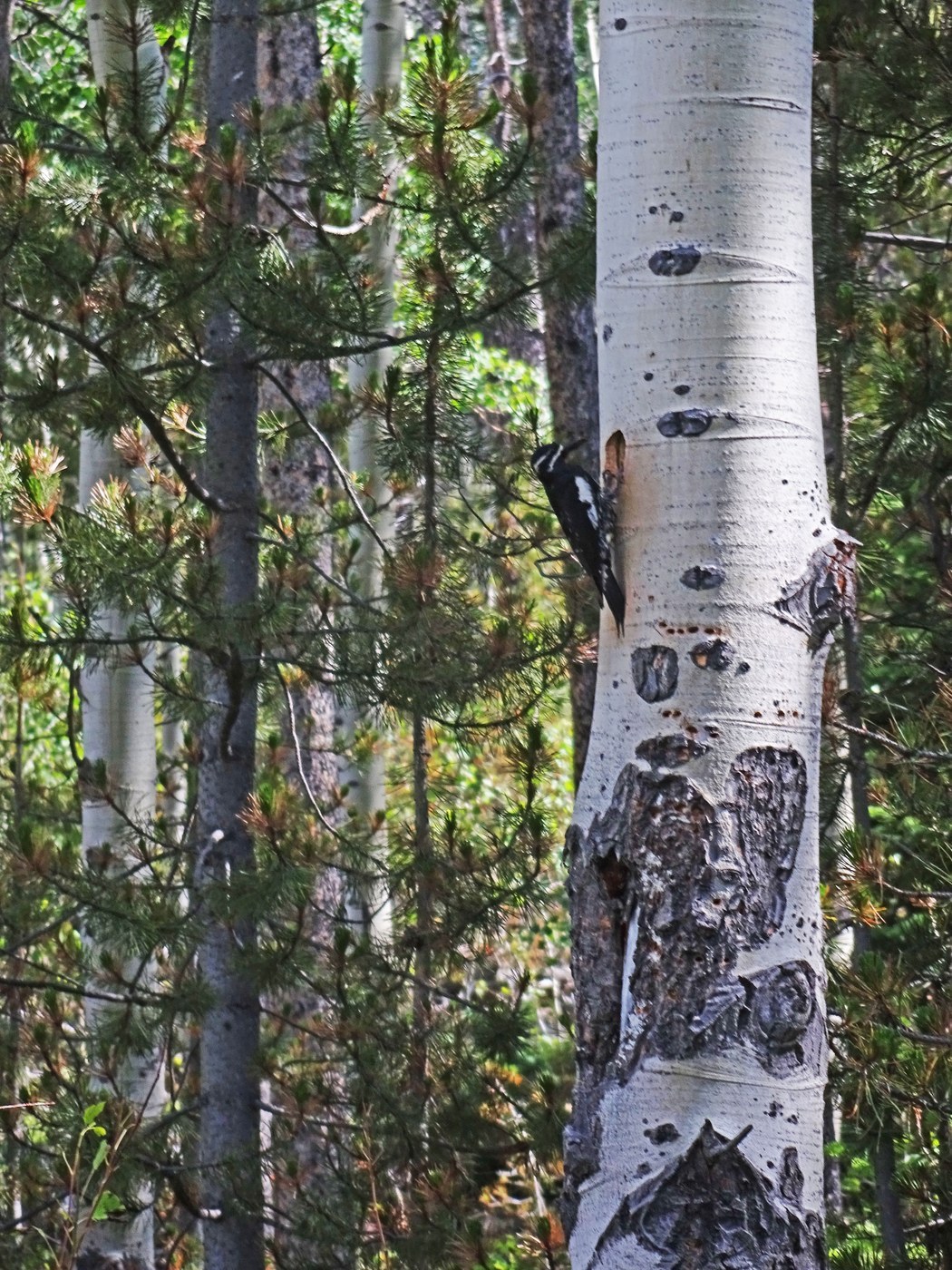
Williamson's Sapsucker
Strongly sexually dimorphic body feathers, glossy black or finely barred brown

Yellow-crowned Woodpecker
Contour and flight feathers

White Woodpecker
Mostly white body feathers with contrasting black wings and back

Red-throated Wryneck
Soft, cryptically mottled contour feathers

White-bellied Woodpecker
Large, glossy black contour and flight feathers
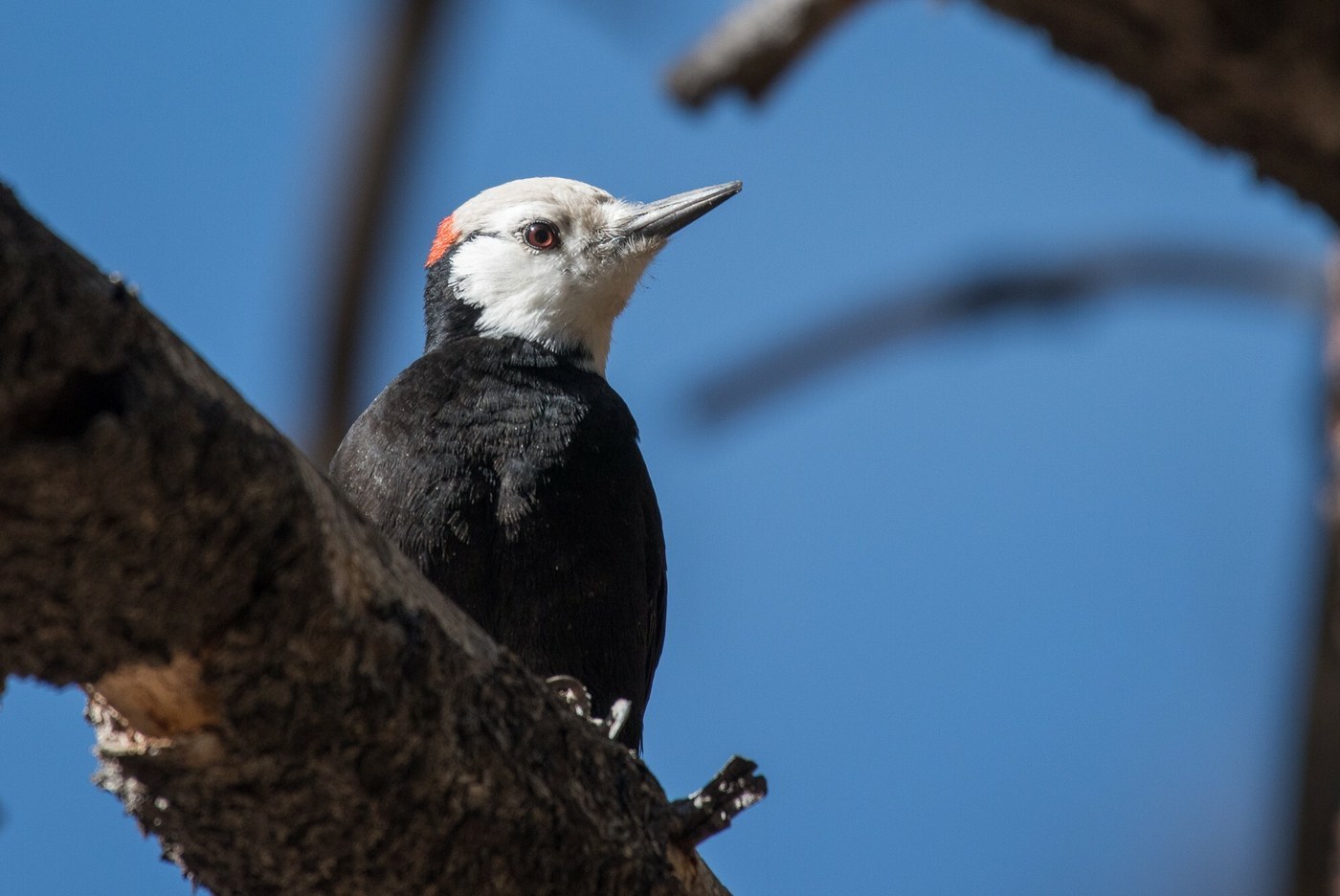
White-headed Woodpecker
Solid black body feathers with an entirely white head

Syrian Woodpecker
Great Spotted-type contour feathers with an incomplete neck bar