
Australian Pelican
Pelecanus conspicillatus
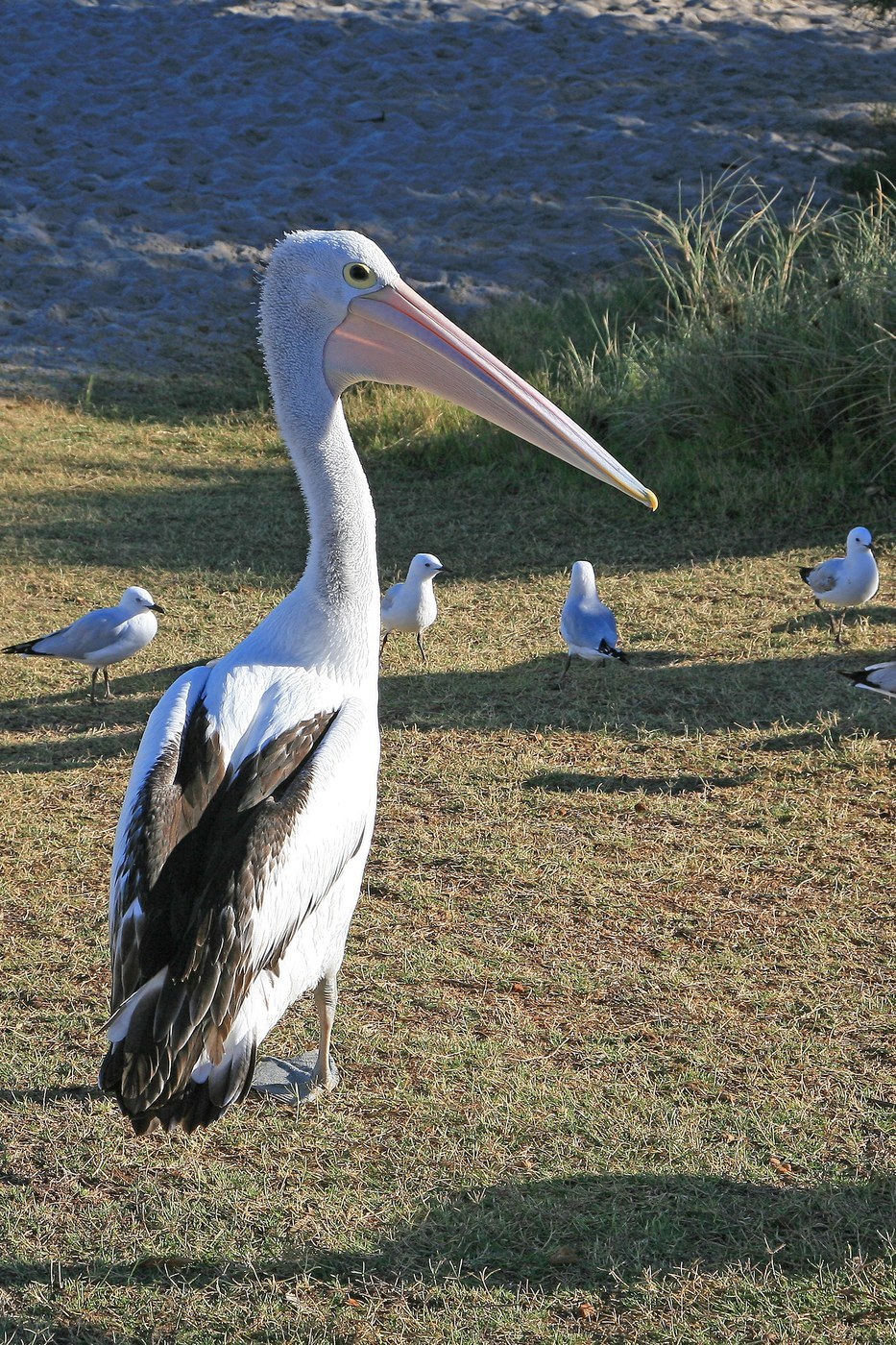
The Australian Pelican is a huge, mostly white waterbird with black flight feathers and an enormous pink bill and throat pouch, a familiar sight on lakes, rivers, and coasts.
- Feather type
- Dense, waterproof body feathers with long, broad flight feathers
- Colours
- Mostly white plumage with black flight feathers and back
- Bird size
- Very large waterbird, ~170 cm, wingspan to about 2.5-3 m
Found a feather like this?
Identify any feather from a photo, free.
Overview
Overview
The Australian Pelican is among the largest flying birds found in Australia, instantly recognisable by its immense bill and throat pouch used for catching fish. It is highly mobile, capable of covering long distances in search of suitable wetlands, and often gathers in large flocks.
- Family: Pelecanidae (pelicans)
- Distribution: Australia, New Guinea, and parts of nearby islands
- Notable trait: enormous bill and expandable throat pouch
Identifying the Feather
Feather Identification
Body plumage is predominantly white, with bold black feathering across the flight feathers and much of the back, creating a strong black-and-white contrast especially visible in flight. The bill is very long, pale pink with a bluish or reddish tip in breeding condition, and the throat pouch is bare, expandable skin used for catching and draining fish rather than storing them long-term. Tail feathers are short and white.
- Overall pattern: white body with black flight feathers and back
- Key mark: enormous pink bill and pouch, unmatched by any other Australian bird
- Compare with: no other Australian waterbird approaches its size and bill proportions
Plumage & Molt
Plumage
Sexes look similar, with males slightly larger on average. Bill and bare skin colours brighten during the breeding season, including changes in eye-ring and pouch colour, then dull outside breeding. Juveniles are browner overall, gaining the crisp white-and-black adult pattern with maturity.
Habitat & Range
Habitat & Range
Australian Pelicans occupy a wide range of wetland habitats including large lakes, rivers, estuaries, and sheltered coasts across Australia, with some individuals also recorded in New Guinea and nearby islands. The species is highly nomadic, moving widely in response to water availability and breeding opportunities, sometimes travelling great distances inland.
Behavior & Field Notes
Behavior & Field Notes
This species feeds mainly on fish, caught by scooping with the bill and pouch while swimming, sometimes cooperating in group drives to concentrate fish. It often soars on thermals in tight flocks at considerable height, and breeds colonially on islands or isolated ground sites when conditions allow. Calls are generally low, guttural grunts, mostly heard around breeding colonies.
- Diet: mainly fish, caught using the bill and expandable throat pouch
- Voice: low, guttural grunts, mainly around nesting colonies
- Field note: often seen soaring in large, coordinated flocks at considerable altitude between wetlands
Frequently asked questions
What is the pouch under the pelican's bill for?
It is used to scoop up fish and water, which is then drained before the fish is swallowed, rather than for long-term storage.
How big is the Australian Pelican?
It is one of the largest flying birds in Australia, with a body length around 170 cm and a wingspan that can approach 3 metres.
Does the Australian Pelican migrate?
It is highly nomadic rather than migrating on a fixed schedule, moving widely in response to water levels and food availability.
What colour are its wings in flight?
The flight feathers are black, contrasting strongly with the otherwise white body and creating a bold pattern overhead.
Australian Pelican guides
In-depth guides for identifying and understanding Australian Pelican.
Australian Pelican identified by the community
Real feathers identified with Feather Identifier.


Other feathers you may enjoy

Mallard
Wing (speculum), body, and tail feathers

Spectacled Eider
Large sea-duck body feathers with distinctive eye-ring patches

Canada Goose
Body and flight feathers
Mute Swan
Body (contour) and flight feathers

Wood Duck
Iridescent crest feathers; ornate scapular and flank feathers; white teardrop facial feathers (female)
Whooper Swan
Contour and flight feathers

White-winged Scoter
Large sea-duck body feathers with a white wing patch

Ruddy Duck
Stiff tail feathers and compact body plumage

Ross's Goose
Contour and flight feathers

White-cheeked Pintail
Contour and elongated tail feathers

Torrent Duck
Dense, sleek contour feathers; stiff, pointed tail feathers used for bracing against rocks

Tundra Swan
Contour and flight feathers