
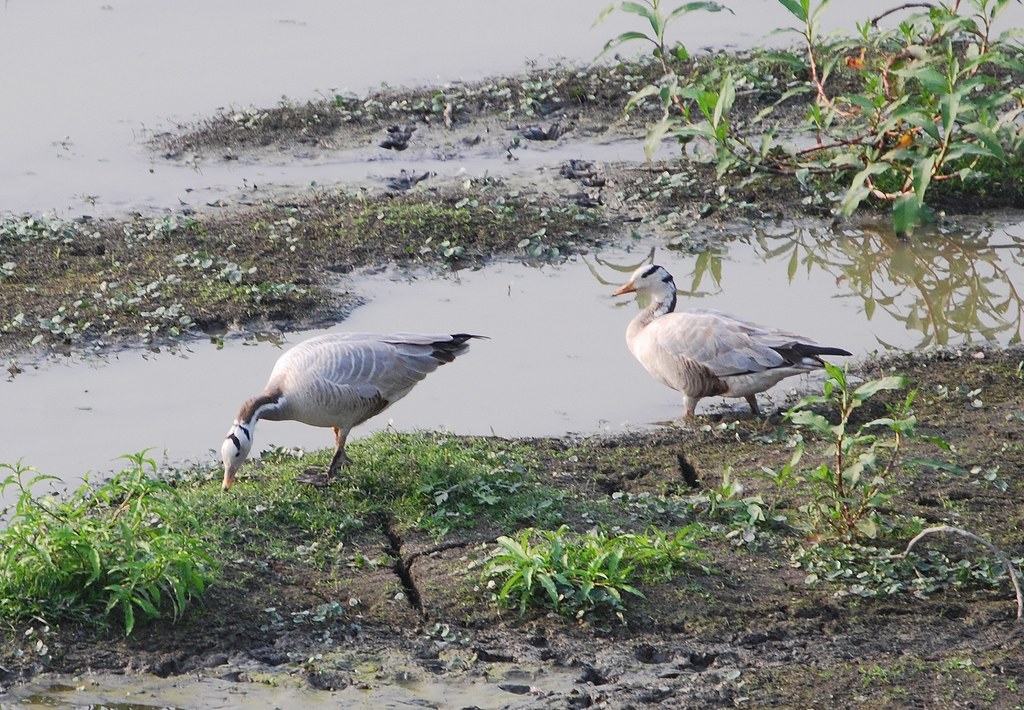
Bar-headed Goose
Anser indicus
A pale gray goose renowned for migrating over the Himalayas at extreme altitude, identified by a white head marked with two bold black bars across the crown and nape.
- Feather type
- Contour and flight feathers
- Colours
- Pale gray body, white head with two black bars
- Bird size
- Medium goose, ~74 cm
Found a feather like this?
Identify any feather from a photo, free.
Overview
The Bar-headed Goose breeds at high-altitude lakes across the Tibetan Plateau and Central Asia and is famous for its migratory flights over the Himalayas, reaching some of the highest altitudes recorded for any bird during long-distance migration. It winters in lowland wetlands and farmland across South and Southeast Asia.
Identifying the Feather
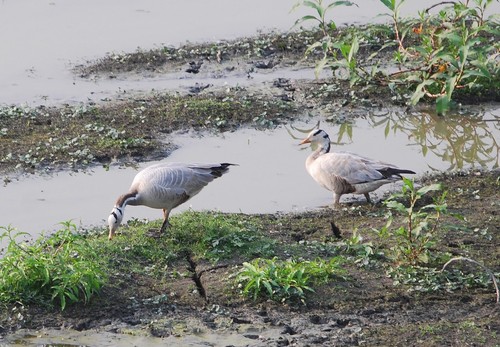
Body feathers are pale gray-brown, evenly fringed with a lighter shade to give subtle scaling across the back and flanks. The head is white, marked by two bold black bars—one across the crown and one behind it toward the nape—a pattern unique among geese and highly diagnostic even from isolated head feathers. A white stripe of feathering also runs down each side of the neck, contrasting against the darker feathers of the neck itself. Legs are orange-yellow.
Plumage & Molt
Sexes are alike. Juveniles show a duller, grayer head lacking the crisp black bars of adults, developing the full head pattern with maturity.
Habitat & Range
Breeds at high-altitude lakes and wetlands across the Tibetan Plateau, Mongolia, and parts of Central Asia. Migrates over the Himalayas to winter in lowland wetlands, rivers, and agricultural fields across India and neighboring parts of South and Southeast Asia.
Behavior & Field Notes
Grazes on grasses, grain, and other vegetation, often in large flocks on wintering grounds. Highly gregarious and vocal, giving loud honking calls. Nests on the ground, sometimes on islands or cliff ledges near high-altitude lakes, offering some protection from ground predators. Renowned among ornithologists for sustained high-altitude flight during migration.
Frequently asked questions
What is the key feather feature of the Bar-headed Goose?
A white head crossed by two bold black bars, one over the crown and one toward the nape, a pattern found in no other goose.
Why is the Bar-headed Goose famous among migratory birds?
It migrates over the Himalayas at extremely high altitudes, among the highest recorded for any bird during long-distance flight.
Where does the Bar-headed Goose breed?
At high-altitude lakes across the Tibetan Plateau, Mongolia, and parts of Central Asia.
Do juvenile Bar-headed Geese show the black head bars?
No, juveniles have a duller, grayer head and develop the crisp black bars as they mature.
Bar-headed Goose guides
In-depth guides for identifying and understanding Bar-headed Goose.
Other feathers you may enjoy

Mallard
Wing (speculum), body, and tail feathers

Spectacled Eider
Large sea-duck body feathers with distinctive eye-ring patches

Canada Goose
Body and flight feathers
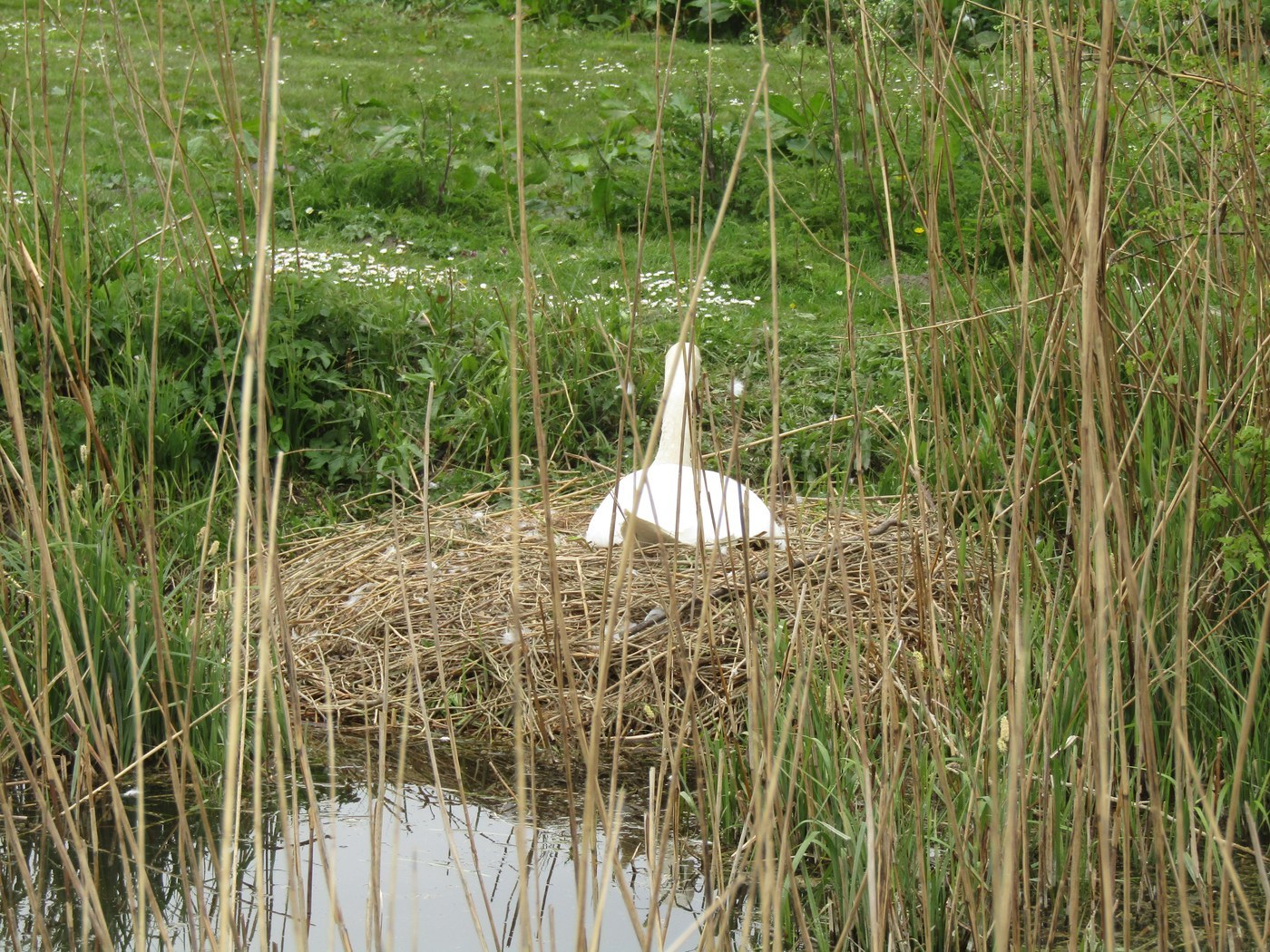
Mute Swan
Body (contour) and flight feathers

Wood Duck
Iridescent crest feathers; ornate scapular and flank feathers; white teardrop facial feathers (female)
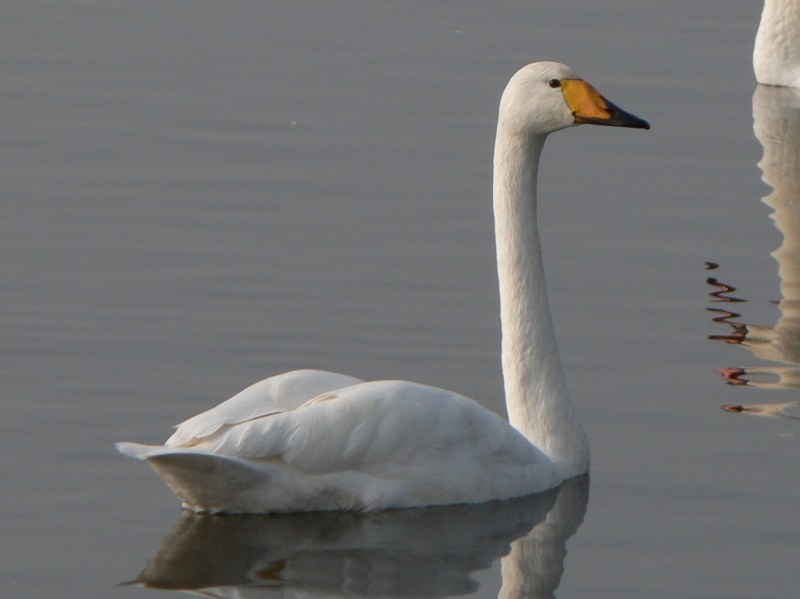
Whooper Swan
Contour and flight feathers

White-winged Scoter
Large sea-duck body feathers with a white wing patch

Ruddy Duck
Stiff tail feathers and compact body plumage

Ross's Goose
Contour and flight feathers

White-cheeked Pintail
Contour and elongated tail feathers

Torrent Duck
Dense, sleek contour feathers; stiff, pointed tail feathers used for bracing against rocks

Tundra Swan
Contour and flight feathers