
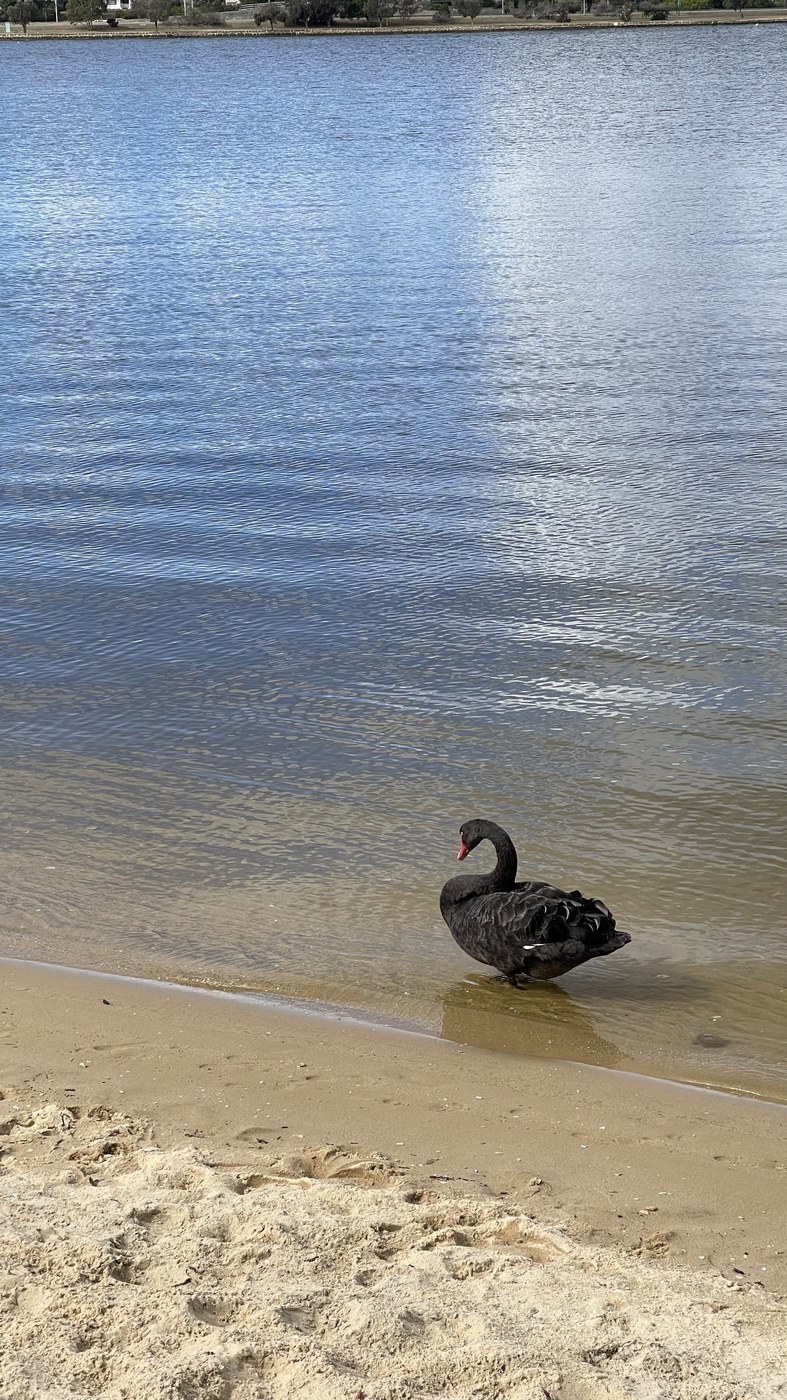
Black Swan
Cygnus atratus
An Australian swan with distinctively curled, sooty black-gray body feathers and a striking red bill, its white flight feathers hidden until the wings are spread.
- Feather type
- Curled contour feathers, flight feathers
- Colours
- Black-gray body, white flight feathers
- Bird size
- Large, ~130 cm
Found a feather like this?
Identify any feather from a photo, free.
Overview
The Black Swan is native to Australia, where it is a common and conspicuous wetland bird, and has been widely introduced as an ornamental species to parks and lakes elsewhere in the world, including New Zealand, Europe, and North America. It is unique among swans for its dark plumage and distinctively textured, curled body feathers.
Identifying the Feather
Body and back feathers are sooty black to dark gray with a distinctive curled or ruffled edge, giving the plumage a shaggy, textured appearance quite unlike the sleek feathers of white swans—a useful identification feature even on an isolated body feather. In striking contrast, the primaries and secondaries are white, visible as a bright flash when the wings are spread or in flight, and sometimes as a pale edge peeking from the folded wingtip at rest. The bill is deep red with a pale tip and band.
Plumage & Molt
Sexes look alike. Juveniles are grayish-brown overall, already showing the curled feather texture, and darken with age. Molt occurs after breeding, with a flightless period typical of swans.
Habitat & Range
Native to wetlands, lakes, and coastal lagoons across Australia. Introduced and often semi-domesticated populations occur in parks and ornamental lakes in New Zealand, parts of Europe, and North America.
Behavior & Field Notes
Feeds by grazing and by dabbling or upending for aquatic vegetation in shallow water. Builds a large nest of reeds and grasses, often on a small island or emergent platform. Highly gregarious, sometimes gathering in large flocks on productive wetlands. Vocal, with a musical, bugling or whistling call quite different from the hiss of the Mute Swan.
Frequently asked questions
What makes Black Swan feathers unusual among swans?
The body feathers have a curled, ruffled edge, giving a shaggy texture unlike the smooth, sleek feathers of white swans.
Are Black Swan flight feathers also black?
No, the primaries and secondaries are white, creating a striking contrast that is only visible when the wings are spread.
Where is the Black Swan originally from?
Australia, though introduced ornamental populations now exist in New Zealand, parts of Europe, and North America.
What color is the Black Swan's bill?
Deep red with a pale band near the tip.
Black Swan guides
In-depth guides for identifying and understanding Black Swan.
Black Swan identified by the community
Real feathers identified with Feather Identifier.

Other feathers you may enjoy

Mallard
Wing (speculum), body, and tail feathers

Spectacled Eider
Large sea-duck body feathers with distinctive eye-ring patches

Canada Goose
Body and flight feathers
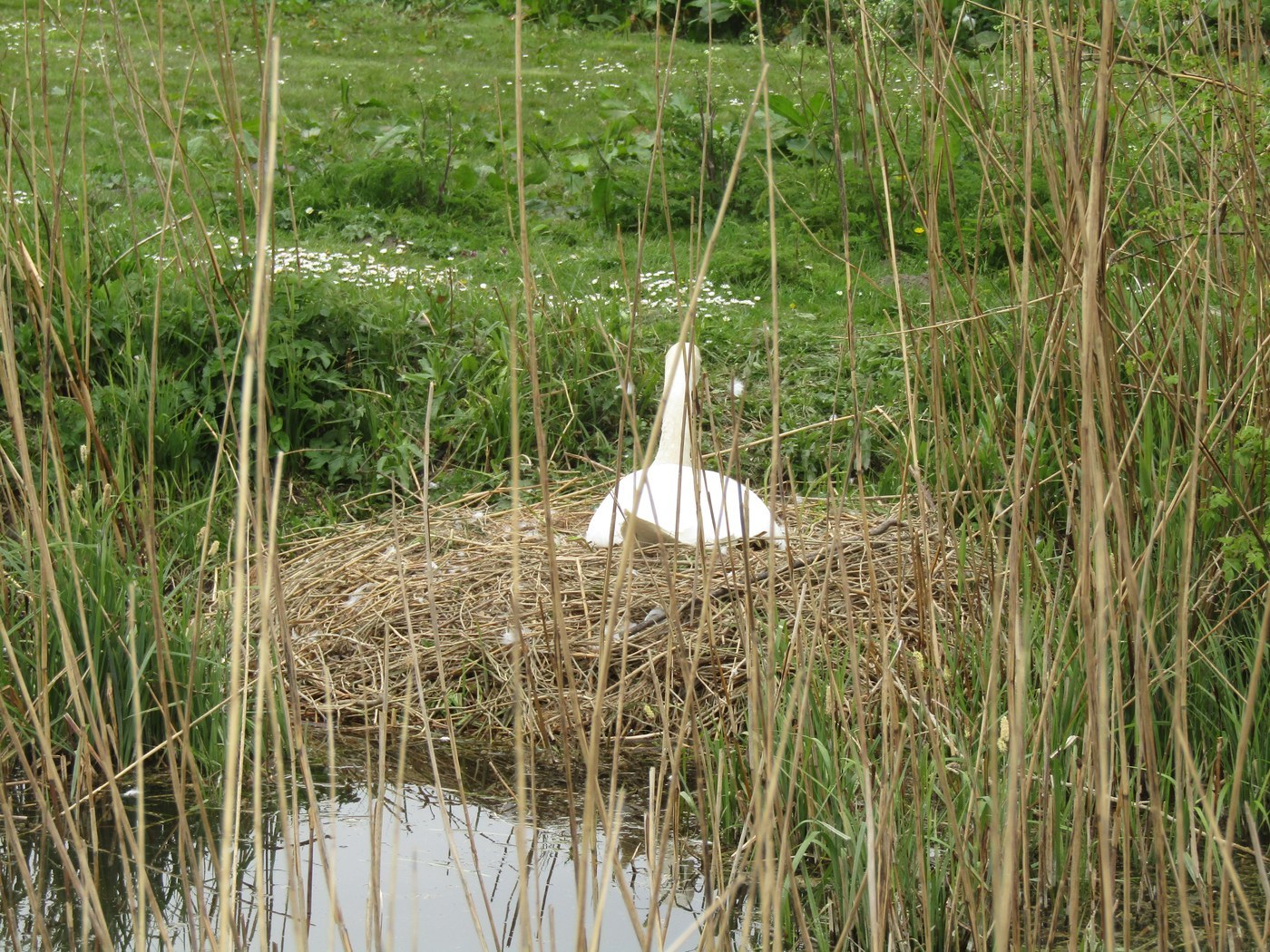
Mute Swan
Body (contour) and flight feathers

Wood Duck
Iridescent crest feathers; ornate scapular and flank feathers; white teardrop facial feathers (female)
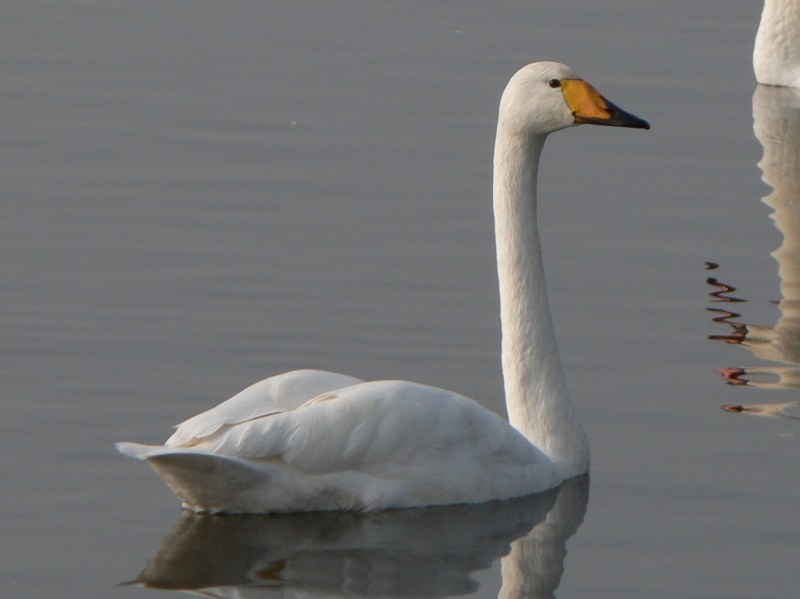
Whooper Swan
Contour and flight feathers

White-winged Scoter
Large sea-duck body feathers with a white wing patch

Ruddy Duck
Stiff tail feathers and compact body plumage

Ross's Goose
Contour and flight feathers

White-cheeked Pintail
Contour and elongated tail feathers

Torrent Duck
Dense, sleek contour feathers; stiff, pointed tail feathers used for bracing against rocks

Tundra Swan
Contour and flight feathers