

Black-throated Green Warbler
Setophaga virens
A small wood-warbler with a bright yellow face framed by an olive-green crown and a black throat, breeding in northern conifer forests.
- Feather type
- Small contour and flight feathers
- Colours
- Olive-green crown and back, yellow face, black throat, and streaked flanks
- Bird size
- Small, ~12 cm
Found a feather like this?
Identify any feather from a photo, free.
Overview
The Black-throated Green Warbler is a small, brightly patterned wood-warbler breeding in coniferous and mixed forests across a wide swath of North America, from the boreal forest south into Appalachian highlands, and wintering from Mexico to northern South America. Its combination of an olive-green crown and back, bright yellow face, and black throat and upper breast makes it one of the more readily identified warblers.
Identifying the Feather
The crown, nape, and back feathers are olive-green, while the face is bright yellow, broken only by a faint olive line through the eye. The throat and upper breast in breeding males are solid black, extending into streaking along the white flanks. Wings show two white wingbars against darker flight feathers. This pattern of yellow face, olive-green crown, and black throat distinguishes it from other similarly sized warblers with yellow faces.
Plumage & Molt
Breeding males show the boldest black throat and upper breast; females and immatures have a paler, more mottled throat with less solid black, sometimes reduced to a scattering of dark spots. The yellow face and olive-green upperparts remain consistent across sexes and ages, though duller in immature birds. A single complete molt follows the breeding season.
Habitat & Range
This species breeds in coniferous and mixed forests, including spruce, hemlock, and pine stands, across a broad range from Canada south through the northeastern United States and Appalachian Mountains. It winters in forest and forest-edge habitats from Mexico through Central America to northern South America.
Behavior & Field Notes
Black-throated Green Warblers forage for insects in the mid to upper canopy, often moving methodically along branches. The male's song is a distinctive, buzzy "zee-zee-zee-zoo-zee." Nests are built as cups placed on horizontal branches, often well up in a conifer. The species is a nocturnal migrant, moving between breeding and wintering grounds each year.
Frequently asked questions
How do I identify a Black-throated Green Warbler feather?
Look for olive-green upperpart feathers combined with a black throat feather in males and a bright yellow face — a pattern distinct from other warblers.
Where does this warbler breed?
It breeds in coniferous and mixed forests across a wide range from the Canadian boreal forest south through Appalachian highlands.
How does the male differ from the female?
Males show a solid black throat and upper breast, while females and immatures have a paler, mottled throat with reduced black.
What is this warbler's song like?
Its song is a buzzy, distinctive series often described as "zee-zee-zee-zoo-zee."
Black-throated Green Warbler guides
In-depth guides for identifying and understanding Black-throated Green Warbler.

Other feathers you may enjoy

Yellow-breasted Bunting
Contour and flight feathers, chestnut-and-yellow breeding pattern
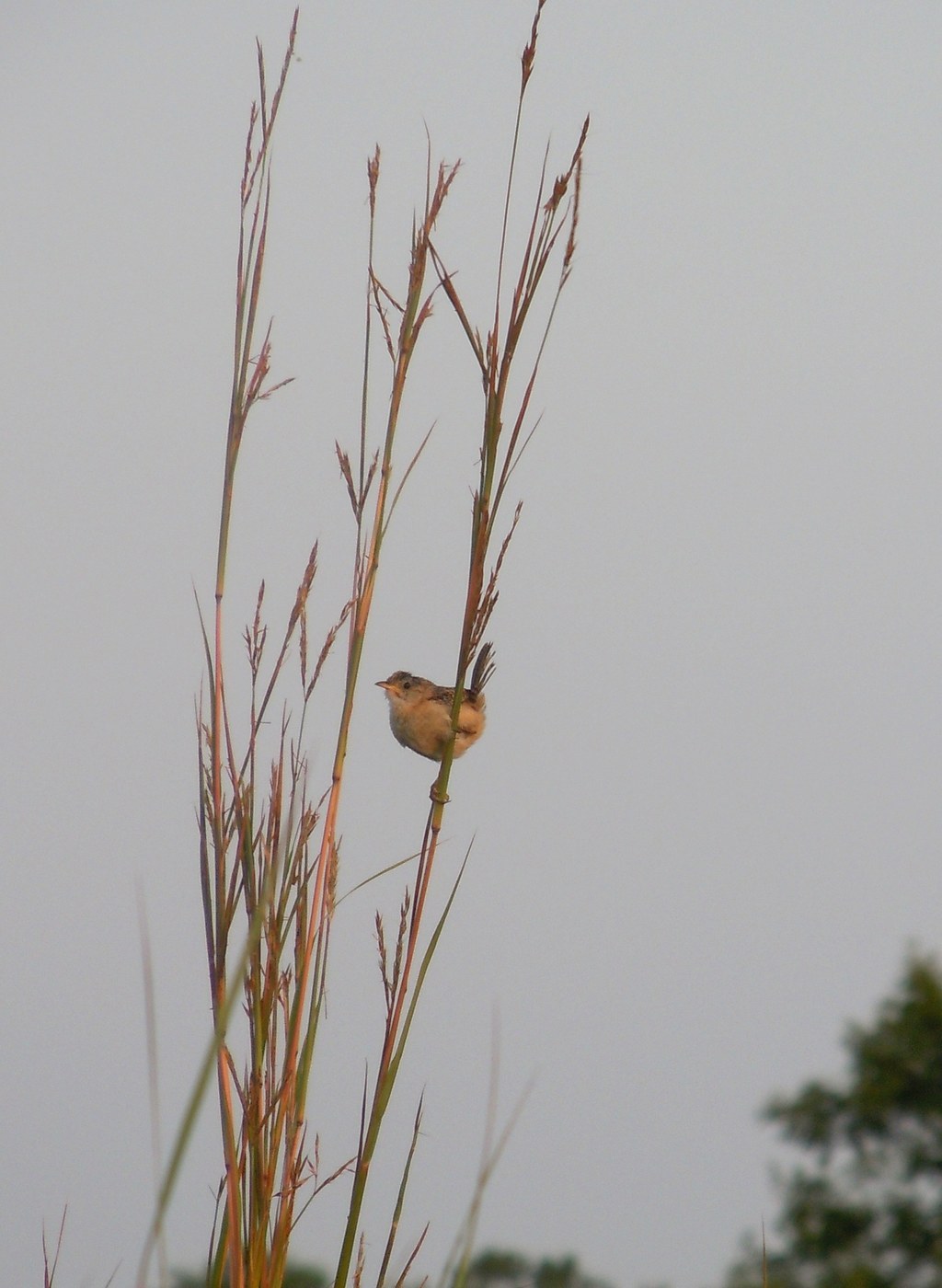
Sedge Wren
Tiny streaked crown and back feathers

Yellow-winged Cacique
Glossy black body feathers, yellow wing patch, shaggy crest

Yellow Warbler
Small contour and flight feathers
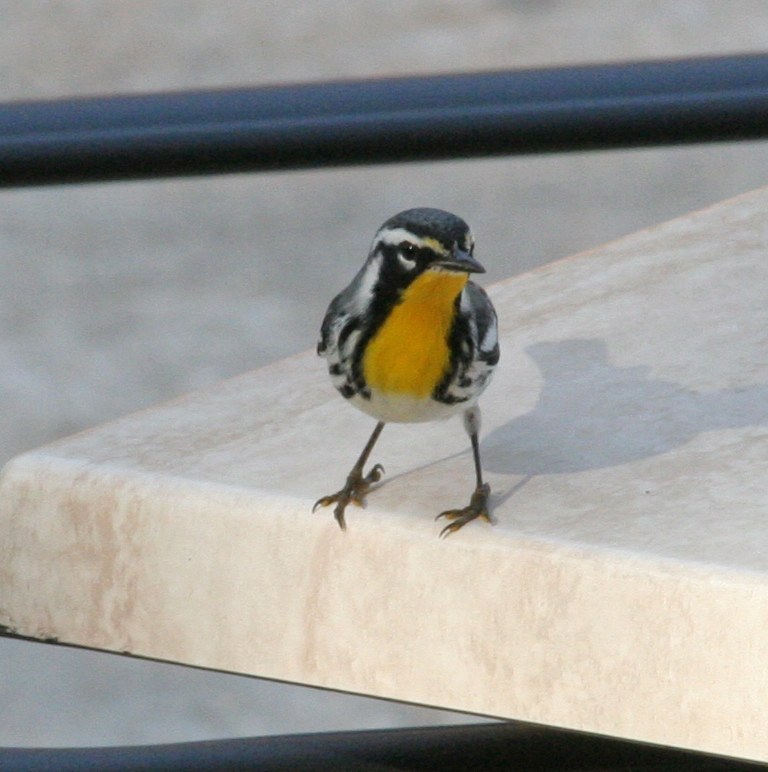
Yellow-throated Warbler
Small contour and flight feathers
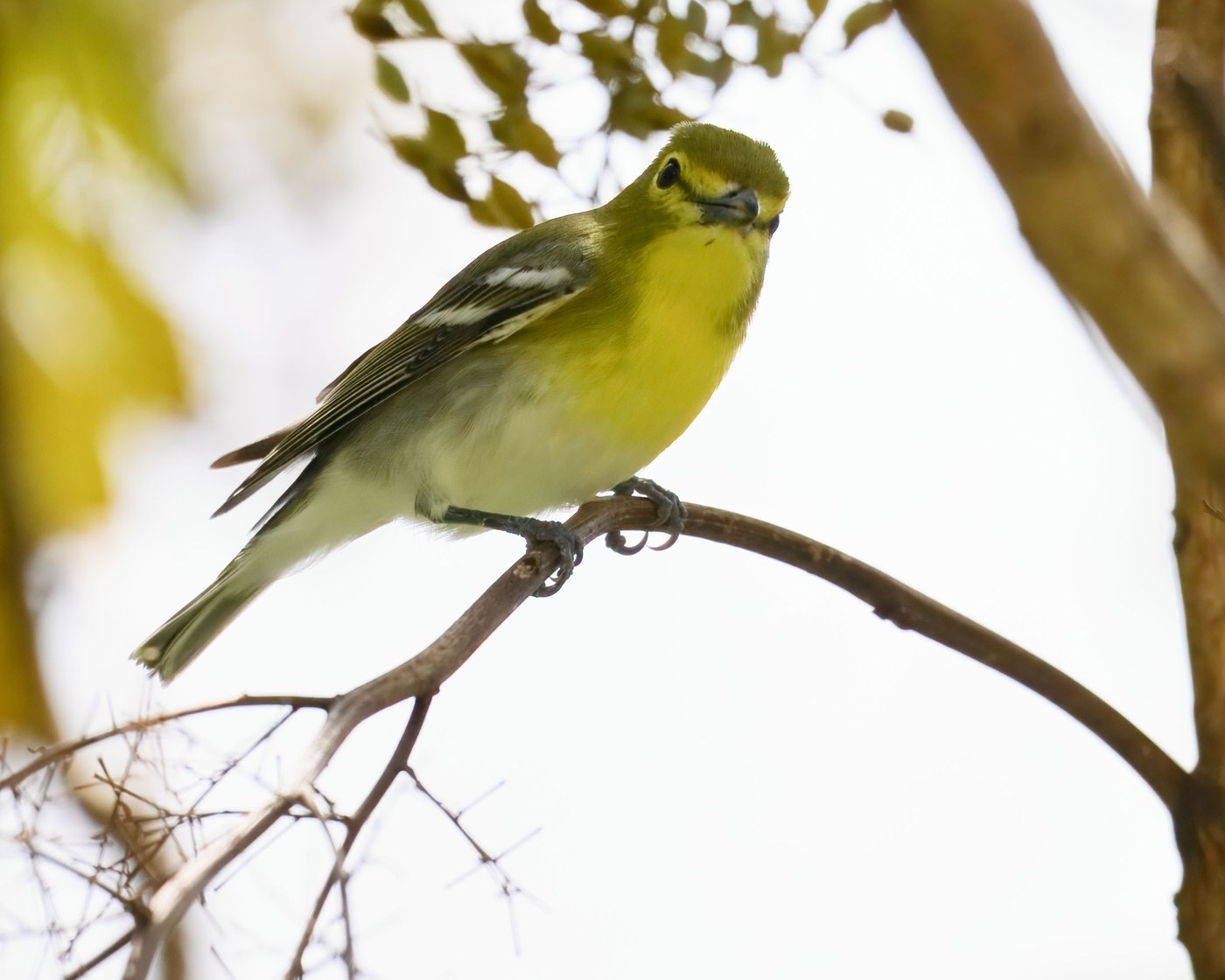
Yellow-throated Vireo
Bright yellow throat and spectacle feathers; olive-green back feathers; two white wing-bar feathers

Yellow-rumped Warbler
Small contour and flight feathers
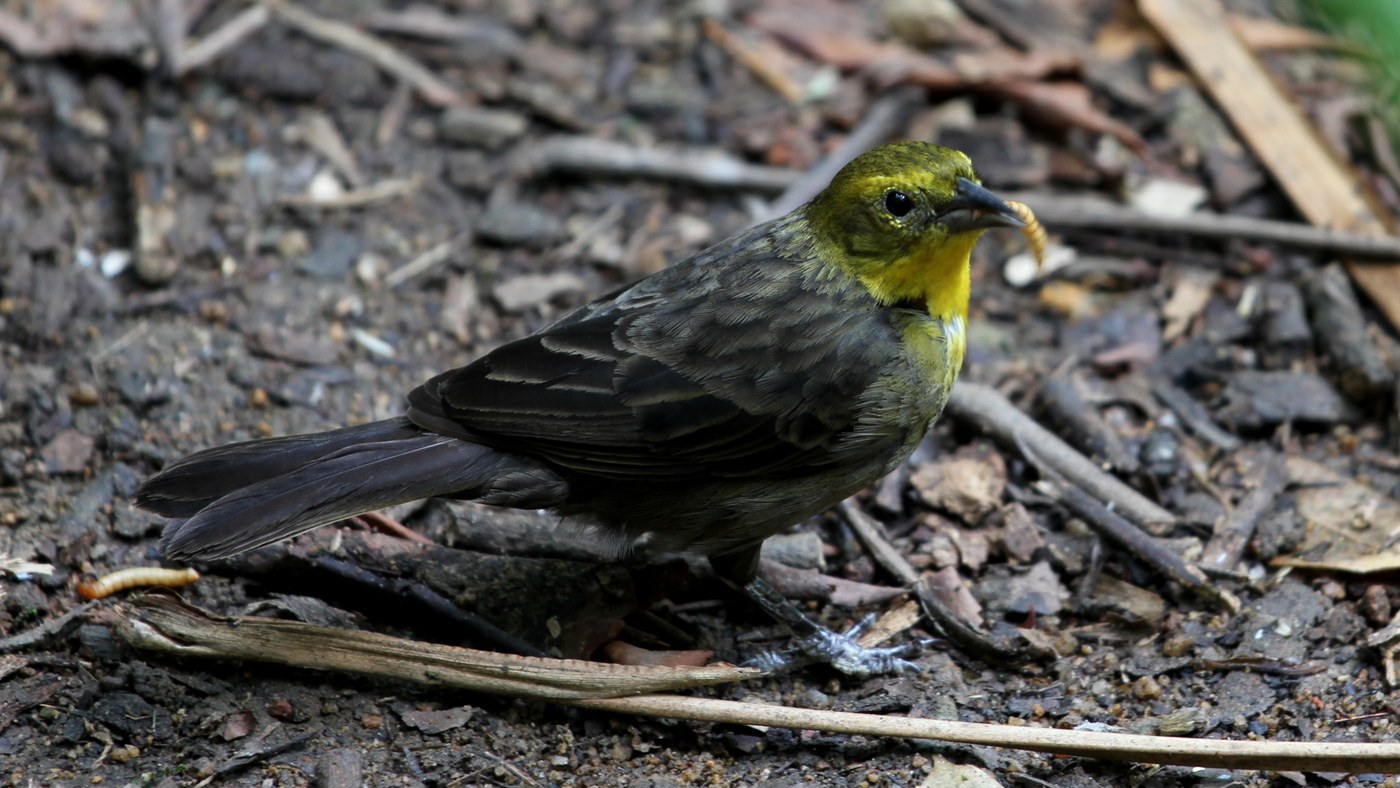
Yellow-hooded Blackbird
Contrasting hood and body feathers
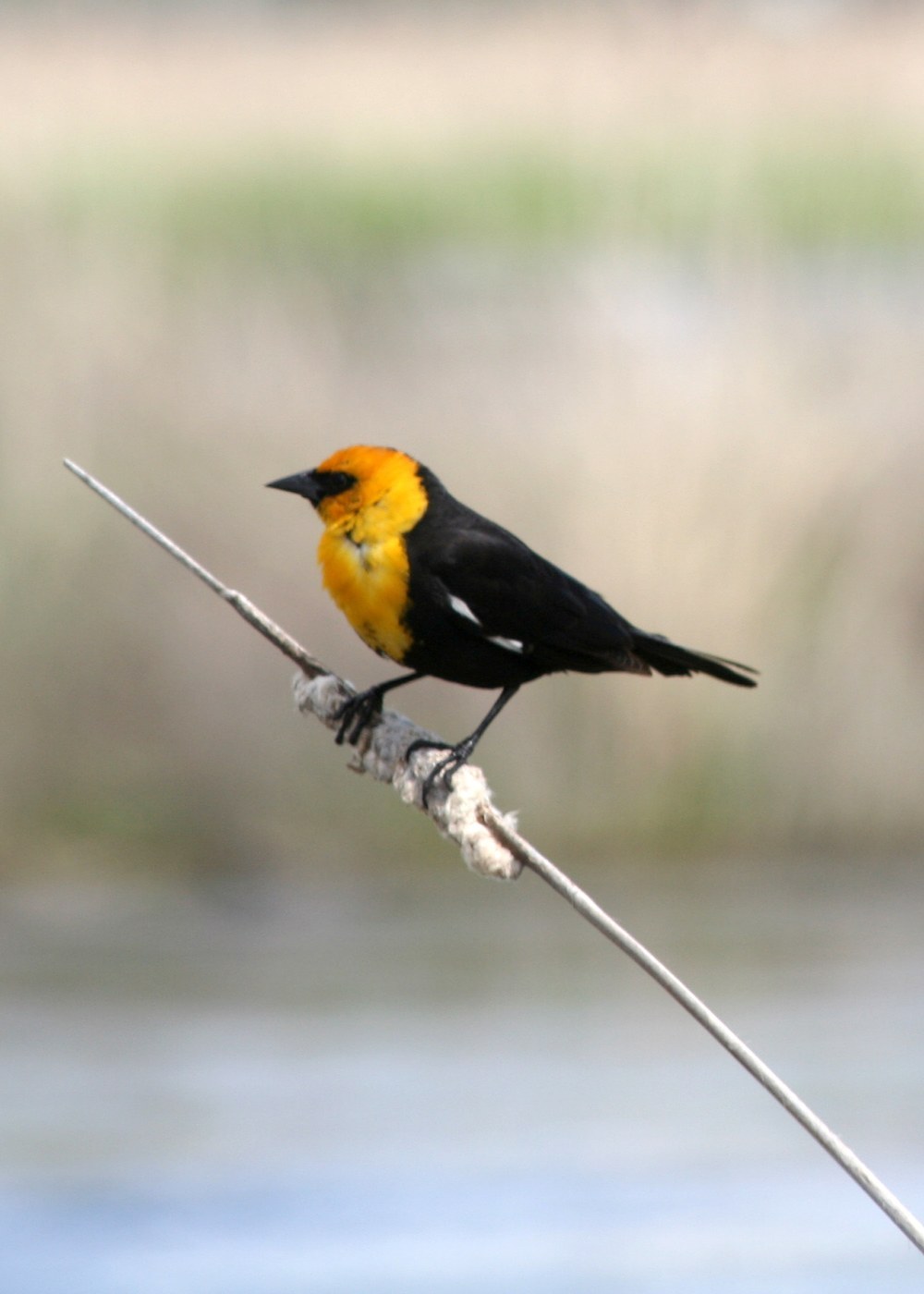
Yellow-headed Blackbird
Glossy black body plumage with a bright yellow head and breast

Yellow-eyed Junco
Contour and flight feathers

Yellow-fronted Canary
Small, smooth body plumage

Yellow-breasted Greenfinch
Compact, smooth body plumage