
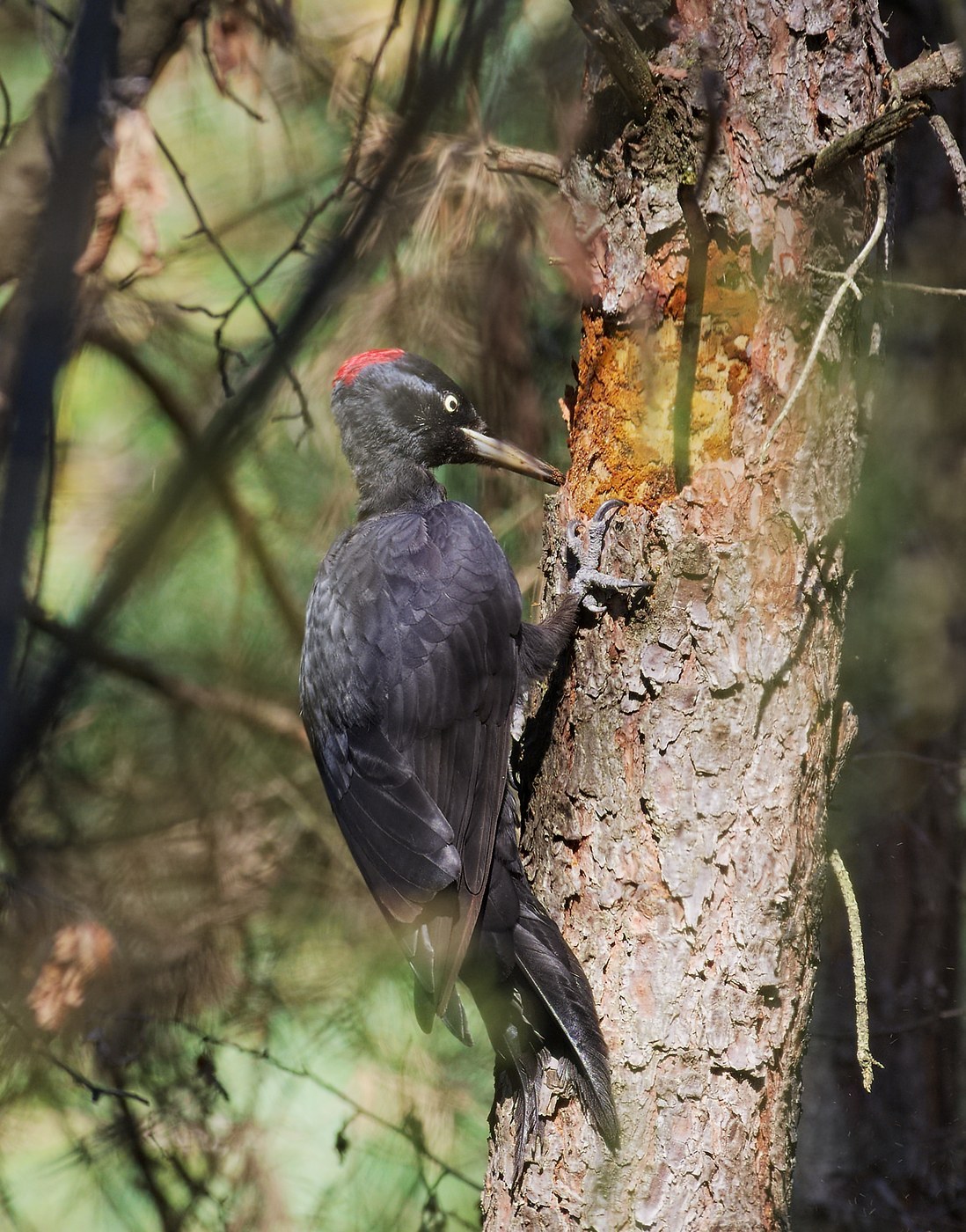
Black Woodpecker
Dryocopus martius
The largest woodpecker across most of Europe and northern Asia, entirely black except for a red crown patch and a pale bill.
- Feather type
- Entirely black body feathers, largest woodpecker in its range
- Colours
- Entirely black plumage, red crown patch, pale bill
- Bird size
- Crow-sized, ~46 cm
Found a feather like this?
Identify any feather from a photo, free.
Overview
The Black Woodpecker is the largest woodpecker across most of its Eurasian range, a striking all-black bird about the size of a crow. Its size alone helps separate it from smaller pied woodpeckers sharing its forest habitat.
It excavates large, roughly rectangular nest cavities in mature trees, holes later reused by numerous other forest species, and its loud, far-carrying calls and heavy drumming often reveal its presence before it is seen.
Identifying the Feather
- Body: entirely black plumage overall, unlike smaller pied woodpeckers in the same range
- Crown: males show a red cap covering the entire crown from bill to nape; females show red restricted to the nape only
- Bill: pale ivory-colored, contrasting with the black plumage
- Size: notably larger than other European woodpeckers, roughly crow-sized
- Vs. Great Spotted Woodpecker and relatives: the Black Woodpecker's much larger size and entirely black body immediately separate it from the smaller black-and-white pied woodpeckers of the same forests
Plumage & Molt
Males show a full red crown from the bill to the nape, while females have red restricted to a smaller patch on the nape only. Juveniles resemble adults but are duller and browner-black, with young males showing a less extensive red cap. A single annual molt follows breeding.
Habitat & Range
Found in mature coniferous, deciduous, and mixed forest across much of Europe and northern Asia, favoring old-growth stands with large trees suitable for its oversized nest cavities. It is largely non-migratory, though some individuals may shift locally in severe winters.
Behavior & Field Notes
Forages heavily on wood-boring insects and ants, often excavating large, deep holes in dead wood or ant-infested logs to reach prey, producing distinctively large excavation debris. It carves out large, roughly rectangular nest cavities in mature trees, which are later used by many other forest species once vacated. Its calls are loud and far-carrying, including a ringing "kluee" note, and its drumming is notably slow and powerful compared to smaller woodpeckers.
Frequently asked questions
How can I tell if a feather belongs to a Black Woodpecker?
Look for large, entirely black body feathers; the species' size alone, roughly crow-sized, sets it apart from the smaller black-and-white pied woodpeckers sharing its forests.
How do males and females differ?
Males show a full red crown from the bill to the nape, while females have red restricted to a smaller nape patch only.
What is distinctive about its nest cavities?
It excavates unusually large, roughly rectangular cavities in mature trees, which are later reused as shelter by many other forest-dwelling species.
Where does the Black Woodpecker live?
It is found in mature coniferous, deciduous, and mixed forest across much of Europe and northern Asia, favoring old-growth stands with large trees.
Black Woodpecker guides
In-depth guides for identifying and understanding Black Woodpecker.
Other feathers you may enjoy

Ivory-billed Woodpecker
Very large flight feathers with a solid white trailing patch

Great Slaty Woodpecker
Massive, uniformly colored contour feathers

Yellow-tufted Woodpecker
Black body feathers with bright yellow forehead tufts

Magellanic Woodpecker
Very large, glossy contour feathers with a recurved crest

Yellow-bellied Sapsucker
Black-and-white patterned back and facial-stripe feathers
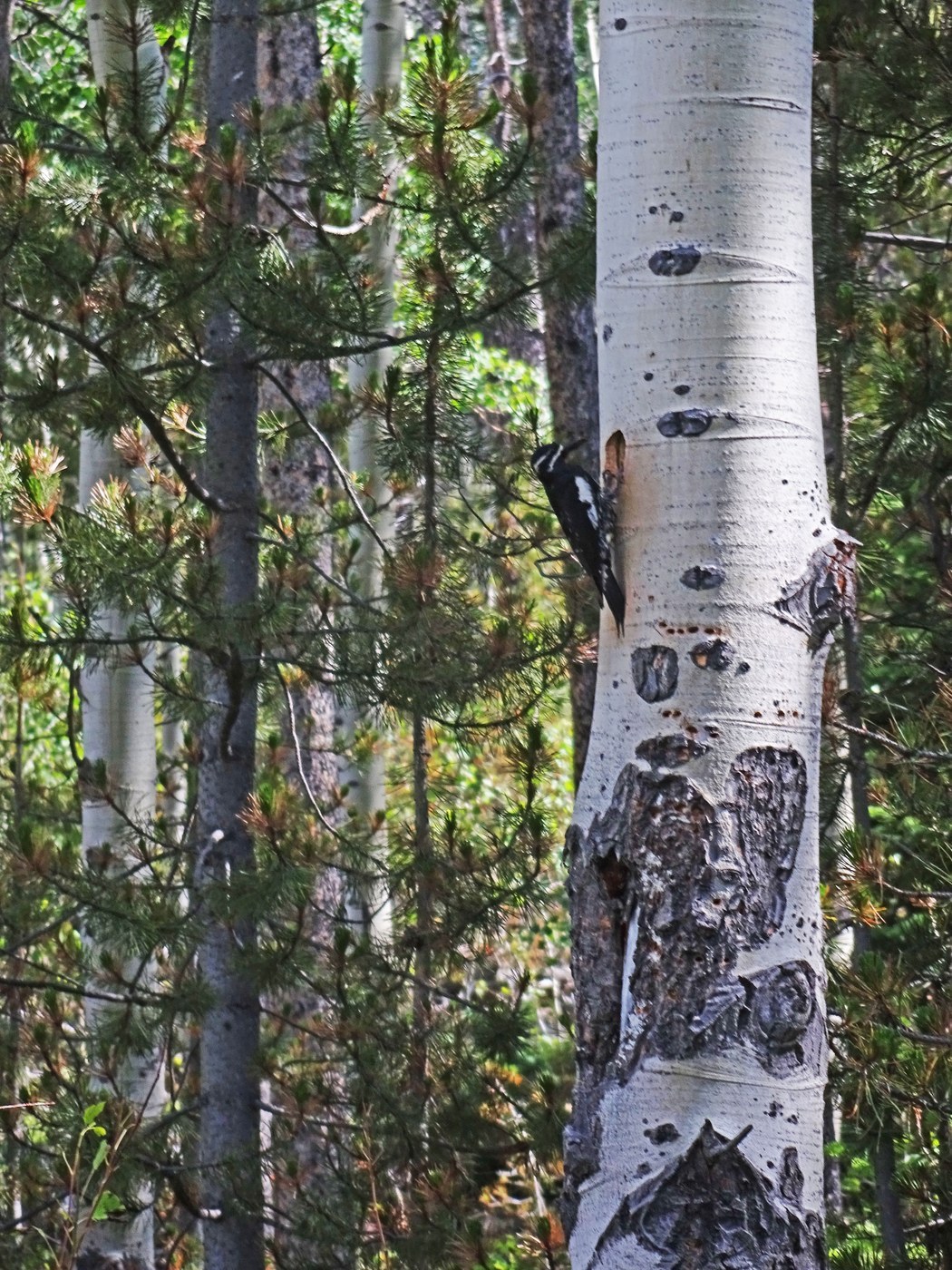
Williamson's Sapsucker
Strongly sexually dimorphic body feathers, glossy black or finely barred brown

Yellow-crowned Woodpecker
Contour and flight feathers

White Woodpecker
Mostly white body feathers with contrasting black wings and back

Red-throated Wryneck
Soft, cryptically mottled contour feathers

White-bellied Woodpecker
Large, glossy black contour and flight feathers

White-backed Woodpecker
Barred back feathers rather than a solid white patch
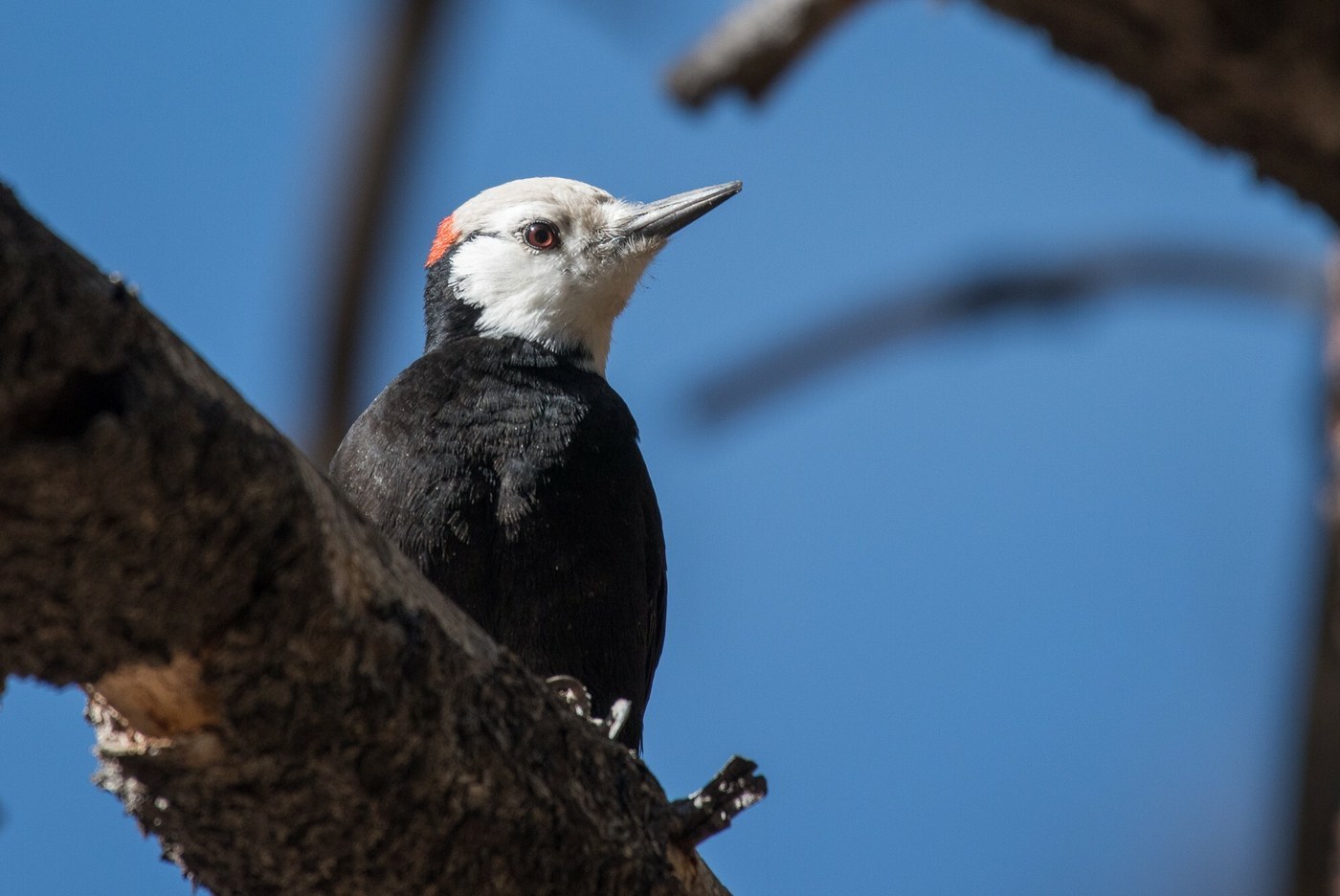
White-headed Woodpecker
Solid black body feathers with an entirely white head