
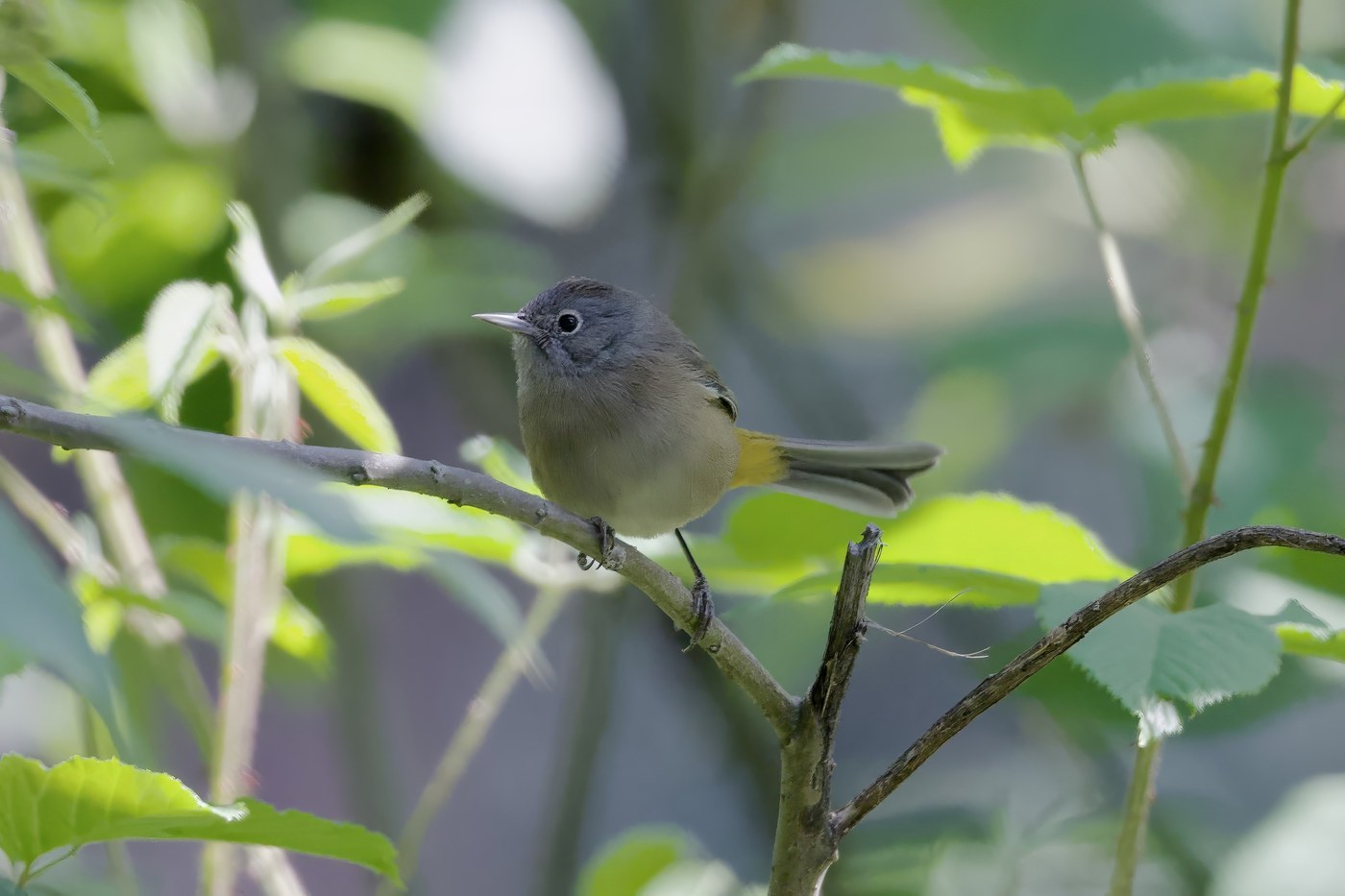
Colima Warbler
Leiothlypis crissalis
A plain gray-brown warbler with a bright rufous-orange undertail patch, found in the United States only in high-elevation oak-pine canyons of a single mountain range.
- Feather type
- Small, soft contour feathers; plain gray-brown, bright rufous undertail
- Colours
- Gray-brown overall, bright rufous-orange undertail coverts, rufous crown patch (concealed)
- Bird size
- Kinglet-sized, ~14 cm
Found a feather like this?
Identify any feather from a photo, free.
Overview
Overview
The Colima Warbler is a plainly plumaged warbler notable mainly for its extremely restricted United States range, occurring reliably only in high-elevation oak-pine canyon woodland of the Chisos Mountains in Big Bend National Park, Texas, with the bulk of its range extending into the mountains of Mexico. Its overall gray-brown coloring is set off by a bright rufous-orange patch under the tail, a useful identifying feature at close range.
Because of its very limited U.S. distribution, this species is a sought-after target for birders, requiring a specific high-elevation hike to encounter within the country.
Identifying the Feather
Feather Identification
- Overall coloring: Body feathers are gray-brown overall, generally plainer and less colorful than many other warblers, lacking any yellow or olive tones on the body.
- Undertail coverts: A bright rufous-orange patch of feathers under the tail is the most distinctive feature, standing out against the otherwise subdued plumage.
- Crown patch: A rufous crown patch is present in adults but usually concealed by overlying feathers, visible mainly at close range or when the crown feathers are disturbed.
- Eye-ring: A thin, pale eye-ring is present, adding subtle facial contrast.
- Wings: Wings are plain, without wing bars.
- Size: Slightly larger than many similarly patterned Leiothlypis warblers, with correspondingly fuller feathers.
Plumage & Molt
Plumage Details
Adult males typically show slightly more developed rufous crown and undertail coloring than females, though the difference is subtle. Immatures are duller overall, with a less vivid rufous undertail patch and reduced or absent crown color, gradually developing more adult-like plumage with age.
A complete molt occurs on the breeding grounds in late summer, and plumage remains fairly stable through the year given the largely resident to short-distance migratory habits of this species within its restricted range.
Habitat & Range
Habitat & Range
Colima Warblers breed in high-elevation oak-pine canyon woodland, generally above a certain elevation threshold, most famously in the Chisos Mountains of Big Bend National Park, Texas, which represents the only reliable U.S. breeding location. The species' broader range extends through the mountains of northern and central Mexico.
Some populations undertake short elevational or latitudinal movements outside the breeding season, generally remaining within Mexico, while the Texas population is present seasonally during the breeding months.
Behavior & Field Notes
Behavior & Field Notes
This warbler forages in oak-pine canyon woodland, gleaning insects from foliage and bark at a range of heights, generally within or below the canopy. It can be somewhat inconspicuous despite its restricted and well-known range, requiring patience to locate.
The nest is built on the ground, often on a slope within its canyon woodland habitat. The song is a trilled series of notes, broadly similar in structure to related Leiothlypis warblers. Because access to its only reliable U.S. location involves a significant elevation gain, sightings are often tied to a specific, well-known hiking route within its national park habitat.
Frequently asked questions
What feather feature best distinguishes a Colima Warbler?
A bright rufous-orange patch under the tail is the most distinctive feature, contrasting with the otherwise plain gray-brown body.
Where can this species reliably be found in the United States?
Only in high-elevation oak-pine canyon woodland of the Chisos Mountains in Big Bend National Park, Texas.
Is the crown patch easy to see on a Colima Warbler?
No, the rufous crown patch is typically concealed by overlying feathers and best seen at close range.
Does the Colima Warbler have wing bars?
No, its wings are plain without wing bars, consistent with its overall subdued plumage.
Colima Warbler guides
In-depth guides for identifying and understanding Colima Warbler.
Other feathers you may enjoy

Yellow-breasted Bunting
Contour and flight feathers, chestnut-and-yellow breeding pattern

Sedge Wren
Tiny streaked crown and back feathers

Yellow-winged Cacique
Glossy black body feathers, yellow wing patch, shaggy crest

Yellow Warbler
Small contour and flight feathers

Yellow-throated Warbler
Small contour and flight feathers

Yellow-throated Vireo
Bright yellow throat and spectacle feathers; olive-green back feathers; two white wing-bar feathers

Yellow-rumped Warbler
Small contour and flight feathers

Yellow-hooded Blackbird
Contrasting hood and body feathers

Yellow-headed Blackbird
Glossy black body plumage with a bright yellow head and breast

Yellow-eyed Junco
Contour and flight feathers

Yellow-fronted Canary
Small, smooth body plumage

Yellow-breasted Greenfinch
Compact, smooth body plumage