

Common Ground Dove
Columbina passerina
One of the smallest doves in North America, a diminutive, scaly-patterned bird that flushes from the ground to reveal a flash of rufous in the wings.
- Feather type
- Small, scaly-patterned body feathers; short flight feathers with a rufous flash
- Colours
- Grayish-brown with scaly markings and a rufous wing patch
- Bird size
- Very small dove, ~16-18 cm
Found a feather like this?
Identify any feather from a photo, free.
Overview
The Common Ground Dove is a tiny dove found across the southern United States, Mexico, Central America, and parts of South America, notable for its small size and scaly plumage pattern. It spends much of its time walking or foraging on the ground and often goes unnoticed until it flushes to reveal a bright rufous flash in the wings.
Identifying the Feather
Flight feathers: short and rounded, with a bright rufous-chestnut patch on the primaries that is concealed at rest but flashes conspicuously in flight. Tail feathers: short, dark, and squared, lacking the white corners of larger doves. Body feathers: grayish-brown overall with a distinct scaly pattern created by dark crescent-shaped edges on the feathers of the head and breast, along with small dark spots on the wing coverts. This small size, scaly-patterned plumage, and rufous wing flash together distinguish Common Ground Dove feathers from the larger, plain-breasted Mourning Dove and Inca Dove.
Plumage & Molt
Sexes differ subtly: males show a light pinkish-gray wash on the head and breast with the scaly pattern, while females are duller grayish-brown overall. Both sexes share the rufous primary patch and dark-spotted wing coverts. Juveniles are more heavily scaled and duller, gradually acquiring adult coloration after their first molt. There is no strong seasonal plumage variation.
Habitat & Range
Common Ground Doves inhabit open scrub, farmland, dry grassland, and open woodland edges across the southern United States, Mexico, Central America, and into South America and the Caribbean. Most populations are resident, though some northern birds may shift southward in the coldest months.
Behavior & Field Notes
This dove forages almost entirely on the ground, walking with a bobbing head motion while picking up small seeds. It builds a simple, flimsy nest of twigs and grass, sometimes placed directly on the ground or low in a shrub. Its call is a soft, repetitive cooing note, often described as monotonous, given from a low perch, and the species tends to flush low and fly only a short distance before dropping back to the ground.
Frequently asked questions
What feather feature helps confirm a Common Ground Dove identification?
Its very small size combined with a scaly pattern on the head and breast feathers, along with a bright rufous patch on the flight feathers visible in flight, is diagnostic.
How can I tell this species apart from the Inca Dove?
The Common Ground Dove shows a bolder rufous wing patch and a shorter, squared tail without white edges, while the Inca Dove has a longer tail edged in white and a more uniformly scaly appearance overall.
Do male and female feathers differ?
Males typically show a light pinkish-gray wash on the head and breast, while females appear duller and more uniformly grayish-brown, though both share the rufous wing patch.
Where would this species typically be found?
In open scrub, farmland, and dry grassland habitats across the southern United States, Mexico, Central America, and parts of South America and the Caribbean.
Common Ground Dove guides
In-depth guides for identifying and understanding Common Ground Dove.

Other feathers you may enjoy

Victoria Crowned Pigeon
Large lace-like fan crest plumes over dense body contour feathers

Plain Pigeon
Contour feathers, plain and uniformly toned, with a white wing patch

Zenaida Dove
Contour and flight feathers, faint iridescent sheen on neck

Pink Pigeon
Soft contour feathers with graduated tail

Nicobar Pigeon
Long, hackle-like elongated neck feathers with iridescent sheen
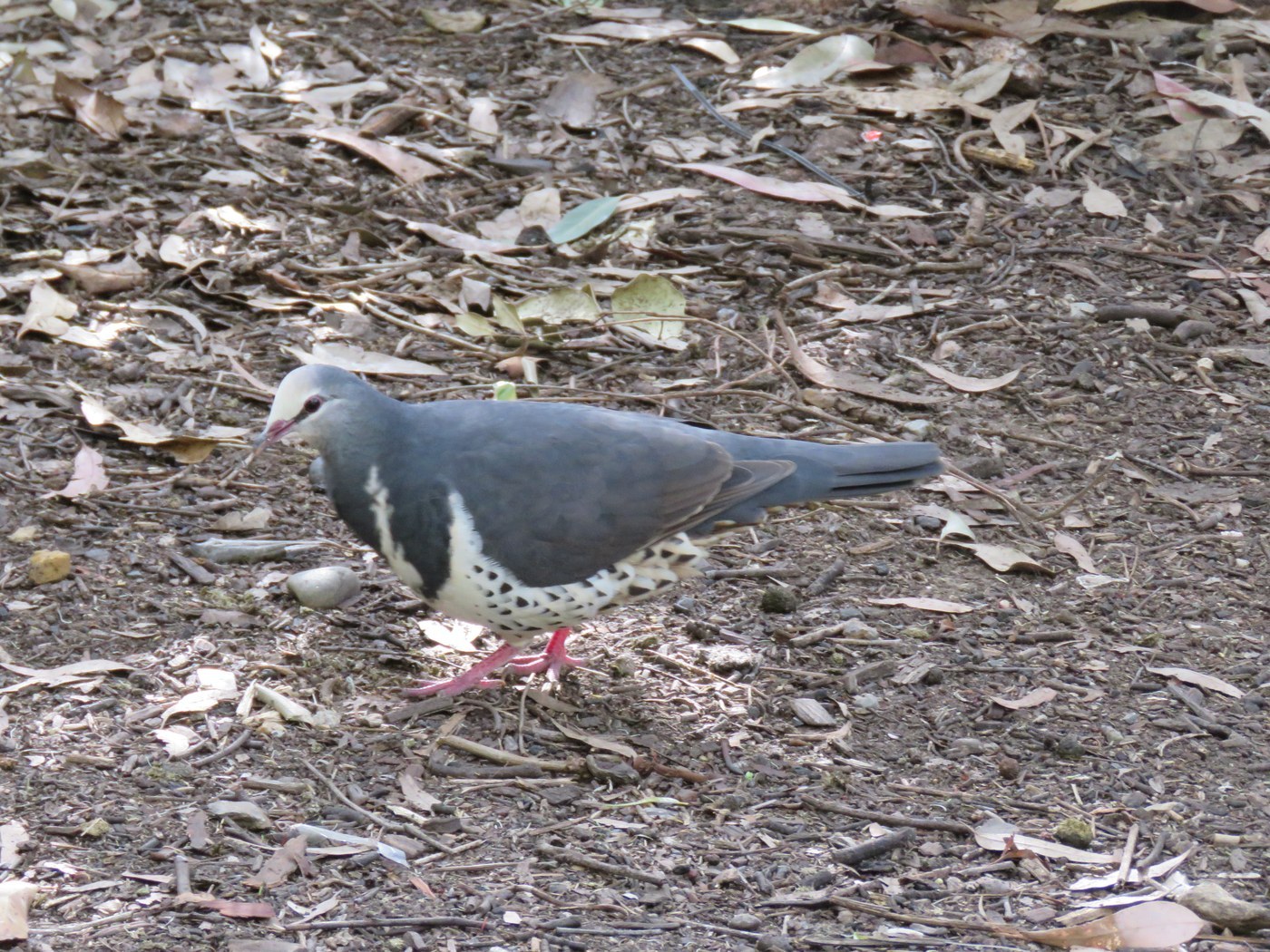
Wonga Pigeon
Dense, soft body contour feathers over a stocky frame

Squatter Pigeon
Dense, cryptic body contour feathers with a bold facial pattern

White-winged Dove
Broad, sturdy flight feathers with a bold white wing stripe

Western Crowned Pigeon
Rounded fan crest plumes over dense soft body feathers

Snow Pigeon
Dense insulating body contour feathers with a bold white rump and belly patch

Zebra Dove
Contour feathers with bold, extensive black-and-white barring

Scaly-naped Pigeon
Contour feathers with iridescent scaled nape pattern