

Common Merganser
Mergus merganser
The Common Merganser is a large, sleek fish-eating duck whose male combines a glossy dark green head with an almost entirely white body faintly tinged pink.
- Feather type
- Large diving-duck body and head feathers
- Colours
- Glossy dark green head, white body with pinkish tinge, black back
- Bird size
- Large, ~58-72 cm
Found a feather like this?
Identify any feather from a photo, free.
Overview
Overview
The Common Merganser, known as the Goosander in parts of its Eurasian range, is the largest of the mergansers, favoring clear rivers, lakes, and reservoirs. Breeding males show a smooth, glossy dark green head, a black back, and a strikingly clean white body that can show a subtle salmon-pink wash early in the season. Females have a reddish-brown crested head sharply set off from a gray body by a clean white throat and chin, an important field mark distinguishing them from the similar Red-breasted Merganser.
Identifying the Feather
Feather Identification
- Head-neck demarcation: Females show a sharp, clean-cut boundary between the reddish-brown head/neck feathering and the pale gray body, unlike the more gradual blending seen in Red-breasted Merganser.
- Male body color: The male's underparts appear nearly pure white, sometimes with a faint pinkish tinge, lacking the vermiculated gray flanks of Red-breasted Merganser.
- Crest shape: Both sexes show a crest, but it is looser and less shaggy than the double-pointed crest of the Red-breasted Merganser.
- Bill and head shape context: A straight, thin, serrated bill paired with a smoothly rounded head shape complements the body feather pattern for identification.
- Wing pattern: A large white patch on the inner wing is visible in flight, more extensive in males than females.
Plumage & Molt
Plumage Notes
Breeding males show a glossy dark green head, black back, and clean white underparts, sometimes tinged pink. Females have a rusty-brown crested head, gray body, and a well-defined white chin and throat. Eclipse males resemble females but often retain a darker back. The species undergoes a complete post-breeding molt, with a flightless period while new flight feathers grow in. Juveniles resemble females, and young males acquire full adult head and body coloration over time.
Habitat & Range
Habitat & Range
Common Mergansers breed along clear rivers, lakes, and large ponds across the northern forested regions of North America and Eurasia, often nesting in tree cavities or other sheltered sites near water. In winter, they move to large rivers, lakes, and reservoirs that remain open, sometimes forming sizeable flocks. The species is migratory across much of its range but can remain resident where open water persists through the colder months.
Behavior & Field Notes
Behavior & Field Notes
Common Mergansers are strong swimmers and divers, pursuing fish underwater with their thin, serrated bills. They often forage cooperatively, with groups working together to herd fish into shallower water. Nesting occurs in tree cavities or other sheltered sites near rivers and lakes, and broods of ducklings are frequently seen following the female closely. The species is relatively quiet, with occasional low croaking or grunting calls, and flight is fast and direct, typically low over the water in a line formation.
Frequently asked questions
How can I distinguish a Common Merganser feather pattern from a Red-breasted Merganser?
Look for a sharp, clean boundary between the female's reddish head and gray body, and an almost pure white male underside, both differing from the more blended, vermiculated pattern of the Red-breasted Merganser.
What color is a male Common Merganser's body?
Nearly pure white, sometimes with a faint pink tinge, contrasting with a dark glossy green head and black back.
Does the Common Merganser have a crest?
Yes, both sexes show a crest, though it is looser and less pronounced than the shaggy double crest of the Red-breasted Merganser.
What habitat is most likely to have Common Merganser feathers?
Clear rivers, large lakes, and reservoirs, where the species forages for fish and often rests along shorelines.
Common Merganser guides
In-depth guides for identifying and understanding Common Merganser.

Other feathers you may enjoy

Mallard
Wing (speculum), body, and tail feathers

Spectacled Eider
Large sea-duck body feathers with distinctive eye-ring patches

Canada Goose
Body and flight feathers
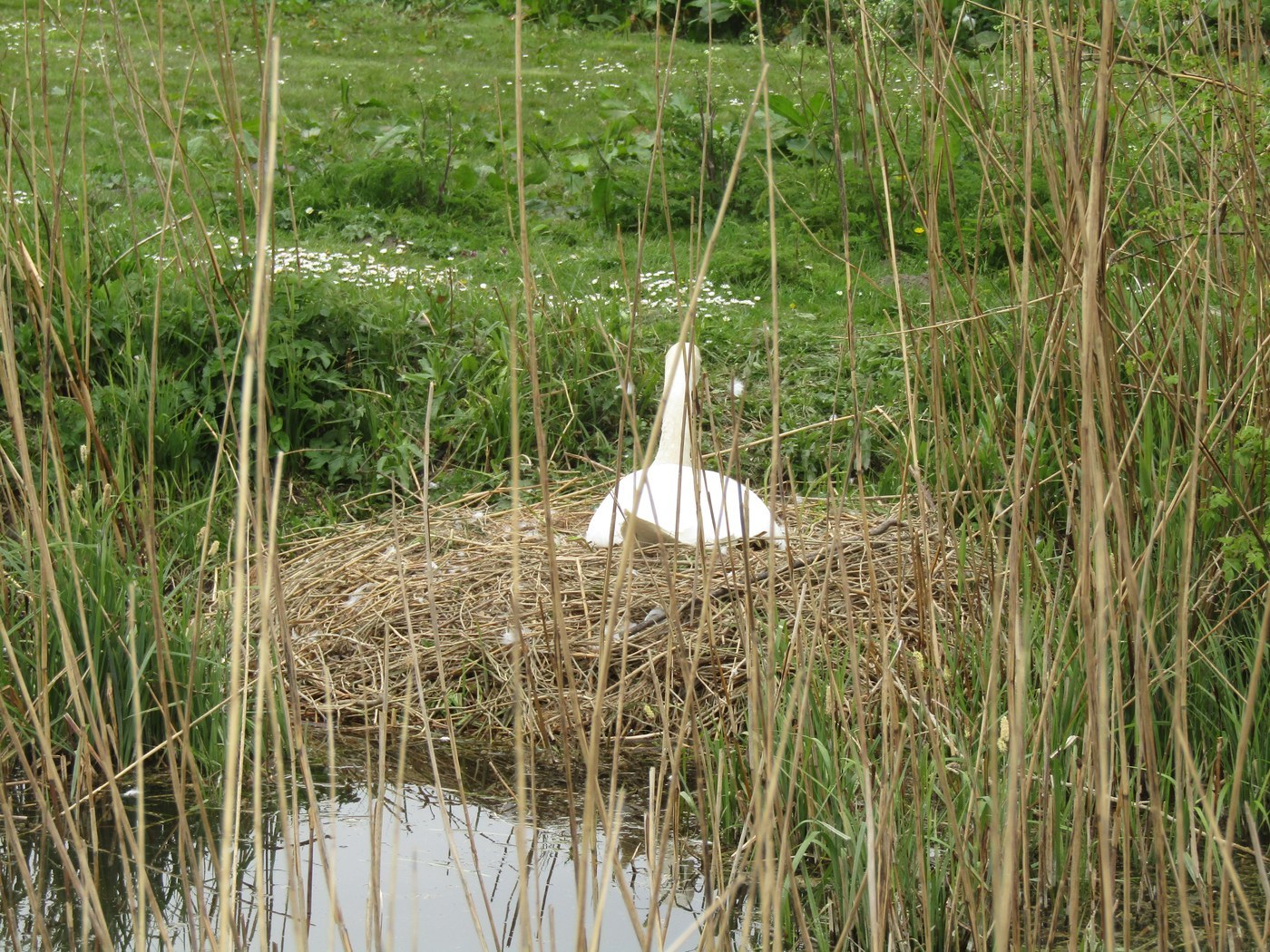
Mute Swan
Body (contour) and flight feathers

Wood Duck
Iridescent crest feathers; ornate scapular and flank feathers; white teardrop facial feathers (female)
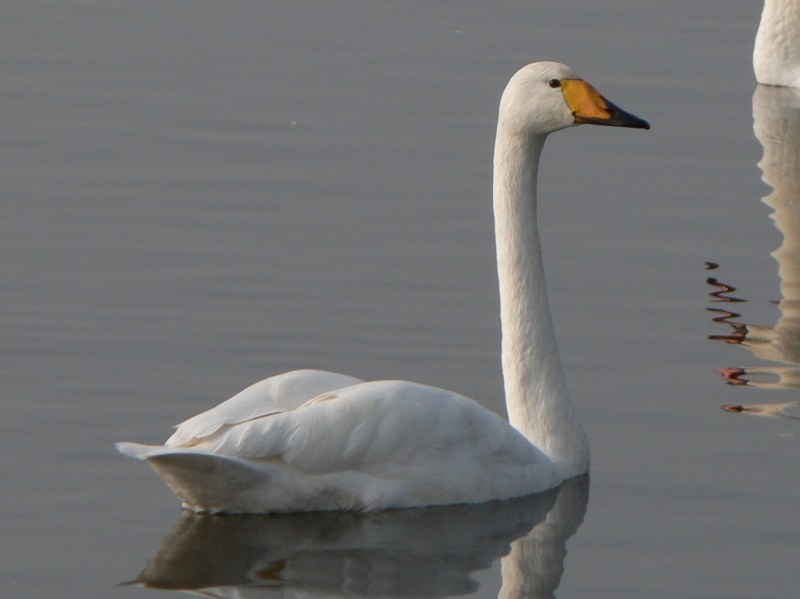
Whooper Swan
Contour and flight feathers

White-winged Scoter
Large sea-duck body feathers with a white wing patch

Ruddy Duck
Stiff tail feathers and compact body plumage

Ross's Goose
Contour and flight feathers

White-cheeked Pintail
Contour and elongated tail feathers

Torrent Duck
Dense, sleek contour feathers; stiff, pointed tail feathers used for bracing against rocks

Tundra Swan
Contour and flight feathers