
Crested Tit
Lophophanes cristatus
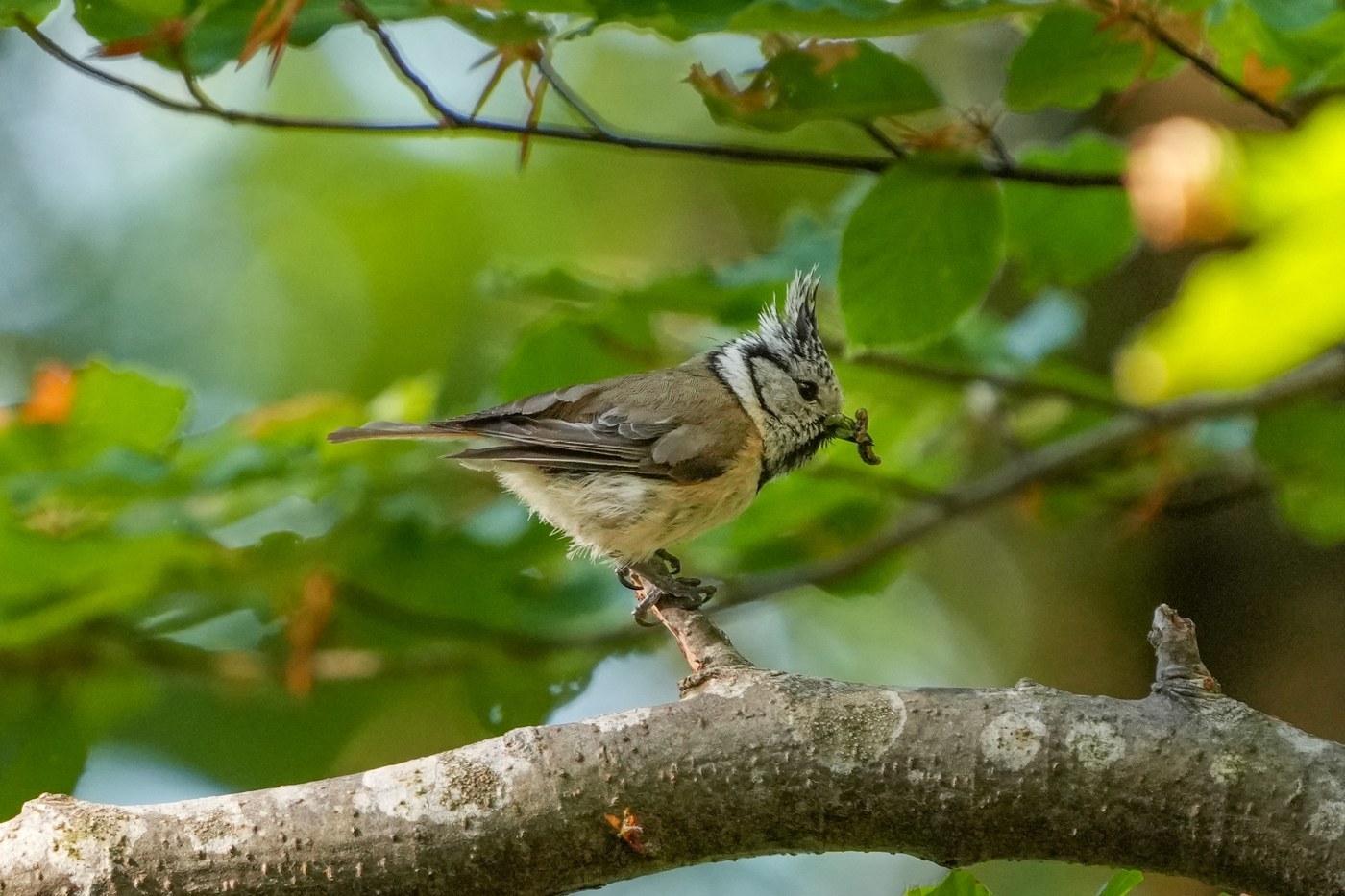
The Crested Tit is a small European woodland bird easily recognized by its pointed, black-and-white speckled crest, a feature unique among the continent's tits.
- Feather type
- Distinctive pointed crest feathers plus soft body plumage
- Colours
- Black-and-white speckled crest, brown-gray back, buffy-white underparts
- Bird size
- Small tit, ~11-12 cm
Found a feather like this?
Identify any feather from a photo, free.
Overview
Overview
The Crested Tit is a distinctive small tit of European conifer forests, best known for the pointed, speckled crest that gives the species its name. It is a non-migratory bird strongly tied to pine and spruce woodland, particularly old-growth stands with abundant dead wood for nesting.
- Only crested member of the tit family in Europe
- Closely tied to coniferous forest, especially Scots pine
- Excavates its own nest cavities in soft, rotten wood
Identifying the Feather
Feather Identification
The Crested Tit's most identifiable feathers are those of its pointed crest.
- Crest feathers: Elongated, pointed, black-tipped with white speckling, forming a raised peak on the crown
- Body feathers: Soft, brownish-gray above and pale buffy-white below, without bold markings
- Face feathers: White cheek patch bordered by a black eye-line and black crescent behind the ear coverts
- Tail feathers: Plain grayish-brown, unbarred
- The speckled, pointed crest feathers are unmistakable and distinguish this species from all other similarly sized European tits, none of which show a crest
Plumage & Molt
Plumage, Sex & Age Differences
Male and female Crested Tits are alike in plumage, both showing the diagnostic black-and-white speckled crest, black-bordered white cheek, and warm brownish upperparts. Juveniles have a shorter, less defined crest and duller facial markings that sharpen after the first molt. Adults undergo a single complete molt following the breeding season.
Habitat & Range
Habitat & Range
Crested Tits are resident across much of northern, central, and parts of southern Europe, favoring coniferous and mixed forests, especially those with mature pine or spruce and standing dead wood. In Britain, the species is restricted to native Scots pine forest in Scotland. It does not migrate and remains on or near its breeding territory year-round.
Behavior & Field Notes
Behavior, Voice & Field Notes
Crested Tits forage through conifer branches for insects and, outside the breeding season, cached seeds, often joining mixed flocks with other tits and goldcrests. Their call is a distinctive purring trill, quite different from the whistles of other tits. Pairs excavate their own nest holes in soft, decaying stumps or dead branches, a trait that ties the species closely to unmanaged, old-growth conifer stands.
Frequently asked questions
What feather feature makes the Crested Tit unmistakable?
Its pointed, black-and-white speckled crest, unique among European tits.
What habitat is best for finding Crested Tit feathers?
Mature coniferous forest, particularly old pine or spruce stands with dead wood.
Do Crested Tits migrate?
No, they are non-migratory residents that stay near their breeding territory year-round.
How does a Crested Tit build its nest?
It excavates its own cavity in soft, rotten wood rather than using an existing hole.
Crested Tit guides
In-depth guides for identifying and understanding Crested Tit.
Other feathers you may enjoy

Yellow-breasted Bunting
Contour and flight feathers, chestnut-and-yellow breeding pattern

Sedge Wren
Tiny streaked crown and back feathers

Yellow-winged Cacique
Glossy black body feathers, yellow wing patch, shaggy crest

Yellow Warbler
Small contour and flight feathers

Yellow-throated Warbler
Small contour and flight feathers

Yellow-throated Vireo
Bright yellow throat and spectacle feathers; olive-green back feathers; two white wing-bar feathers

Yellow-rumped Warbler
Small contour and flight feathers

Yellow-hooded Blackbird
Contrasting hood and body feathers

Yellow-headed Blackbird
Glossy black body plumage with a bright yellow head and breast

Yellow-eyed Junco
Contour and flight feathers

Yellow-fronted Canary
Small, smooth body plumage

Yellow-breasted Greenfinch
Compact, smooth body plumage