
Diamond Dove
Geopelia cuneata
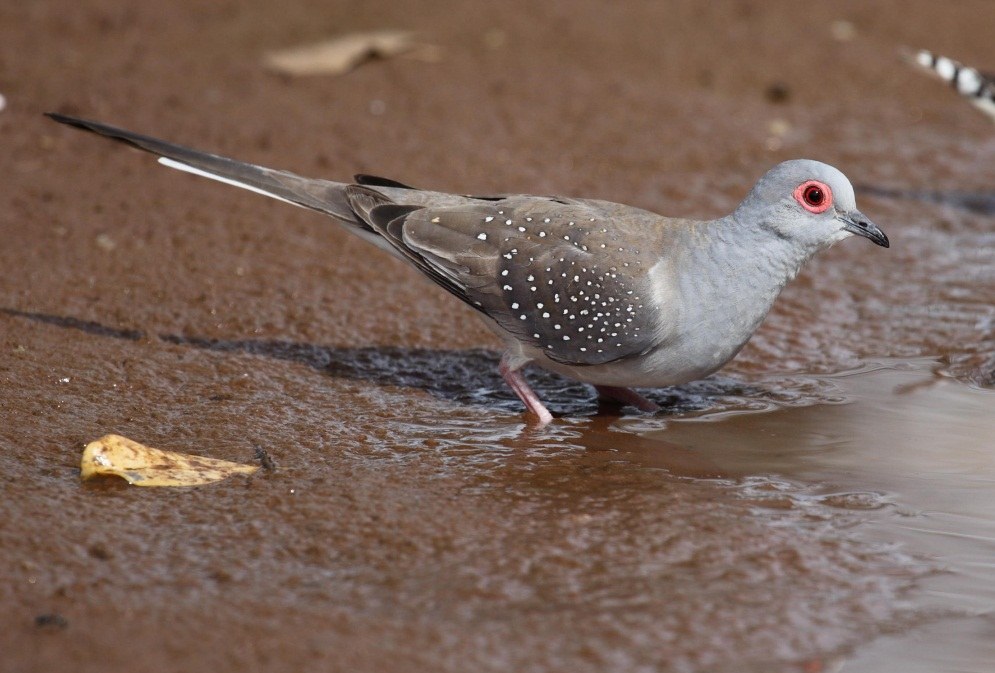
One of the smallest doves in the world, a soft gray-brown Australian desert species with tiny white-spotted wings and a bright red ring around the eye.
- Feather type
- Fine contour feathers with small white-spotted wing coverts
- Colours
- Soft gray-brown body with small white spots on the wing coverts and a bright red eye-ring
- Bird size
- Very small dove, ~19-21 cm
Found a feather like this?
Identify any feather from a photo, free.
Overview
The Diamond Dove is among the smallest members of the dove family and is found across the arid and semi-arid interior of Australia, generally near permanent or semi-permanent water sources. It has a soft gray body with a pinkish-brown wash, small white spots scattered across the wing coverts that resemble tiny diamonds, and a distinctive bright red ring of bare skin around the eye. It is a popular species in aviculture in addition to its wild range.
Identifying the Feather
- Wing covert feathers: gray-brown with small, evenly scattered white spots, giving a diamond-like dotted pattern
- Body feathers: soft gray with a subtle pinkish wash on the breast, notably small and delicate compared to most doves
- Tail feathers: long relative to body size, dark gray with white outer edges visible in flight
- Eye-ring: bright red bare skin, a key supporting feature alongside the spotted wings
- Compare with the Peaceful Dove, which is larger with barred rather than spotted plumage on the neck and breast
Plumage & Molt
Sexes are similar, though males often show slightly more numerous or brighter white wing spots than females. Juveniles lack the spotted wing pattern almost entirely and show duller, more uniform gray-brown plumage until their first molt. Adults undergo regular molts and can breed opportunistically following rainfall.
Habitat & Range
Diamond Doves are widespread across the arid interior of Australia, typically remaining close to waterholes, rivers, and other reliable water sources in otherwise dry habitat. They show nomadic movements in response to rainfall and water availability rather than a fixed migratory pattern.
Behavior & Field Notes
This dove forages on the ground for small seeds, often in pairs, and depends on regular access to water in its arid habitat. Its call is a soft, mournful cooing. Nests are small, flimsy stick platforms built low in shrubs or trees near water. Its diminutive size and tameness make it a familiar sight at outback waterholes.
Frequently asked questions
What is the clearest feather feature for identifying the Diamond Dove?
The small white spots scattered across the gray-brown wing coverts, resembling tiny diamonds, are the most distinctive feature.
Does the red eye-ring help with identification?
Yes, the bright red bare skin around the eye is a useful supporting feature alongside the spotted wing pattern, though it is not a feather itself.
How do juvenile feathers differ from adult feathers?
Juveniles lack the white wing spotting almost entirely, showing duller, more uniform plumage until after their first molt.
How can this species be told from the Peaceful Dove?
The Diamond Dove shows white-spotted wing coverts, while the Peaceful Dove instead shows fine barring on the neck and breast and lacks the spotted wing pattern.
Diamond Dove guides
In-depth guides for identifying and understanding Diamond Dove.
Other feathers you may enjoy

Victoria Crowned Pigeon
Large lace-like fan crest plumes over dense body contour feathers

Plain Pigeon
Contour feathers, plain and uniformly toned, with a white wing patch

Zenaida Dove
Contour and flight feathers, faint iridescent sheen on neck

Pink Pigeon
Soft contour feathers with graduated tail

Nicobar Pigeon
Long, hackle-like elongated neck feathers with iridescent sheen
Wonga Pigeon
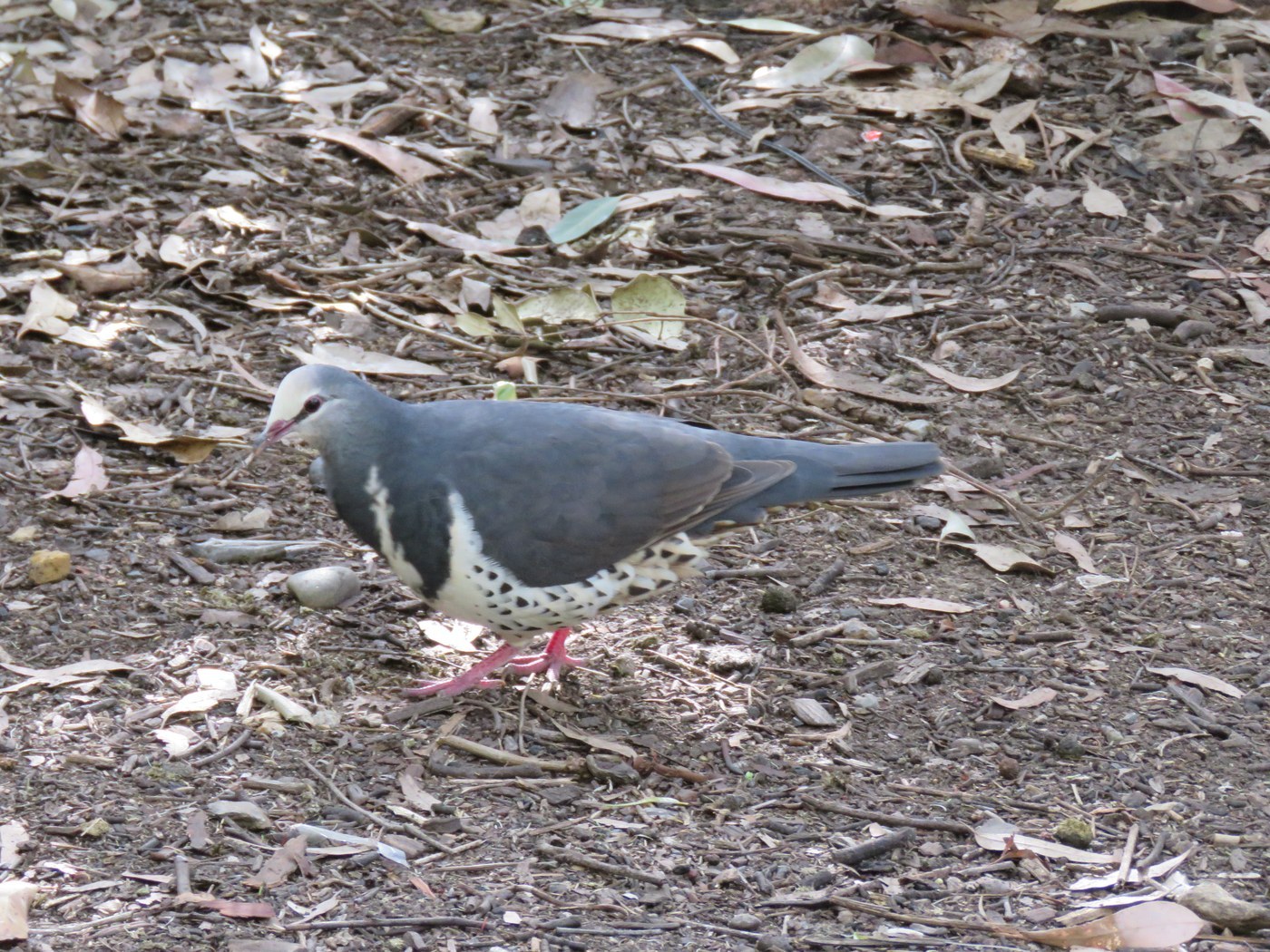
Dense, soft body contour feathers over a stocky frame

Squatter Pigeon
Dense, cryptic body contour feathers with a bold facial pattern

White-winged Dove
Broad, sturdy flight feathers with a bold white wing stripe

Western Crowned Pigeon
Rounded fan crest plumes over dense soft body feathers

Snow Pigeon
Dense insulating body contour feathers with a bold white rump and belly patch

Zebra Dove
Contour feathers with bold, extensive black-and-white barring

Scaly-naped Pigeon
Contour feathers with iridescent scaled nape pattern