
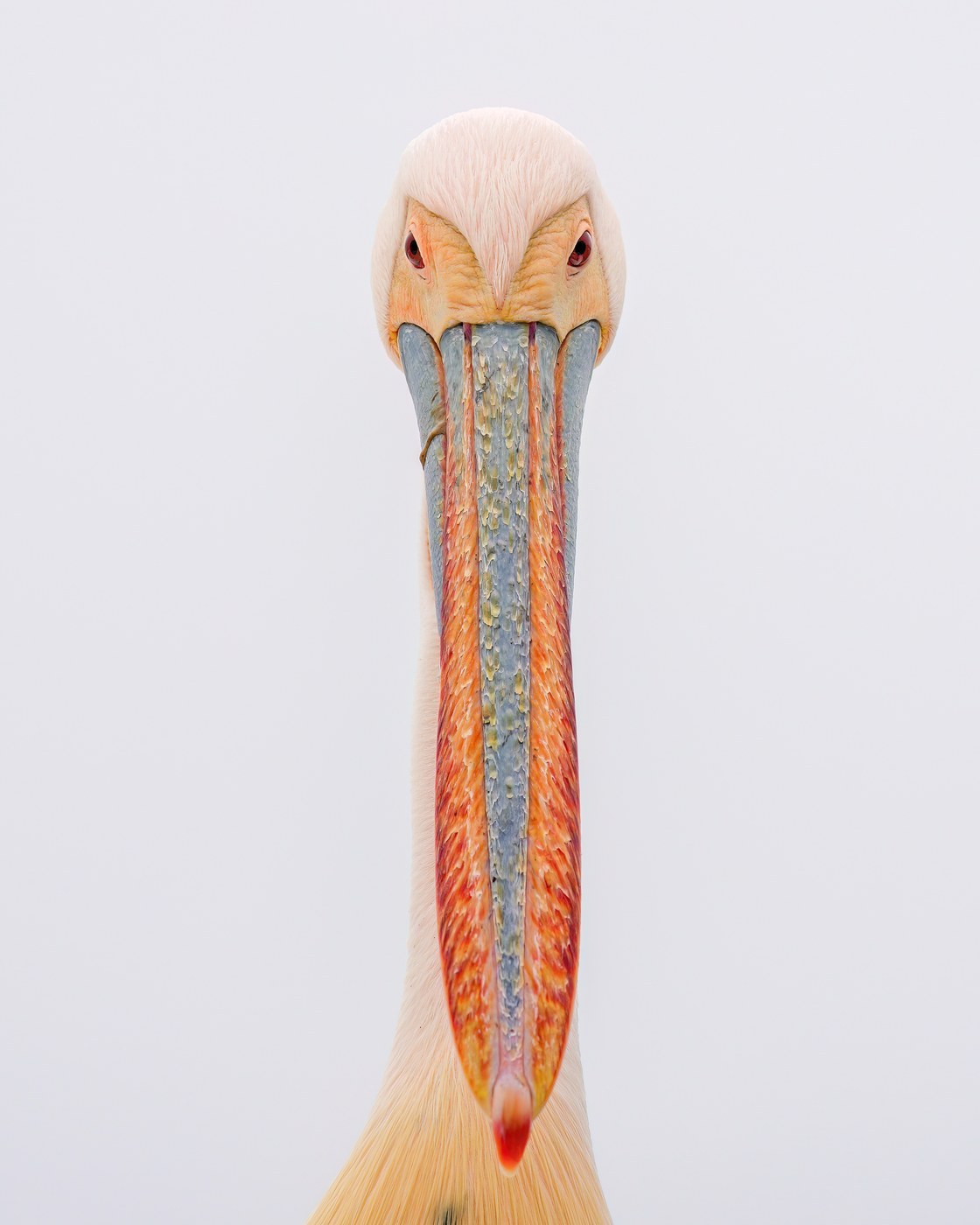
Great White Pelican
Pelecanus onocrotalus
A massive white pelican with a subtle pinkish tinge, black flight feathers, and a tufted nape crest, found across freshwater and coastal wetlands of Africa and Eurasia.
- Feather type
- Very large body feathers and broad flight feathers
- Colours
- White with a pinkish tinge, black flight feathers, pink facial skin
- Bird size
- Very large, ~140-180 cm
Found a feather like this?
Identify any feather from a photo, free.
Overview
Overview
The Great White Pelican is a huge waterbird of Africa and Eurasia, similar in general pattern to the American White Pelican but with a distinctive soft pinkish tinge to the plumage and a small tuft of nape feathers forming a short crest. Pink facial skin and legs during the breeding season add further color to this large bird.
It is a highly social species, often seen in large flocks that cooperatively herd fish while swimming, and breeds in dense colonies on islands and wetland sites.
Identifying the Feather
Great White Pelican feathers are large, given the bird's great size, and mostly white with subtle pink tones.
- Body feathers: White overall, often with a faint pinkish tinge, particularly noticeable during the breeding season.
- Flight feathers: Primaries and secondaries are black, contrasting with the pale body plumage.
- Nape feathers: A small tuft of elongated feathers forms a short, loose crest on the back of the head, absent in the American White Pelican.
- Compared to American White Pelican: The pinkish tinge and nape crest tuft distinguish Great White Pelican feathers from the more purely white plumage of its American counterpart.
Plumage & Molt
Adults are white overall with a soft pinkish tinge, black primaries and secondaries, and a short, loose crest of feathers on the nape. Bare facial skin and legs turn pink during the breeding season. Sexes look alike. Juveniles are grayish-brown overall, gradually acquiring white adult plumage over a few years. Molt is completed after breeding, with the pink breeding tones and nape crest most developed just before and during the nesting period.
Habitat & Range
Great White Pelicans breed in colonies on islands and wetland sites across a broad range spanning Africa, southeastern Europe, and parts of Asia, favoring large freshwater lakes, marshes, and coastal lagoons. Populations in some regions are resident while others migrate seasonally between breeding and wintering wetlands, generally avoiding open ocean in favor of large inland and coastal water bodies.
Behavior & Field Notes
This pelican feeds cooperatively while swimming, often forming coordinated groups that herd schooling fish into shallow water before scooping them up in the throat pouch, similar to the American White Pelican's technique. It breeds in large, dense colonies, building a simple ground nest, and typically raises one or two chicks. Calls are low grunting notes given mainly at breeding colonies, with the species largely silent outside the nesting season.
Frequently asked questions
What feather feature distinguishes a Great White Pelican from an American White Pelican?
A subtle pinkish tinge to the body feathers and a tuft of elongated nape feathers forming a small crest, both features the American White Pelican lacks.
Do Great White Pelican feathers change color with the season?
The pinkish tinge and nape crest are most developed around the breeding season, along with pink facial skin and legs, though the black-and-white feather pattern itself stays consistent.
How large are Great White Pelican feathers?
Very large, consistent with the species being one of the largest flying birds, with body and flight feathers sized accordingly.
Where would a Great White Pelican feather likely be found?
Near large freshwater lakes, marshes, and coastal lagoons across Africa, southeastern Europe, and parts of Asia.
Great White Pelican guides
In-depth guides for identifying and understanding Great White Pelican.
Other feathers you may enjoy

Western Gull
Body, flight, and tail feathers
Glaucous Gull
Body, flight, and tail feathers

American Herring Gull
Body, flight, and tail feathers

Great Black-backed Gull
Body, flight, and tail feathers

Common Gull
Body, flight, and tail feathers
Iceland Gull
Body, flight, and tail feathers

Ring-billed Gull
Body, flight, and tail feathers

Glaucous-winged Gull
Body, flight, and tail feathers

Herring Gull
Body, flight, and tail feathers

Lesser Black-backed Gull
Body, flight, and tail feathers

California Gull
Body, flight, and tail feathers
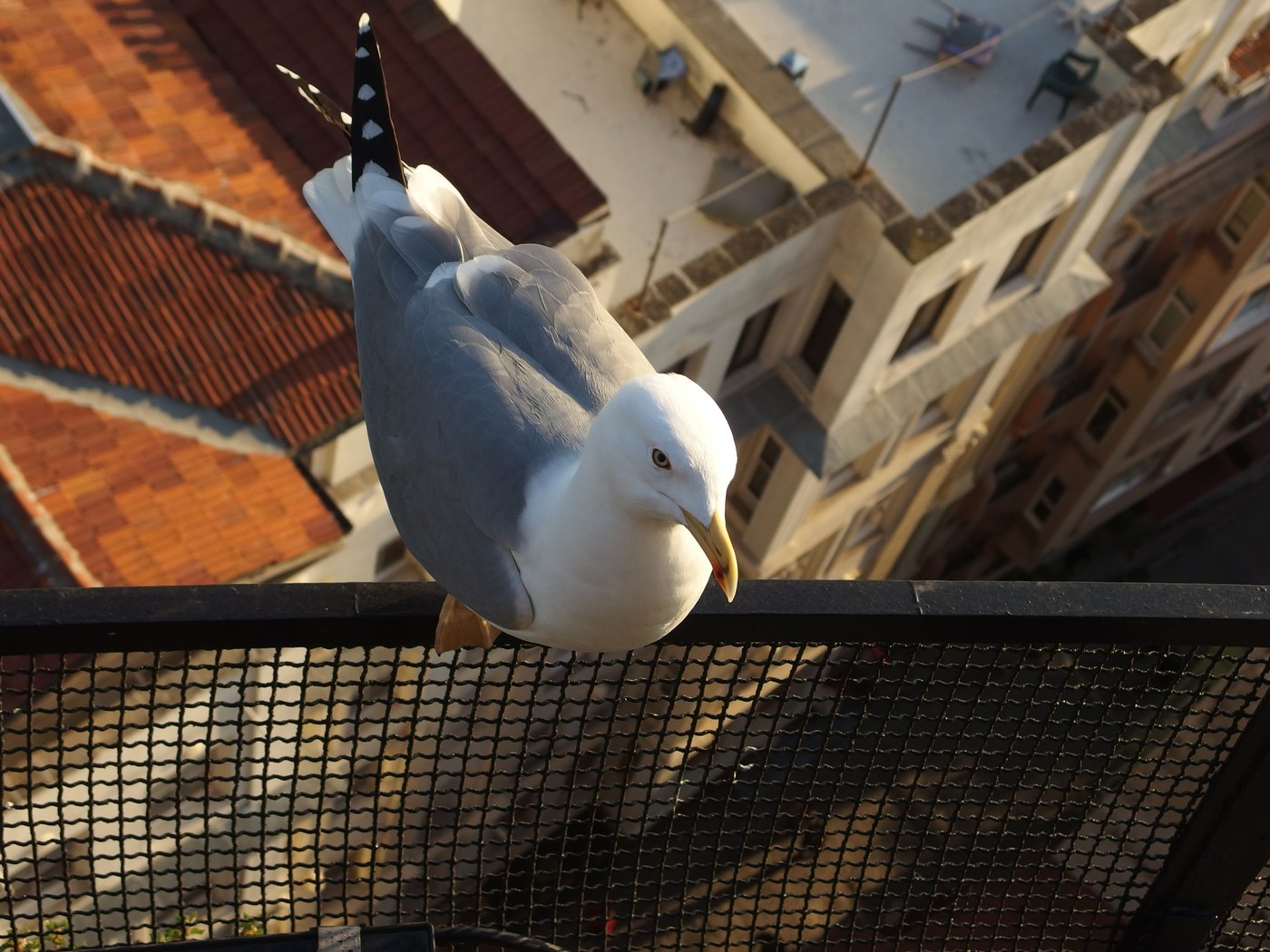
Yellow-legged Gull
Body, wing covert, and flight feathers