
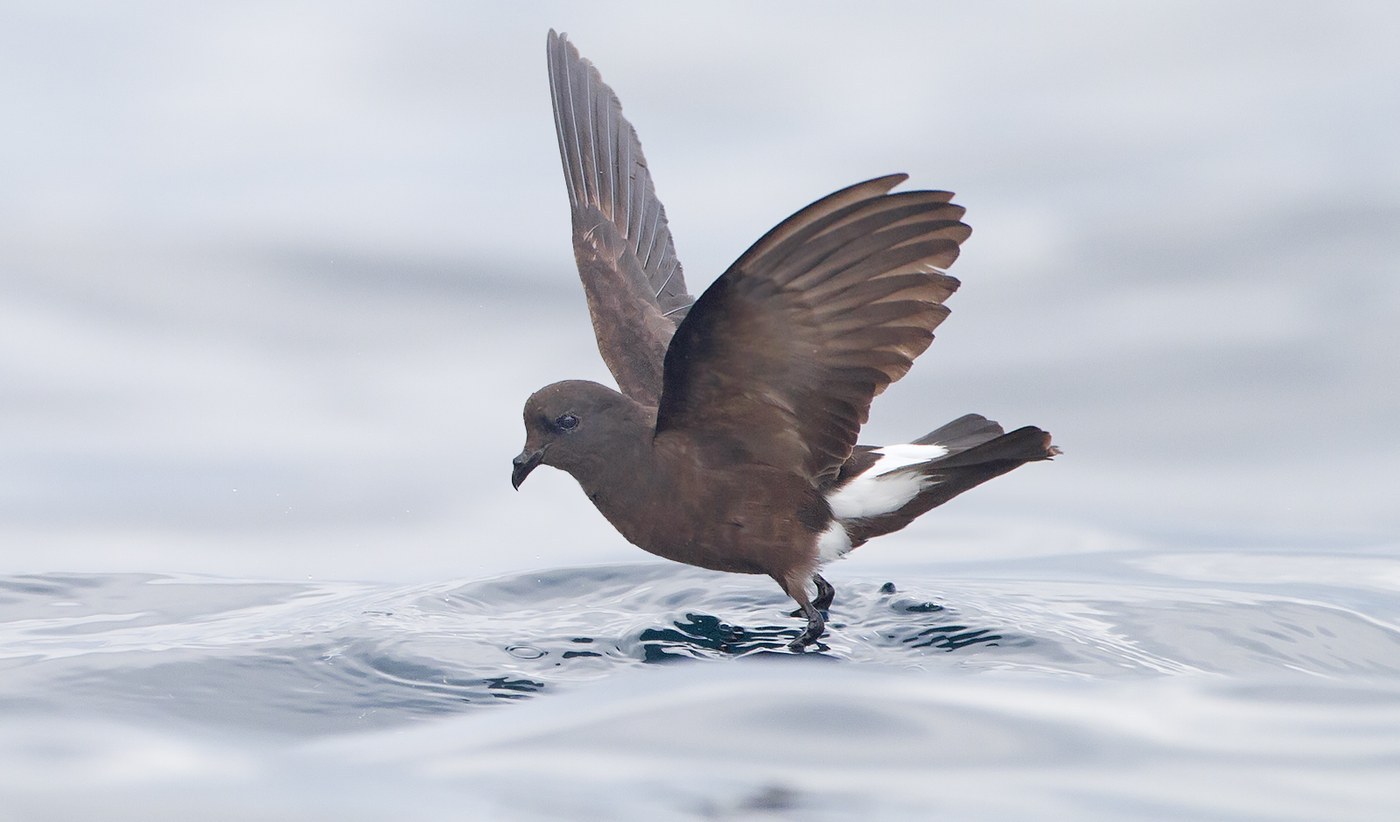
Wilson's Storm-Petrel
Oceanites oceanicus
A tiny, sooty seabird with a bright white rump patch, often seen fluttering and pattering its feet on the sea surface far from land.
- Feather type
- Small, soft flight and body feathers
- Colours
- Sooty black with a white rump band
- Bird size
- Very small, ~15-19 cm
Found a feather like this?
Identify any feather from a photo, free.
Overview
Overview
Wilson's Storm-Petrel is one of the smallest seabirds and among the most numerous, breeding in vast colonies on subantarctic islands and Antarctica before dispersing widely across the world's oceans. Its small size, sooty coloring, and habit of pattering its feet on the water while feeding make it a distinctive sight far offshore.
Despite its diminutive size, it undertakes long-distance movements between breeding and non-breeding areas, and its feathers are correspondingly built for sustained, energy-efficient flight over open water.
Identifying the Feather
A Wilson's Storm-Petrel feather is small and delicate compared to almost any other seabird likely to be encountered.
- Body feathers: Sooty black to sooty brown overall, with a band of white feathers across the rump that stands out sharply against the dark plumage.
- Flight feathers: Primaries and secondaries are blackish and relatively short and rounded for the bird's size, without strong barring.
- Compared to European Storm-Petrel: Wilson's feathers are similar in color but the species is slightly larger overall, and Wilson's shows long legs with yellow-webbed feet that project noticeably beyond the tail in flight, useful when a whole bird or wing is being examined rather than a loose feather.
- Compared to Leach's Storm-Petrel: Leach's is larger with a more forked tail and a paler, more contrasting pale bar on the upperwing; Wilson's wing feathers are more uniformly dark.
Plumage & Molt
Adults are almost entirely sooty black to sooty brown, relieved only by the crisp white rump band and a pale diagonal bar across the upperwing coverts. Sexes look alike. Juveniles closely resemble adults. The molt cycle is completed mostly in the non-breeding range away from the colony, allowing feather replacement without interrupting the demands of breeding.
Habitat & Range
Wilson's Storm-Petrels breed on Antarctic and subantarctic islands and coastlines, nesting in burrows or rock crevices, then migrate widely across the Atlantic, Pacific, and Indian Oceans during the austral winter, reaching well into the Northern Hemisphere in some regions. They are highly pelagic, spending virtually all non-breeding time far from land over open ocean.
Behavior & Field Notes
This species feeds by fluttering low over the water and pattering its feet on the surface while picking small planktonic prey, fish fragments, and oily material from the sea surface, sometimes gathering in loose feeding flocks around fishing vessels. Nesting occurs in burrows or crevices in dense colonies, with adults visiting nests only at night to avoid predators, and a single egg is laid per season. Calls are soft chattering or churring notes given mainly underground at the nest.
Frequently asked questions
What is the easiest way to identify a Wilson's Storm-Petrel feather?
Look for small, sooty black feathers combined with a section showing a crisp white band, which corresponds to the bird's distinctive white rump patch.
How does a Wilson's Storm-Petrel feather differ from a European Storm-Petrel feather?
The two are very similar in color, but Wilson's is a slightly larger bird overall, and structural differences such as leg length are more reliable than feather color alone for separating them.
Why are Wilson's Storm-Petrel feathers so small?
The species is one of the smallest seabirds in the world, so its flight and body feathers are correspondingly tiny and lightweight.
Where would a Wilson's Storm-Petrel feather likely be found?
Almost always far out at sea or occasionally washed ashore after storms, since this species rarely approaches land outside its remote island breeding colonies.
Wilson's Storm-Petrel guides
In-depth guides for identifying and understanding Wilson's Storm-Petrel.
Other feathers you may enjoy

Western Gull
Body, flight, and tail feathers
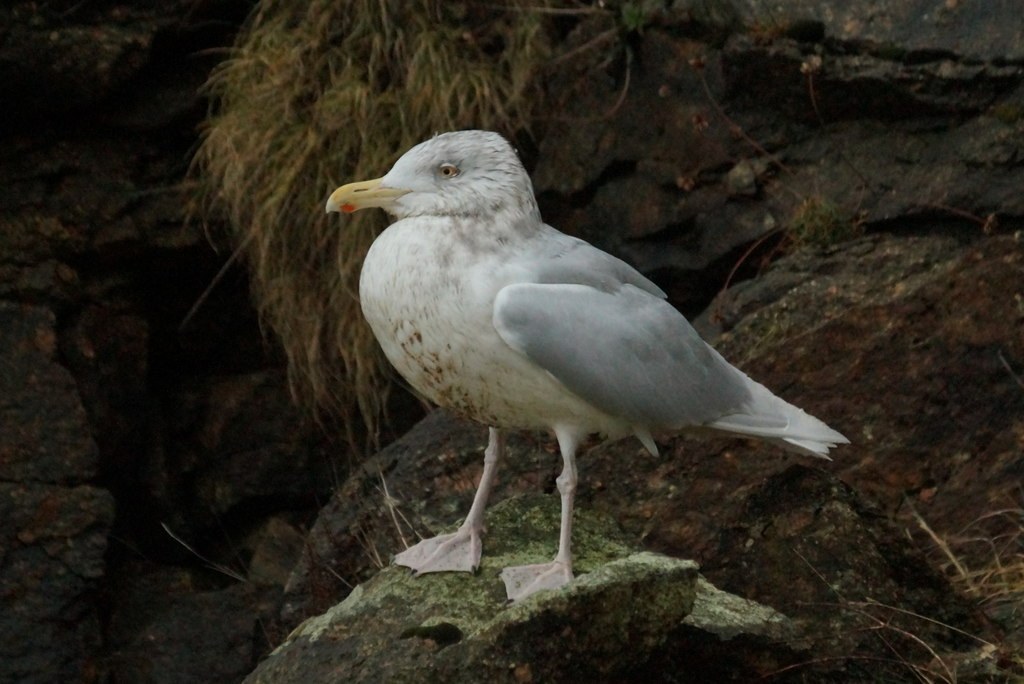
Glaucous Gull
Body, flight, and tail feathers

American Herring Gull
Body, flight, and tail feathers

Great Black-backed Gull
Body, flight, and tail feathers

Common Gull
Body, flight, and tail feathers
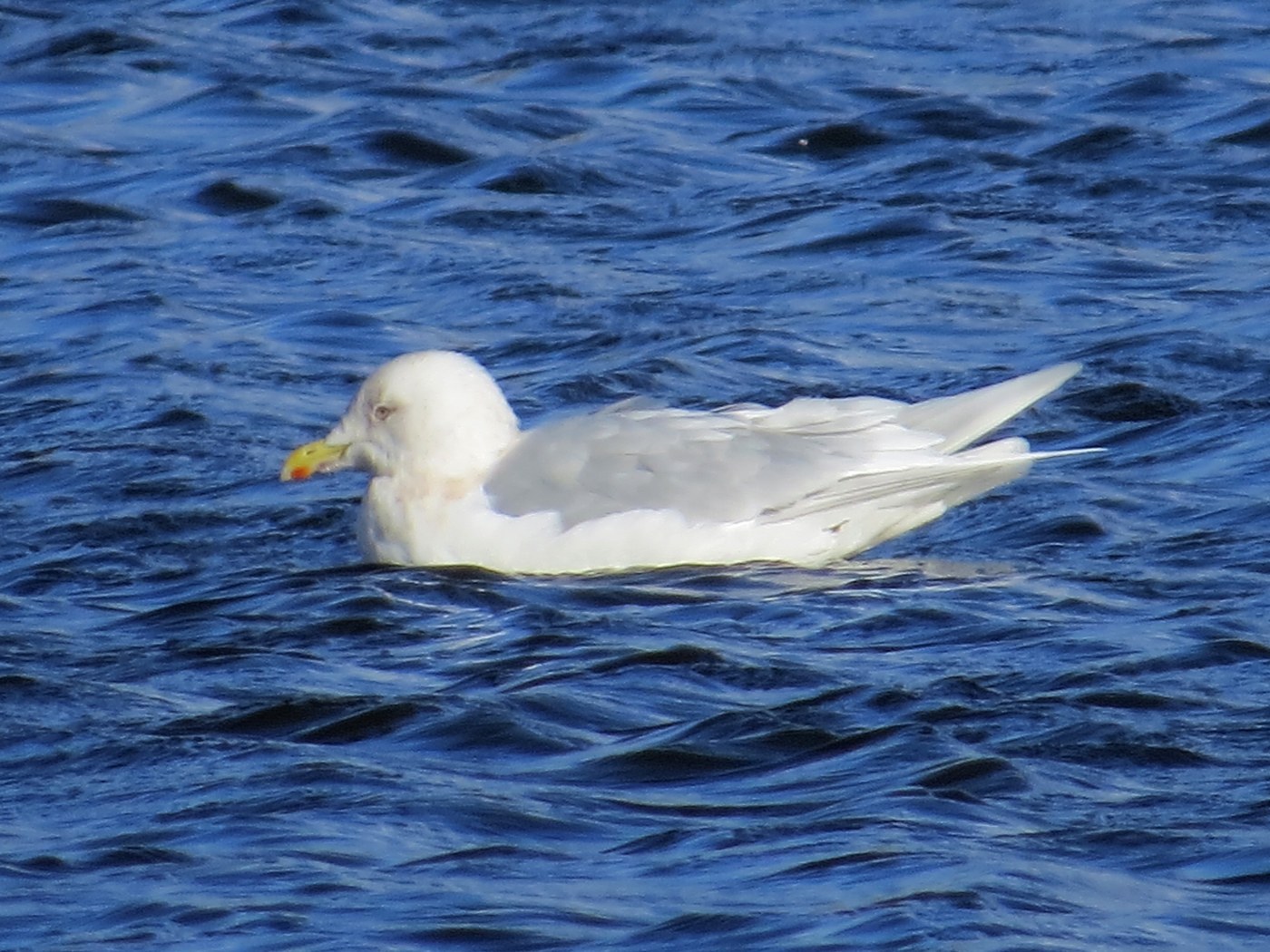
Iceland Gull
Body, flight, and tail feathers

Ring-billed Gull
Body, flight, and tail feathers

Glaucous-winged Gull
Body, flight, and tail feathers

Herring Gull
Body, flight, and tail feathers

Lesser Black-backed Gull
Body, flight, and tail feathers

California Gull
Body, flight, and tail feathers
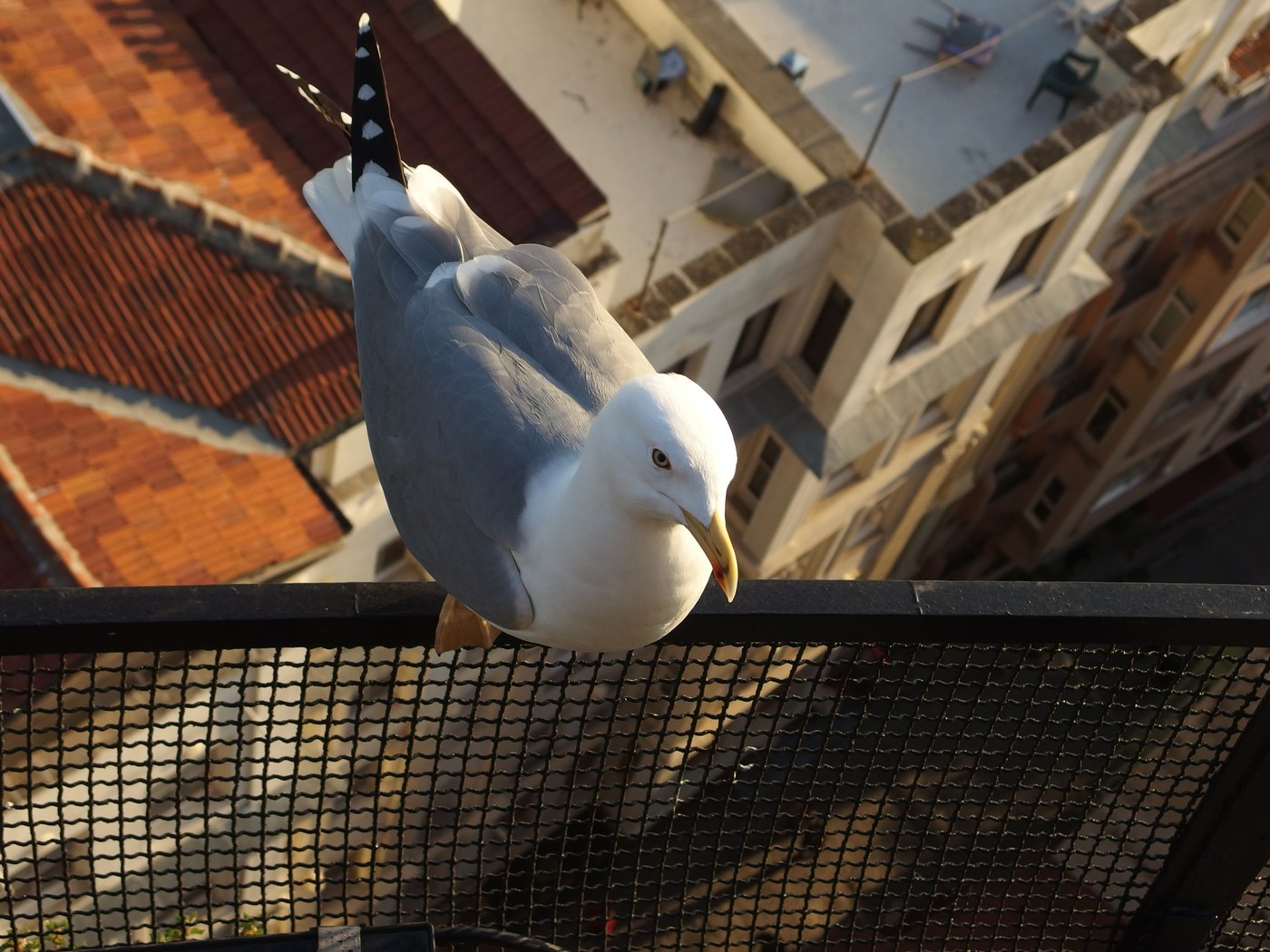
Yellow-legged Gull
Body, wing covert, and flight feathers