

Ground Woodpecker
Geocolaptes olivaceus
A highly unusual, almost entirely terrestrial woodpecker of southern African rocky grassland, with pink-flushed underparts and none of the tree-climbing habits of its relatives.
- Feather type
- Soft, less-stiffened contour and tail feathers
- Colours
- Olive-brown above with pink-flushed underparts
- Bird size
- Medium-large, ~25-30 cm
Found a feather like this?
Identify any feather from a photo, free.
Overview
The Ground Woodpecker is endemic to rocky, grassy hillsides, gorges, and boulder-strewn slopes of South Africa and Lesotho, and is one of the very few largely non-arboreal woodpeckers in the world. Rather than living in trees, it nests and roosts in tunnels excavated into earth banks or rock crevices, and its muted, pinkish plumage reflects camouflage suited to open rocky and grassy habitat rather than tree bark.
Its unusual ecology makes it an outlier among woodpeckers, more reminiscent in habits of some ground-dwelling birds than of typical tree-climbing woodpeckers.
Identifying the Feather
Key features:
- Upperpart feathers are olive-grey to brown, muted and suited to rock and grassland camouflage rather than bark camouflage
- Underparts and rump are washed pink to pinkish-red, a palette unlike the typical black-white-red pattern of most woodpeckers
- Tail feathers are less stiffened than in strongly tree-climbing woodpeckers, since this species rarely climbs vertical trunks
- Longer legs than most woodpeckers, suited to its terrestrial habits
Compared to similar species: the combination of drab olive-brown upperparts, pink-washed underparts, and softer (less stiffened) tail feathers immediately sets this species apart from virtually any tree-climbing woodpecker, which show bolder patterns and stiffer, spike-tipped tail feathers.
Plumage & Molt
Sexes are similar, with males possibly showing slightly brighter pink tones on the underparts. Juveniles are duller and greyer overall, with less pink coloring. A complete annual molt occurs.
Habitat & Range
This species is endemic to rocky, grassy hillsides, gorges, and boulder-strewn slopes of South Africa and Lesotho, largely avoiding trees altogether. It is a non-migratory resident confined to this specialized habitat type.
Behavior & Field Notes
Ground Woodpeckers nest and roost in tunnels excavated into earth banks or crevices between rocks, rather than in tree cavities as with almost all other woodpeckers. They forage on the ground for ants and other insects and typically live in small family groups, communicating with loud calls. This largely terrestrial lifestyle makes the species one of the most unusual members of the woodpecker family worldwide.
Frequently asked questions
How can I identify a Ground Woodpecker feather?
Drab olive-brown upperpart feathers combined with pink-washed underpart or rump feathers, along with softer, less stiffened tail feathers, point to this unusual species.
Why doesn't this species live in trees?
It has evolved a largely terrestrial lifestyle, nesting and roosting in tunnels dug into earth banks or rock crevices rather than tree cavities, an unusual adaptation among woodpeckers.
Where is this species found?
It is endemic to rocky, grassy hillsides and boulder-strewn slopes of South Africa and Lesotho, and does not occur outside this specialized habitat.
Why are the tail feathers different from typical woodpeckers?
Since this species rarely climbs vertical tree trunks, its tail feathers are less stiffened than in strongly tree-climbing woodpeckers, which rely on stiff tail feathers to brace against trunks.
Ground Woodpecker guides
In-depth guides for identifying and understanding Ground Woodpecker.

Other feathers you may enjoy

Ivory-billed Woodpecker
Very large flight feathers with a solid white trailing patch

Great Slaty Woodpecker
Massive, uniformly colored contour feathers

Yellow-tufted Woodpecker
Black body feathers with bright yellow forehead tufts

Magellanic Woodpecker
Very large, glossy contour feathers with a recurved crest

Yellow-bellied Sapsucker
Black-and-white patterned back and facial-stripe feathers
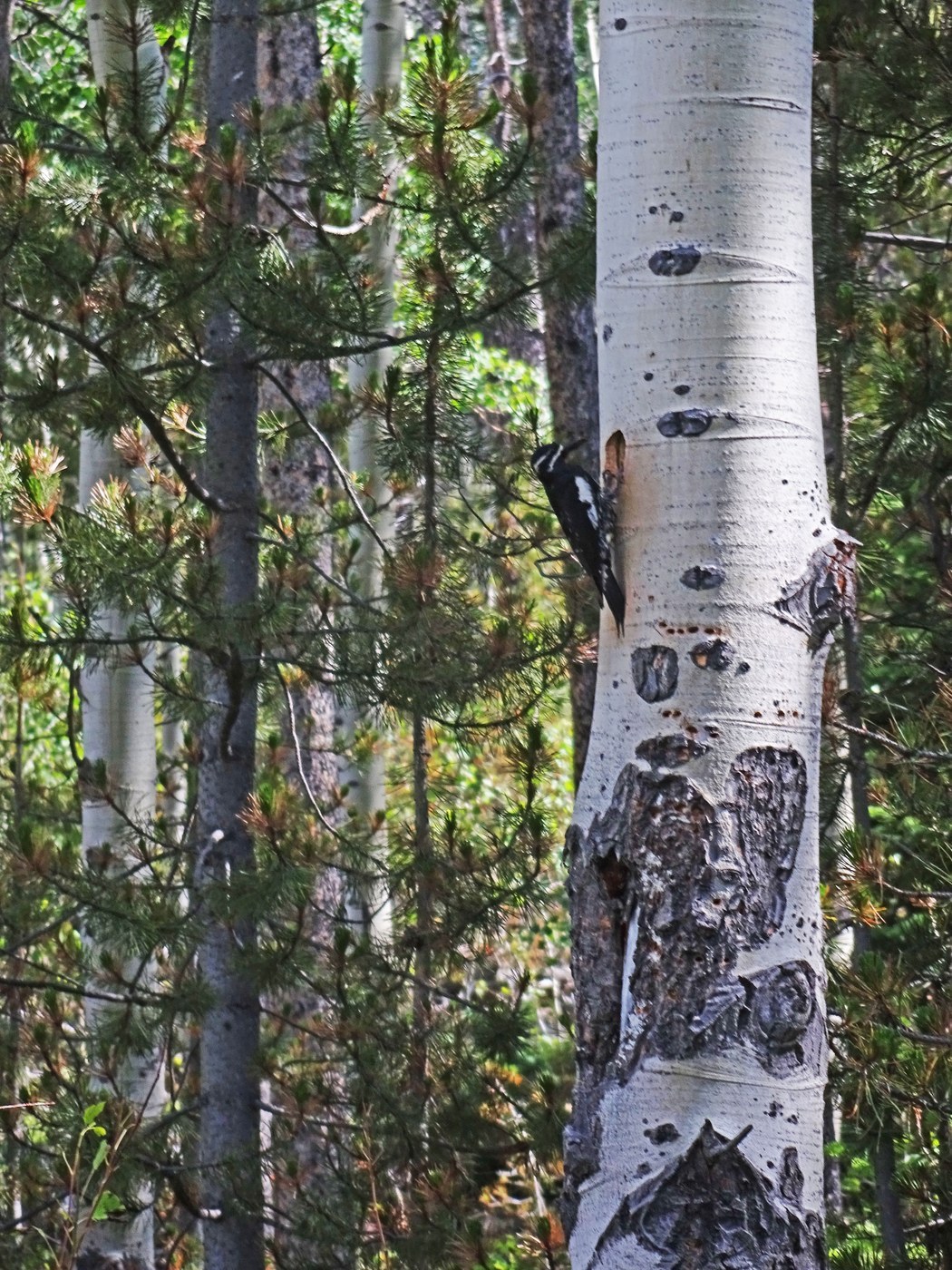
Williamson's Sapsucker
Strongly sexually dimorphic body feathers, glossy black or finely barred brown

Yellow-crowned Woodpecker
Contour and flight feathers

White Woodpecker
Mostly white body feathers with contrasting black wings and back

Red-throated Wryneck
Soft, cryptically mottled contour feathers

White-bellied Woodpecker
Large, glossy black contour and flight feathers

White-backed Woodpecker
Barred back feathers rather than a solid white patch
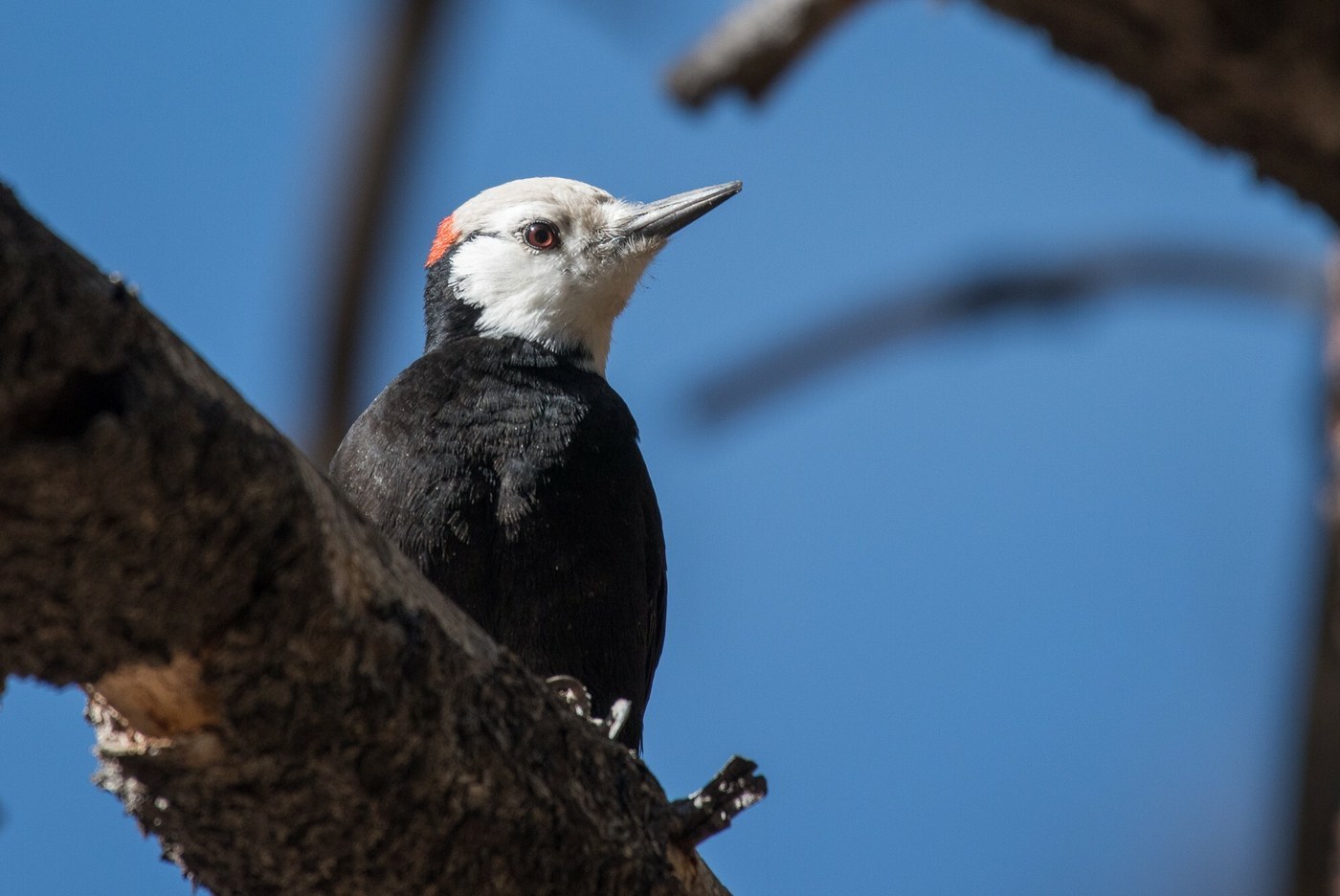
White-headed Woodpecker
Solid black body feathers with an entirely white head