

Ivory-billed Woodpecker
Campephilus principalis
An extremely large, historically iconic woodpecker of southeastern US bottomland forest, now exceedingly rare, recognized by its bold white wing patches and ivory-colored bill.
- Feather type
- Very large flight feathers with a solid white trailing patch
- Colours
- Glossy black with bold white wing and neck stripes
- Bird size
- Very large, ~48-53 cm
Found a feather like this?
Identify any feather from a photo, free.
Overview
The Ivory-billed Woodpecker was historically found in mature bottomland hardwood and cypress-tupelo swamp forest across the southeastern United States, with a closely related population in Cuba. It was one of the largest woodpeckers in the world, and its striking plumage made it instantly recognizable to observers who encountered it. The species has become extremely rare over the past century due to widespread loss of the mature forest it depends on, with its continued survival uncertain.
Because confirmed sightings have become vanishingly rare, most feather identification in its historic range is far more likely to involve the common and widespread Pileated Woodpecker.
Identifying the Feather
Key features:
- Secondaries and inner flight feathers show a large, solid white patch that forms a bold white trailing panel on the folded wing
- A broad white stripe runs down the side of the neck and onto the back, forming a more solid pale saddle than in similar species
- Males show a red crest confined to the rear crown, with a black forehead; females have an entirely black, forward-curving crest
- Overall body plumage is glossy black
Compared to similar species: the widespread Pileated Woodpecker is smaller, shows white mainly on the underwing rather than as a solid patch on the folded wing, and has black (not white-patched) secondaries — this wing pattern difference is the most reliable way to separate a folded-wing feather of the two species.
Plumage & Molt
Males historically showed a red crest restricted to the back of the crown with a black forehead, while females had an entirely black, recurved crest. Body plumage was glossy black overall, with a broad white neck stripe and large white wing patches distinguishing it from smaller relatives. Given the species' extreme rarity, detailed observations of molt and plumage variation are limited compared to more common woodpeckers.
Habitat & Range
Historically, this species occupied large tracts of mature bottomland hardwood swamp forest and cypress-tupelo stands in the southeastern United States, with a related population in old-growth forest in Cuba. Extensive logging of mature forest through the 20th century led to a severe decline, with no confirmed breeding population documented in recent decades.
Behavior & Field Notes
The Ivory-billed Woodpecker historically fed on large wood-boring beetle larvae, scaling bark from recently dead trees with its powerful bill. It nested in cavities excavated in large hardwood trees within mature forest. Its calls were described as a nasal, toy-trumpet-like "kent," and it used double-knock drumming for communication. Given its rarity, any feather tentatively linked to this species from its historic range warrants especially careful comparison against the much more common Pileated Woodpecker before concluding an identification.
Frequently asked questions
How is an Ivory-billed Woodpecker feather told apart from a Pileated Woodpecker feather?
The clearest difference is in the wing: Ivory-billed Woodpecker secondaries show a solid white patch forming a white trailing edge on the folded wing, while Pileated Woodpecker secondaries are black, with white confined mostly to the underwing coverts.
Is it likely that a found feather is truly from this species?
Given the species' extreme rarity and uncertain current status, feathers resembling this description in its historic range are far more likely to be from the common and widespread Pileated Woodpecker, so careful comparison is warranted.
What color is the crest in males versus females?
Males historically showed red confined to the rear crown with a black forehead, while females had an entirely black, recurved crest with no red at all.
What habitat was this species associated with?
Mature bottomland hardwood swamp and cypress-tupelo forest in the southeastern United States, along with old-growth forest in Cuba for the related population there.
Ivory-billed Woodpecker guides
In-depth guides for identifying and understanding Ivory-billed Woodpecker.

Other feathers you may enjoy

Great Slaty Woodpecker
Massive, uniformly colored contour feathers

Yellow-tufted Woodpecker
Black body feathers with bright yellow forehead tufts

Magellanic Woodpecker
Very large, glossy contour feathers with a recurved crest

Yellow-bellied Sapsucker
Black-and-white patterned back and facial-stripe feathers
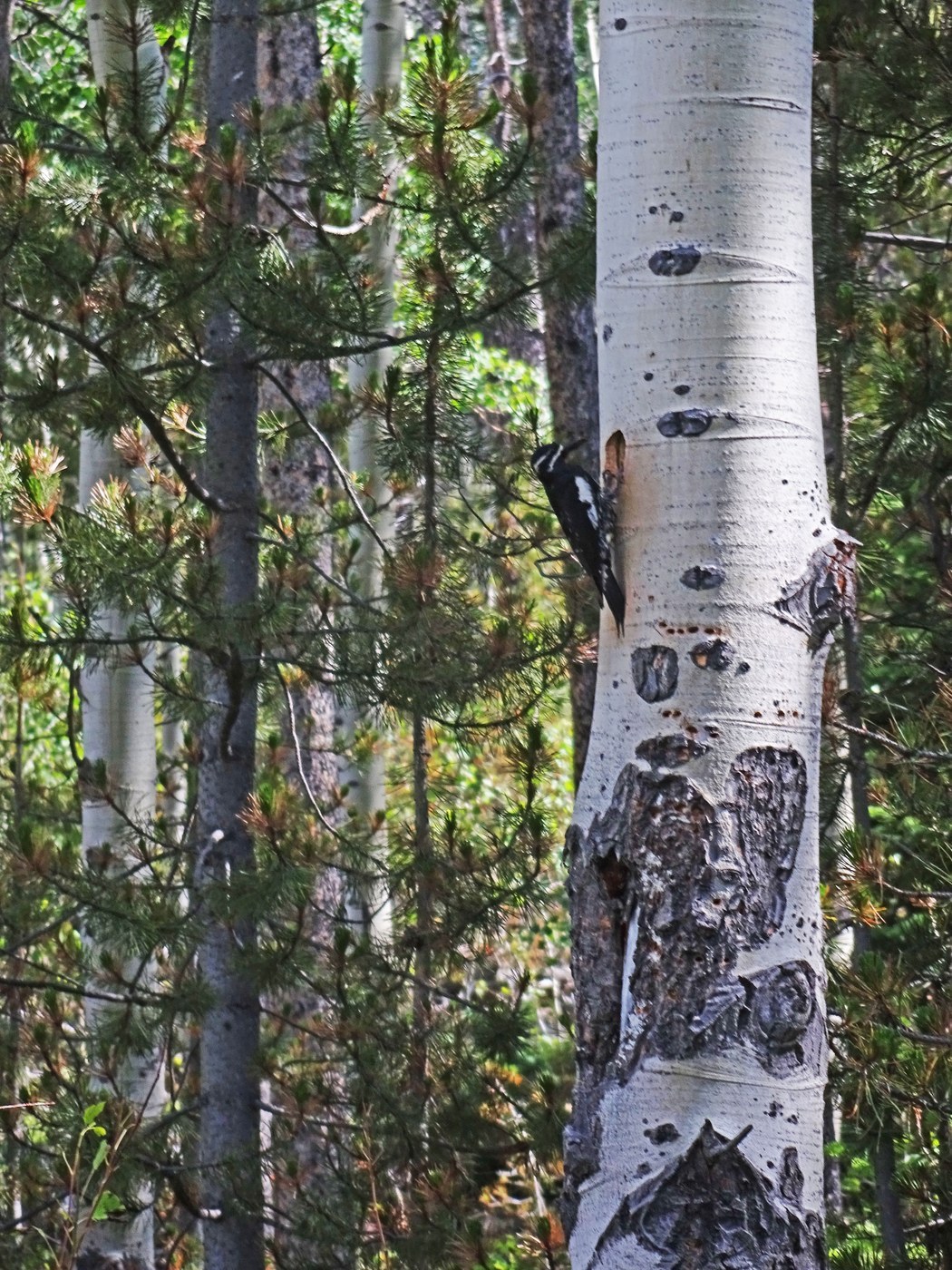
Williamson's Sapsucker
Strongly sexually dimorphic body feathers, glossy black or finely barred brown

Yellow-crowned Woodpecker
Contour and flight feathers

White Woodpecker
Mostly white body feathers with contrasting black wings and back

Red-throated Wryneck
Soft, cryptically mottled contour feathers

White-bellied Woodpecker
Large, glossy black contour and flight feathers

White-backed Woodpecker
Barred back feathers rather than a solid white patch
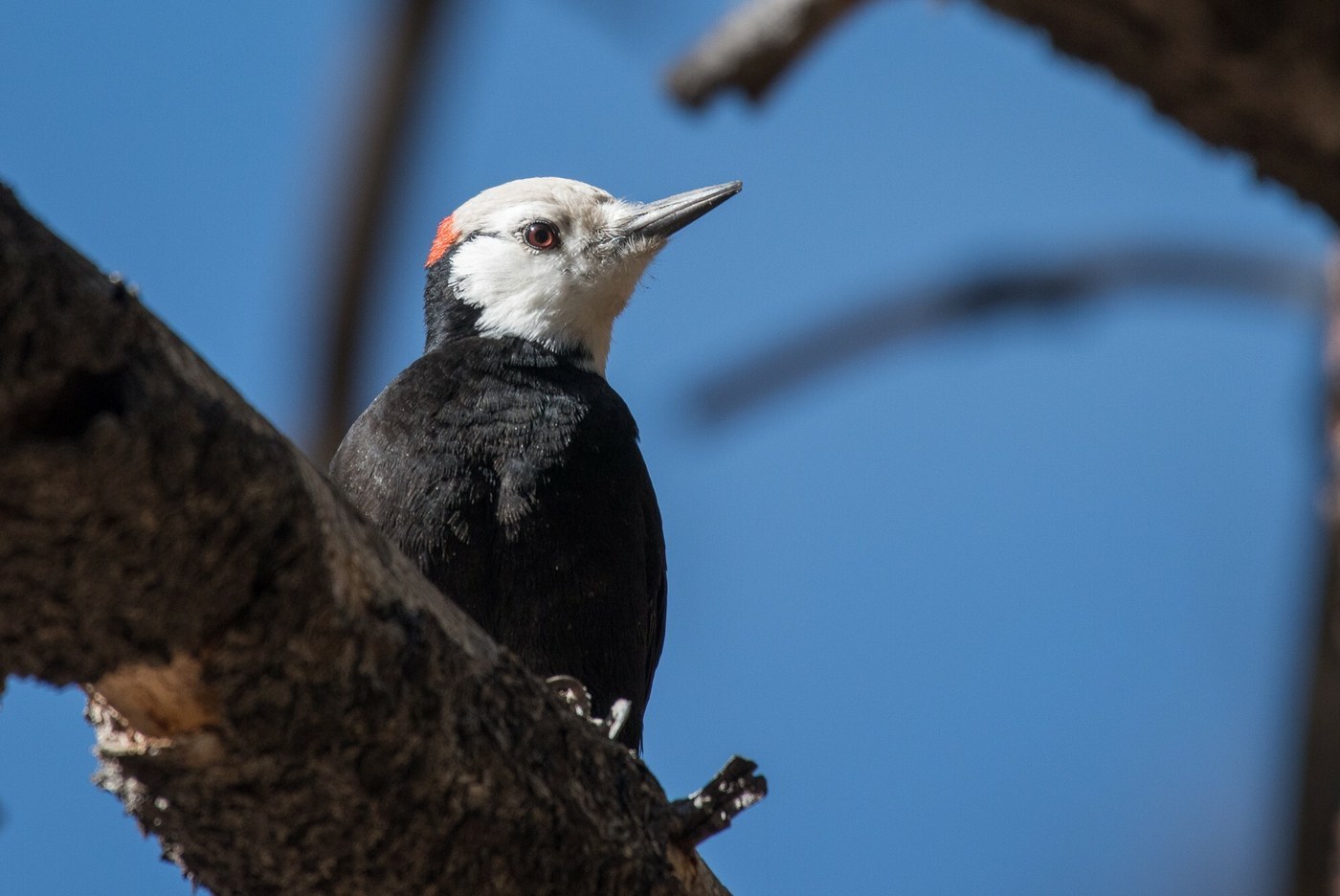
White-headed Woodpecker
Solid black body feathers with an entirely white head

Syrian Woodpecker
Great Spotted-type contour feathers with an incomplete neck bar