
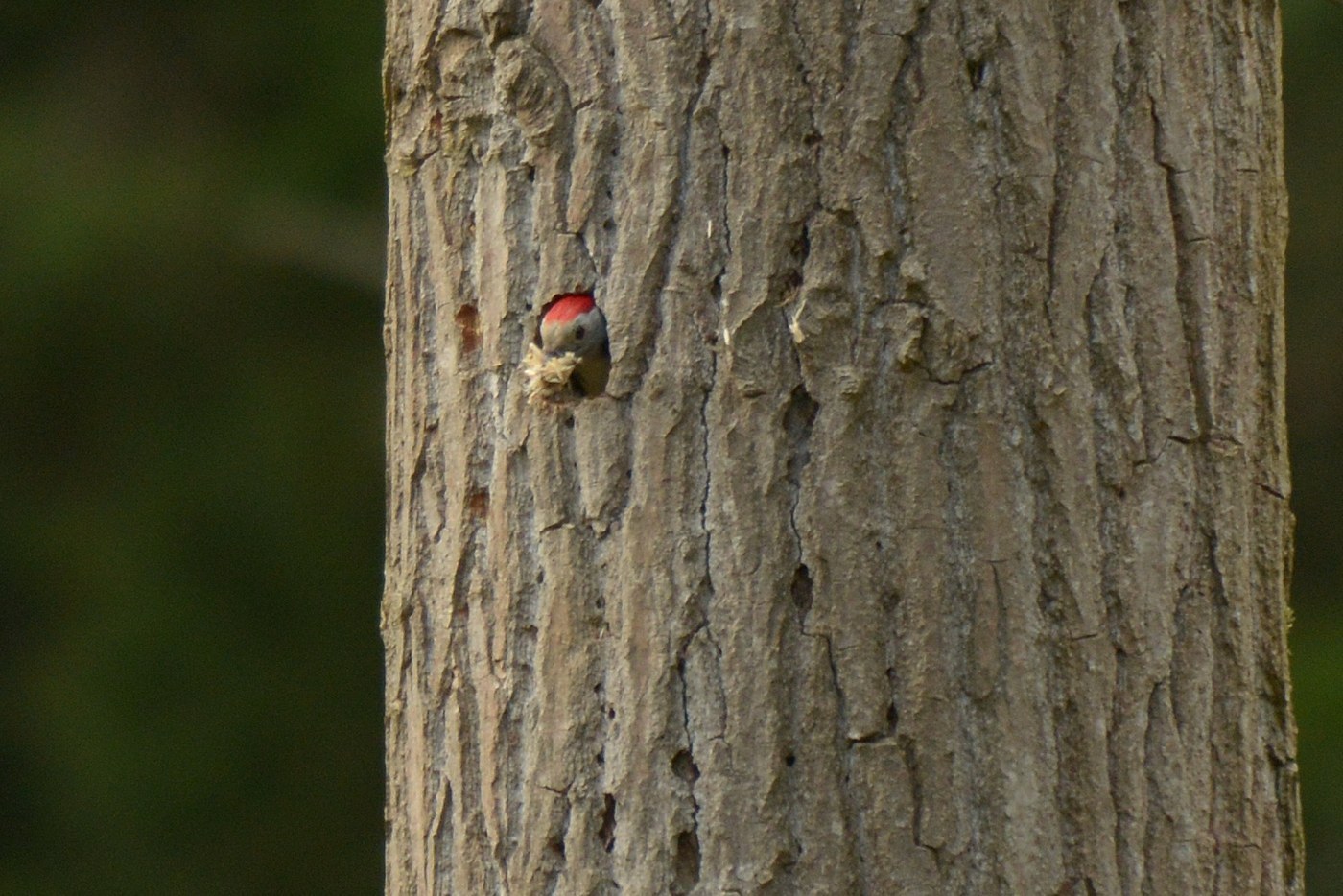
Middle Spotted Woodpecker
Dendrocoptes medius
A small, delicately patterned European woodpecker of old oak woodland, easily told from the Great Spotted Woodpecker by its unbroken red cap and streaked, rather than solidly barred, flanks.
- Feather type
- Small contour feathers with finely streaked flanks
- Colours
- Black-and-white patterned with a pale pinkish-red cap
- Bird size
- Small, ~20 cm
Found a feather like this?
Identify any feather from a photo, free.
Overview
The Middle Spotted Woodpecker is a small, boldly patterned woodpecker found in mature deciduous woodland across much of continental Europe, extending into Anatolia and Iran. It closely resembles the more familiar Great Spotted Woodpecker but is smaller, more delicately marked, and specifically tied to old oak-dominated forest with abundant dead wood.
Its dependence on old, structurally diverse woodland makes it a useful indicator of high-quality forest habitat in much of its European range.
Identifying the Feather
Key features:
- Crown feathers are red or pink in both adult males and females, unlike related spotted woodpeckers where red is often restricted by sex or age
- The black malar (mustache) stripe does not reach the bill or eye, leaving a pale, unmarked cheek area
- Flank feathers show dark streaking rather than the solid black band seen in the Great Spotted Woodpecker
- Back feathers show white barring across a black background rather than large solid white ovals
Compared to similar species: the Great Spotted Woodpecker shows red confined to the nape in adult males (and none in adult females), a black malar stripe reaching the bill, and a solid black flank band — all differing from the Middle Spotted Woodpecker's pattern.
Plumage & Molt
Unlike many spotted woodpeckers, both adult sexes of the Middle Spotted Woodpecker show a red or pinkish crown, rather than red being restricted to males or to juveniles. Juveniles are duller overall with less crisply defined streaking on the flanks. A complete molt occurs annually after the breeding season.
Habitat & Range
This species favors mature deciduous and mixed forest, particularly old oak woodland, across much of continental Europe and into parts of Anatolia and Iran. It is largely sedentary and depends on old trees with dead wood for both foraging and nesting, making it sensitive to intensive forest management that removes dead and decaying timber.
Behavior & Field Notes
Middle Spotted Woodpeckers glean and probe bark rather than heavily excavating solid wood, feeding on insects along with some plant material. Drumming is weaker and less frequent than in other spotted woodpeckers, and calls are relatively soft. Nests are placed in cavities within old or decaying trees, and the species tends to remain within the same woodland year-round.
Frequently asked questions
How do I tell a Middle Spotted Woodpecker feather from a Great Spotted Woodpecker feather?
A red or pink crown feather from an adult of either sex points to the Middle Spotted Woodpecker, since the Great Spotted Woodpecker shows red only on the nape of males and none at all in adult females.
What does the flank pattern tell me?
Streaked (rather than solidly black-barred) flank feathers suggest Middle Spotted Woodpecker, while a solid black band across white flank feathers is more typical of the Great Spotted Woodpecker.
What habitat is this species tied to?
Old, mature deciduous woodland, especially oak stands with abundant dead wood, across continental Europe into Anatolia and Iran.
Does this species drum loudly like other woodpeckers?
No, its drumming is comparatively weak and infrequent, and it relies more on gleaning and probing bark than heavy excavation.
Middle Spotted Woodpecker guides
In-depth guides for identifying and understanding Middle Spotted Woodpecker.

Other feathers you may enjoy

Ivory-billed Woodpecker
Very large flight feathers with a solid white trailing patch

Great Slaty Woodpecker
Massive, uniformly colored contour feathers

Yellow-tufted Woodpecker
Black body feathers with bright yellow forehead tufts

Magellanic Woodpecker
Very large, glossy contour feathers with a recurved crest

Yellow-bellied Sapsucker
Black-and-white patterned back and facial-stripe feathers
Williamson's Sapsucker
Strongly sexually dimorphic body feathers, glossy black or finely barred brown

Yellow-crowned Woodpecker
Contour and flight feathers

White Woodpecker
Mostly white body feathers with contrasting black wings and back

Red-throated Wryneck
Soft, cryptically mottled contour feathers

White-bellied Woodpecker
Large, glossy black contour and flight feathers

White-backed Woodpecker
Barred back feathers rather than a solid white patch
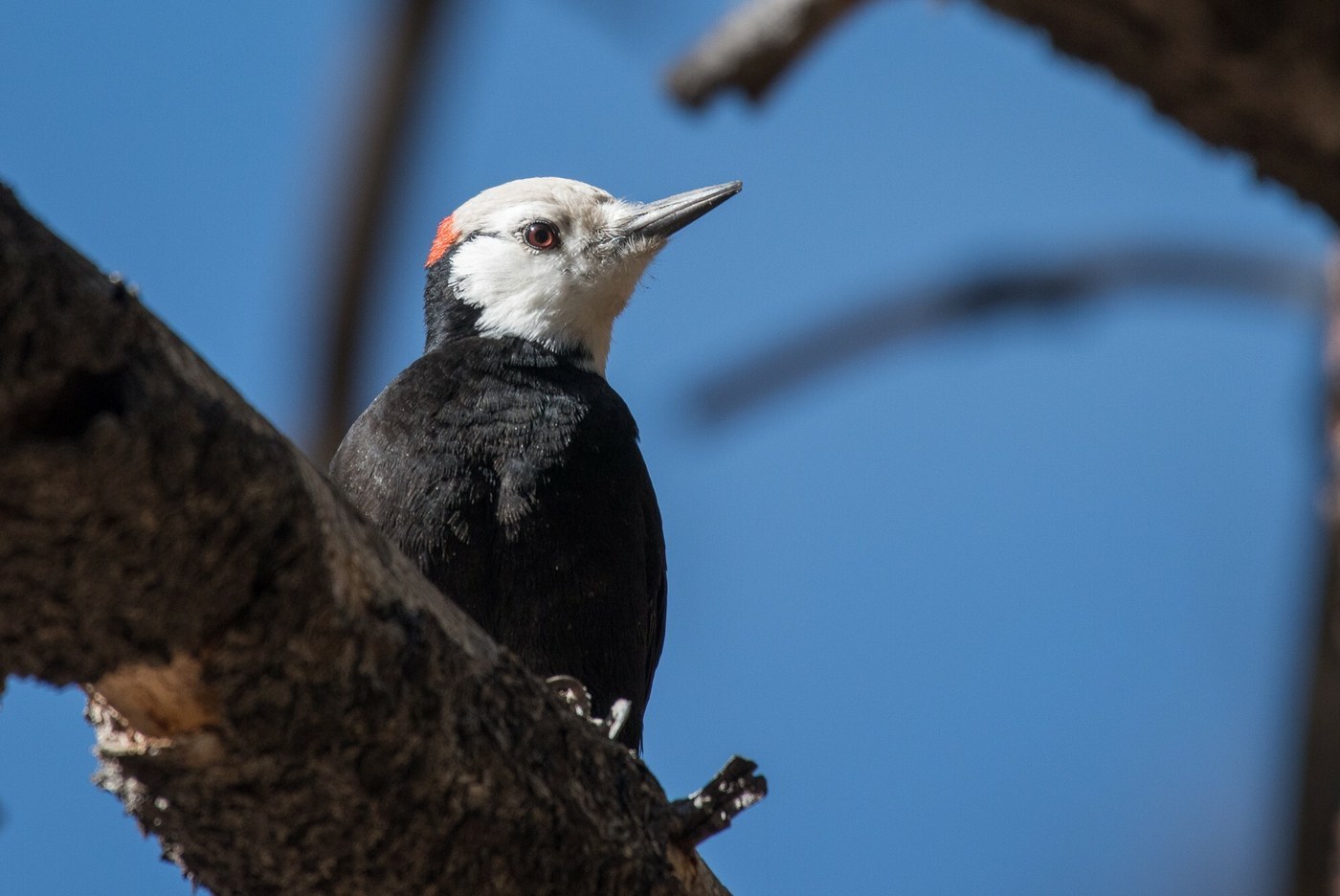
White-headed Woodpecker
Solid black body feathers with an entirely white head