
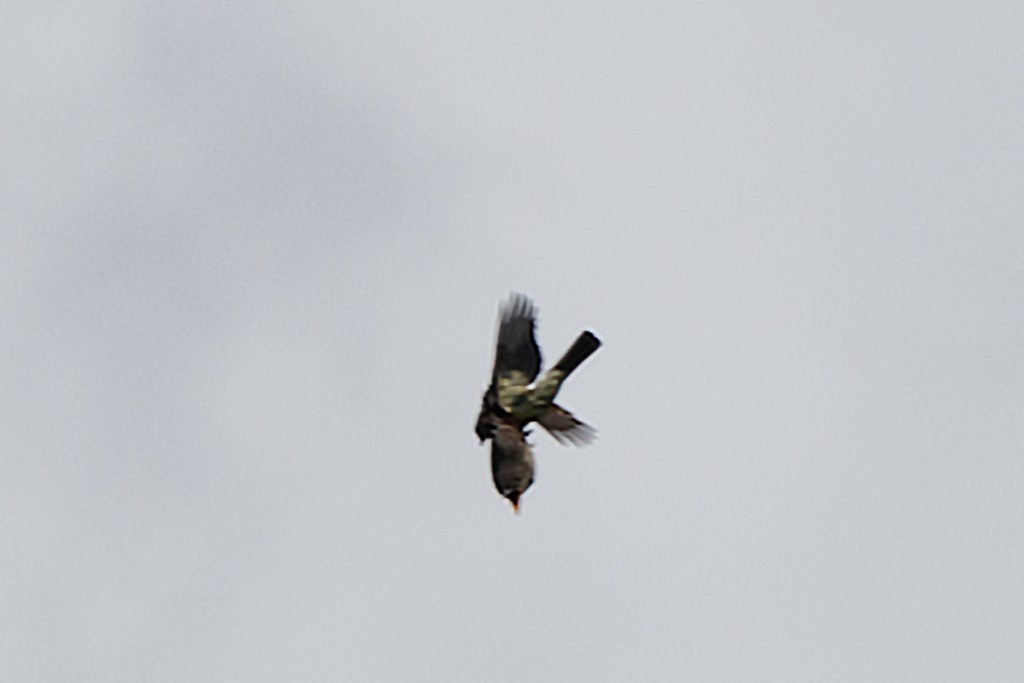
Olive-sided Flycatcher
Contopus cooperi
A large-headed, big-chested flycatcher whose dark olive-gray flanks and white central stripe create a distinctive vest-like appearance.
- Feather type
- Contour, body plumage
- Colours
- Dark olive-gray sides/flanks, white central throat/belly stripe, tufts of white on rump sides
- Bird size
- Sparrow-sized, ~19 cm
Found a feather like this?
Identify any feather from a photo, free.
Overview
Overview
The Olive-sided Flycatcher is a robust, large-headed flycatcher of coniferous forest edges, burns, and bog habitats across northern and western North America, often perching conspicuously atop the tallest available snag or treetop to scan for flying insects. Its distinctive plumage pattern and habit of using prominent high perches make it relatively easy to identify despite its otherwise plain coloration.
The most notable plumage feature is the dark olive-gray coloring along the sides and flanks that leaves a contrasting white stripe down the center of the throat and belly, often described as giving the bird an open-vest appearance.
Identifying the Feather
Feather ID Notes
Olive-sided Flycatcher feathers show dark, sooty olive-gray coloring concentrated along the flanks and sides of the breast, while the central throat and belly remain white, creating a distinctive "unbuttoned vest" pattern unlike other Contopus flycatchers. Small tufts of white feathers are often visible on the sides of the rump, sometimes peeking out from beneath the folded wings.
- Head/back feathers: dark olive-gray to sooty brown
- Flank feathers: dark olive-gray, forming the "vest" sides
- Central throat/belly feathers: white, contrasting sharply with the flanks
- Rump-side tufts: white, occasionally visible as small fluffy patches This vest-like pattern, combined with a notably large head and short tail relative to body size, readily separates this species from wood-pewees and Empidonax flycatchers.
Plumage & Molt
Plumage Details
Males and females look alike, both showing the same dark-flanked, white-striped pattern year-round. Juveniles are similar to adults but may show slightly less defined contrast between the flanks and central white area until their first molt. There is no distinct seasonal plumage change, though the white rump tufts can appear more or less visible depending on how the wings are held.
Habitat & Range
Habitat & Range
This species breeds in coniferous forest habitats across northern North America and higher elevations in the west, favoring forest edges, burned areas, bogs, and other habitats with scattered tall snags or dead treetops for perching. It is a long-distance migrant, wintering in Central America and the Andes region of South America, one of the longest migrations among North American flycatchers.
Behavior & Field Notes
Behavior & Field Notes
Olive-sided Flycatchers forage by sallying from a prominent, often very high perch to catch flying insects, frequently returning to the exact same lookout spot. Diet is primarily flying insects, including larger prey such as bees and wasps. Nests are shallow, loosely built cups placed high in a conifer, often far out on a horizontal branch. The song is a distinctive, whistled "quick-three-beers" phrase that is one of the most recognizable and memorable flycatcher songs in North America.
Frequently asked questions
What is the key feather pattern for Olive-sided Flycatcher?
Dark olive-gray flanks contrasting with a white central throat and belly stripe, giving a vest-like appearance.
What perching behavior helps identify this species?
It favors very high, prominent perches on dead snags or treetops, often returning repeatedly to the same spot.
How far does this species migrate?
It undertakes one of the longest migrations of any North American flycatcher, wintering in Central America and the Andes of South America.
What does its song sound like?
A distinctive whistled phrase often rendered as "quick-three-beers," one of the most recognizable flycatcher songs.
Olive-sided Flycatcher guides
In-depth guides for identifying and understanding Olive-sided Flycatcher.
Other feathers you may enjoy

Yellow-breasted Bunting
Contour and flight feathers, chestnut-and-yellow breeding pattern
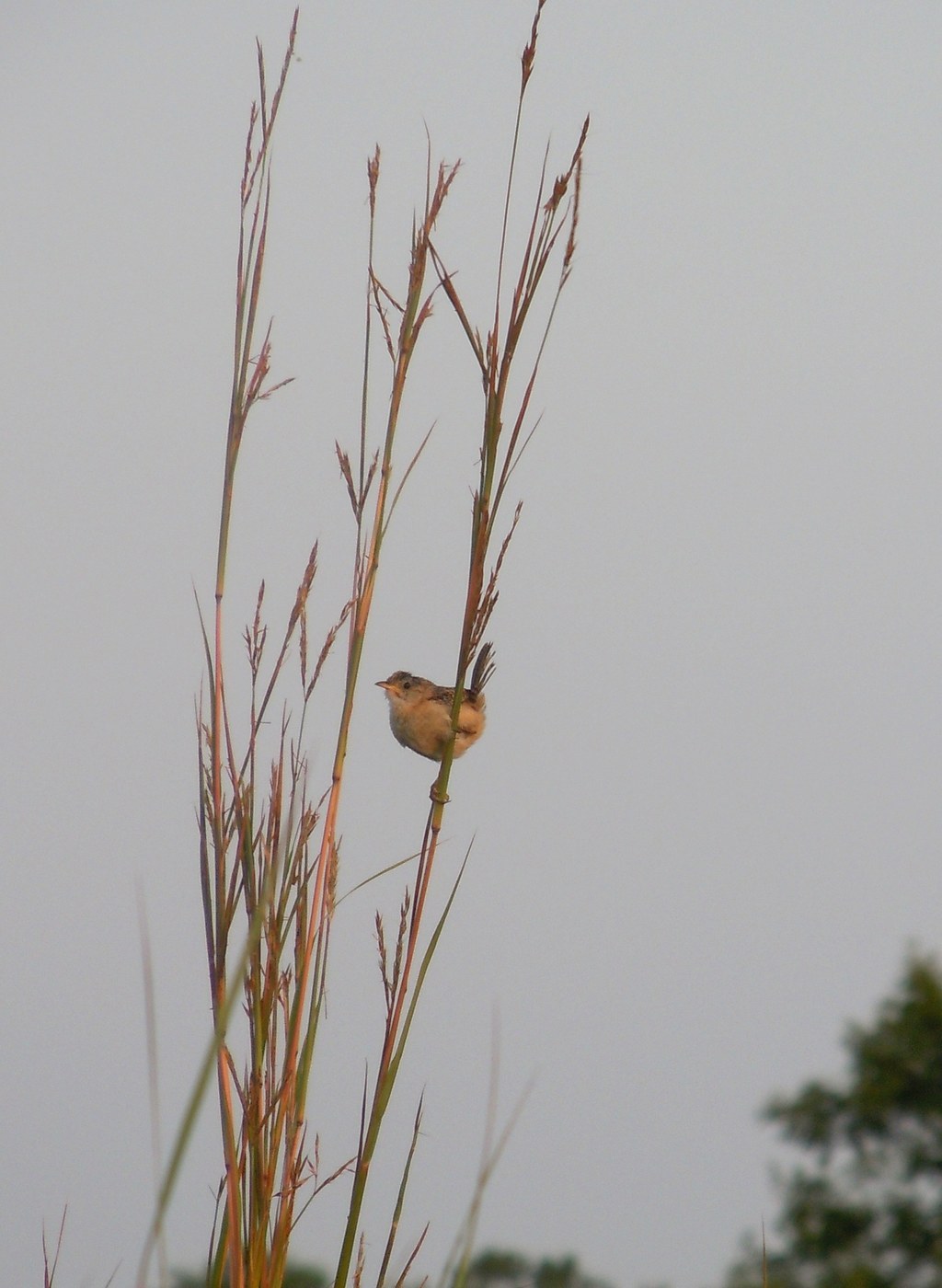
Sedge Wren
Tiny streaked crown and back feathers

Yellow-winged Cacique
Glossy black body feathers, yellow wing patch, shaggy crest

Yellow Warbler
Small contour and flight feathers
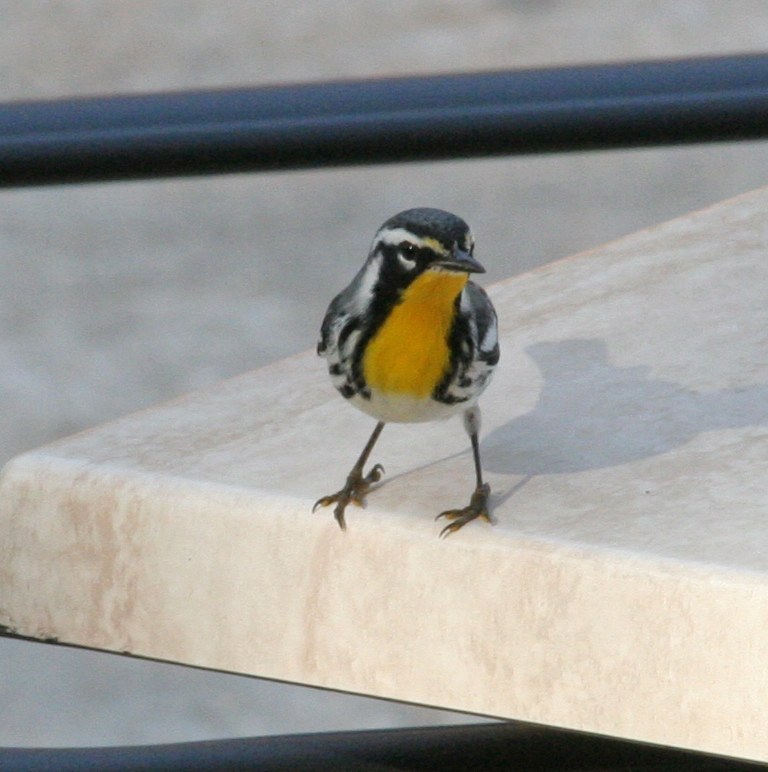
Yellow-throated Warbler
Small contour and flight feathers
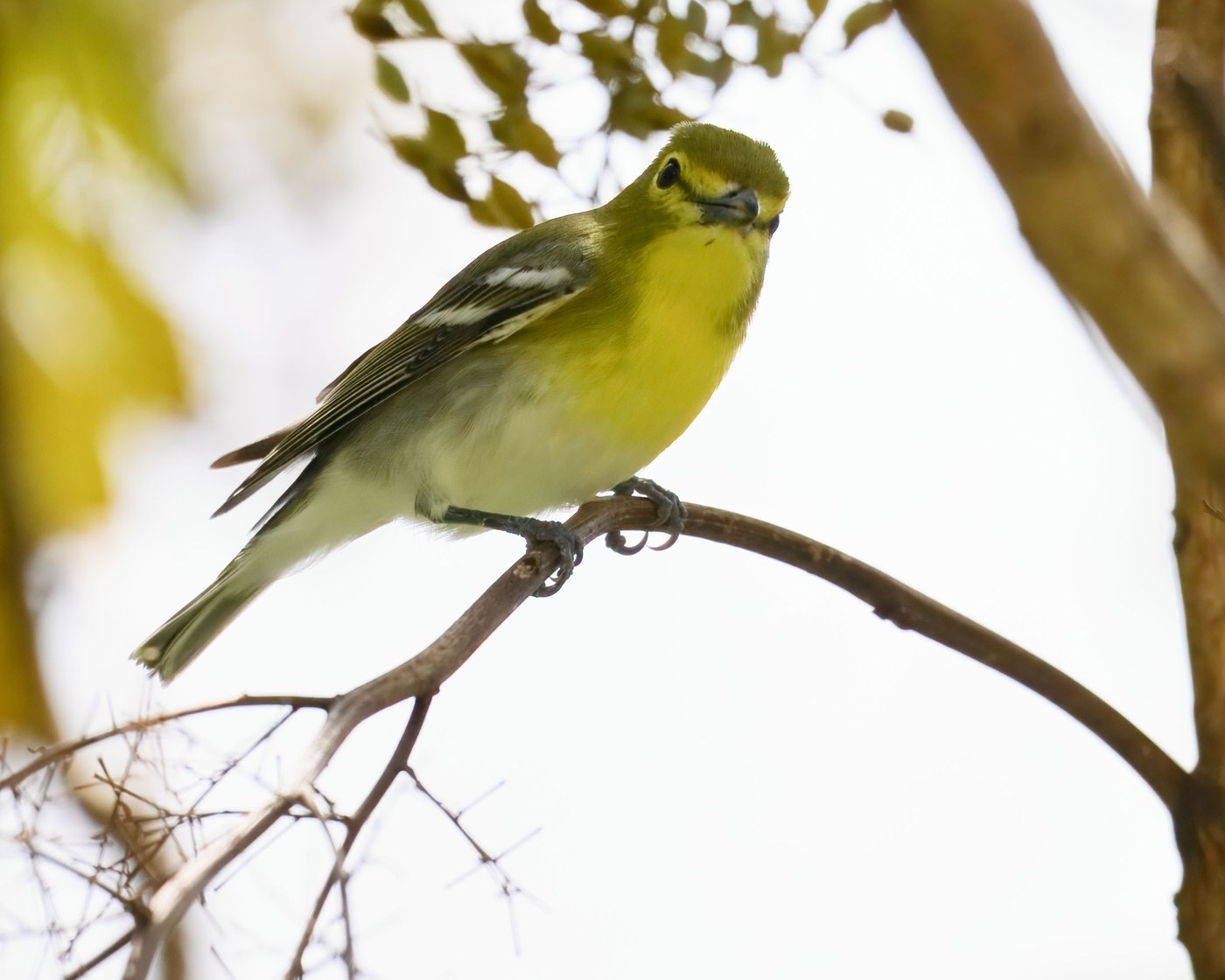
Yellow-throated Vireo
Bright yellow throat and spectacle feathers; olive-green back feathers; two white wing-bar feathers

Yellow-rumped Warbler
Small contour and flight feathers
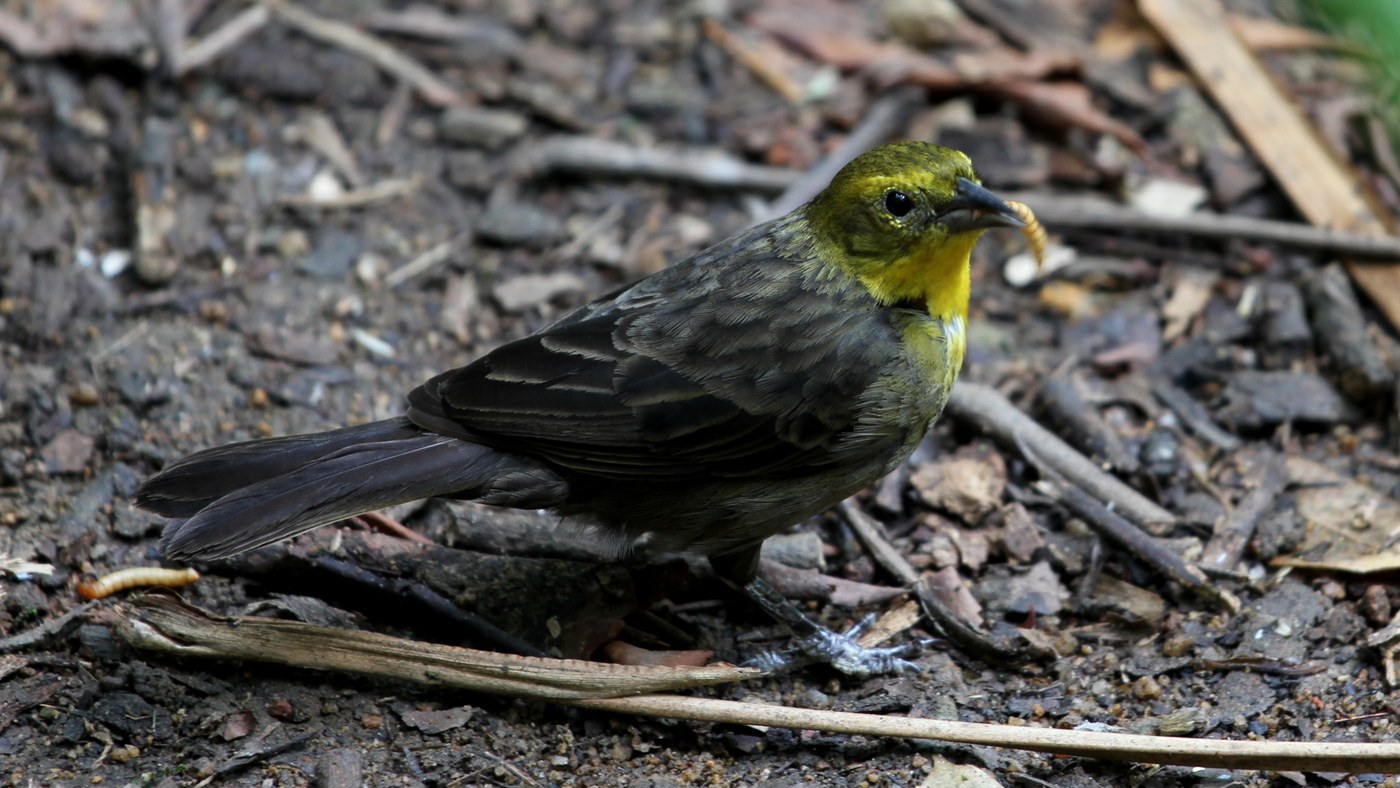
Yellow-hooded Blackbird
Contrasting hood and body feathers
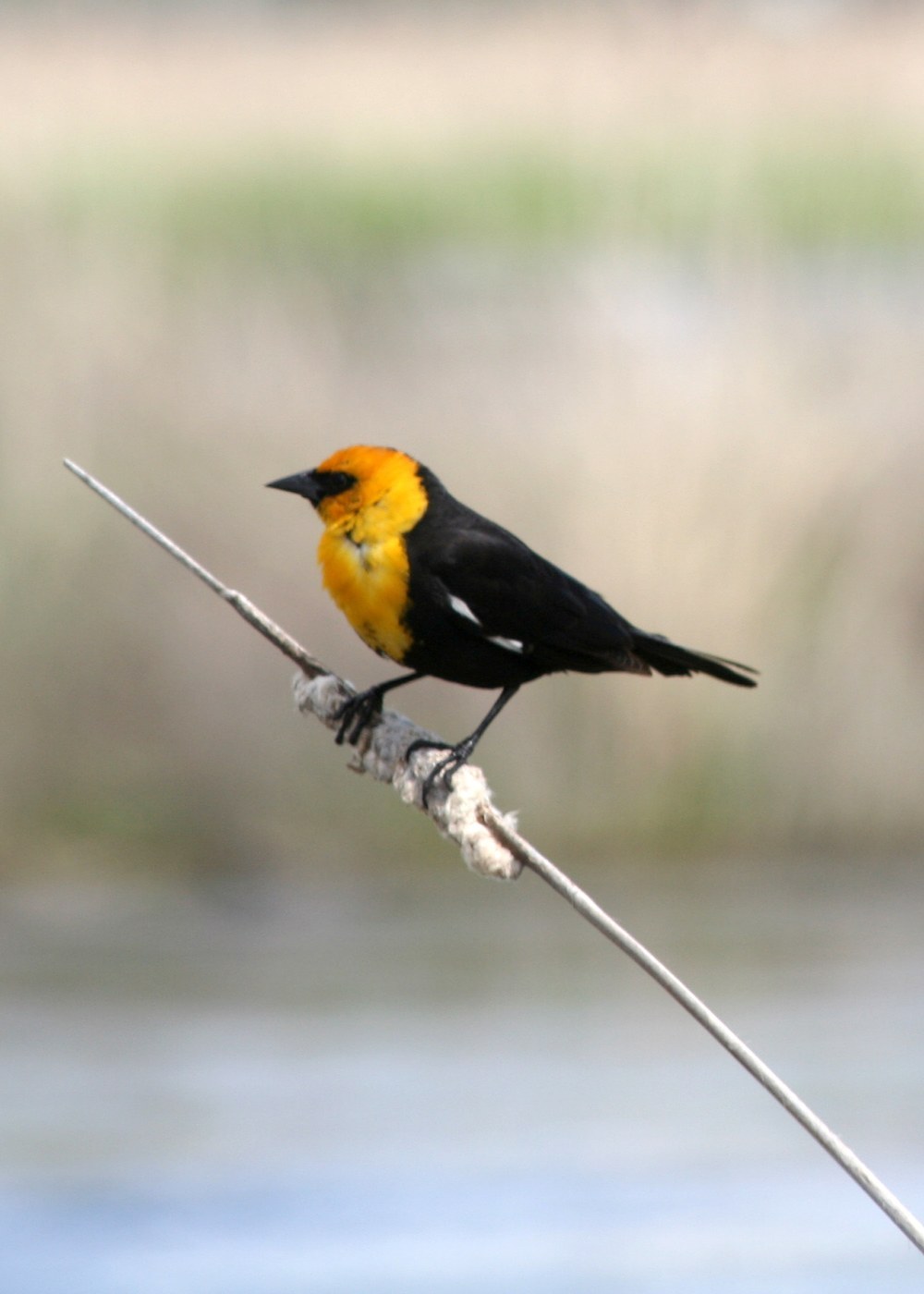
Yellow-headed Blackbird
Glossy black body plumage with a bright yellow head and breast

Yellow-eyed Junco
Contour and flight feathers

Yellow-fronted Canary
Small, smooth body plumage

Yellow-breasted Greenfinch
Compact, smooth body plumage