
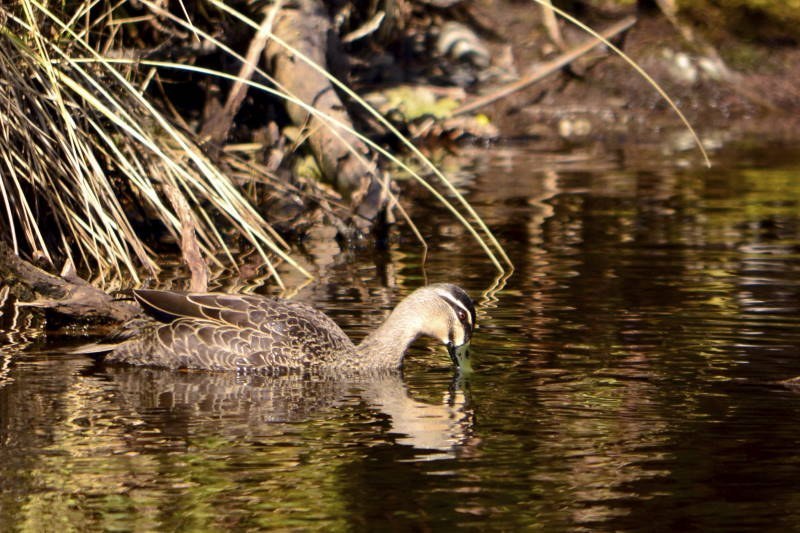
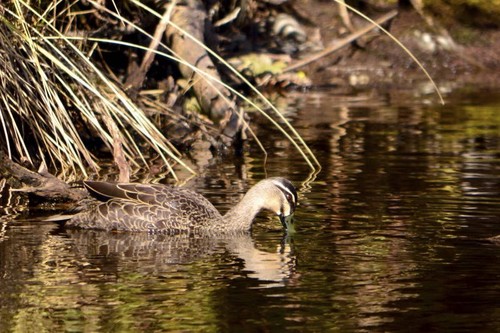
Pacific Black Duck
Anas superciliosa
The Pacific Black Duck is a mottled dark brown dabbling duck with a distinctive pale face crossed by dark eye stripes, common on wetlands across Australia and the Pacific.
- Feather type
- Dense, waterproof contour feathers with an iridescent speculum patch
- Colours
- Mottled dark brown body with a pale face and dark eye stripes
- Bird size
- Mallard-sized, ~55 cm
Found a feather like this?
Identify any feather from a photo, free.
Overview
Overview
The Pacific Black Duck is the most widespread native dabbling duck across much of Australia, New Zealand, and many Pacific islands, filling a similar ecological role to the Mallard elsewhere in the world. It readily hybridises with introduced Mallards in some areas, a conservation concern in parts of its range.
- Family: Anatidae (ducks, geese, and swans)
- Distribution: Australia, New Zealand, and the southwestern Pacific
- Notable trait: pale face with bold dark stripes through and below the eye
Identifying the Feather
Feather Identification
Body feathers are mottled dark brown with paler buff edging, giving an overall dark, richly patterned look typical of a dabbling duck. The face is notably paler, cream to buff, crossed by two dark stripes, one through the eye and one below it, a key identification feature. A glossy green (sometimes with a blue or purple sheen) speculum patch on the secondaries is bordered by black and white, visible at rest and in flight.
- Overall tone: dark mottled brown with a contrastingly pale, striped face
- Key mark: iridescent green speculum bordered in black and white
- Compare with: female Mallard (paler overall, less strongly striped face) with which it can hybridise where ranges overlap
Plumage & Molt
Plumage
Sexes look quite similar, unlike many ducks, though males can show a slightly glossier speculum. Juveniles resemble adults but are somewhat duller. There is limited seasonal plumage change, though some wear and brightening of the speculum sheen occurs through the year.
Habitat & Range
Habitat & Range
This duck occupies a very broad range of wetland habitats, from freshwater lakes and rivers to estuaries and sheltered coastal waters, across Australia, New Zealand, and many Pacific islands. Populations show local movements linked to water availability rather than fixed long-distance migration.
Behavior & Field Notes
Behavior & Field Notes
Pacific Black Ducks are dabbling ducks, feeding by upending in shallow water or grazing at the water's edge on plant material and small aquatic animal prey. They are often seen in pairs or small flocks, sometimes mixing with other waterfowl. Calls include a typical duck quacking, with the female's call louder and more emphatic than the male's softer notes. Nests are built on the ground near water, lined with down.
- Diet: aquatic plant material and small invertebrates, obtained by dabbling and upending
- Voice: typical quacking, louder and more repeated in females
- Field note: hybridisation with introduced Mallards can complicate identification in some urban wetlands
Frequently asked questions
What is the best field mark for the Pacific Black Duck?
A pale buff face crossed by two bold dark stripes, one through the eye and one below it, on an otherwise dark mottled brown body.
Does it look similar to a female Mallard?
Somewhat, but the Pacific Black Duck shows a more strongly striped pale face and can hybridise with Mallards where the two overlap.
What colour is its speculum?
A glossy green patch on the secondaries, bordered by black and white, visible both at rest and in flight.
How does it feed?
It dabbles and upends in shallow water, and also grazes at the water's edge, on plant material and small aquatic animal prey.
Pacific Black Duck guides
In-depth guides for identifying and understanding Pacific Black Duck.
Other feathers you may enjoy

Mallard
Wing (speculum), body, and tail feathers

Spectacled Eider
Large sea-duck body feathers with distinctive eye-ring patches

Canada Goose
Body and flight feathers
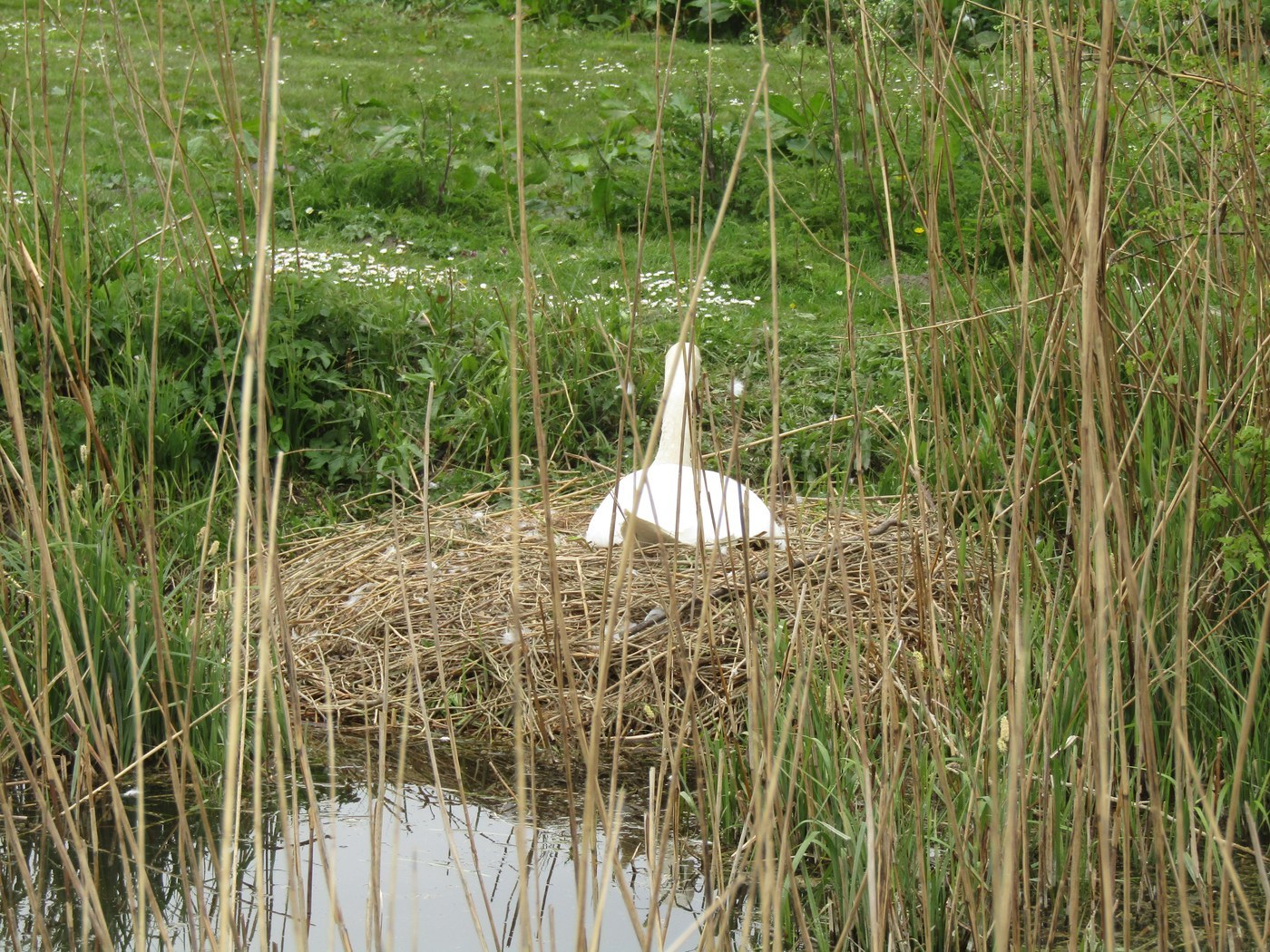
Mute Swan
Body (contour) and flight feathers

Wood Duck
Iridescent crest feathers; ornate scapular and flank feathers; white teardrop facial feathers (female)
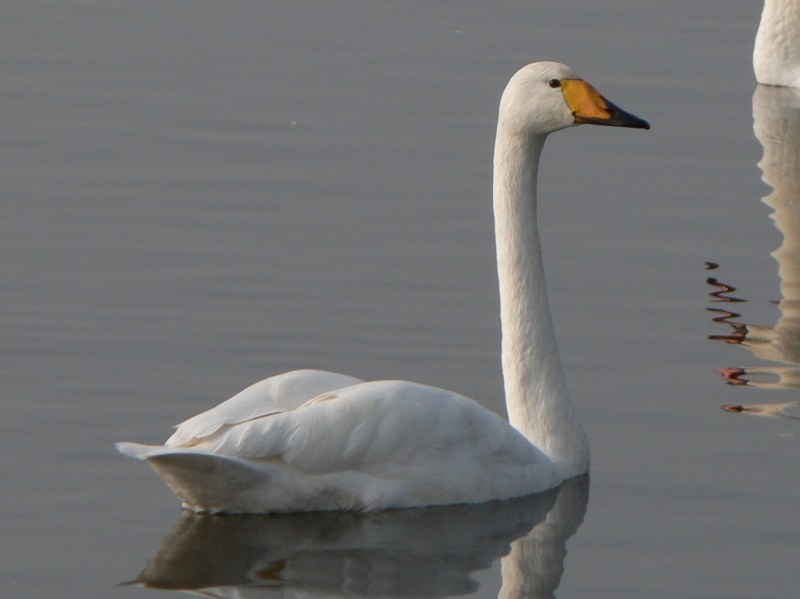
Whooper Swan
Contour and flight feathers

White-winged Scoter
Large sea-duck body feathers with a white wing patch

Ruddy Duck
Stiff tail feathers and compact body plumage

Ross's Goose
Contour and flight feathers

White-cheeked Pintail
Contour and elongated tail feathers

Torrent Duck
Dense, sleek contour feathers; stiff, pointed tail feathers used for bracing against rocks

Tundra Swan
Contour and flight feathers